
The U.S. Bureau of Reclamation has approved a revised plan for managing California’s Central Valley Project (CVP), with the goal of sending more water to farmers in the state.
The revised operation, called Action 5, aligns with directives from Executive Order 14181, signed on Jan. 24 by President Donald Trump, which orders federal agencies to maximize water output from the CVP while complying with legal standards.
“With the signing of this Record of Decision, we are delivering on the promise of Executive Order 14181 to strengthen California’s water resilience,” Secretary of the Interior Doug Burgum said in a statement on Dec. 4.
Burgum also said the updated operations plan employs the state-of-the-art science to increase water deliveries while safeguarding the environment.
Assistant Secretary for Water and Science Andrea Travnicek said that Action 5 represents a forward-looking approach to water management that balances the needs of the state’s communities, agriculture, and ecosystems.
“By refining real-time governance and operational flexibility, we are ensuring that every drop of water is managed with precision, accountability, and purpose,” she said.
The change could increase yearly CVP distributions by 130,000 to 180,000 acre-feet, with the State Water Project gaining 120,000 to 220,000 acre-feet, depending on weather and California’s implementation of Action 5.
The new strategy overrides the December 2024 framework and incorporates advanced scientific tools for decision-making. The adjustments stay within the 2024 environmental impact study’s scope and are in line with biological assessments from NOAA Fisheries and the U.S. Fish and Wildlife Service.
Notable shifts include minor changes to Delta pumping, ending the Delta Summer and Fall Habitat Action, and removal of export-reduction ideas from California’s Healthy Rivers and Landscapes initiative.
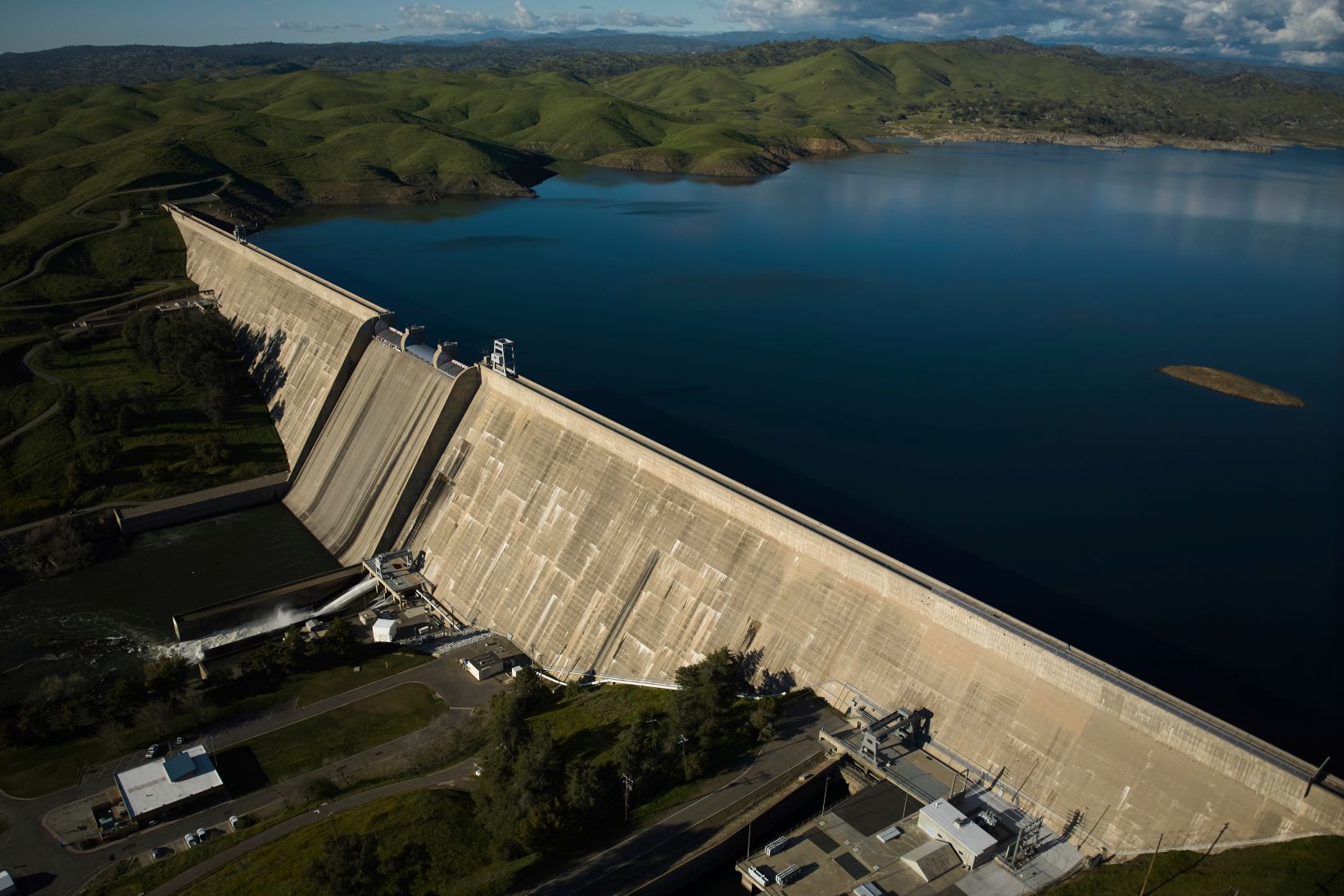
The announcement occurs at the same time as the 90th anniversary of the CVP’s 1935 authorization, which created an expansive system of dams, reservoirs, and canals spanning 400 miles from Redding to Bakersfield, and serving up to 30 million people.
In December 2024, federal and state officials agreed to regulate CVP flows to protect against floods and droughts.
“The new framework supercharges our adaptive management and enables project operators to work with water users and the broader public to better manage the system to benefit millions of Californians and endangered fish species,” state water director Karla Nemeth said at the time. “Extreme storms and extended droughts mean we need to be as nimble as possible in operating our water infrastructure.”
California Gov. Gavin Newsom celebrated federal collaboration between the state and the then-Biden administration, claiming the future would be hotter and drier.
“That means we have to do everything we can now to prepare and ensure our water infrastructure can handle these extremes,” Newsom said at the time.
Deputy Assistant Secretary Mike Brain said the Central Valley Project “is critical to the state’s water supply future.”
Funding help came in September, with $1 billion for storage expansions, Rep. Kevin Kiley (R-Calif.) announced.
The Associated Press contributed to this report.
Correction: A previous version of this article misstated the nature of the agency that approved the California water management plan. The Epoch Times regrets the error.