
California’s Fast Food Council has not held a meeting since February and has been without a leader since May, while costing the state more than $1 million, according to publicly available records.
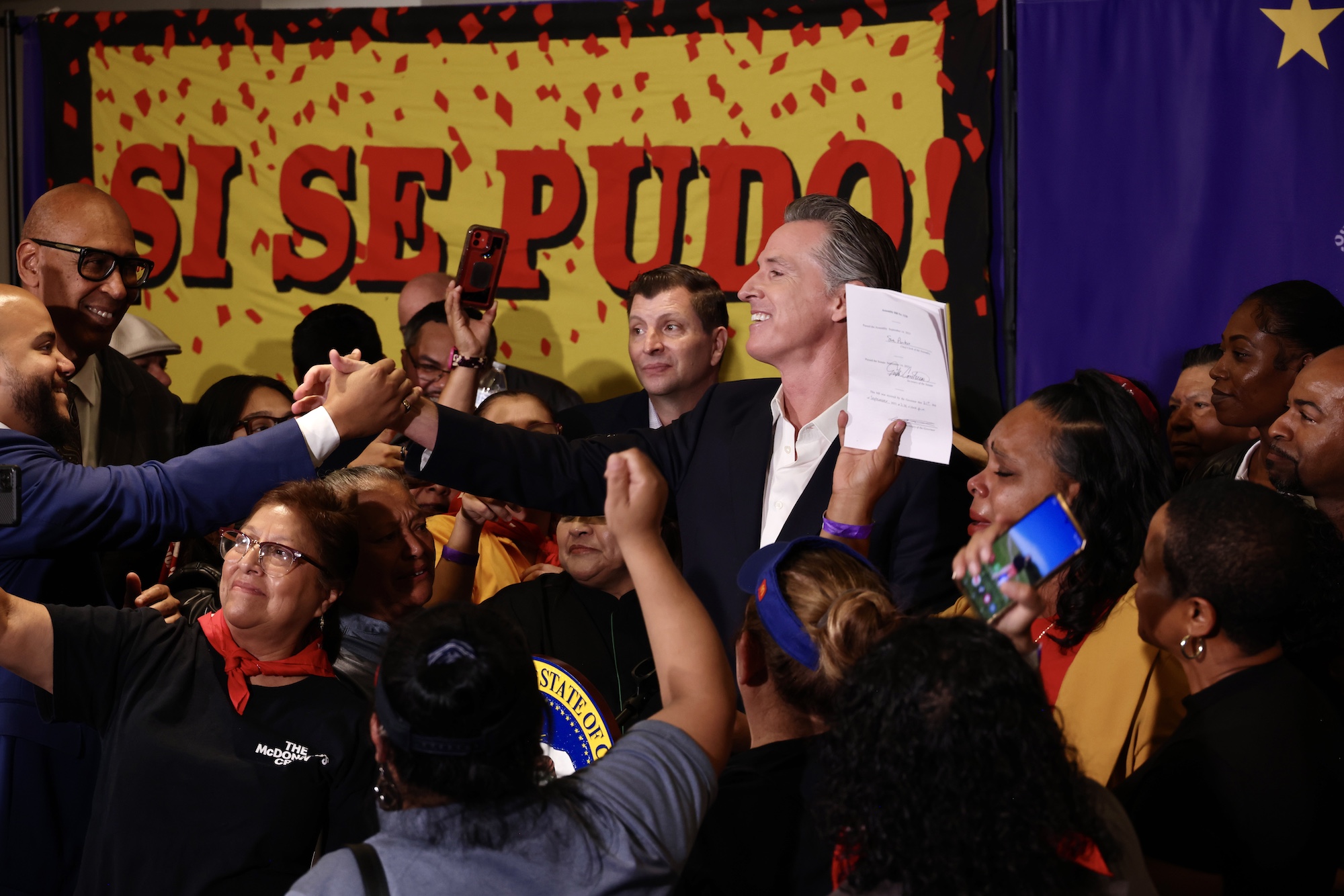
Created under Assembly Bill 1228, which Gov. Gavin Newsom signed in September 2023, the council is intended to establish minimum wages and standards for adequate working conditions and hours for the state’s fast food industry.
The bill also required that “the council shall hold meetings or hearings no less than every six months that are open to the public.”
The council met five times in 2024 at various locations across the state; however, it has not yet met as a full nine-member council in 2025. Meeting records show that the council held meetings in January and February with only half of the members in attendance.
During the last meeting on Feb. 26, the council listened to hours of public comments regarding another wage increase for fast food workers. At the end of the meeting, the council said it would have to select a date and find a location large enough to accommodate its next meeting to continue the discussion on wages and other proposals.
Members suggested April or May as possible months for a full council meeting, but those plans did not materialize. No future meetings have been scheduled as of December 2025.
A few months later, Nick Hardeman quietly vacated his position as the council’s chairman in May after he was appointed by the governor to join the California Housing Finance Agency’s board of directors. Before serving on the Fast Food Council, Hardeman held various positions in the state government.
As of December, the Fast Food Council chairman position remains vacant. The governor is responsible for appointing a new member to fill that role.
Despite its limited activity, the council carries a nearly $1.1 million budget in the 2025–2026 fiscal year, according to the Department of Industrial Relations, which oversees the council.
The funds have been categorized as a “Labor Enforcement and Compliance Fund,” but the budget does not specify beyond that. The 2024–2025 fiscal year did not include this funding, although the council was holding meetings and operating.
A spokesperson for the Department of Industrial Relations told The Epoch Times in an email: “Staff continue their day-to-day work supporting the Council’s mission, which continues without meetings.” The budget funds salaries for staff who work on policy, draft materials, among other tasks, and unspent funds stay in the council’s budget for future needs, according to the statement.
The spokesperson added that the Fast Food Council will resume meetings after a new chairperson is appointed.
State Assemblymember Kate Sanchez wrote in a Dec. 4 post on X: “Californians are scraping to get by, and Sacramento just lit $1.1 MILLION on fire for a fast-food council that accomplished absolutely NOTHING. This isn’t mismanagement: it’s out of touch politicians treating taxpayers like an endless ATM while families suffer.”
Since its creation, the Fast Food Council has received a mix of public support and criticism.
During its early meetings in 2024, unions and many fast food employees praised the new $20-an-hour minimum wage for fast food workers and encouraged councilmembers to consider establishing benefit packages as an industry standard.
Meanwhile, fast food employers and business owners have criticized the move, saying it increases the cost of operating and forces them to raise prices for consumers to balance expenses.
Beyond wages, members of the public raised concerns about alleged backroom deals after bakeries were granted an exemption to the minimum wage laws late in the lawmaking process.
Former state Sen. Melissa Melendez said in a March 2024 episode of “California Insider Opinion” that lawmakers held closed-door negotiations with labor union SEIU regarding AB 1228.
“We have the discovery that everybody who was at the negotiating table with SEIU had to sign non-disclosure agreements,” Melendez said. “That is a binding agreement that says whatever happens at this negotiating table, you may not discuss it with anyone outside.”
AB 1228 was passed along party lines and has been cited by franchises—such as Pizza Hut, Carl’s Jr., Wendy’s, and Del Taco—as the reason for price hikes and employee layoffs.
As for the Fast Food Council, it will continue to have authority over the sector’s wages and working standards in California until Jan. 1, 2029, after which it is slated to disband unless future legislation extends its authorization.
This article has been updated with a response from the California Department of Industrial Relations.