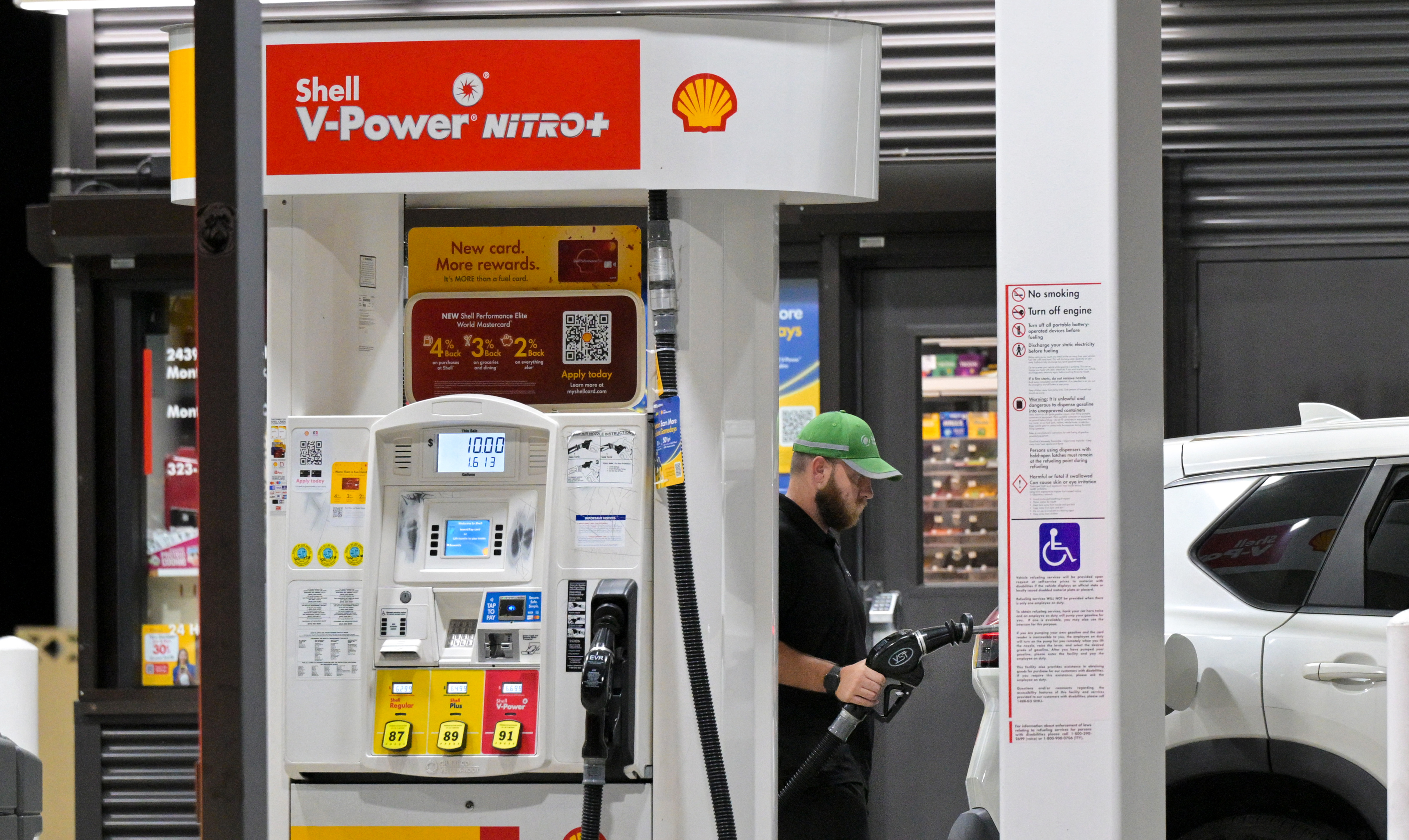

California Gov. Gavin Newsom signed legislation on Saturday that clears the way for the immediate sale of E15 gasoline, amid high energy prices.
Senate Bill 795 removed barriers that had blocked stations in California, the only U.S. state where the fuel could not be sold, from offering the fuel after Assembly Bill 30 authorized E15 last year.
E15 is regular gasoline blended with about 15 percent ethanol, which in the United States is made mostly from corn.
On Monday, U.S. diesel prices topped $6.50 per gallon for the first time, extending a rally fueled by supply disruptions from the war in Iran and Ukrainian strikes on Russian refineries.
The nationwide average was still $6.51 per gallon on Sept. 22, according to AAA, up about 77 percent over the past year.
Diesel powers much of the country’s trucking, freight, farming, and delivery networks, making higher prices a source of pressure on transportation costs across the U.S. economy.
Regular gasoline is $4.47 per gallon on Sept. 22, according to AAA, up 40.5 percent since last year.
The impact has been particularly high in California, which already has some of the highest gasoline prices in the United States.
In a statement on Sunday, Newsom called President Donald Trump’s involvement in the Iran war “costly and reckless” and said it “continues to disrupt global oil markets and drive up costs for families at the pump.”
He cited a Brown University study claiming that since the Iran war started on Feb. 28, Americans have spent more than $110 billion on extra fuel costs, amounting to nearly $900 per U.S. household.
His office also cited a study by the University of California–Berkeley and the U.S. Naval Academy, which claimed that introducing E15 into the market could lower gasoline prices by up to $0.20 per gallon.
California gasoline was already 55 percent more expensive than the rest of the United States before the conflict. The statewide average for a gallon of regular gasoline was $4.63, compared to the national average of $2.98, the AAA said on Feb. 26.
Newsom has a hardline stance on decarbonization, despite the Golden State having a major concentration of recoverable oil and gas—67 million barrels of oil and 56 billion cubic feet of gas—in the Santa Maria Basin Province, according to a 2024 U.S. Geological Survey report.
A major net-zero piece of legislation is AB 1279, which codifies statewide carbon neutrality by 2045 and mandates an 85 percent cut in emissions below 1990 levels.
In 2023, California Attorney General Rob Bonta, backed by Newsom, sued the state’s biggest oil producers for “climate change-related harms,” including extreme drought, flooding, and wildfires. The case is still ongoing.
Six refineries have closed since 2008, with two converting to renewable diesel.
E15, often marketed as Unleaded 88, is used in many states, but was restricted from sale during the summer months due to increased smog concerns, to meet the requirements of the Clean Air Act Amendments of 1990.
On April 28, the Environmental Protection Agency (EPA) issued an emergency fuel waiver allowing the sale of E15 gasoline nationwide during the summer season.
“This is consistent with President Trump’s Executive Order Declaring a National Energy Emergency, directing the EPA to consider issuing emergency waivers to allow for year-round E15 sales,” EPA’s press release at the time read.
Because of its higher ethanol content, E15 is considered less efficient than regular 87-grade, which is a blend containing up to 10 percent ethanol.
Due to air quality and potential damage to vehicles, E15 has been approved by the EPA only for use in flexible-fuel vehicles and conventional vehicles starting in model year 2001.
EPA prohibits the use of E15 in motorcycles, vehicles with heavy-duty engines such as school buses and delivery trucks, off-road vehicles such as boats and snowmobiles, and engines in off-road equipment such as chainsaws and gasoline lawnmowers.
Tom Ozimek, Jane Yang, and Beige Luciano-Adams contributed to this report.