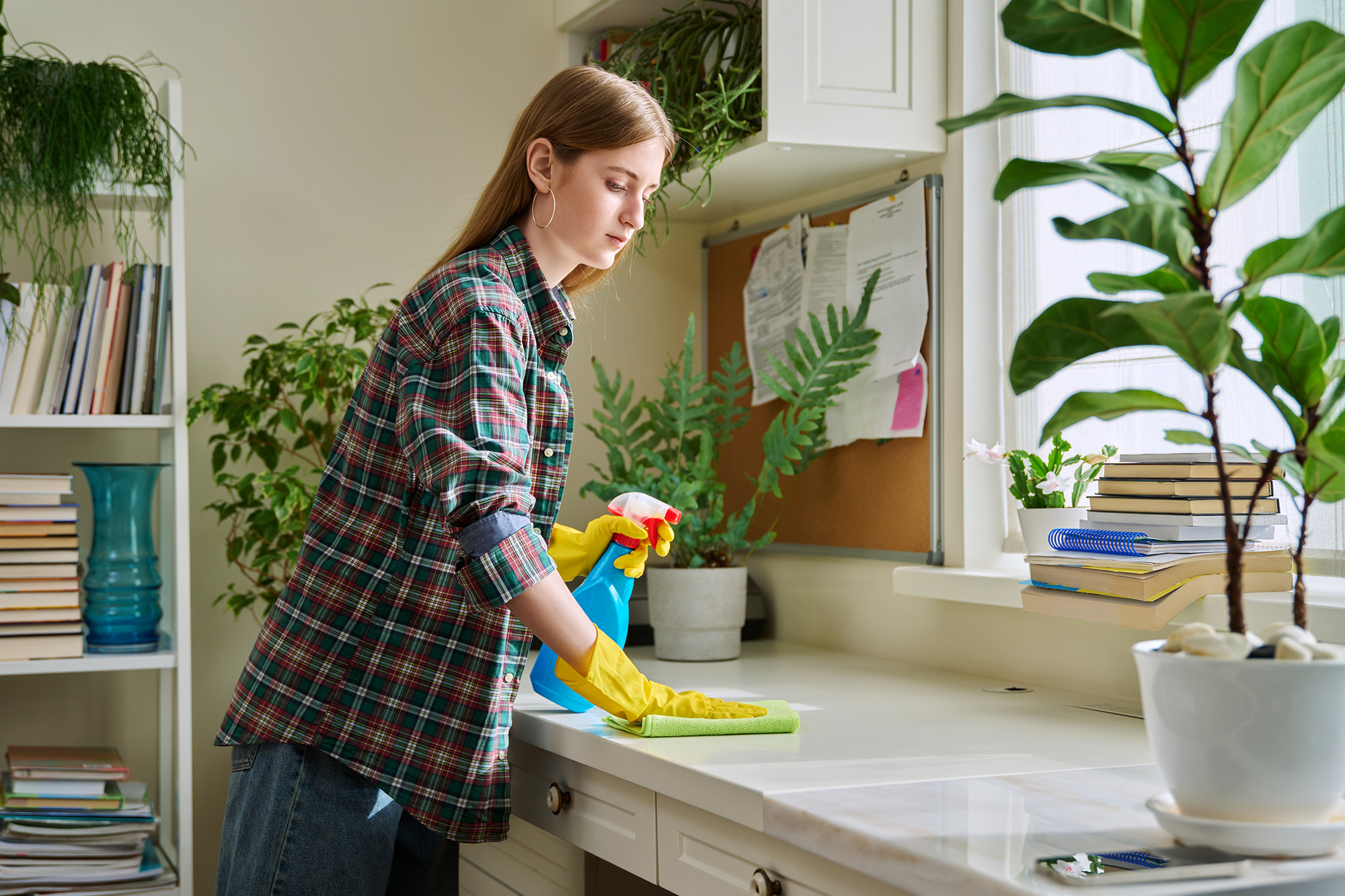
Dusting isn’t everyone’s favorite chore. But if it falls on you, there are ways that you can thoroughly dust and take less time. Here are some tips to make your dusting easier.
Schedule Frequent Dusting
Your dusting schedule may depend on whether you have pets or how sensitive your family is to dust buildup. Typically, once a week is effective at keeping dust at a minimum.
Besides a dusting schedule, change the furnace and HVAC filters every few months. This will help combat house dust and increase the efficiency of the furnace. Use pleated or electrostatic filters, which are more effective at trapping dust, rather than fiberglass filters.
Declutter Your Surfaces Before Dusting
The first step to efficiently dusting is to tidy. You can’t dust effectively if you have books and papers piled on the tables.
Barbara Metzel, owner and lead organizer for Professional Organizing Plus, told The Epoch Times: “Dusting is way easier when your surfaces aren’t covered in stuff. I always tell clients when you cut back on the clutter, cleaning becomes less of a chore.”
Dust From Top to Bottom
Scott Schrader, cleaning expert at
Cottage Care, told The Epoch Times, “First and foremost, always dust from top to bottom. With this, you get to leverage gravity in your favor.”
Schrader said to always start from the ceiling fan or shelf and finish with the baseboards.
“For hard-to-reach areas like blinds and vents, try an old sock over your hand. Spray the sock with a touch of water and vinegar and use it on your hand to clean the dust,” Schrader said.
Use the Right Tools
Some people dust with an old rag, a fluffy duster, or a flat cloth. But if you want to collect all the dust, it’s important to use a microfiber cloth. The tiny fibers are great for picking up dust. It has an electrostatic charge, which turns the cloth into a dust magnet. If you use a regular cloth or rag, it will end up leaving dust and lint behind.
When picking a cloth, ensure it’s general-purpose terry-weave microfiber.
Dusters aren’t the most efficient for large surfaces, since the plume sometimes spreads the dust instead of removing it. But if you use one for collectibles or hard-to-reach areas, move it from one side to the other with a quick stroke. Go outside and give it a shake when you’re finished.
Dig out your art supplies and start dusting. Paintbrushes are great for places that require more finesse, and the soft bristles on these brushes won’t do any damage.
Lampshades or other household fabrics can collect dust. Use tape or a lint brush to remove it.
If your vacuum has a HEPA filter and is strong enough to suck dust, it can be a great tool for dusting. Use it on blinds, bookshelves, or any other hard-to-reach areas.
Keyboards and electronics in general have traps that collect dust and sometimes crumbs. Use canned air to blast dust out of your electronics, making sure to hold the can upright while spraying. Then, use the vacuum to remove all the debris.
Fold Your Microfiber Cloth Correctly
Use the eight-sided folding trick to extend your microfiber cloth’s use. Fold your cloth into quarters. This will divide your cloth into eight different cleaning surfaces.
The result is that you make the most use of your cleaning cloth and will have less laundry. A microfiber cloth can hold eight times its weight in water, according to Clean My Space, and even more in dust. The eight-sided folding trick gives you more bang for the wipe.
Use a Maintained Vacuum
Vacuuming and dusting are related. A poorly maintained or malfunctioning vacuum means extra work on your part. You can’t remove all the dust if the vacuum isn’t working properly.
To maintain the vacuum, empty the bin or bag after each cleaning. Sometimes, especially if you have pets, you may need to empty it during the cleaning job.
Filters must be cleaned and maintained routinely. Always make sure any cleanable filters are sealed properly when you put them back together.
Vacuum Hardwood Floors
Many people use a broom instead of a vacuum on hardwood floors. But although they may look dust-free, there are still particles in the air and in the floor cracks. The broom kicks up dust that resettles on your surfaces. This requires you to clean again. A vacuum can eliminate these particles.
When sweeping or using a microfiber pad for a quick clean, you’re not necessarily removing all the dust. Use a vacuum with a good-quality filter to remove dust efficiently.
Know Where Dust Lingers
Books that are displayed next to each other on a bookcase are a hub for dust. Make it a point to use a microfiber cloth on them. Start from the spine and work toward the front covers, being sure to clean the tops of the books where dust usually settles.
Window treatments trap dust particles from the air. Use your vacuum dusting or upholstery attachment for curtains, or reach for the lint brush or tape.
Vents in household appliances collect dust because of air circulation. Always vacuum hotspots such as the spaces under furniture and baseboards.