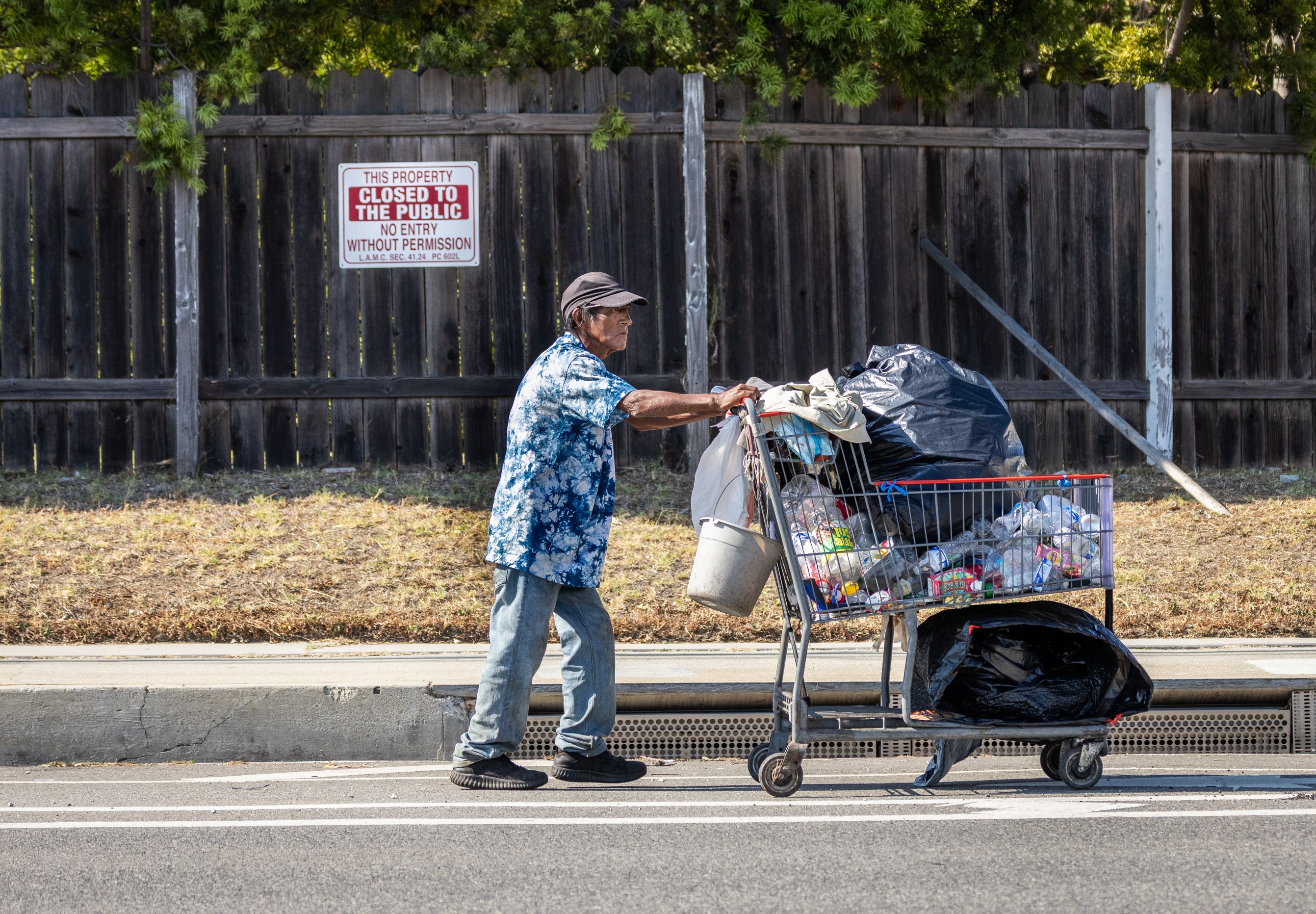

California tied Louisiana for the nation’s highest poverty rate in 2024, with 7 million people—or 17.7 percent of the state’s population—living below adjusted income thresholds.
The numbers come from a report released by the California Budget and Policy Center, a left-leaning think tank based in Sacramento. The organization analyzed U.S. Census Bureau data using a supplemental measure that accounts for local costs of living, family size, and medical expenses.
The state’s rate held steady from the previous year but remained well above the national average of about 13 percent. Louisiana posted the same 17.7 percent figure, although the two states face different economic pressures. California deals with high urban housing prices, while Louisiana contends with rural job shortages.
The report links the high numbers to the end of COVID-19 pandemic-era aid. In 2021, expanded child tax credits, increased food assistance, and eviction protections had cut California’s rate to 11 percent, a record low. As those programs expired, poverty levels rose sharply across the country—the largest increase in more than 50 years, according to the report.
Housing stands out as a key factor in California. Renters face a 27.1 percent poverty rate, compared with 11.1 percent for homeowners. In many areas, rents take up more than one-third of income for low earners. The median rent exceeds $2,000 per month in major cities, making it hard for families to cover basics, according to real estate marketplace company Zillow.
“Some of them leave, some of them double up, some of them sort of live on the margins,” said Joel Kotkin, fellow in urban studies at Chapman University in Orange.
“Obviously, in the worst case, they’re homeless,” Kotkin told The Epoch Times on Sept. 16. “They just accept a life where, you know, basically, their quality of life will be dependent on the level of government services.”
Certain groups are hit harder. Children and seniors have rates higher than 20 percent. Black and Latino residents see rates about 10 percentage points higher than those of white residents.
High housing costs, wage gaps, and limited affordable child care drive poverty, according to experts.
There are also other things that are causing it, according to Kotkin.
“The high taxes drive out high-income earners, it drives out people in businesses,” he said, noting that for developers, regulations are another factor. “It’s not worth the pain, basically.”
Poverty varies by region. Coastal cities such as Los Angeles and San Francisco struggle with high costs, while inland areas such as the Central Valley face limited job options in farming and trucking. Despite job growth in tech and entertainment, many positions do not pay enough to meet living expenses, according to statistics by career website Dice.
What that means, according to Kotkin, is that people are not moving to California from other states as much.
“I don’t think you’re seeing the guy or the family who came from Ohio to California that really was critical to the state’s development,” Kotkin said. “That person isn’t coming here anymore, and certainly they’re not coming here when they have kids.”
The total of 7 million people in poverty equals the population of several smaller states combined.
Nationwide, other states with high poverty rates include New Mexico and Oregon. Low-rate states such as New Hampshire sit below 8 percent. The report warns that without new policies, California’s numbers could worsen, especially with potential federal cuts to health and nutrition programs.
State officials have passed laws to speed up affordable housing builds, but Kotkin said the state’s policies are what have made the problem worse.
“It gets worse, and the production gets lower because it’s slated for things that people fundamentally don’t want and can’t afford,” he said of the state’s “aggressive” housing policies.