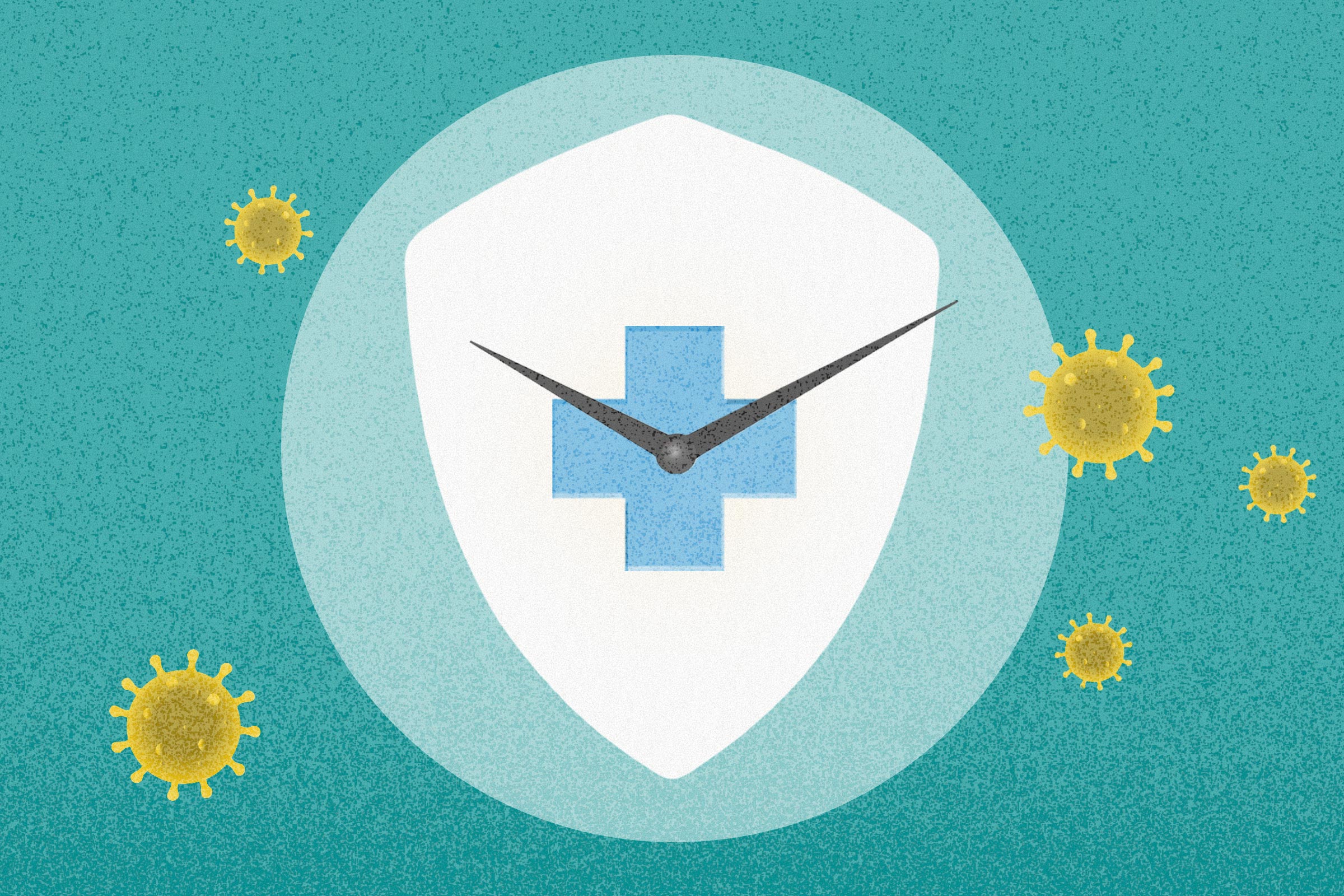
Your immune cells don’t keep a steady watch. Like shift workers on a biological assembly line, they clock in and out throughout the day—surging during morning hours, retreating at night, and following an internal rhythm that determines how well your body fights everything from the flu to cancer.
A growing number of researchers believe that understanding circadian rhythms could change modern medicine.
The Body’s Hidden Schedule
Interest in how circadian rhythms shape the immune system dates back more than 50 years, to when researchers first
noticed that white blood cell levels—cells that help fight infection—rise and fall throughout the day in healthy people. They also observed that animals respond differently to toxins depending on the time of exposure. The immune system, therefore, isn’t in constant operation, but follows a daily rhythm.
“Virtually all of our cells have circadian clocks and daily rhythms,” Karyn Esser, professor and chair of the Department of Physiology and Aging at the University of Florida, told The Epoch Times. “We are just beginning to learn and recognize how to support these rhythms to promote health.”
Two parts of the nervous system—the sympathetic and parasympathetic systems—work together to control the daily movement of immune cells. At night, calming signals slow the release of immune cells from the bone marrow. During the day, activating signals become stronger, encouraging immune cells to circulate throughout the body. This back-and-forth mechanism creates a daily rhythm in the movement of immune cells.
Even when immune cells are removed from the body and grown in the lab, they continue to follow near-24-hour cycles. These internal clocks control when cells move, how they produce energy, and how strongly they respond to threats.
Understanding these rhythms opens the door to better-timed immune therapies and vaccines that work with the body’s natural clock, potentially improving infection control and leading to even better outcomes in organ transplantation.
In rheumatoid arthritis, for instance, morning stiffness is worse because inflammatory signals peak in the early hours. Immune responses against cancer are stronger in the morning to early afternoon, aligning with the immune system’s most active phase of the circadian cycle. Therefore, treatments could be timed accordingly. It has also been shown that older adults vaccinated in the morning produce a stronger antibody response than those vaccinated later in the day.
Optimizing Circadian Rhythm
How can we support or optimize circadian rhythms to keep our immunity in balance?
One of the most powerful tools is sleep, a key regulator of both circadian rhythm and immune health.
“I talk about ‘circadian hygiene’—keeping a consistent routine with sleep, exercise, and meals at the same time every day, seven days a week—in my graduate student classes and in the community,” Michelle Gumz, an associate professor of medicine at the University of Florida, told The Epoch Times.
Getting regular, consistent sleep supports effective immune responses, while sleep deprivation can increase inflammation and raise the risk of disease. Early, deep sleep in particular plays a critical role by lowering stress hormones and supporting immune signaling that helps the body fight infections. This process is tightly linked to the circadian rhythm, which times the release of immune cells and inflammatory signals to follow a daily cycle of repair and defense. When sleep is disrupted, inflammatory markers rise, and the immune system becomes less efficient at maintaining homeostasis.
Having meals at predictable times helps the body organize immune activity. Being physically active during daylight hours also reinforces daily signals, helping the immune system stay alert when it’s most needed.
What’s Next
Researchers see potential for circadian medicine to improve outcomes in infection control, organ transplantation, and chronic disease management. Monitoring circadian-related markers may even help predict disease risk and assess immune health in the future.
“It is important for clinicians to have some understanding of circadian biology and that the circadian clock mechanism modulates our cell, tissue, and system homeostasis in virtually all cells in the body,” Esser said.
The idea of timing drug treatments—chronotherapy—is being explored in several areas of medicine. Statins, for example, are often taken at night, when the liver produces the most cholesterol. Cancer medications are also being timed to improve patient tolerance and maximize effectiveness, according to Esser.
“While more research is needed to understand differences across ages, sexes, and backgrounds, aligning our daily routines with the immune system’s natural rhythms gives a simple, practical way to support immunity and improve how our body responds to infections, vaccines, and inflammation,” she said.