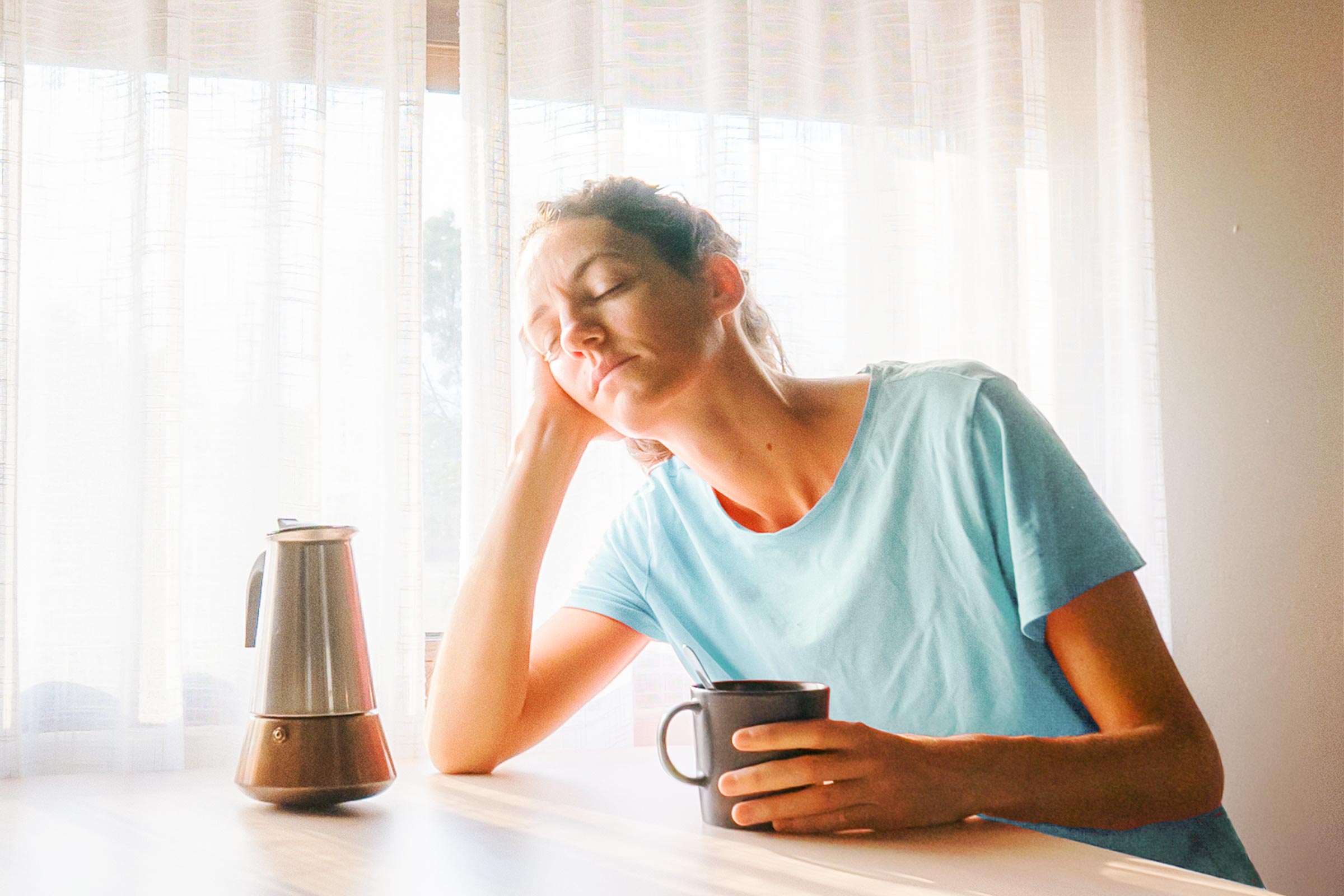
For years, Patty Schmidt believed she was doing everything right. She went to bed by 10 p.m., woke up at 6 a.m., avoided coffee after lunch, and stayed off screens before bed. Yet most mornings she woke up exhausted.
“I thought I was disciplined about sleep, but my body told a different story,” Schmidt said. “I would wake up groggy, push through the day, and crash again by midafternoon.”
Her experience points to a reality millions face: Meeting the seven-to-nine-hour recommendation for sleep doesn’t guarantee you will feel rested. Recent research shows the real issue is not only the length of sleep, but its quality, the body’s internal processes during the night, and whether you’re sleeping at the correct biological time.
When Hours Don’t Equal Rest
For much of the past century, people were told that feeling tired just meant they weren’t getting enough sleep. The advice was simple: Go to bed earlier. However, that assumption began to shift as doctors noticed patients who slept a full night yet woke without feeling rested. The culprit wasn’t duration, it was disruption.
“Quality is more important than quantity,” Daniella Marchetti, a clinical psychologist and board-certified behavioral sleep medicine specialist, told The Epoch Times. “Sleep may not feel restorative if you are not getting enough deep sleep or REM [rapid eye movement], or if your sleep is fragmented. Sometimes you remember waking up. Other times, there are micro-arousals between cycles that you do not recall. Those can be just as disruptive.”
Everyone has a slightly different sleep need, and what matters most is how those hours are distributed across the stages of sleep. “Deep sleep refers to the breakdown of your sleep architecture rather than the number of hours you get,” Marchetti said.
That disconnect can take a toll. A meta-analysis in BMC Public Health found that poor sleep quality, even with normal sleep duration, was linked to higher rates of anxiety, depression, and cognitive decline.
What You Can Do
If you have tried sleep hygiene strategies—such as keeping a consistent bed and wake time, limiting caffeine, and reducing screen use before bed—with little benefit, Marchetti recommends seeking professional help.
“If you have trouble falling asleep, staying asleep, or waking earlier than desired three times a week for three months or longer, consider cognitive behavioral therapy for insomnia. And if symptoms like loud snoring, waking out of breath, or choking at night are present, a sleep study is necessary to get proper diagnosis and treatment.”
When Your Internal Clock Is out of Sync
Timing matters as much as deep sleep. It requires sleeping at the right biological time.
The circadian rhythm governs hormone release, alertness, and body temperature. When the internal clock falls out of alignment with your daily schedule, even adequate hours of sleep can feel insufficient.
In controlled trials, when a person’s internal clock was out of sync with their daily schedule, people reported foggy focus, slower thinking, and heavier daytime fatigue, according to a 2018 study published in Scientific Reports.
“If a person notices a pattern of significantly delayed sleep and wake times, they might have delayed sleep wake phase disorder,” Alexandra Wharton, a circadian rhythm sleep disorder patient representative on the American Academy of Sleep Medicine’s patient advocacy roundtable, told The Epoch Times.
“Circadian mismatch can be challenging, especially when it conflicts with work demands,” Marchetti said. “If someone presents with issues related to circadian misalignment, I recommend working one-on-one with a specialist.”
Dr. Clay Lowder, a family physician in South Carolina who has asked every patient about their sleep for more than three decades, emphasizes that light and physical movement are foundational cues the body depends on to regulate sleep. Daily exercise is known to improve the quality and duration of sleep, including increasing the most restorative phase of non-REM sleep.
“We had to do that 100 years ago, as we had to have vigorous exercise to survive. We need to go back to that. Put down your screens, and get to just walking or lifting weights. Sleep starts with good exercise during the day. You can’t wear your mind out all day, and not wear your body out.”
What to Do
Anchor your circadian rhythm by getting morning light exposure within an hour of waking, keeping a steady rise time even on weekends. If your schedule has drifted too late, make gradual shifts in bedtime—15 minutes earlier every few days rather than sudden changes.
People who suspect they may have a circadian rhythm disorder should keep a two-week sleep log and take it to a sleep specialist, along with information about their own and their family’s medical history, according to Wharton, who recently spoke at the National Institutes of Health’s Sleep Disorders Research Advisory Board meeting about innovative ways to diagnose circadian rhythm disorder.
When Habits Quietly Sabotage Rest
While undiagnosed sleep disorders play a role, everyday habits can quietly chip away at how restorative sleep feels. Lowder often finds that patients sabotage their nights without realizing it.
“I always recommend not eating a couple hours before bedtime, since digestion and sleep don’t go together. Avoid stimulants in the evening, which include caffeine, certain medications, and screen time if you really want to rest well,” he said. “Exercise during the day helps, but avoid intense workouts too close to bed.”
Lowder noted the mental side of fatigue. “Most people blame themselves when what they need is evaluation. Fatigue is a signal,” he told The Epoch Times.
What to Do
Build an evening wind-down routine. Cut off caffeine after midday, finish eating at least two hours before bed, and trade scrolling online for a book or
meditation. If you wake during the night, Lowder suggests not panicking. Read something calming, use breathing techniques, and remember that a short wake-up is normal. One bathroom trip can be fine. More than that deserves a closer look.
When Sleep Reveals Deeper Issues
Sleep is not separate from the rest of the body. How we use energy during the day and how our internal systems align at night shape how rested we feel.
“Sleep is complex. To get good, restorative sleep, people need a certain amount of deep sleep, and a certain amount of REM sleep, as well as intermediate stages,” said Peter Mansbach, president and cofounder of the Circadian Sleep Disorders Network.
When those rhythms are off, the body can spend the night working instead of repairing. Research suggests that long sleep paired with fatigue may be a warning sign, not a marker of restoration. A meta-analysis published in The Journals of Gerontology found higher dementia risk among people who reported long but unrefreshing sleep, indicating deeper metabolic strain.
Hidden issues can show up in ways many people notice but don’t always connect to sleep quality. A review in the World Journal of Men’s Health linked frequent nighttime urination, often tied to hormonal or kidney signaling, to fragmented rest and higher long-term mortality.
Even with sleep apnea treated using continuous positive airway pressure—the standard therapy that employs a machine to keep airways open during sleep—a 2024 study in Sleep Medicine found that many patients still struggled with daytime fatigue. This suggests airway treatment alone cannot reset the deeper physiological imbalances that leave people feeling drained.
Taken together, these findings suggest that unrefreshing sleep often reflects underlying metabolic or systemic imbalances that deserve attention, not just more hours in bed.
What to Do
If fatigue lingers despite healthy sleep habits, look beyond the usual suspects. Keep track of patterns such as frequent night waking, bathroom trips, or ongoing tiredness even after treating a known condition. Bring the details to your doctor so that deeper issues, from kidney function to persistent sleep apnea, can be properly evaluated.
What to Watch for at Night
Doctors and sleep specialists suggest paying attention to the following patterns because they can reveal what is really interfering with rest:
- Fragmented Sleep: Waking several times a night or starting the day restless
- Breathing Disruptions: Snoring, gasping, or waking with headaches could suggest undiagnosed sleep apnea
- Circadian Misalignment: Feeling sharpest late at night but sluggish in the morning may mean the circadian clock is out of sync
- Persistent Grogginess: Sleeping long hours yet staying groggy all day may reflect metabolic or neurological issues
- Nocturia: Frequent trips to the bathroom at night
Persistent sleepiness that doesn’t improve with good sleep habits can sometimes signal a deeper issue. Wharton added that consistently struggling to fall asleep until the early morning hours may be a circadian rhythm disorder that needs evaluation by a sleep specialist.
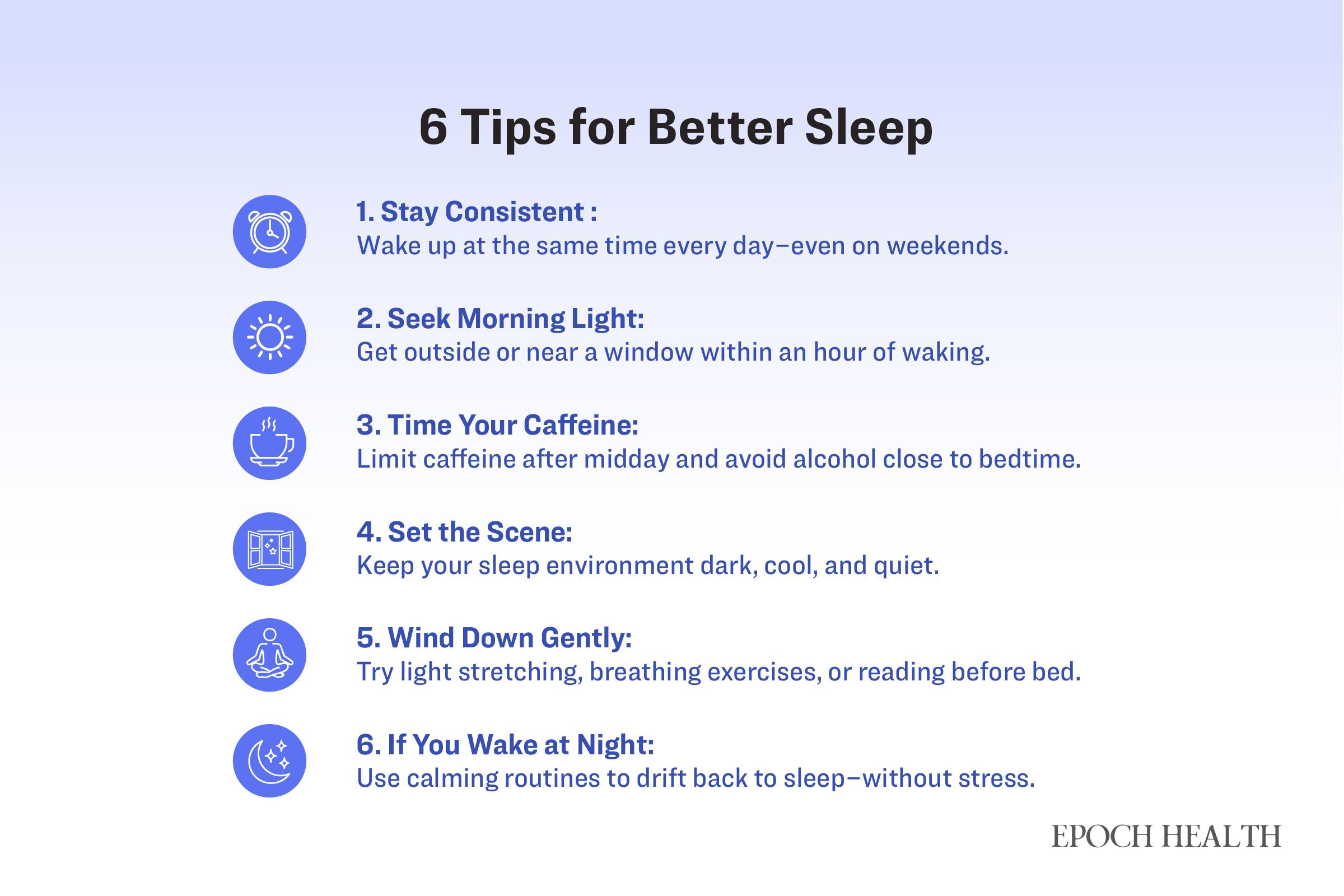
Practical Steps You Can Try Now
Small changes do not replace medical care, but they can support it:
(Illustration by The Epoch Times, Shutterstock)
What Fatigue Might Be Trying to Tell You
While studies highlight broad patterns, the effects of restless sleep show up in everyday lives, too. For Schmidt, progress came when she stopped focusing only on hours and began addressing different factors. She added 10 minutes of morning light, built in gentle stretching before bed, and committed to a consistent wake time, even on weekends.
Within weeks, her nights felt steadier and her mornings a little bit easier.
“The difference was almost immediate,” she said. “I finally woke up without needing three cups of coffee to feel human. I felt hope again. For the first time in years, I realized better sleep was possible.”
Doctors emphasize that exhaustion is not a measure of willpower. “Sleepiness is a symptom, not a character flaw,” Marchetti said. “Treat it like feedback. That approach can prevent larger health issues later.”
Fatigue signals something deeper that may need attention. By looking beyond the clock, finding a steadier daily rhythm, and addressing underlying health issues, tired mornings don’t have to be the norm. Better sleep is possible—even if the answers aren’t what you expected.