

What Research Shows About Neck Pain Relief
A systematic review and meta-analysis published in May found that spinal manipulative therapy, a common chiropractic technique that uses quick, precise movements to restore normal joint motion, can significantly reduce pain, improve neck movement, and ease day-to-day tasks for people with acute nonspecific neck pain. The review analyzed eight randomized controlled trials involving 965 participants, offering one of the clearest looks yet at how effective spinal manipulative therapy can be for recent-onset neck pain.

Why Timing Matters
If your neck pain began recently, chiropractic care has a strong chance of helping quickly.
Do Different Techniques Make a Difference?
Chiropractic adjustments come in a few different styles. Some involve a quick and precise movement, while others are slower and gentler. Another systematic review and meta-analysis published in January found that people tend to experience similar improvements regardless of which method is used.
Common Adjustment Styles You May Encounter
Chiropractors adjust the neck in several ways depending on the cause of stiffness and your comfort level. Here are some of the most common styles you might experience:
- Quick Manual: A small, controlled movement that restores motion, sometimes with that familiar popping sound. It is often used when the neck is stiff in one specific spot.
- Gentle Stretching: Slow and smooth movements that ease into better motion. A good option for people worried about sudden movement.
- Tool-Assisted: A tiny, precise tap delivered by a handheld device such as an Activator to help the joint move. This can be useful for those who prefer a lighter approach or have medical conditions that limit twisting.
“Patients come in with stiff, painful necks, and these treatments are consistently effective,” William J. Lauretti, a chiropractic professor at Northeast College of Health Sciences, told The Epoch Times. “It’s exciting to see the research catching up with what we already observe in the clinic.”
What’s Actually Improving After an Adjustment?
A separate systematic review published in July measured neck movement before and after typical chiropractic adjustments and saw clear changes in how the neck moved and felt. Most people showed immediate gains in neck rotation and flexibility, often within minutes of the adjustment.
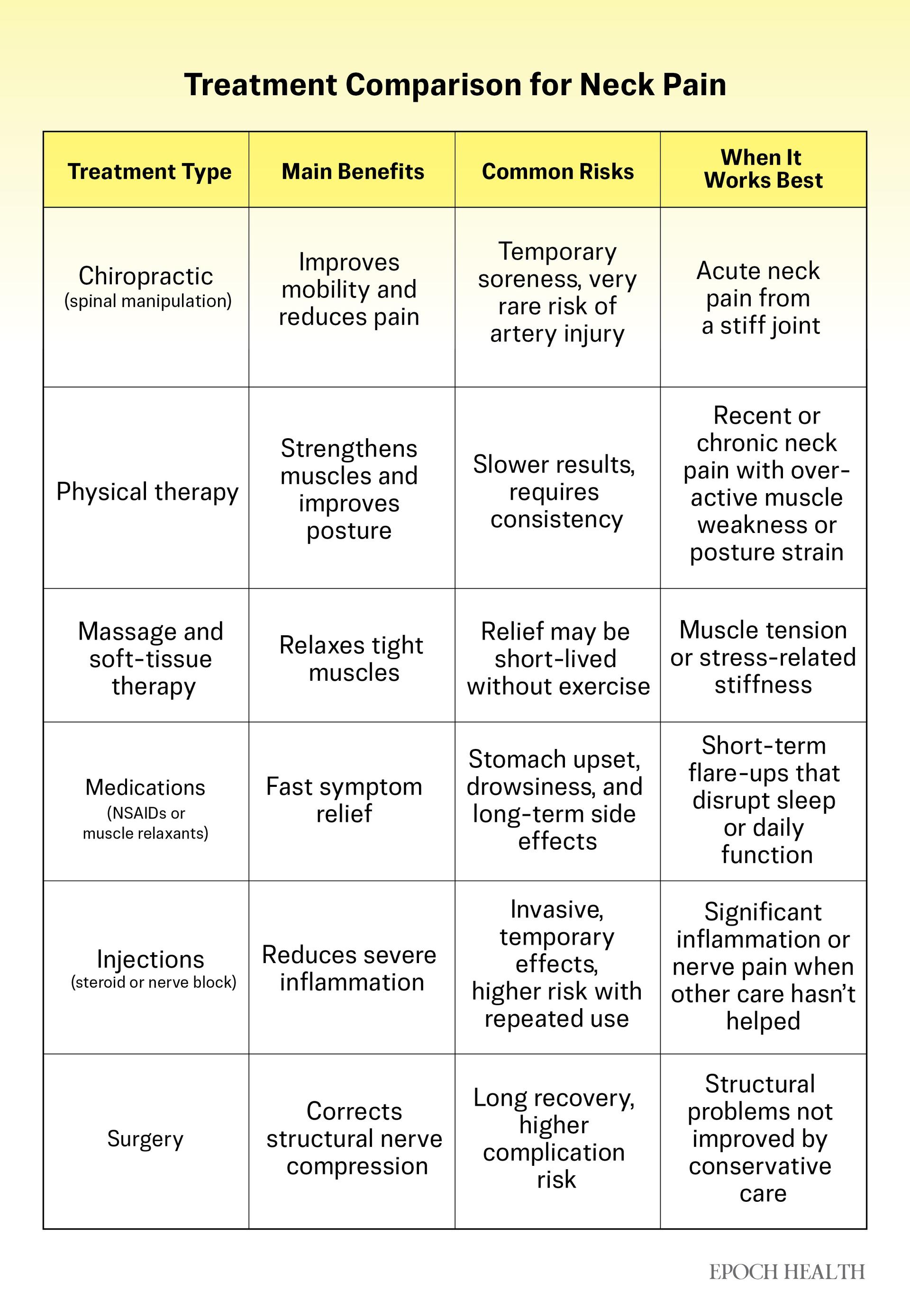
How Chiropractic Care Stacks Up Against Other Treatments
Chiropractic care isn’t the only nondrug approach for neck pain. Treatments such as physical therapy, massage, and guided stretching can also help ease stiffness and improve mobility. Research has found that chiropractic adjustments work about as well as these other hands-on methods, with the most significant improvements seen when manipulation was combined with strengthening exercises.
Understanding the Risks
No medical treatment is risk-free, and spinal manipulation is no exception. The May meta-analysis reported mostly mild side effects, usually limited to temporary soreness or a headache lasting less than a day.
What Patients Should Ask
If you’re considering chiropractic care for neck pain, experts recommend asking a few simple questions before your first adjustment:
- Is your pain recent or chronic? Manipulation works best for new, uncomplicated neck pain.
- What will you do besides adjustments? Ask about stretching, posture tips, and exercises you can do at home.
- How will you check for risks? Your provider should take a full health history and explain any concerns.
- What should you expect afterward? Mild soreness is common; severe or persistent symptoms are not.
When treatment is tailored to the person and communication is clear, most people tolerate adjustments well and notice improvement within a few visits.
What You Do Between Visits Matters
Hands-on care can help restore motion, but what you do during the rest of your week plays a big role in how well those gains stick. Research shows that simple strengthening and mobility exercises for the upper back, neck, and shoulder blade muscles can reduce stiffness and help prevent flare-ups. These movements support the areas that work hardest to keep your neck stable throughout the day.
Simple Exercises That Strengthen Your Neck
Try these gentle options recommended in clinical exercise research:
- Sit tall and draw your head straight back, creating a small “double chin.”
- Hold for five to 10 seconds and repeat eight to 12 times.
- This helps counter forward-head posture that strains the base of the skull.
Shoulder Blade Squeeze
- Pull shoulder blades down and back as if you are sliding them into a back pocket.
- Hold for five seconds and repeat 10 to 15 times.
- This improves upper back support so the neck doesn’t overwork.
Upper Back Extension Over a Chair
- Place your hands behind your head and gently arch your upper back over the top of a chair without dropping your head backward.
- Hold 10 to 15 seconds and repeat two to three times.
- This eases rounded shoulders that can contribute to neck tension.
If anything feels sharp or alarming, stop and check with your provider.
Everyday Habits That Support Healing
What you do throughout the day matters as much as exercise. Small posture and movement habits can reduce strain on the cervical spine and surrounding muscles.
- Keep screens at eye level to avoid prolonged forward-head posture.
- Take short movement breaks to prevent stiffness in the neck and shoulders.
- Apply light heat before stretching to loosen tight neck muscles.
- Relax your jaw and avoid clenching, which creates tension through the head and neck.
- Practice slow belly breathing to help reduce neck tension driven by stress.
These actions help reinforce the message your body receives during treatment. Strengthening and posture-friendly movement help your nervous system stop guarding the neck. Over time, those gains can mean fewer flare-ups and more confidence in everyday motion.
Takeaway
For recent, nonspecific neck pain, chiropractic spinal manipulation is a safe, evidence-supported option with a good chance of helping restore comfortable movement. If your pain has lasted longer, combining adjustments with exercise and posture changes offers the best plan for improvement. With appropriate screening and clear communication, many people with recent neck pain improve within the first few weeks and return to daily life with less pain and discomfort.