
Commentary
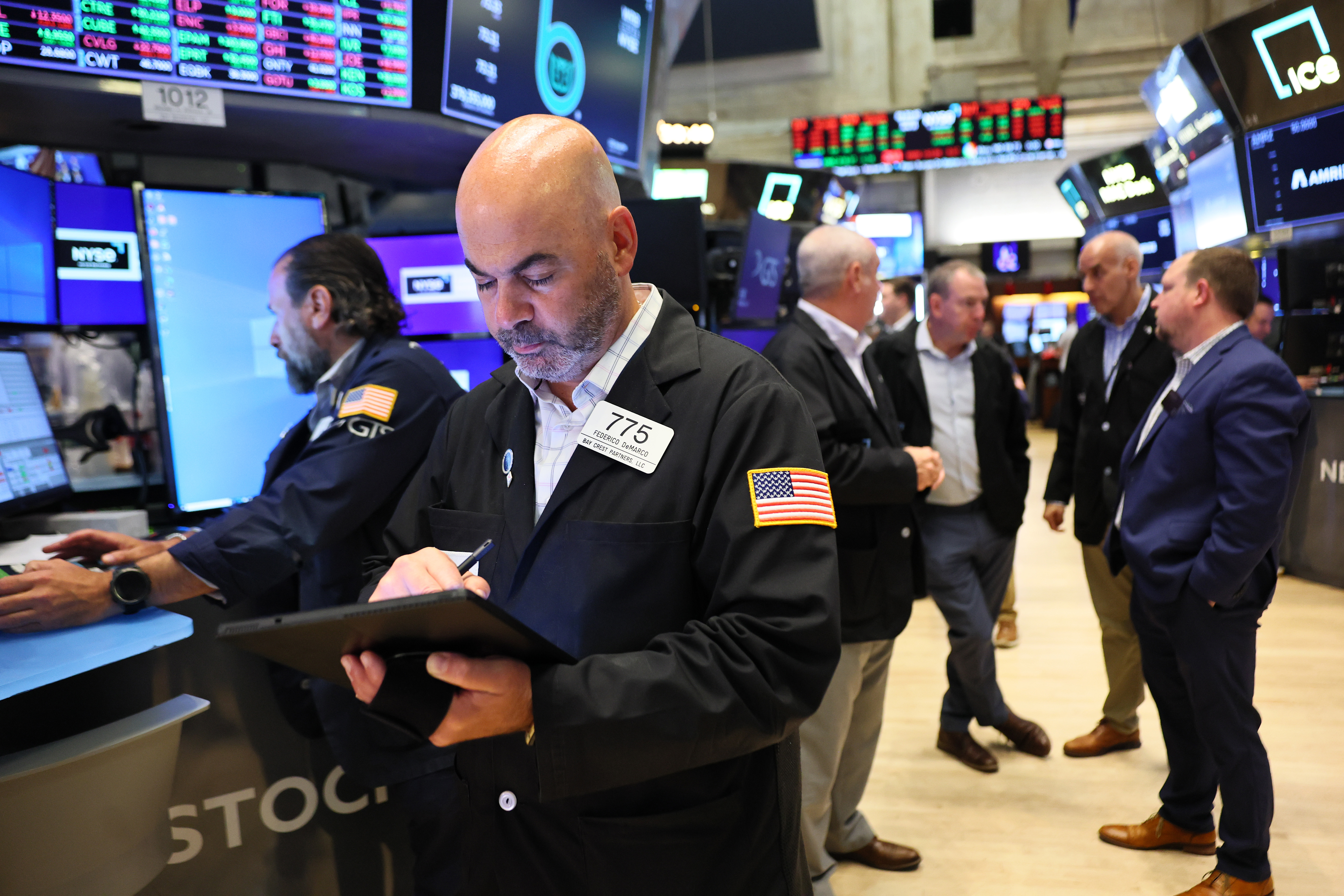
With the first half of 2025 in the books, it must come as a surprise to many of the bears that the S&P 500 and NASDAQ are each up 5% year-to-date (as of last Friday), and both indexes hit new highs also as of last Friday.
Part of last week’s market surge came after a ceasefire between Iran and Israel was announced on Tuesday, causing President Trump to label the recent conflict “The 12-Day War,” a reference to the 6-Day War of June 1967. As a result of this ceasefire, the price of oil quickly fell from $78 last Monday to $64 on Tuesday. Oil has stayed around $65 since then, as Iran’s threat to close the Strait of Hormuz is no longer being taken seriously. Although Iran still lobbed some missiles at Israel after the announcement, and Israel may do the same, this ceasefire is, at the very least, a huge reduction in the level of hostilities.
After the U.S. entered the conflict with a “bunker buster” bombing raid on June 21st, Iran announced on Monday that their Revolutionary Guard Corps fired six missiles at the U.S. base in Qatar. Another missile was apparently fired at another U.S. base in Iraq, but Iran gave the Trump Administration notice of these missile launches first, so President Trump thanked Iran on Truth Social for giving us advance notice.
I realize that the world is still full of dangers – and wars can promote indecision and fears of retaliatory strikes on U.S. embassies and military bases, fueling uncertainty – but we must remember that the U.S. is fortunate to be separated by two big oceans, so we do not have to fear retaliatory strikes as much as Israel.
Here are the most important developments recently and what they mean:
- Anytime the stock market makes a new high, profit taking ensues. Right now, it appears that the stock market is rotating. As an example, the quantum computing stocks that had been so hot a few weeks ago have settled down, but this in turn allowed the semiconductor industry to lead the way. I expect profit taking to persist in leading stocks like Palantir Technologies (PLTR), but as long as money is being reshuffled, there is nothing to worry about, since money is not leaving the stock market. The traditional pattern is that the stock market tends to rally into the 4th of July weekend, and some profit taking will be postponed until after the holiday.
- President Trump is going to get his “big beautiful bill” passed this week, which should boost consumer confidence, since it will put more money into consumers’ hands. Furthermore, President Trump has succeeded in making Fed Chairman Jerome Powell a “lame duck,” since other Federal Open Market Committee (FOMC) members have been speaking out and hinting at a rate cut in late June at the next FOMC meeting.
- July 9th is the tariff deadline for many countries, so it will be interesting how many will reduce their reciprocal tariffs to get a better trade deal with the U.S. I remain in the camp that when all the dust settles, that there will be freer trade will less tariffs, since many countries cannot fight with the U.S. As an example, Canada rescinded its Digital Services Tax to avoid any delay negotiating tariffs with the U.S. Specifically, President Trump abruptly ended all trade negotiations over Canada’s Digital Services Tax, so Canada was forced to cancel it to continue negotiations. The U.S. and Canada are striving to wrap up their trade negotiations by July 27th.
- Effective this week, the tariff on British vehicles is 10% (for a 100,000 annual quota), down from the 25% rate that the Trump Administration proposed. The 25% tariffs disrupted the flow of imported vehicles, so at least for British vehicles, the ports are expected to get busier. The same thing is expected to happen to vehicles from Germany, Japan and South Korea as trade deals are finalized. I would add that I am grateful that Porsche did not impose any special tariff on a car that I ordered, which arrived last week. However, most Porsche shipments (other than custom orders) are on hold until the EU finalizes tariffs on vehicles.
- China’s National Bureau of Statistics announced that its purchasing managers index (PMI) rose to 49.7 in June, up from 49.5 in May. This represents the third month in a row that the PMI has been below 50, which signals a contraction. One of the green shoots in the PMI report was that new export orders rose to 47.7 in June and is now significantly higher than the April low. Although the PMI readings are signaling a contraction, as trade with the U.S. and the rest of the world improves, China’s PMI is expected to improve. In the meantime, China’s manufacturing sector continues to sputter as deflationary forces continue to reduce output.
- The Institute of Supply Management (ISM) on Tuesday announced that its manufacturing PMI rose to 49 in June, up from 48.5 in May. This is the fourth straight month that the ISM manufacturing index has been below 50, which signals a contraction. One green shoot is that the production component rose to 50.3 in June, up from 45.4 in May. The new orders index, backlog and employment components all declined in June compared to May. So, there is hope on the manufacturing front, especially if the Fed cuts key interest rates in the upcoming months and stimulates demand in the automotive and housing sectors.
- There has been a lot of attention on how the U.S. dollar has declined over 10% this year compared to other major currencies. First, President Trump has purposely weakened the U.S. dollar with his erratic behavior, which is exactly what he wanted to achieve for the U.S. dollar. Second, when all the dust settles and the reciprocal tariffs are finalized, I suspect the U.S. dollar will get its “mojo” back since the U.S. will be the last country to cut key interest rates, plus will have higher rates than Britain, China, the European Union, Japan and other major countries. Ironically, the ultimate impact of the Trump tariffs is that trade barriers are expected to fall, and freer trade is expected to be the net result, so the international concern over tariffs and the U.S. dollar is largely unwarranted.
Looking forward, the uncertainty surrounding the stock market is disappearing fast. Not only is the S&P 500 forecasted to post another round of double-digit earnings growth on a capitalization weighted basis, but the Fed is now also expected to cut key interest rates to provide a “turbo boost.”
*Views expressed in this article are opinions of the author and do not necessarily reflect the views of The Epoch Times.