When you hear about a Metropolitan Opera star, that title evokes someone far away, snobby, and foreign. Such a singer must be European-born or at least from New York, right? Well, it turns out that opera singers can come from just as varied a background as anyone else. Although many of the biggest names in opera still come from historically musical locales like Vienna or Paris, just as many were born in average American towns.
Many American opera companies proudly feature these homegrown talents. Ironically, some of these stars are now too busy performing in London, Sweden, or Brazil to grace the stages of their home state’s companies.
This season, San Diego Opera is proudly welcoming international opera star Craig Colclough to its impressive ensemble cast in Gioachino Rossini’s “The Barber of Seville” (“Il barbiere di Siviglia”). Although he’s played title roles at the Metropolitan Opera, Los Angeles Opera, the Royal Opera House, and other top-level companies around the globe, this will be the renowned bass-baritone’s debut with the company that’s just miles away from his Southern Californian hometown.
Southern Californian
Colclough was born in Claremont, a charming suburb in Los Angeles County. He started out as a cellist before getting into singing. Having enjoyed a thriving theater program there in his high school years, supported by his encouraging and highly musical family, Colclough and his wife are now raising their three children in their own home in Colclough’s childhood neighborhood. All three children are interested in the arts, but their parents are careful not to push them into becoming juvenile commodities.
Colclough began his operatic journey with studies at the University of Redlands, where he studied global affairs as well as music. After getting his Master of Music at the University of Redlands Conservatory of Music, Colclough started his professional career with the young artist program at Florida Grand Opera. Such artistic apprenticeships don’t lead to a thriving professional career for everyone, but this one did for Colclough.
When asked why he thinks he reached the top level while many others haven’t, Colclough mused that a big part of it is genetics. Only certain people have the vocal capabilities to sing with the intensity and stamina that grand opera demands. Although he’s too modest to say it in so many words, Colclough’s impressive resume and track record of glowing reviews show that he’s one of the lucky few. Becoming an opera headliner takes more than being blessed with a good larynx and powerful lungs, though. The most naturally gifted singer in the world must dedicate years of study and put in countless hours of training, which happens both in the practice room and in the rehearsal hall. Colclough credits observing others in the industry when he was a young singer as one of the greatest learning tools. Even beyond ability and training, however, operatic success demands dedication, sacrifice, and a willingness to go where the jobs are.
These days, many of the biggest names in opera are making headlines by discussing, rather cynically, I might add, how unsustainable an operatic career is even at the top levels. Colclough, with his characteristic optimism, offered a positive but realistic analogy. He compared an operatic career with mountain climbing. The higher you get, the less atmosphere there is and the harder it is to breathe. He’s not saying that it isn’t hard. In fact, the family man explains that “you really have to love mountain climbing” to make the struggles worthwhile. In Colclough’s case, a supportive family has made his career worth the climb. He and his wife were high school sweethearts, and she herself was a professional musical theater performer in childhood and later an operatic soprano. She’s dedicated much of her time and energy to supporting her husband’s international career.
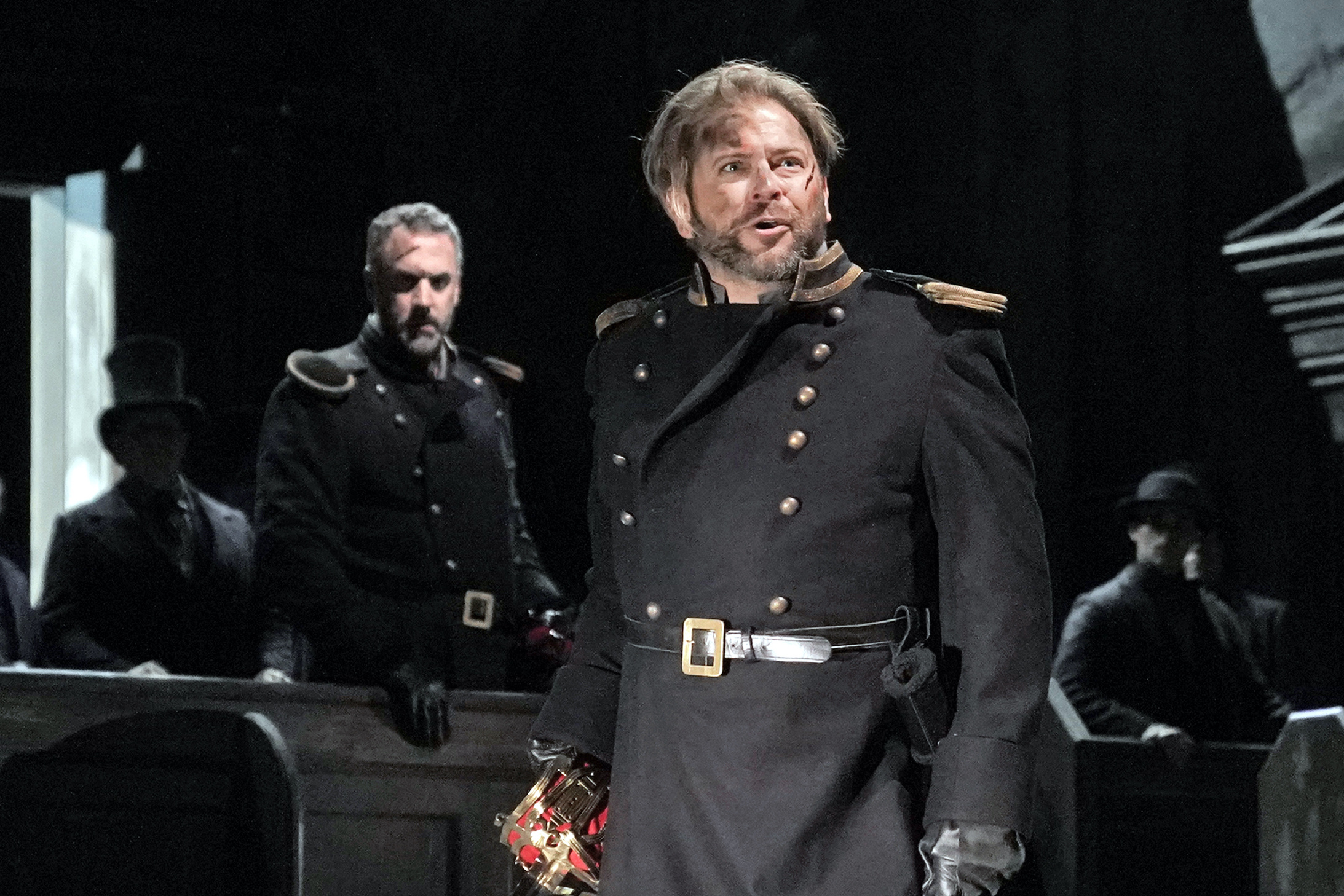
The Colcloughs spent nine years on the road as Colclough was getting his career off the ground, but Colclough now prioritizes jobs in Southern California so that he can be close to the family. He considers LA Opera his homebase, and he’s performed over a dozen roles there since making his debut in a small role in Puccini’s “Gianni Schicchi” in 2008. Since then, he has grown to be an audience favorite in roles like Figaro in Mozart’s “The Marriage of Figaro,” the Father in Engelbert Humperdinck’s “Hansel and Gretel,” and Leporello in Mozart’s “Don Giovanni.” His next performance at LA Opera, the title role in Giuseppe Verdi’s “Falstaff,” is a dream come true Colclough didn’t even realize he had until it happened. In his school days, Colclough loved doing stand-up comedy, so the hilarious conman in Verdi’s only comedy has become a beloved staple of his repertoire. After playing that role in Belgium, at Opera Saratoga, and at Arizona Opera, he’s excited to be doing it with his home company.
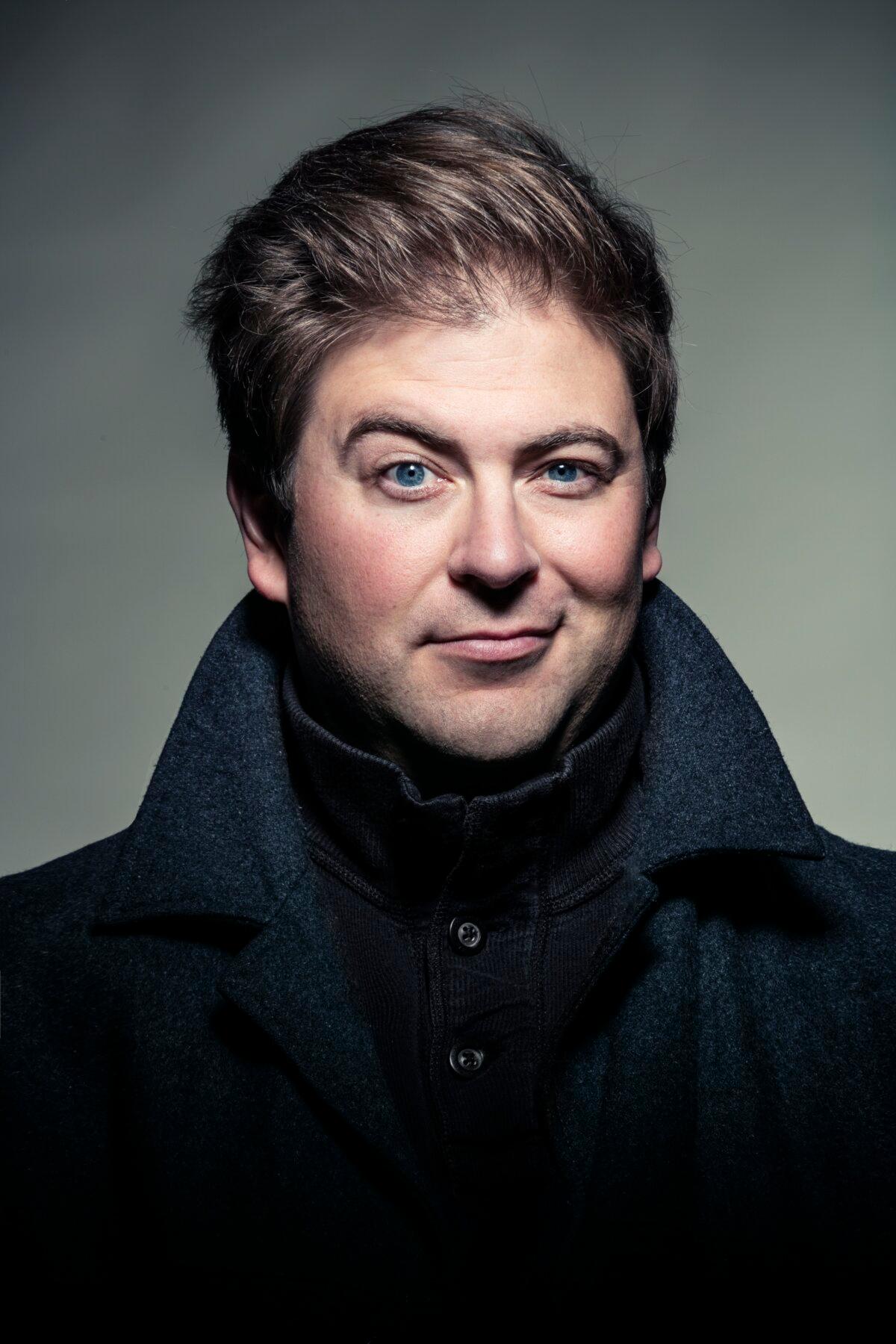
Opera singer Craig Colclough. (Courtesy of Craig Colclough)
What’s a Bass-Baritone?
For those not really familiar with opera, the classification of bass-baritone may be confusing. What is he, a bass or a baritone? Well, Colclough explains why this term helps describe just what repertoire he can sing. A lot of his repertoire includes the hard-hitting, dramatic baritone repertoire of Verdi and the powerful Heldenbaritone (heroic baritone) roles of Richard Wagner. However, if Colclough were to describe himself as a “Verdi baritone,” he would be asked to play the title role in “Rigoletto,” which is too high for his range. He also enjoys doing pure bass roles, often comical “buffo” bass parts like Don Basilio, his role in “The Barber of Seville.” Nevertheless, just calling himself a bass would imply a lower voice and one that isn’t able to sustain the intense singing in the higher range.
Thus, bass-baritone suits singers like Colclough just fine, defining the versatility that he has as both a singer and performer. You’ll often see him in an outlandish costume, whether playing a ghoulish bad guy or a lovable buffoon.
Life Outside the Spotlight
While some singers are still chasing that dream role or elusive gig after decades in the spotlight, Colclough says that he’s very content with the career he’s had so far. He loves what he’s doing, and he doesn’t have any particular goals to cross off his list at this point. Instead, he hopes to gain a professorship at some point to give his family more stability. At present, he supplements his busy singing schedule with private voice teaching, recording audio books, and even recording jingles.
Colclough’s latest venture is a book on vocal pedagogy, “The Theory of Everything.” Scheduled to come out this month, it will be an analysis of the intersection of art and science which is operatic singing. I for one can’t wait to read what is certain to be an intriguing analysis from a very talented and intelligent singer.
Here in Southern California, we’re very fortunate to have such a wealth of classical music throughout the region. It’s especially exciting to see San Diego Opera continue to establish its reputation as a first-class opera company, attracting top tier singers like Colclough. As he is fitting this three-week whirlwind production between performances in New York at the Metropolitan Opera, it looks to be an amazing show.
“The Barber of Seville” will be performed at the Civic Auditorium in downtown San Diego on Feb. 13–15, making it a perfect Valentine’s weekend outing.