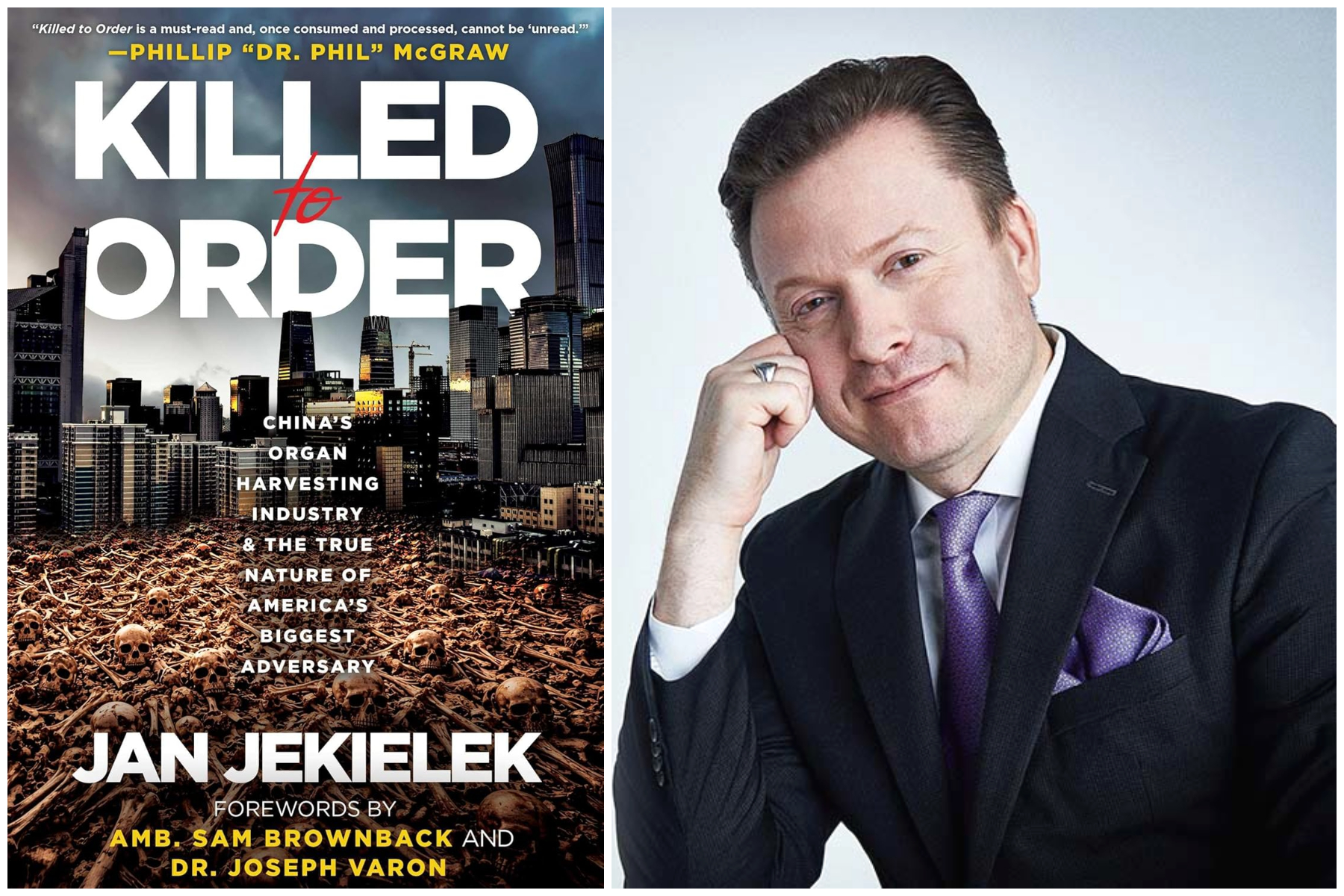

“Killed to Order” is a work of nonfiction, yet one may find it hard to believe that the book belongs anywhere outside a bookstore’s horror fiction section. Jan Jekielek’s book is a harrowing tale and an urgent cry for justice about one of the largest crimes against humanity since World War II and Mao’s Great Leap Forward. At times, it’s not an easy book to read.
The book tells two related stories. The first gives a chilling overview of China’s billion-dollar organ transplant industry, which is sustained by the industrial-scale murder of prisoners of conscience. At the center of this slaughter are practitioners of Falun Gong, a peaceful spiritual discipline that reached up to 100 million adherents before being marked for eradication by the Chinese Communist Party (CCP) in 1999.
Jekielek reveals how the regime’s factory line of death has expanded its inventory to include other so-called “undesirables,” including Uyghurs, Tibetans, and house church Christians.
How did this go on behind the Bamboo Curtain for so long without a public outcry?
The Cost of Blindness
Often, when people hear of mass atrocities or state-sanctioned genocide, they dismiss the story as exaggeration, fabrication, or delusion. After all, North American society has been far removed from such harsh realities.
What “Killed to Order” describes is a nightmare more suited to a serial-killer film or a Holocaust museum. The terrible details Jekielek reveals seem like relics from a barbaric past when world wars were fought, and Nazism and fascism were spreading across the globe.
Humans have a basic impulse to lean toward denial. During World War II, as the Holocaust was unfolding across Europe, reports of mass extermination were only slowly accepted by the Allied nations, despite that radio intercepts and eyewitness testimonies describing the genocide had reached Allied command as early as 1941.
The second problem is educational. North American curricula have largely sidestepped the atrocities committed by communist regimes, including the CCP, and the mechanized inhumanity they’ve inflicted upon their own people throughout their brief histories.
Jekielek reminds readers of the Soviet gulags, which killed untold tens of millions, and Mao’s Great Leap Forward, which wiped out between 45 million and 60 million people through a manmade famine. When those in power view human beings as “oil in the ground” to be extracted and burned for national power, an industry built on forced organ harvesting is not shocking—it is inevitable.
“Killed to Order” lays out, in methodical detail, the evidence and interlocking pieces that demonstrate a 21st-century Holocaust is unfolding today. But the book is more than an indictment of the CCP for genocide.
The second half of the book is a warning to the West about the insidious threat the Chinese communist regime poses to the rest of the world.
The Rising Chinese Threat
Jekielek explains that the CCP operates according to a zero-sum worldview. The regime measures success by a weakening of the United States through a “hundred-year marathon” toward global dominance by 2049. The communists took over China in 1949.
He details how, under the doctrine of “unrestricted warfare,” the CCP weaponizes non-kinetic tools to defeat its adversaries without firing a single shot. These include legal, psychological, and public-opinion warfare.
Central to this system is the United Front Work Department, one of the CCP’s most powerful mechanisms for transnational repression and elite capture. Through its influence campaigns, critics are silenced and Western institutions are co-opted. International bodies, such as the World Health Organization and even the Vatican, have at times provided a veneer of legitimacy to the CCP’s authoritarian practices and bioethical abuses.
Jekielek also examines how the long-term failure of the Kissinger Doctrine (exploiting rivalry between communist powers) left the United States dangerously dependent on China for critical medical supplies and rare-earth elements, creating strategic vulnerabilities that can be exploited at will.
Yet the book does not end in despair. Within China itself, the Tuidang (“Quit the CCP”) movement represents a massive, quiet withdrawal of consent. So far, more than 455 million Chinese citizens have sought to reclaim their moral and spiritual agency by formally and publicly quitting the CCP.
In the United States, a new wave of state and federal legislation, including the Falun Gong Protection Act, signals a turning point in efforts to hold the CCP accountable.
Millions have been killed because millions refuse to see.
Echoes of History Repeated
“Killed to Order” confronts a truth many would rather ignore. History, however, offers a stern warning: The evils a society chooses not to confront do not vanish—they grow.
The West has financed the CCP’s rise through trade while overlooking its crimes. It has not only subsidized mass murder, but begun to absorb the regime’s utilitarian logic, eroding the West’s own ethical boundaries around the sanctity of human life.
George Santayana famously warned, “Those who cannot remember the past are condemned to repeat it.” There was a time when the West could not believe the atrocities of the Nazi regime.
Jekielek’s work is an attempt to awaken our collective memory before history completes its cycle once again. We cannot say we were not warned.
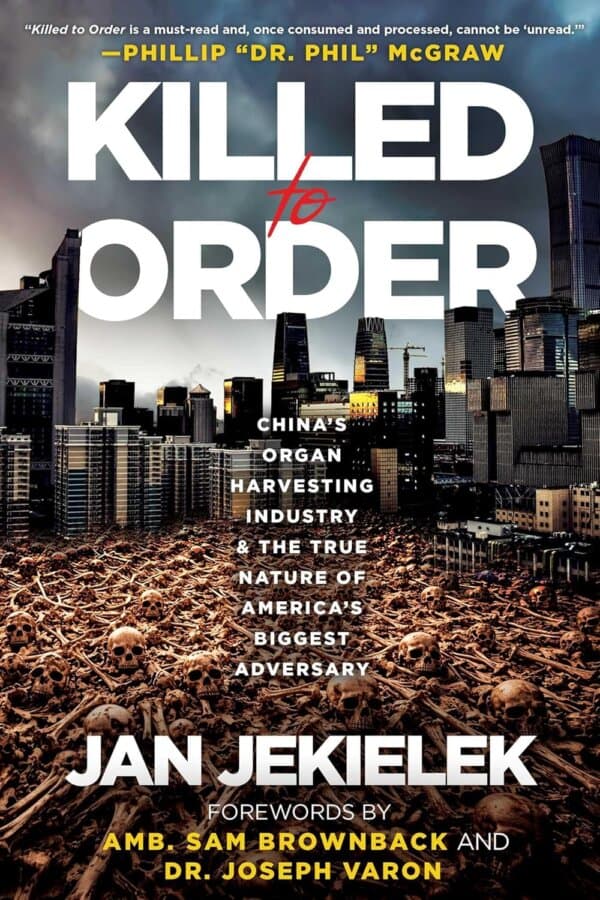
’Killed to Order: China’s Organ Harvesting Industry and the True Nature of America’s Biggest Adversary’
By Jan Jekielek
Skyhorse: March 17
Hardcover, 264 pages
What arts and culture topics would you like us to cover? Please email ideas or feedback to features@epochtimes.nyc