
If you’ve ever heard someone mention the doctrine of the Mean, you’ve brushed up against Confucian wisdom.
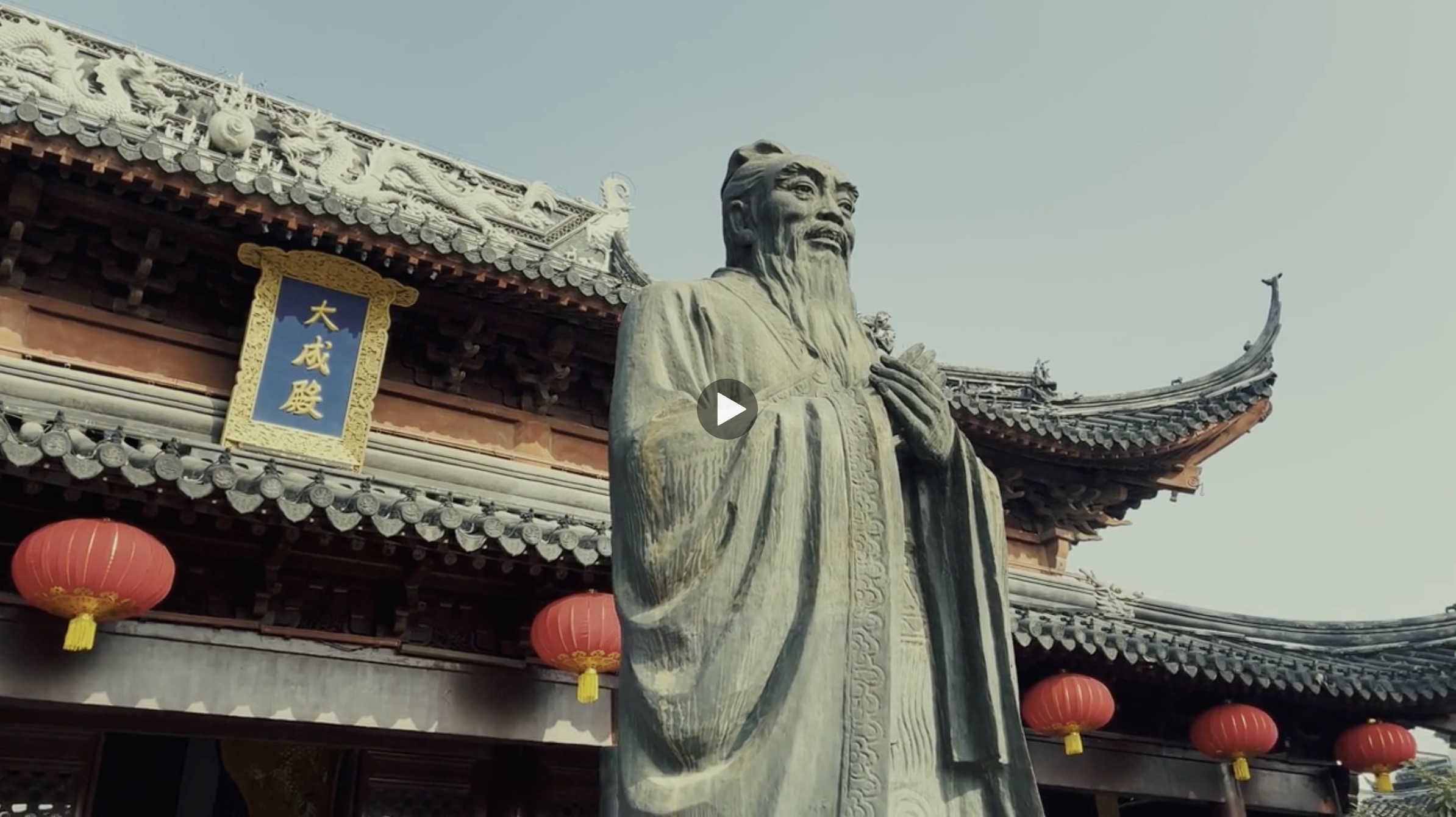
Confucius, known in Chinese as Kongzi, lived more than 2,500 years ago (551–479 B.C.). He was born in the state of Lu—today’s Shandong Province—at a time when China was fragmented by rival kingdoms and plagued by political corruption. Against that backdrop, he became one of history’s most influential teachers.
Confucius was a philosopher, educator, and moral guide who believed that the path to a better society began with cultivating virtue in the individual. He emphasized three core values:
Ren: This single word carries a wide range of connotations. The Chinese character for “ren” is composed of two parts—“person” on the left and “two” on the right of the character. Some scholars believe that ren has no definitive explanation and is the core virtue that Confucius promotes for interpersonal relationships, encompassing loyalty, reciprocity, benevolence, and altruism. Arthur David Waley, a pioneering British translator and sinologist, called it “Goodness” in his 1938 translation.
Yi: The virtue of yi refers to righteousness, or doing the right thing even when it’s a more difficult path.
Li: Again, this single character has a wide range of implied meanings, and it has no equivalent in English. Basically, it refers to proper ritual and conduct, from social forms to ceremonial rites. Confucius said in “Liji” (Book of Rites): “What is li (ritual propriety)? Li is the code of conduct and the rules we follow in what we do.”
Confucius taught that li is the set of rules, customs, and standards that guide proper behavior in every sphere of life. Without li, society falls into disorder: Families lose harmony, rulers and officials lose hierarchy, armies lose discipline, and even everyday interactions lose their sense of respect and proportion. In short, li provides the structure that keeps both personal conduct and public life in balance.
The teachings of Confucius were later compiled by his disciples in a book called “The Analects.” His ideas shaped Chinese culture for centuries and spread across East Asia, influencing Japan, Korea, and Vietnam.
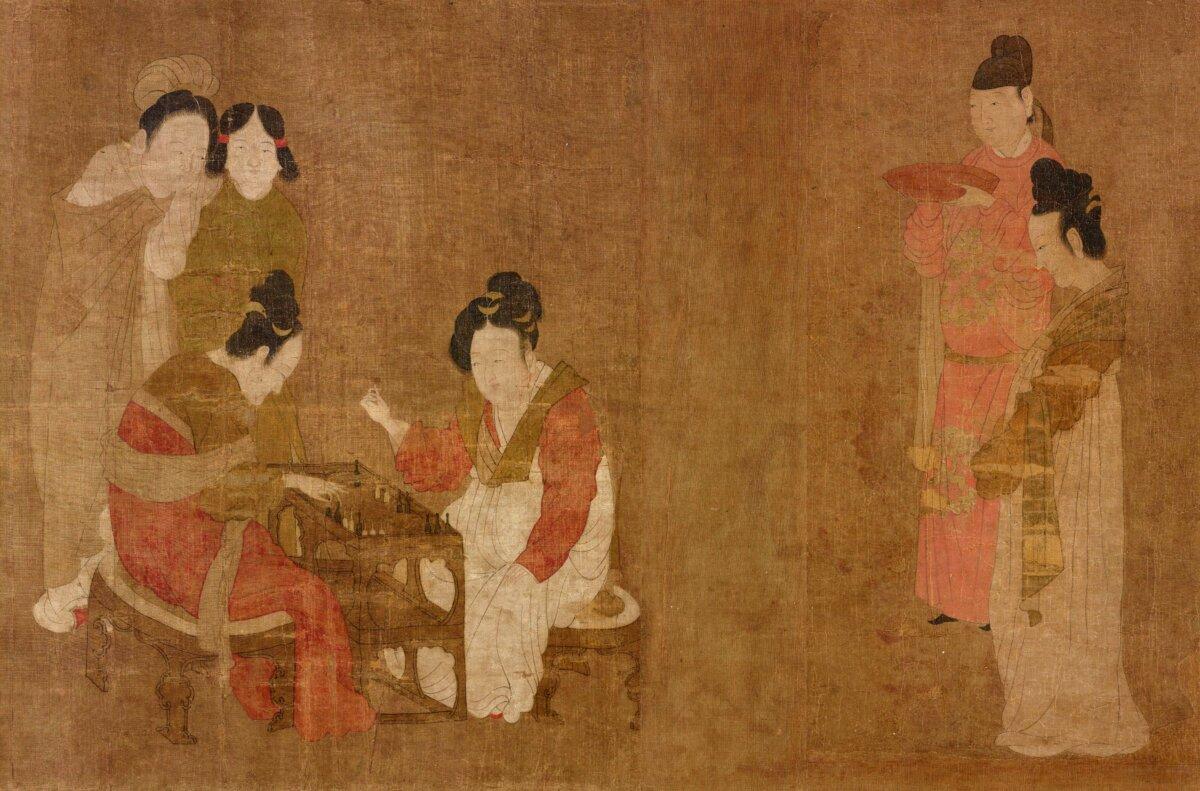
Court Ladies Playing Double Sixes during the Tang Dynasty. (Zhou Fang)
Confucius’ legacy hasn’t always been smooth. The Chinese Communist Party (CCP), which advocates atheism and violence, banned Confucianism from China, calling it “feudal superstition,” alongside other traditional philosophies. During China’s Cultural Revolution in the 1960s, the CCP’s Red Guards smashed temples dedicated to Confucius and even desecrated his tomb and dug it open.
In recent years, however, the CCP has used his name abroad—through its Confucius Institutes set up on education campuses—to promote CCP rhetoric and further its soft power objectives under its United Front Work Department, an agency tasked with overseeing Beijing’s influence activities in China and abroad.
Despite decades of suppression, appropriation, and reinterpretation, the truth of Confucius’s words still strikes a chord. Here are five of his quotes, all taken from “The Analects,“ that remain surprisingly relevant today.
5 Quotes from Confucius
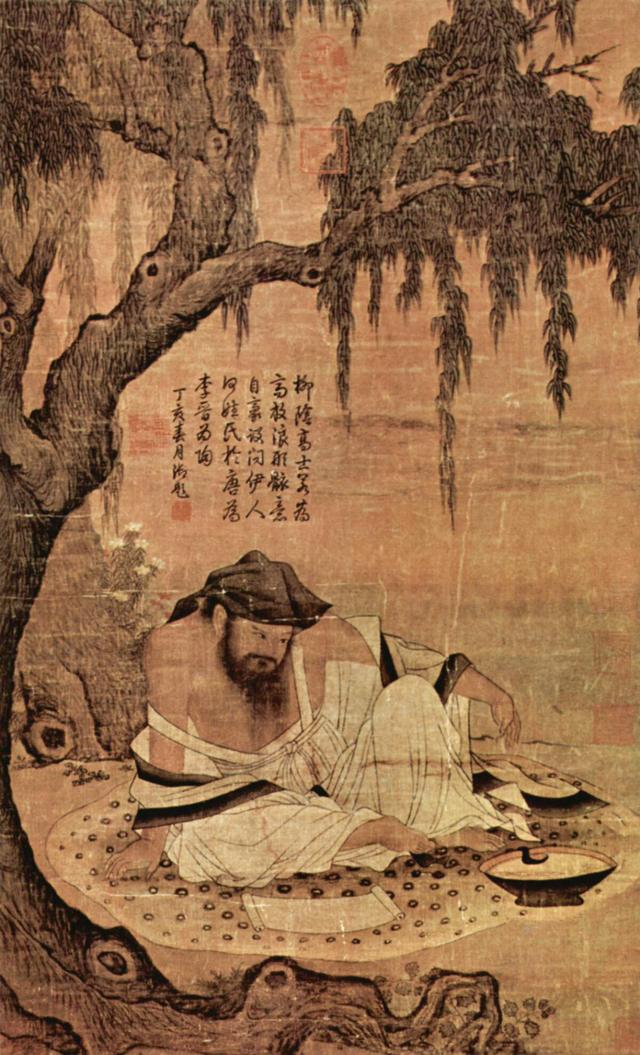
A Chinese scholar in a meadow. (Anonymous artist of the Song Dynasty period)
1. “Education should be for all, without discrimination.”
Confucius believed everyone deserved the chance to learn. At a time when education was a privilege for the aristocracy, he opened his school to anyone who showed eagerness, regardless of wealth or birth.
In the Analects, Confucius said, “Anyone who comes to me with the small gift of ten strips of dried meat, I have never refused to teach.”
Back then, bringing a modest gift like this was a customary way to show respect when meeting a teacher (known as “shuxiu” in Chinese). By saying this, Confucius emphasized that he was willing to teach anyone who sincerely wanted to learn, no matter how humble their offering. Over time, shuxiu became synonymous with the traditional gift given to a teacher by a student.
2. “What you do not want done to yourself, do not do to others.”
This quote sounds strikingly similar to the golden rule in Western religions and traditions—“Do unto others as you would have them do unto you.”
Confucius’ point was that true virtue requires putting yourself in someone else’s shoes.
The quote comes from a conversation between Confucius and his disciple Zi Gong, who once asked him, “Is there a single word that could guide a person’s actions for an entire lifetime?”
Zi Gong wanted his teacher to sum up the guiding principle of life in just one word.
Confucius replied, “Perhaps it is ‘shu’—what you do not want done to yourself, do not do to others.”
Zeng Shen, another prominent disciple of Confucius, later explained that shu (generosity and kindness to others) and zhong (loyalty or responsibility) are the essence of ren that Confucius promoted as the highest moral standard, representing the good qualities of human beings.
Zeng Shen was best known for his filial piety and his involvement in composing 10 books that contributed greatly to Confucianism.
3. “One who governs the state by virtue is comparable to Polaris, which stays in its fixed position while other stars rotate around it.”
For Confucius, the key to leadership was moral example.
In plain terms, it means that a leader’s personal virtue can inspire the people, bring stability to the nation, and earn lasting trust and support. This idea shows how much Confucius valued ruling by virtue, a concept that deeply shaped traditional Chinese political thought and became a guiding principle for wise rulers throughout history.
4. “The noble-minded do not cling to life at the cost of righteousness; they are willing to give their life to uphold it.”
Throughout Chinese history, many scholars and officials tried to live up to this ideal, sometimes choosing martyrdom over compromise. In modern terms, it reminds us of whistleblowers, those persecuted for their beliefs, or anyone who risks personal safety for a higher principle.
This quote goes to the heart of Confucius’ idea of the junzi—the “gentleman” or “noble person.” Such a person, he said, values integrity above survival.
The same spirit appeared in other cultures. Early Christians under Roman persecution faced torture and execution rather than renouncing their faith, strengthening their tradition with courage and sacrifice.
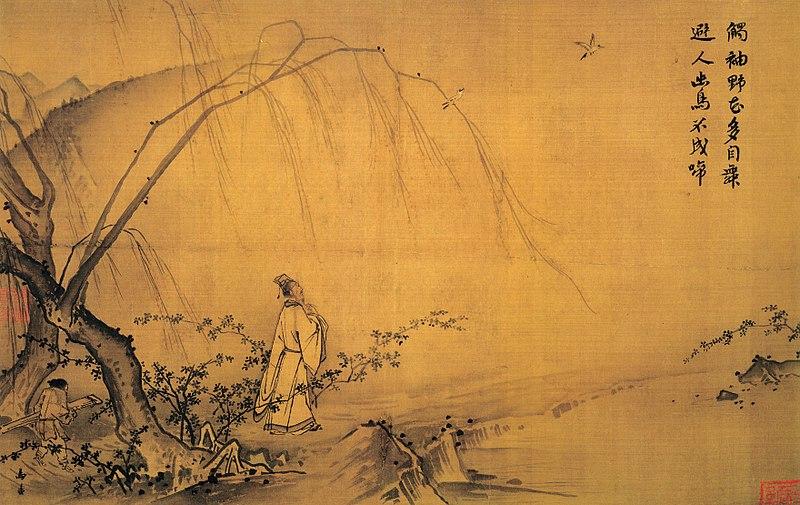
A detail of Chinese artist Ma Yuan's "On a Mountain Path in Spring", 1190-1225. (National Museum, Taipei, Taiwan/Public Domain)
5. “The virtue of the Doctrine of the Mean is supreme, yet people have long neglected it.”
Confucius praised the Doctrine of the Mean, also known as the state of equilibrium and harmony, which is a call for balance and avoiding extremes. The doctrine of the mean, he said, is not weakness, but wisdom: It allows for harmony, stability, and fairness.
In practice, this meant encouraging people to be thoughtful, measured, and self-reflective rather than rash or extreme. Modern psychologists might call it emotional regulation; Confucius called it virtue.
At a time when political polarization and social media outrage dominate daily life, his reminder to seek balance is just as important today.
Why His Words Still Matter
Confucius once described himself modestly: “I transmit, I do not create. I am faithful to and love the ancients.” And in transmitting ancient wisdom, he transformed it into a timeless guide.
From the right to education to empathy, to moral leadership, to integrity, to balance—his words have traveled across 25 centuries and still find their mark.
China in the time of Confucius may have been a land of feudal lords and ritual courts, far removed from our world of smartphones and democracies. Yet his insights into human nature remain as sharp as ever. They remind us that wisdom doesn’t age—and that the most powerful truths are often the simplest.