
For decades, one of the most visible expressions of state power in Iran has been found not in government buildings or military bases but in the streets.
Checkpoints operated by the Basij militia, Islamic Revolutionary Guard Corps, and police have long been embedded in everyday life in Iran. Positioned at major intersections, highways, and neighborhood hubs, they’ve functioned as constant reminders of the state’s reach into the private lives of its citizens.
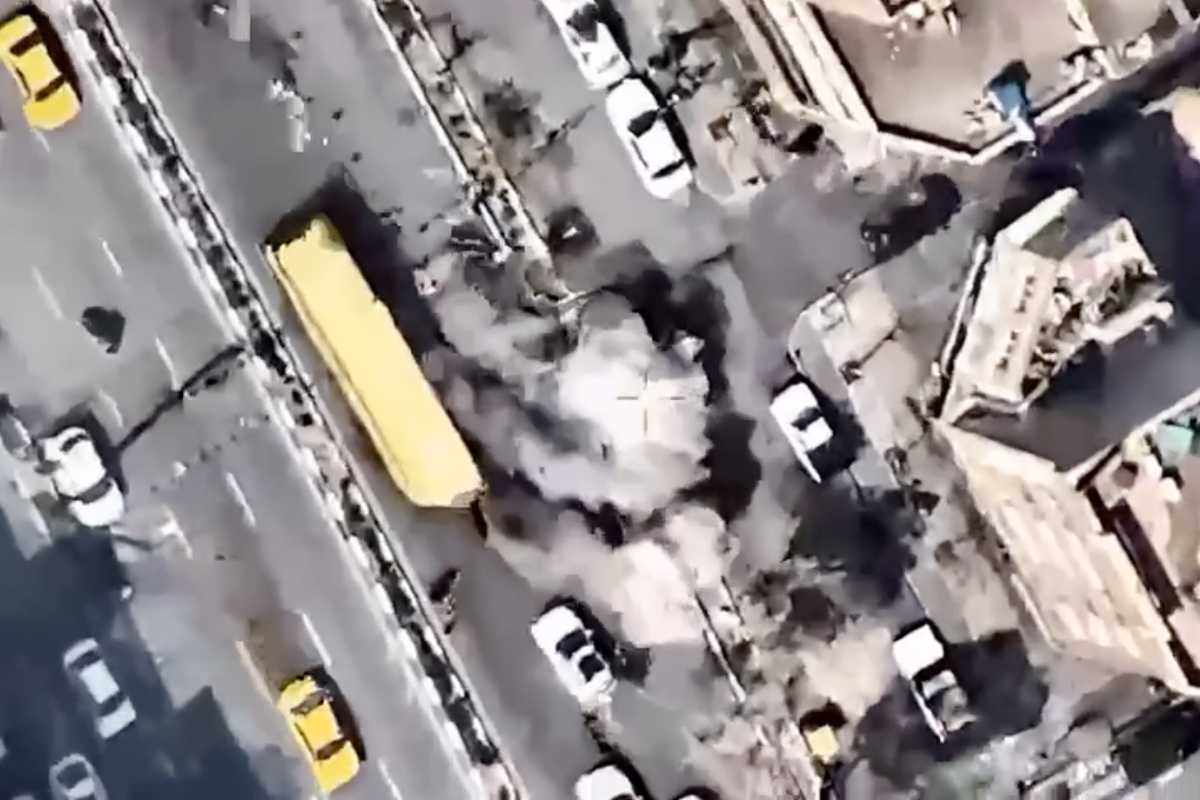
Now, that system is being directly targeted. In recent days, Israel has significantly expanded its military operations inside Iran, focusing on strategic targets, including the Islamic Republic’s internal enforcement network. Strikes have increasingly concentrated on Basij checkpoints, police stations, and mobile security units across major cities, particularly in the capital, Tehran.
On March 17, Israeli forces reportedly killed Gholamreza Soleimani, the commander of the Basij. According to Israeli military statements on March 17 and video footage received from inside Iran, Basij positions at more than 10 locations across Tehran were struck within a short period of time.
Attack on Basiji forces that were active in more than 10 different positions throughout Tehran, Iran, on March 17, 2026. (Israel Defense Forces)
One of the targeted sites was reportedly operating from a former soccer club, highlighting the extent to which security forces are embedded within civilian environments.
Israeli Prime Minister Benjamin Netanyahu has suggested that these operations are intended to create conditions that will allow Iranians to act. In practical terms, this has been interpreted by some analysts as an effort to degrade the regime’s forces while maintaining aerial dominance, particularly through drone operations.
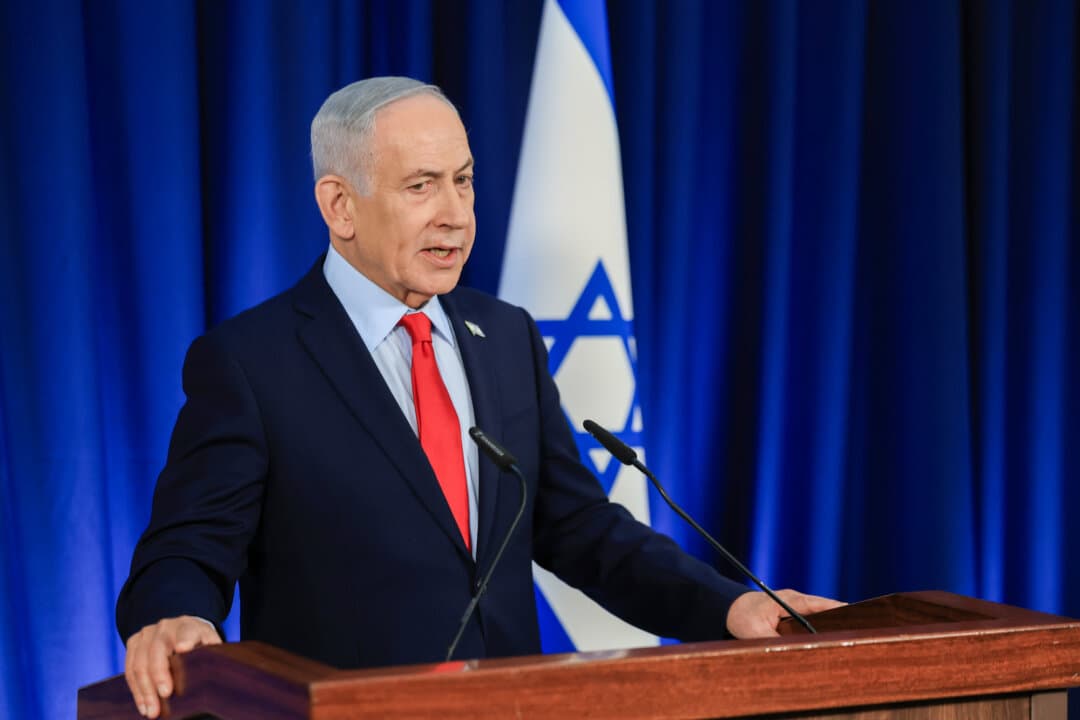
Israeli Prime Minister Benjamin Netanyahu speaks during a press conference in Jerusalem on March 19, 2026. (Ronen Zvulun, Pool Photo via AP)
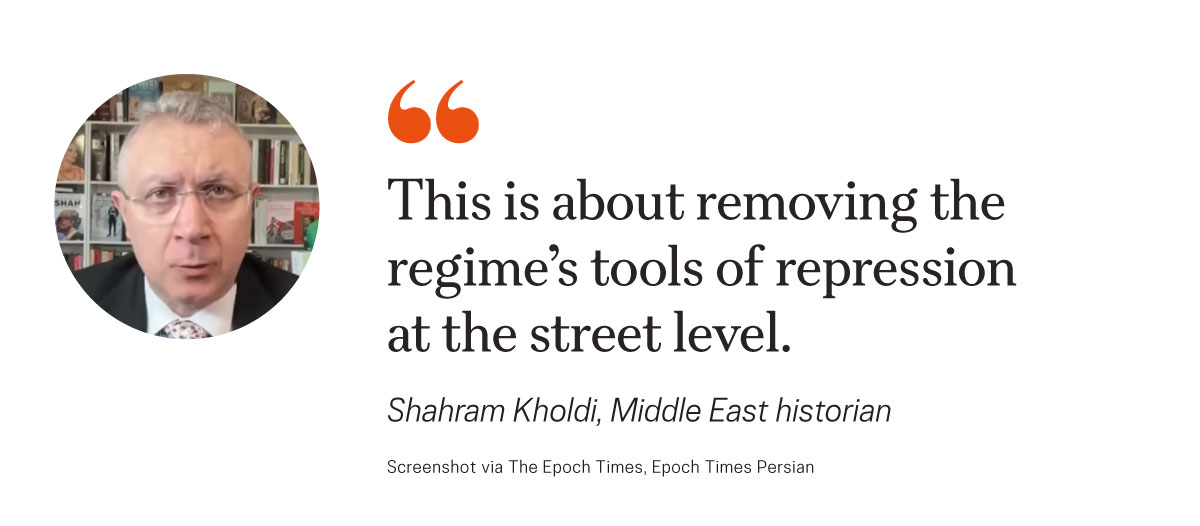
“This is about removing the regime’s tools of repression at the street level,” Middle East historian Shahram Kholdi told the Persian-language edition of The Epoch Times. “At the same time, maintaining aerial presence, especially through drones, can create a form of protective space if protests return to the streets.”
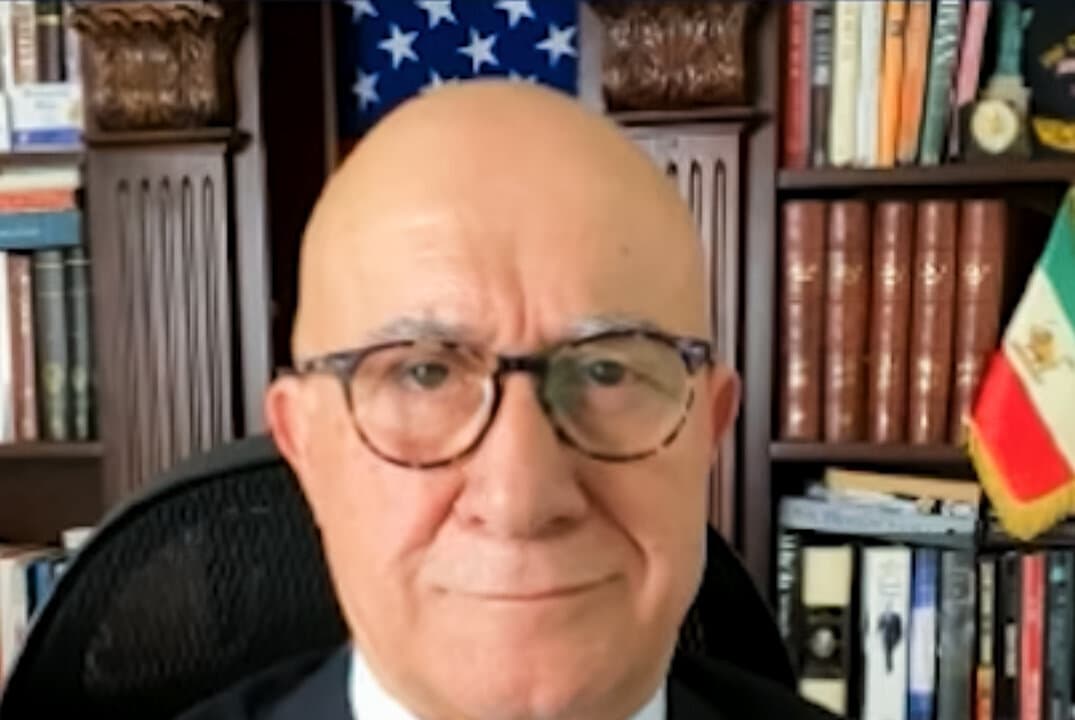
Bijan Kian, a national security expert and a former official of President Donald Trump's administration. (The Epoch Times)
Kholdi said that Basij forces have already signaled that they may retaliate against civilians if pressure eases.
“There have been threats that if a cease-fire happens, they will take revenge on the people,“ he said. ”In that context, continued aerial monitoring, by Israeli or even U.S. assets, could play a role in limiting that violence and giving civilians some level of protection.”
National security analyst Bijan Kian said Israel’s recent actions have helped limit some of the Islamic regime’s capabilities on the ground.
“The regime is under pressure,” he said. “At the same time, Israeli actions have helped constrain some of its capabilities at the street level.
“[Howver,] the situation can still shift, and the government may turn to allied groups from Iraq, Lebanon, and Afghanistan if needed.”
Kian also emphasized that “despite changes on the ground, the broader structure of power remains in place.”
Meanwhile, senior Israeli security officials who spoke with Epoch Magazine said the United States and Israel may be waiting for a strategic moment to provide Iranian protesters with basic protection, which would include Israeli military drones, to provide aerial cover for Iranian demonstrators and to strike Basij personnel attempting to attack protesters.
According to their assessment, the longer the Basij and the Revolutionary Guard continue to be worn down militarily, the closer the moment will come when protesters are encouraged to take to the streets and resume demonstrations against the regime.
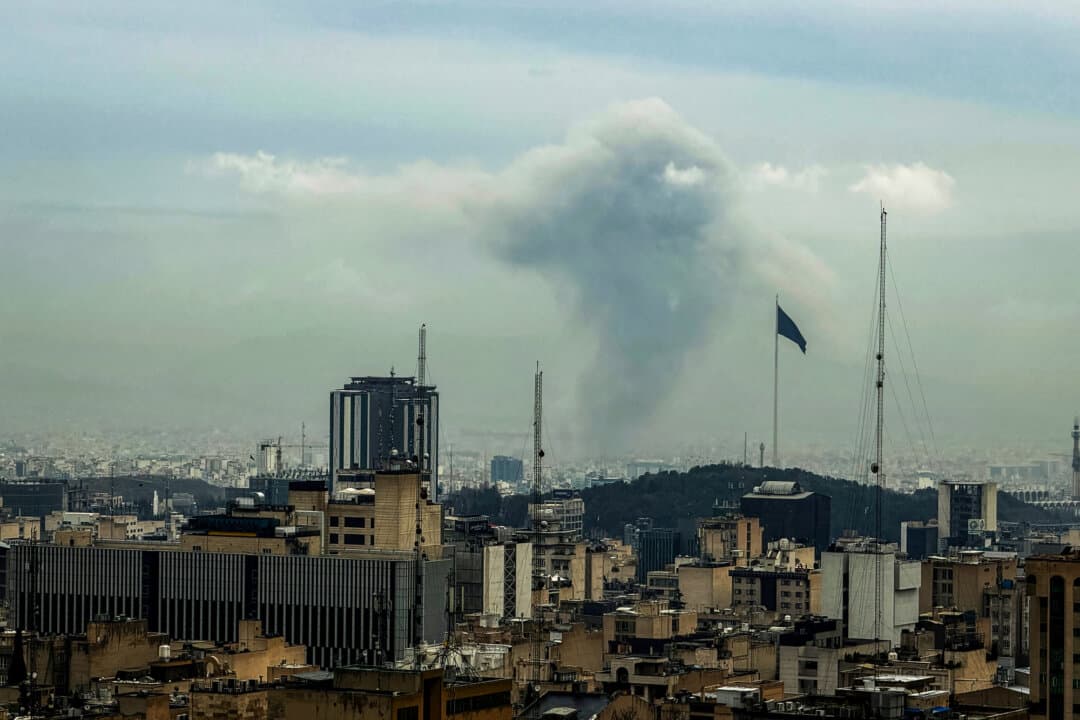
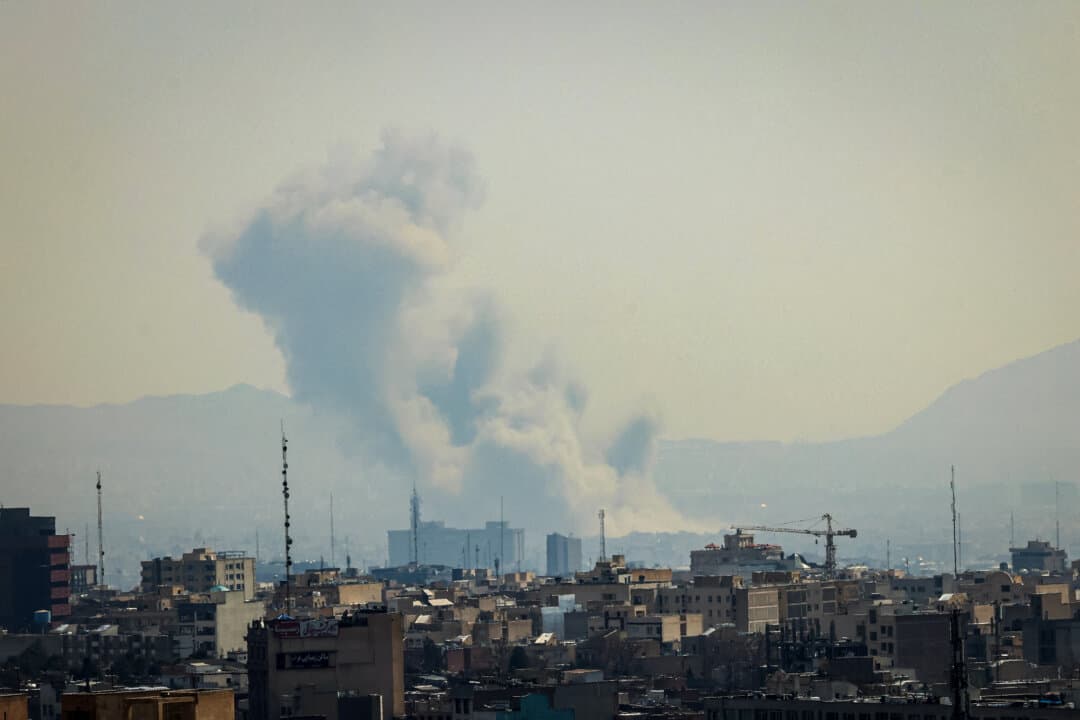
A plume of smoke rises from the site of a strike in Tehran, Iran, on March 16 (L) and March 17 (R), 2026. (Atta Kenare / AFP via Getty Images)
A System Built on Everyday Intimidation
To understand the broader effects of these developments, it is necessary to consider what checkpoints have represented in Iran over time. They have been not merely security installations but instruments of authority woven into daily life.
Young couples could be stopped and questioned. Women could be confronted over dress code rules. Vehicles could be searched without a clear reason. In some cases, minor issues led to detention or punishment. The unpredictability of these encounters created a constant sense of psychological pressure that went far beyond the checkpoints themselves.
For many Iranians, especially in the first two decades after the Islamic Revolution in 1979, these experiences were not occasional but routine.
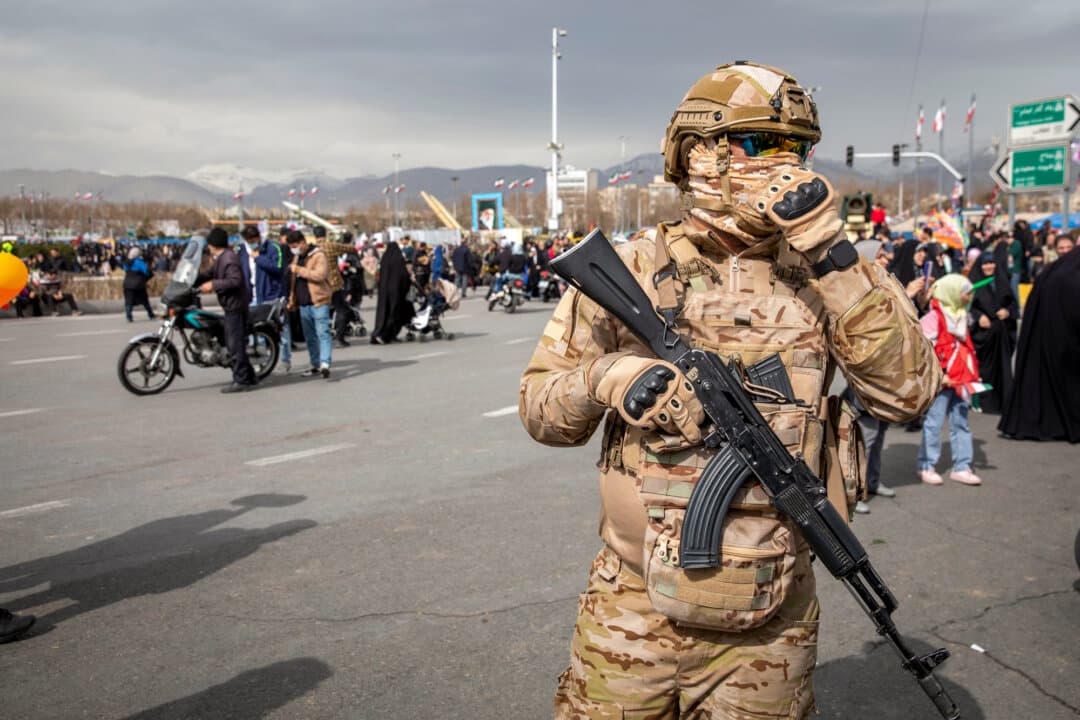
An Iranian special forces soldier stands guard during commemorations to mark the anniversary of the 1979 Iranian Revolution in Tehran, Iran, on Feb. 11, 2026. (Majid Saeedi/Getty Images)
One Iranian couple now living in Canada said: “When we were in our early 20s and newly married, our car was constantly getting stopped at checkpoints. If we didn’t have our marriage certificate with us, it could become a serious problem.”
Industrial automation specialist Amir Rezaei Nevis, who is 48 and now lives in Canada, recalled a formative experience from his youth in Tehran.
“We were at a small celebration at a friend’s house,” he said. “We were dancing, waiting for dinner. Suddenly, Basiji people stormed in. The girls rushed to cover their hair and put on proper hijab.
“We were all taken to the local police station. The next day, both the girls and the boys were lashed, and the adults were fined. That was the moment I felt a deep sense of disgust toward the Islamic Republic.”
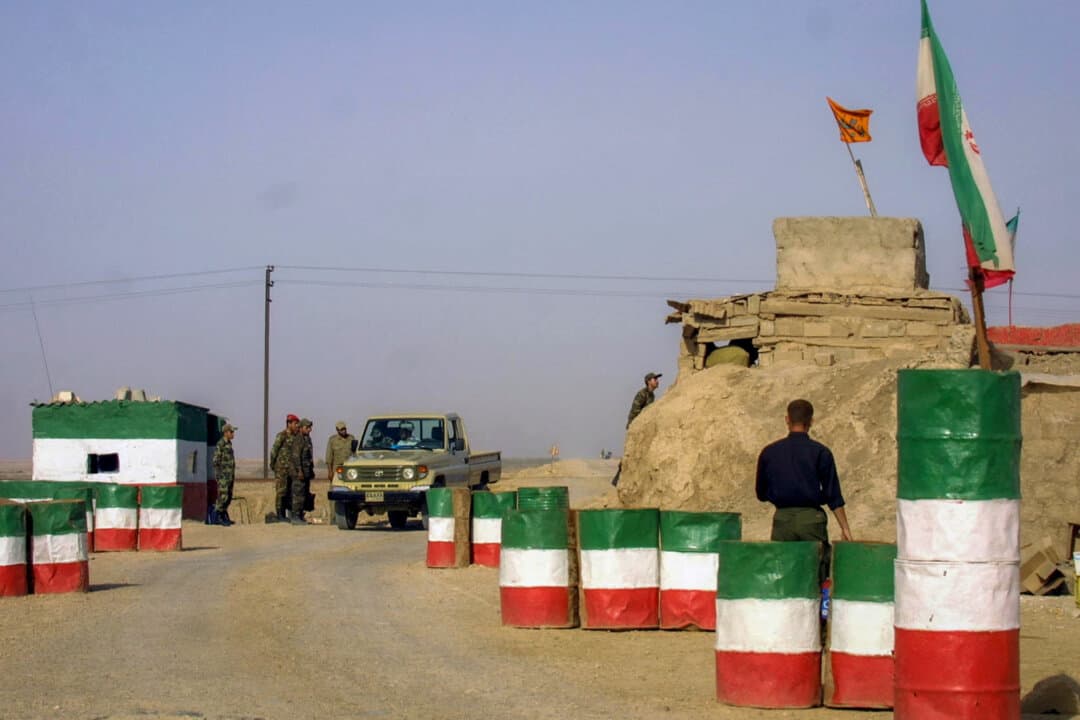
A car passes through an Iranian Revolutionary Guard checkpoint on the road between Ahvaz and Khorramshahr, Iran, on April 4, 2003. (Henghameh Fahimi/AFP via Getty Images)
In a widely cited case, 9-year-old Kian Pirfalak was killed during the November 2022 protests in Izeh when the vehicle his family was traveling in came under gunfire at a checkpoint. His mother later said in a video that their vehicle had been fired upon by plainclothes forces, contradicting official claims that “terrorists” were responsible.
Belgian lawmaker Darya Safai on March 11 described checkpoints such as the one where Pirfalak was killed as long-standing symbols of fear and repression. However, since the start of the Israeli strikes, those same checkpoints have increasingly become a source of fear for the regime’s own forces, she said.
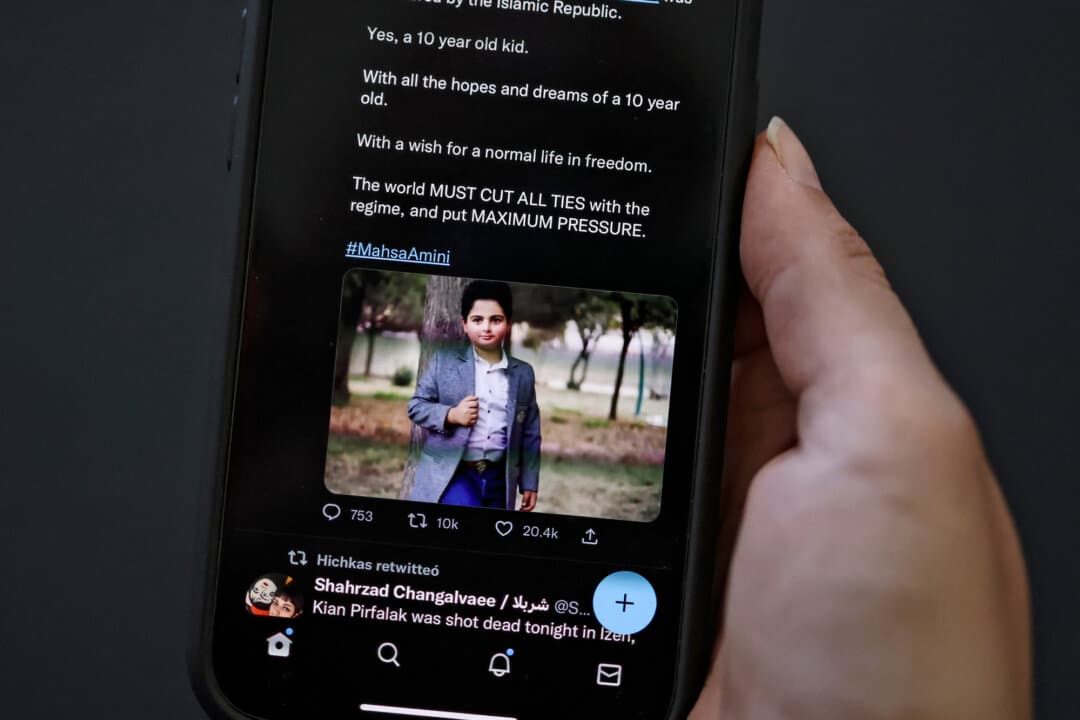
A woman looking at a social media post on her phone screen reportedly showing an Iranian boy who was killed in a shooting attack in November 2022, in the western Iranian town of Izeh, in Nicosia, Cyprus, on Nov. 18, 2022. (-/AFP via Getty Images)
Video footage taken inside Iran shows that Basij forces have reduced their presence in open street locations, relocating checkpoints to less exposed areas such as tunnels and enclosed facilities.
The video footage shows moments that would have been difficult to imagine in the past: security personnel reacting cautiously, even retreating, in response to perceived drone threats.
In one incident, a civilian played the sound of a drone from a second-floor balcony, causing security forces to look up in alarm before retreating moments later. In another, a civilian played a drone sound from a car audio system near a checkpoint, prompting the personnel there to panic and flee the scene.
A New Year
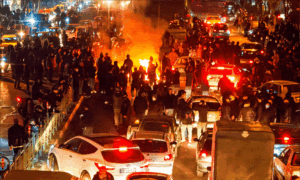
Despite government warnings to stay home, many Iranians took to the streets to celebrate Chaharshanbe Suri on March 17. The centuries-old tradition, in which people jump over fires, dance, and celebrate in the streets, falls on the eve of the last Wednesday of the year, just before Nowruz, the Persian New Year.
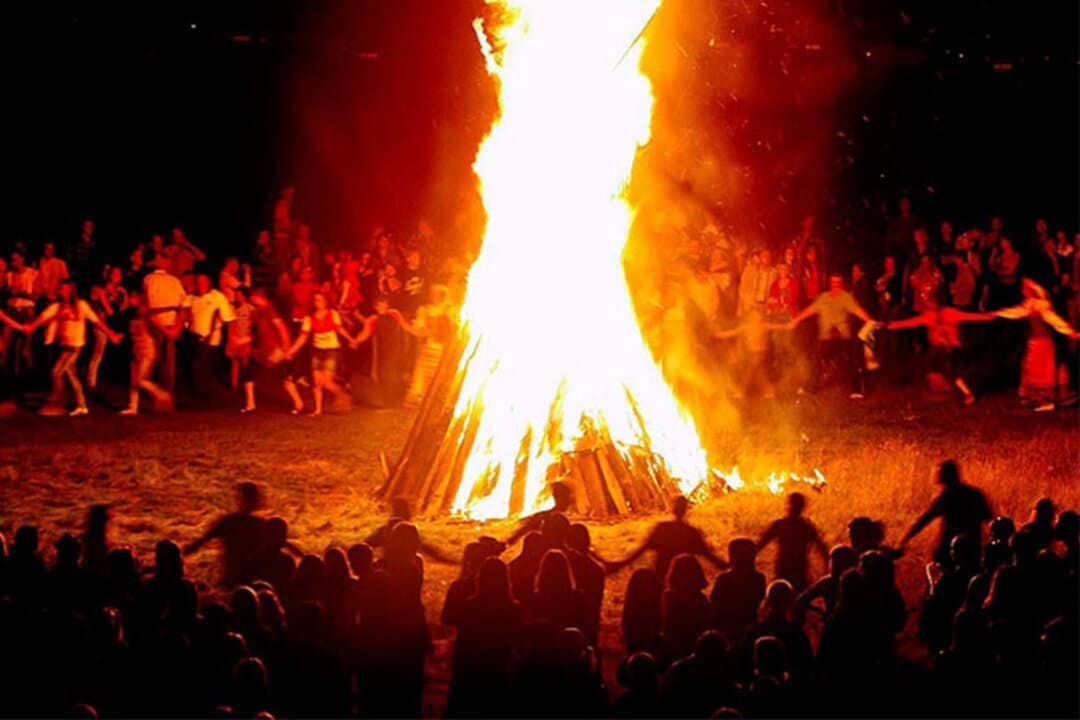
Chaharshanbe Suri, an Iranian festival on the eve of the last Wednesday of the year, where people jump over fires, dance, and celebrate in the streets, in Iran. (CC BY-SA 4.0)
Nowruz, which falls on the spring equinox, marks the beginning of spring and renewal of nature. This year, video footage taken inside the country showed crowds singing “Ey Iran,” a patriotic anthem closely tied to national identity.
Netanyahu said in a video on March 17 that targeting checkpoints and Basij positions could help create safer conditions on the ground, which some observers said contributed to people’s feeling that they could gather in public.
For decades, checkpoints represented a visible and unavoidable expression of authority in daily life. Now, that presence is being challenged. Whether this will lead to deeper political change remains uncertain.
But as the new year begins, one shift is becoming clear: The fear that for years was imposed on ordinary people is now increasingly being felt among the regime’s own forces, as the balance on the streets begins to change.
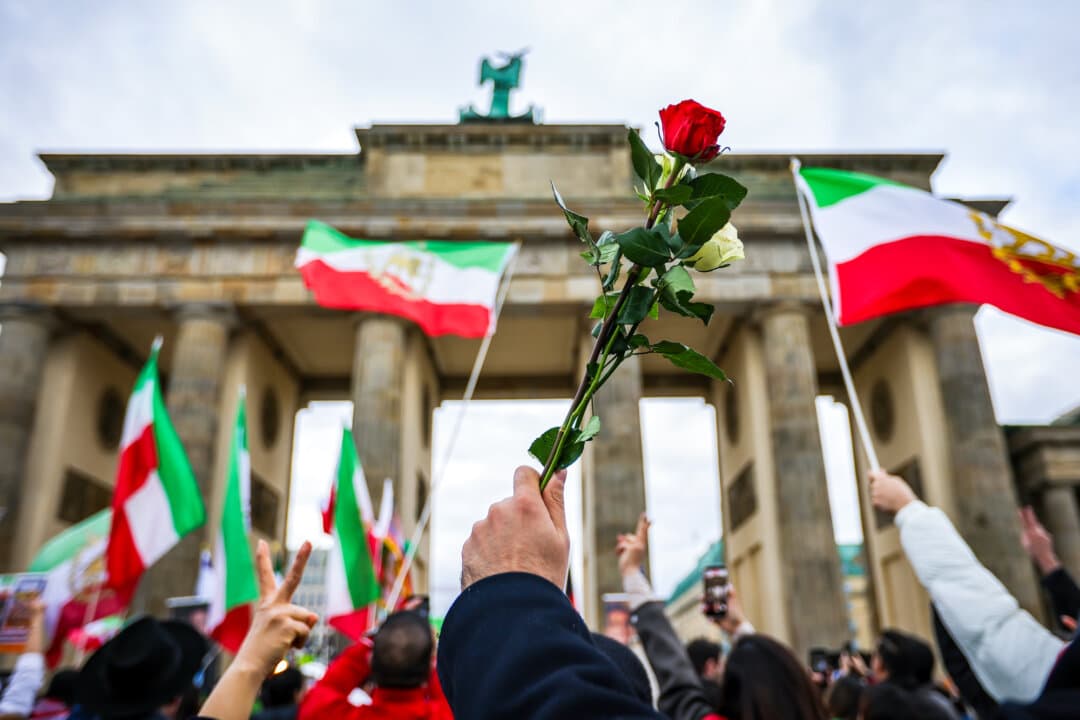
People, many of them expatriate Iranians living in Berlin, hold up flags and roses as they gather to celebrate Nowruz, the Persian new year, in Berlin on March 20, 2026. (Omer Messinger/Getty Images)