
His briefings are scheduled for 11 a.m. ET on Friday, June 20; 6 p.m. on Saturday, June 21; and 6 p.m. on Sunday, June 22.
As the Israel–Iran conflict intensifies, China’s reliance on cheap oil from Iran and its $400 billion deal with the Islamic regime may be in jeopardy.
If the Iranian regime is toppled, analysts say, the Chinese communist regime will not only face an economic blow, but its expansionist global strategy that involves using the Middle East as a frontier to contain the West also will be thwarted.
Currently, more than 90 percent of Iran’s oil exports flow to China, the world’s largest oil importer, according to Kpler, an international trade data provider.
Iran’s crude oil exports have been sanctioned by the international community because of concerns about Iran’s developing nuclear weapons. Nevertheless, many small refineries in China have been buying illicit Iranian oil at a cheaper price than the standard market price.
Because of the sanctions, Iran has almost no other buyers apart from China, so it is at a disadvantage in pricing. In 2024, a senior official from the Iran Chamber of Commerce called the China–Iran trade relationship a “19th-century colonial trap,” saying that China also “dictates how payments are made.”
Iran’s crude oil is paid for in Chinese renminbi instead of U.S. dollars, leaving Iran with the need to purchase large quantities of Chinese goods, which further exacerbates its economic dependence on China.
Israel has bombed some Iranian oil facilities in recent days but hasn’t cut off its oil exports. If that happens, China’s many small refineries will need to buy oil elsewhere at market prices for the first time in years.
The Israel–Iran conflict could potentially have a huge impact on China’s oil supply, Zheng Qinmo, director of the Department of Diplomacy and International Relations at Tamkang University in Taiwan, told The Epoch Times on June 18.
“China has a large investment in Iran, and Iran owes China a lot of money,” Zheng said. “Half of Iran’s oil is exported to China to repay debts, and the other half is sold at a very low price.
“So Iran has become a country that the [Chinese Communist Party (CCP)] can control in the Middle East.”
Su Tzu-yun, a researcher and director of the Division of Defense Strategy and Resources at Taiwan’s Institute for National Defense and Security Research, told The Epoch Times on June 18 that the Chinese regime has long controlled Iran, mainly through trade.
“Iran exports energy to China, and the Chinese regime has market access and invests in some infrastructure projects in Iran,” Su said. “China also sells Iran weapons and equipment to strengthen the diplomatic cooperation between Beijing and Tehran.
“This cooperation seemed unbreakable, but now the situation has changed due to the outbreak of war.”
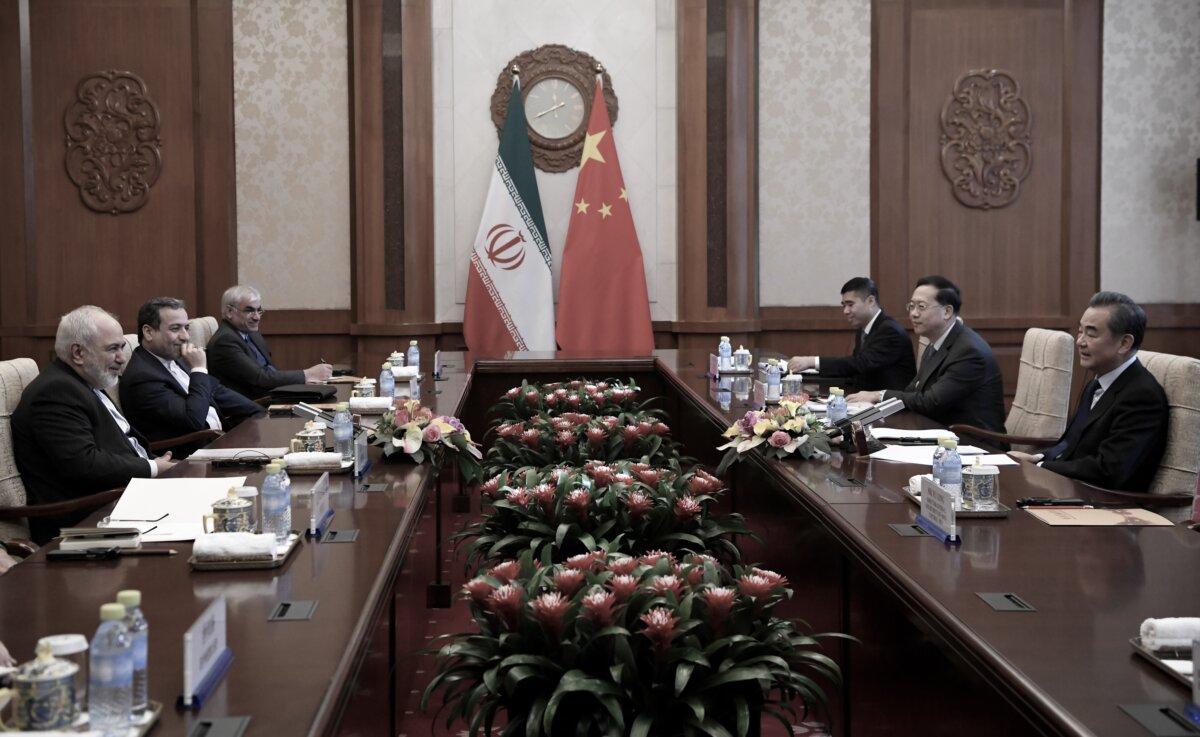
Iranian Foreign Minister Mohammad Javad Zarif (L) talks to Chinese Foreign Minister Wang Yi (R) during their meeting at the Diaoyutai State Guest House in Beijing on Dec. 31, 2019. (Noel Celis / POOL/AFP via Getty Images)
As the Israel–Iran conflict intensifies, top Iranian military and intelligence officials have been killed by Israel, and U.S. President Donald Trump has called for the Iranian regime’s leader to surrender.
If the Iranian regime collapses, the Chinese communist regime’s 25-year, $400 billion deal with Iran will collapse as well, and China’s investment will be lost.
China–Iran BRI Agreement in Jeopardy
In 2021, China and Iran signed a 25-year cooperation agreement to strengthen economic and political ties. The agreement covers various areas including finance, infrastructure construction, health care, and defense. According to the plan, China would invest $400 billion in Iran within 25 years and establish a free trade zone with Iran; Iran would continue to supply oil to China at a relatively low price and allow China to further participate in Iran’s banking, telecommunications, and other projects. The agreement is based on China’s Belt and Road Initiative (BRI)—the Chinese regime’s global foreign policy project to extend its political influence through investment in high-cost infrastructure projects in countries from East Asia to Europe.
Zheng said the Chinese regime’s 2021 cooperation agreement with Iran aimed to “use Iran as a base for expansion in the Middle East and turn it into a frontier for China’s ruling Communist Party to contain the West.”
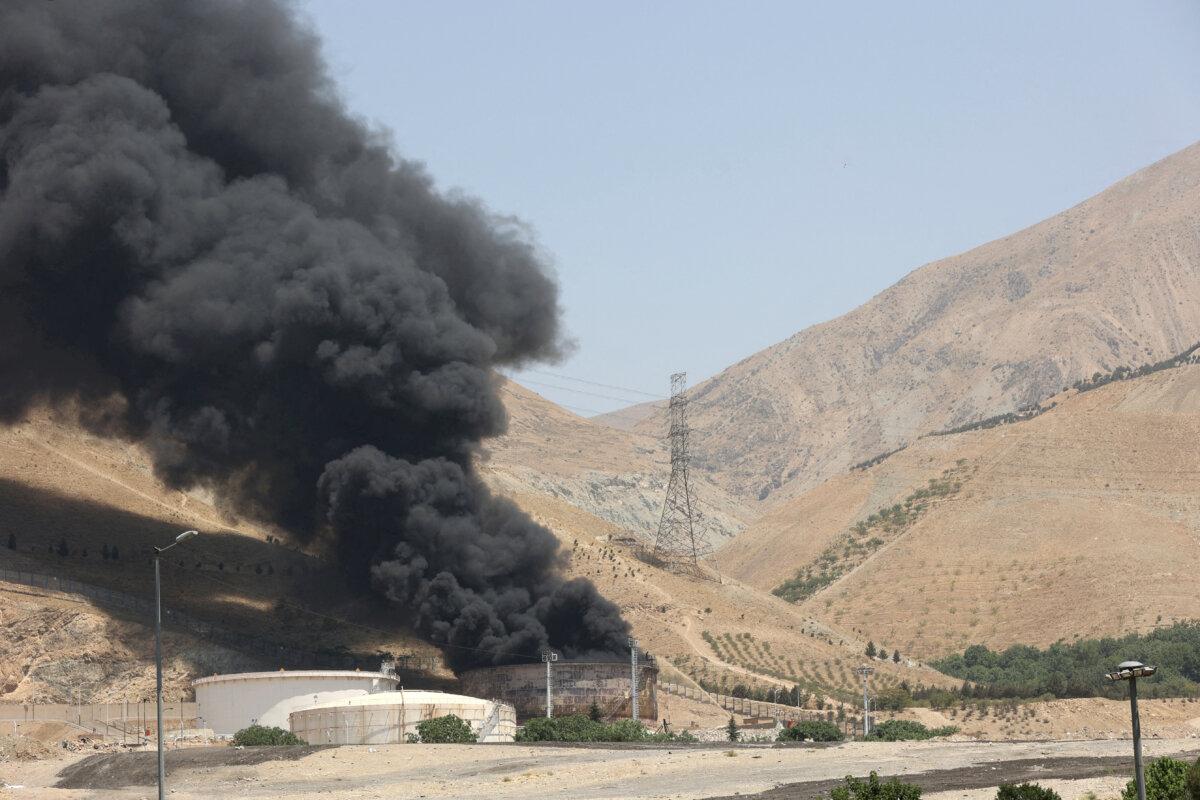
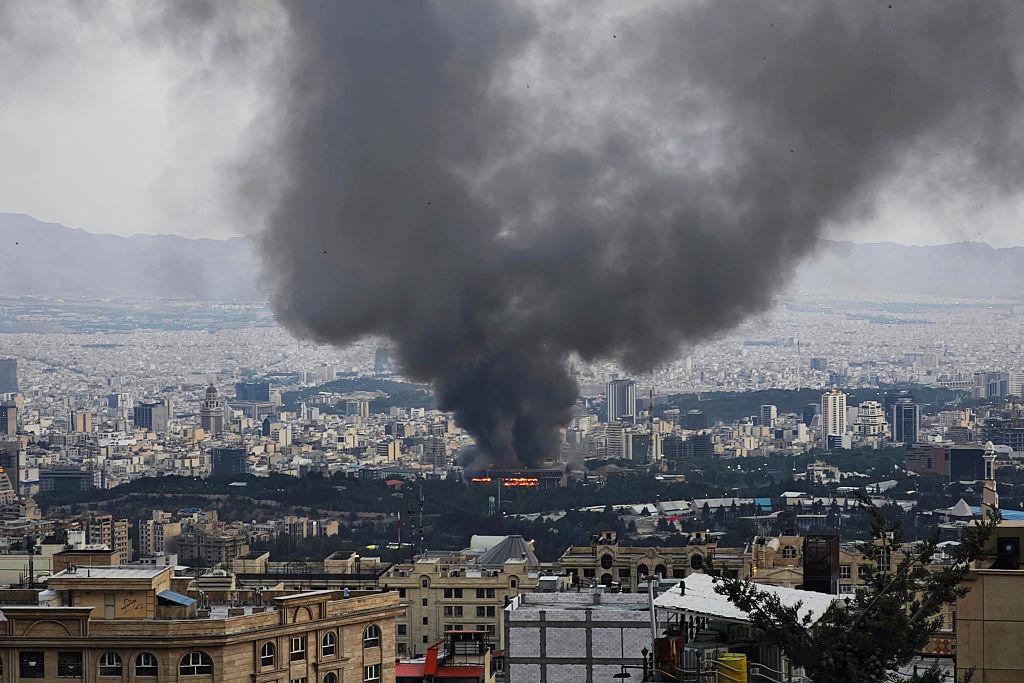
Smoke rises following what Iran said was an Israeli attack on the Sharan oil depot in Tehran, Iran, on June 16, 2025. (Majid Asgaripour/WANA (West Asia News Agency) via Reuters)
It is now a question of whether the Iranian regime will survive, Zheng said.
“The infrastructure investment that China had already made in Iran may have been lost,” he said.
Su said the $400 billion deal is just on paper, “which is actually a [form of] barter.”
“If the Iranian regime collapses this time, the $400 billion contract will become a piece of waste paper,” he said.
The Syrian regime of Bashar al-Assad, which the CCP and Russia had supported in the Middle East, has already fallen, and the current Iranian regime is being threatened.
With the support of the CCP, Iran-backed Hezbollah, Hamas, and the Houthis ran rampant in the Middle East, Zheng said.
“Now the situation has changed. It will be very difficult for the CCP to expand [its influence] in the Middle East in the future. At present, the United States is dominating the situation in the entire Middle East,” he said.
Su said Iran has suffered a heavy blow this time and that the influence of the CCP in the Middle East will diminish.
“After the Trump administration and Israel completely eradicate the influence of China and Russia in the Middle East, the United States could turn around and deal with the threat of the CCP in the Indo-Pacific,” Su said. “The grand strategy of the United States is very clear, which is to concentrate its forces to deal with the CCP.”
Ning Haizhong and Luo Ya contributed to this report.

The IDF stated it had intercepted more than 95 percent of the drones.
“Let's be very clear, Iran has all that it needs to achieve a nuclear weapon,” she said. “All they need is a decision from the supreme leader to do that, and it would take a couple of weeks to complete the production of that weapon, which would of course, pose an existential threat not just to Israel, but to the United States and to the entire world.”
She went on to say that the entire world—including Iran’s ally, Russia—is in agreement that Iran should never be allowed to obtain such a weapon, and that the president has believed that “not just his political career, but frankly, his entire life."
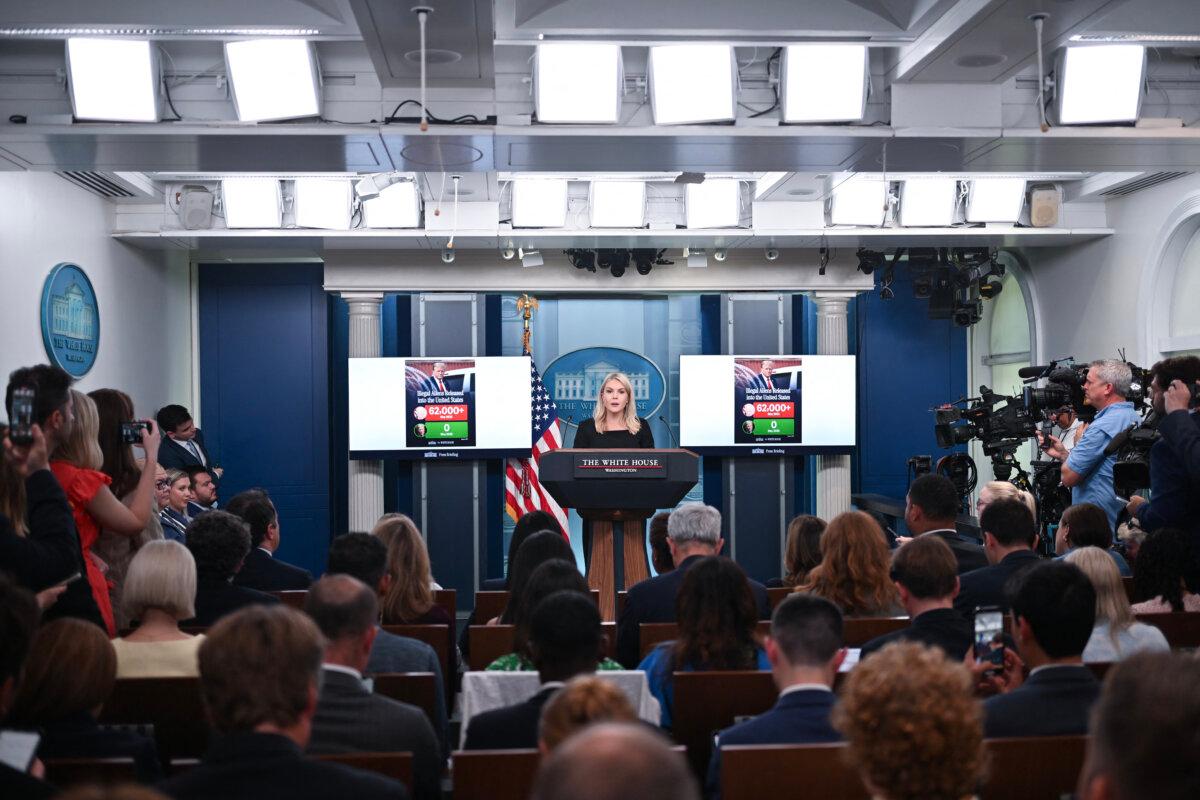
"In light of that news, I have a message directly from the president, and I quote: ‘Based on the fact that there's a substantial chance of negotiations that may or may not take place with Iran in the near future, I will make my decision whether or not to go within the next two weeks,’" Leavitt said at a White House press briefing.
Most of those wounded suffered minor injuries.
The hospital is currently only open for emergencies.
“This is exactly the face of this regime. It’s a terror regime,” Israel Defense Forces spokesperson Brig. Gen. Effie Defrin said. “We are targeting military targets. They are targeting civilians. They are aiming to kill as many civilians as they can.”
Israeli Defense Minister Israel Katz told members of the media Iranian leader Ali Khamenei “should not continue to exist” following the attack. Trump reportedly vetoed an Israeli proposal to take out Khamenei.
“The cowardly Iranian dictator sits in the depths of the fortified bunker and fires aimed shots at hospitals and residential buildings in Israel,” Katz posted on X. “These are war crimes of the most serious kind - and Khamenei will be held accountable for his crimes.”
Israeli Prime Minister Benjamin Netanyahu, who visited the hospital, said: “We will exact the full price from the tyrants in Tehran.”
Meanwhile, President Donald Trump is contemplating U.S. military involvement in the conflict. He is scheduled to hold meetings in the White House Situation Room on Thursday.
"A short time ago, alerts were activated in several areas across the country following the detection of missiles launched from Iran toward the State of Israel," the IDF said in a social media post.
"At this time, the Air Force is operating to intercept and strike wherever necessary to eliminate the threat. The defense is not airtight; therefore, it is essential to continue following the instructions of the Home Front Command."
“The Wall Street Journal has No Idea what my thoughts are concerning Iran!” he wrote on social media platform Truth Social.
"In recent days, Israeli Air Force aircraft identified several attempts by Iranian regime security forces to rebuild launch and storage sites after they were struck by the IDF," the IDF said in a statement posted to social media platform X.
"The aircraft targeted and destroyed engineering equipment and eliminated dozens of soldiers from Iran’s military forces operating in the area."
The IDF said the Israeli Air Force continues to operate in Iranian airspace to "remove threats directed at Israel’s home front."
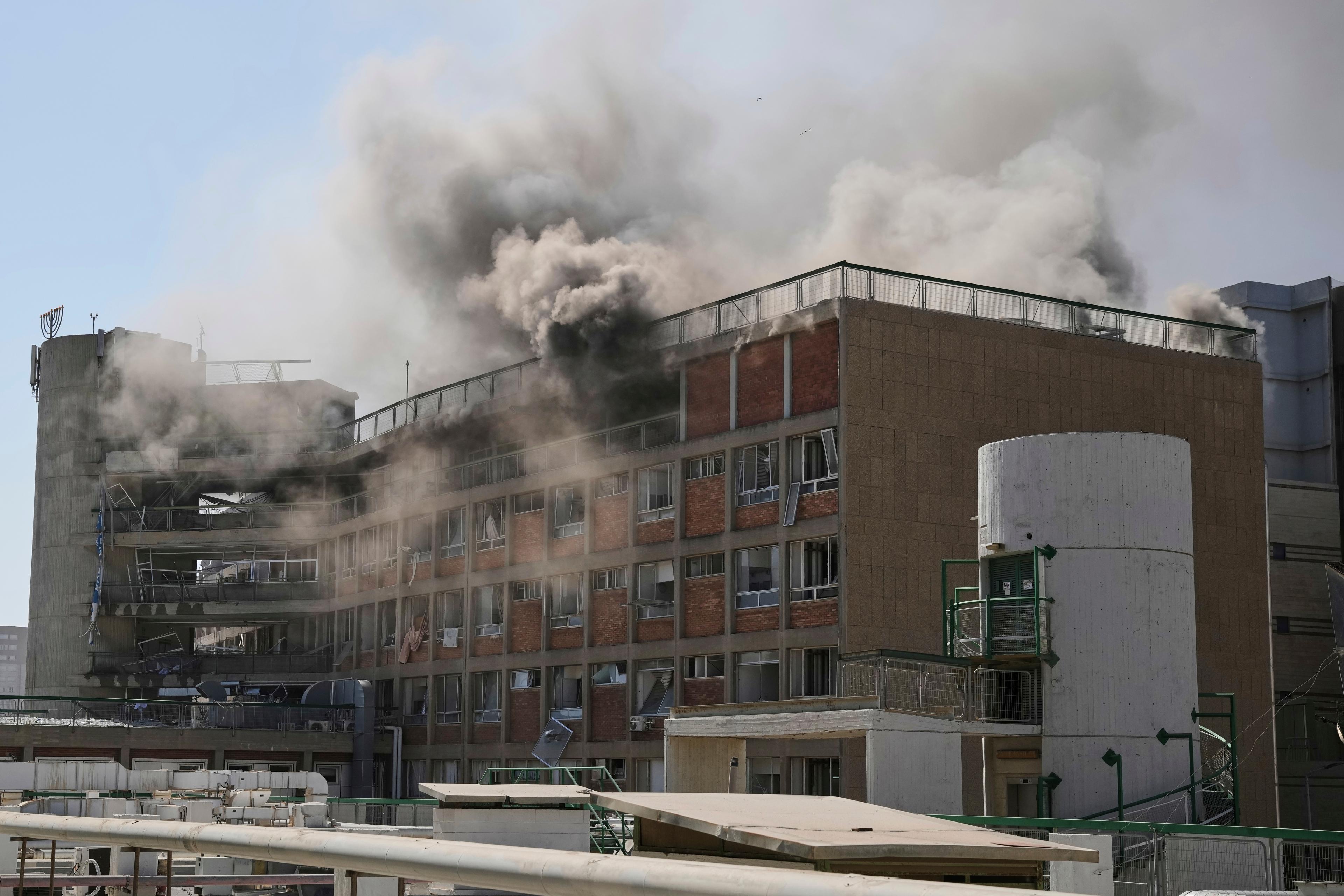
Israeli Defense Minister Israel Katz said on Thursday that Iranian leader Ali Khamenei “cannot continue to exist” after an Iranian missile struck a hospital in Be'er Sheva, southern Israel.
Israeli media carried footage of broken windows and thick black smoke coming from the top floor of a building at the Soroka Hospital.
The hospital said in a statement that several parts of the medical center were damaged and several people with minor injuries were being treated.
Israel’s Magen David Adom (MDA) rescue service said in a statement posted on social media platform X, “Following missile strikes across Israel, 3 seriously injured, 2 moderately injured, 42 with shrapnel/blast injuries, and 18 hurt on route to shelters.”
MDA said teams are continuing to search affected areas.
The missile attacks came on the seventh day of the conflict between Israel and Iran, and followed a warning on Wednesday by Khamenei that “any form of U.S. military intervention will undoubtedly be met with irreparable harm.”
On Thursday, Israeli media and news agency AFP said Katz told reporters in Holon, near Tel Aviv, “Khamenei openly declares that he wants Israel destroyed. He personally gives the order to fire on hospitals. He considers the destruction of the state of Israel to be a goal. ... A dictator like Khamenei, who heads a country like Iran and has made the destruction of Israel his mission, cannot continue to exist.”
U.S. President Donald Trump stated on June 18 that he was still deliberating whether to commit the U.S. military to the conflict.
“I like to make the final decision one second before it’s due,” Trump said.
Earlier, Katz said on X, “These are war crimes of the most serious kind, and Khamenei will be held accountable for his crimes.”
Katz said he and Israeli Prime Minister Benjamin Netanyahu had instructed the Israel Defense Forces (IDF) to increase the intensity of attacks against “government targets in Tehran.”
The BBC reported that Iran’s state-owned IRNA news agency claimed the attack was aimed at an IDF “command and intelligence headquarters” and an army intelligence camp in the Gav-Yam Technology Park, close to the hospital.
Netanyahu condemned the strike on the hospital in a social media post.
“We will exact the full price from the tyrants in Tehran,” he said on X.
The Soroka Medical Center has more than 1,000 beds and provides services to 1 million residents in southern Israel.
Haim Bublil, a local police commander, said a fire had broken out in a six-story building at the hospital after the missile strike. He said staff were moving patients to safer areas of the complex.
Israel carried out air strikes on Iran’s Arak heavy water reactor, a key element of its nuclear program, on Thursday.
On June 13, Israel began a series of air strikes on key targets in Iran, hours after the board of governors of the International Atomic Energy Agency (IAEA) passed a resolution declaring Iran noncompliant and in breach of its obligations under the Nuclear Nonproliferation Treaty.
The massive air campaign—code-named “Operation Rising Lion”—has included attacks on Iranian nuclear facilities and has also taken out several senior military officers.
On June 18, the IAEA’s director general, Rafael Grossi, told Sky News, “On the basis of our inspection, and on the basis of our own evaluation, we came to the conclusion that we could not affirm that there is any systematic effort in Iran at the moment to manufacture a nuclear weapon.”
He said the IAEA’s report found Iran is enriching 60 percent uranium, so “there were elements for concern but as to saying they are building and manufacturing a nuclear weapon, no, we didn’t say that.”
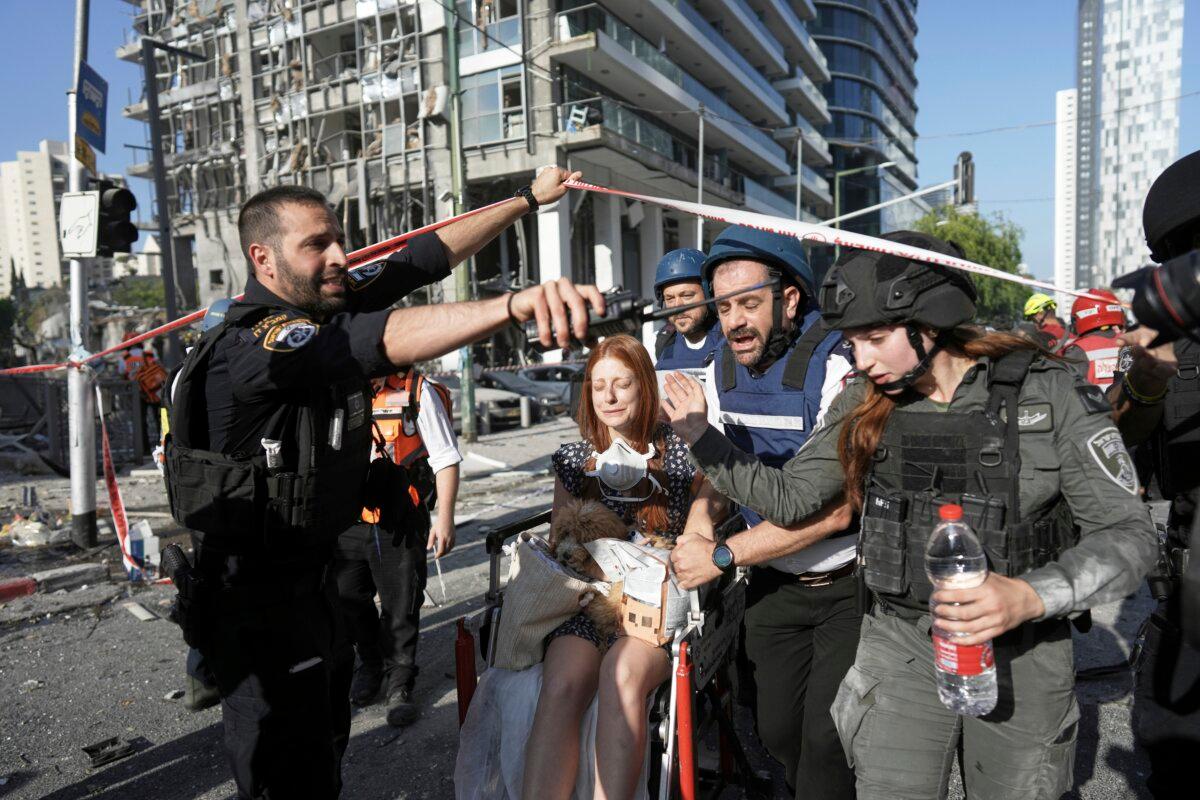
A woman is evacuated from the site of a direct hit from an Iranian missile strike in Ramat Gan, Israel, on June 19, 2025. (Oded Balilty/AP)
Putin Believes in Diplomatic Solution
On Monday, the Kremlin said Russia is prepared to mediate between Israel and Iran and to deal with Tehran’s uranium.
Russian President Vladimir Putin said on Wednesday that it’s “a delicate issue” but “in my view, a solution could be found.”
When asked what Russia’s reaction would be if Israel killed Khamenei, Putin said, “I don’t even want to discuss such a possibility.”
He said Russia had shared its proposals with Iran, Israel, and the United States.
“We are not imposing anything on anyone; we are simply talking about how we see a possible way out of the situation. But the decision, of course, is up to the political leadership of all these countries, primarily Iran and Israel,” Putin said.
On June 14, the council of the European Union said the bloc expressed “its deepest concern at the dangerous escalation that threatens to destabilise the Middle East following Israeli strikes on Iran and Iran’s response.”
Speaking at an event at the European Parliament in Strasbourg on Wednesday, Spanish MEP Antonio López-Istúriz White said, “Israel taking care of Hezbollah, taking care of Hamas, taking care of the nuclear program of Iran, it’s, for us, good.”
López-Istúriz White, from the conservative People’s Party, said: “After Israel, the next target is Europe for the regime. It has always been the case.”
He warned, “When the end might feel that it is appearing on the horizon, that is the most dangerous moment.”
The Associated Press contributed to this report.
A missile damaged the hospital and hit several other residential buildings. At least 240 people were wounded, four of them seriously, according to Israel's Health Ministry.
The hospital is open only for emergencies, the publication stated.
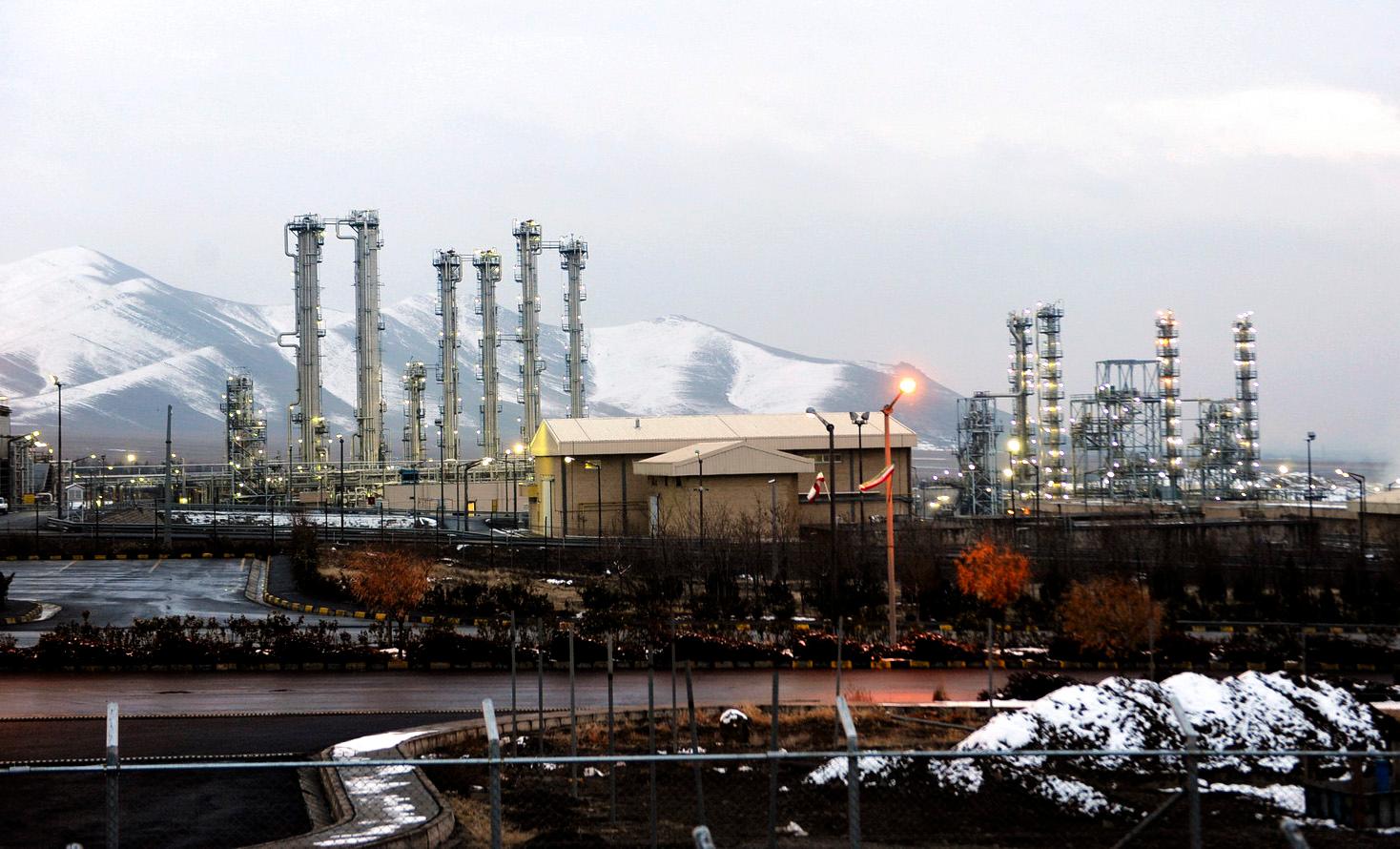

The Israeli Air Force struck two more of Iran’s nuclear sites on June 19, including a nuclear reactor capable of producing weapons-grade plutonium and the country’s largest uranium enrichment facility.
Just before 5 a.m. local time in Tehran, the Israel Defense Forces (IDF), on its Farsi-language channel, issued a warning urging anyone within 2 kilometers of the inactive Arak nuclear plant, since renamed Khondab, to evacuate immediately. Internet access in Iran has been cut for nearly 24 hours, according to NetBlocks, a global internet monitor. The regime imposed a nationwide shutdown, citing Israel’s alleged misuse of the network for military purposes.
The IDF later said that Israel’s air force had conducted strikes on Arak and another site at Natanz used to enrich nuclear material, as part of a wave of attacks on military targets in Tehran and other areas.
The Israeli Air Force said the strikes also hit military production sites that produced and assembled ballistic missiles, as well as Iranian air defense systems, including air defense batteries, missile storage sites, and radars.
The attacks were part of “the Air Force’s extensive operations to damage the Iranian regime’s nuclear weapons program,” it said.
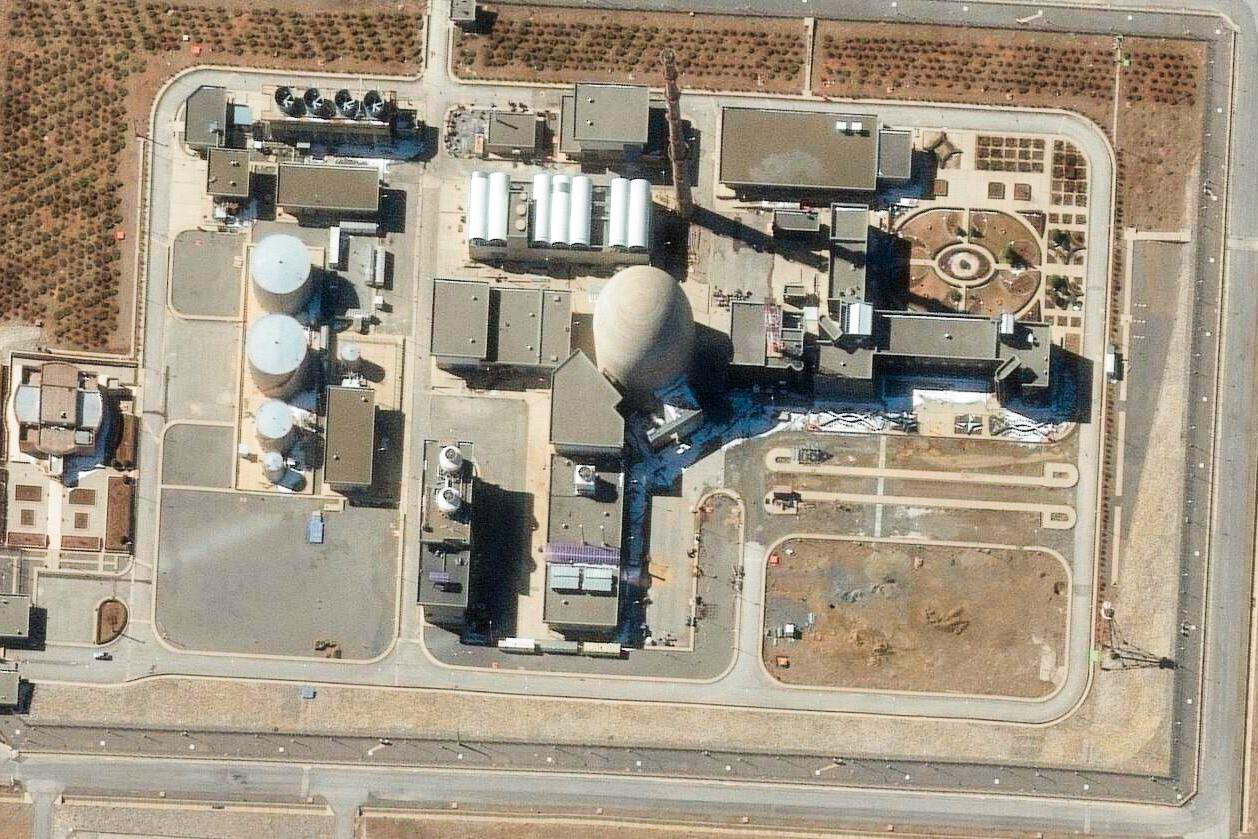
About 200 kilometers southwest of Tehran, the inactive Arak Nuclear Complex (IR-40), built in the 2000s for nuclear research and isotope production, hosts Iran’s IR-40 heavy water nuclear reactor.
The site has been the focus of International Atomic Energy Agency (IAEA) monitoring because of its potential for producing plutonium used in nuclear weapons. Iran’s current nuclear weapons potential is based on enriched uranium, as the regime does not have the capacity to process spent fuel from the reactor into weapons-grade plutonium.
The strikes on Arak “targeted components of the reactor designed to produce plutonium, in order to prevent its capability from being restored to nuclear weapons production,” the IDF said.
The Atomic Energy Organization of Iran said in a statement to Al Jazeera that no casualties were reported, and that “due to preemptive safety measures taken beforehand, there is no threat or harm posed to residents in the vicinity of the mentioned site.”
The organization said it had reported the attack to the IAEA.
The IAEA said that the site, which was under construction, was hit.
“It was not operational and contained no nuclear material, so no radiological effects,” the IAEA stated, adding that it does not believe the heavy water production plant accompanying the Arak heavy water nuclear reactor was hit in the Israeli attacks.
As for Natanz, which is Iran’s primary uranium enrichment site, the Israeli Air Force said the site contained “unique components and equipment used in the development of nuclear weapons.” Highly enriched uranium can be used for both civilian nuclear power and nuclear weapons.
The Natanz enrichment facility, which was built deep underground and protected by reinforced concrete walls, had already been targeted in Israel’s initial attacks on June 13. Those strikes destroyed Natanz’s above-ground pilot enrichment plant and caused damage to the underground enrichment halls and supporting infrastructure.
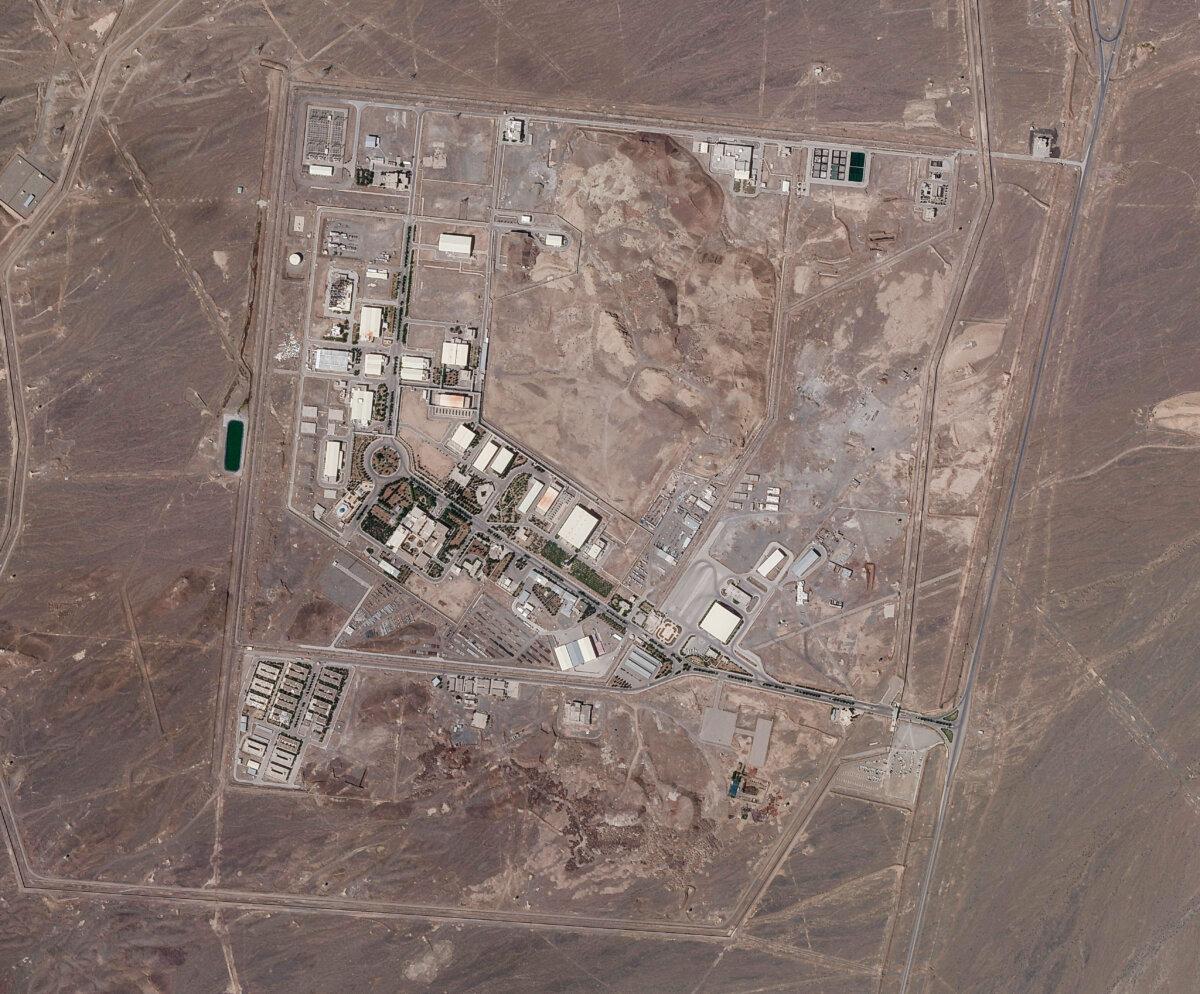
A satellite photo from Planet Labs Inc. shows Iran's Natanz nuclear facility on April 14, 2021. (Planet Labs via AP)
Israeli Prime Minister Benjamin Netanyahu said of the follow-up attack overnight into June 19, “We dealt heavy blows to Iran and disabled the Natanz nuclear facility.”
Israel has said its intelligence believes that the Iranian regime is within days or weeks of having enough highly enriched uranium to have the capacity for a nuclear weapon by using its advanced centrifuges to reach 90 percent enrichment.
IAEA Director General Rafael Grossi told Sky News presenter Yalda Hakim on June 18, “We came to the conclusion that we could not affirm there is any systematic effort in Iran at the moment to manufacture a nuclear weapon.”
He said the IAEA’s report found that Iran is enriching uranium to 60 percent, so “there were elements for concern.”
Israel Says Large Hospital Hit as Iran Retaliates
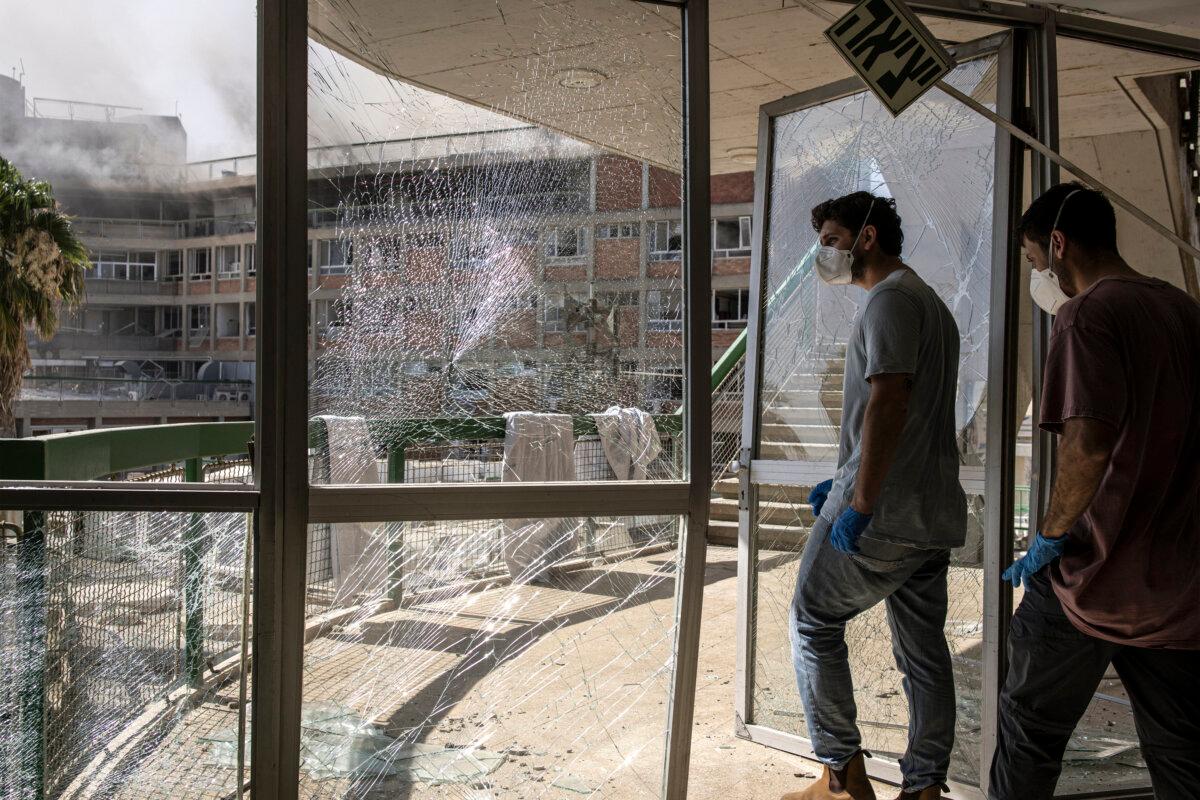
Emergency workers walk through a destroyed door at a building at Soroka Hospital after the facility was struck by an Iranian missile in Beersheba in southern Israel on June 19, 2025. (John Wessels/AFP via Getty Images)
Iran retaliated with a wave of missile attacks on central Israel and Beersheba in southern Israel, which damaged the Soroka Hospital complex, one of Israel’s largest hospitals, according to a hospital spokeswoman.
Netanyahu said in a post on social media platform X: “This morning, Iran’s terrorist tyrants launched missiles at Soroka Hospital in Beersheba and at the civilian population in the center of the country. We will exact the full price from the tyrants in Tehran.”
According to Arab media outlet Al Mayadeen, Iranian Major General Abdolrahim Mousavi praised the IRGC for its response to Israel’s overnight strikes.
The outlet also reported that Iranian state news agency IRNA claimed an Israeli military command center involved in cyber and intelligence operations, located at Gav Yam Technology Park just over one kilometer from Soroka Hospital, was the main target of the missile attack.
“The hospital was only exposed to the blast wave and did not suffer serious damage, but military infrastructure was a precise and direct target,” the report said.
The technology park houses some of Israel’s leading cyber units. The Ben Gurion University and the IDF’s C4I (Command, Control, Communications, Computers, and Intelligence) headquarters are also nearby.
In a statement posted to X, the IDF said: “The claim of an intelligence base or military equipment beneath the hospital is another lie. We are not so depraved as to endanger civilians. Attacking hospitals is a war crime.”
Israeli Health Minister Uriel Buso said, “A red line was crossed, it is a war crime by the Iranian regime.”
Israel’s ambulance service, Magen David Adom, said on June 19 that at least 65 people had been injured by the missiles that penetrated Israel’s air defense systems.
Israeli media also reported that the Ramat Gan area of Tel Aviv was targeted by Iranian missiles. The Tel Aviv Stock Exchange building was reportedly among the buildings damaged in the attacks.
“Air Force strikes in Iran tonight: 40 fighter jets attacked dozens of military targets with more than 100 munitions,” the IDF said in a June 19 statement posted to the social media platform X.
Targets included the Arak heavy water nuclear reactor, the Israeli military said.
“The reactor is designed to produce high-yield plutonium, which would enable the acquisition of nuclear weapons,” the IDF said.
“In light of various agreements, in recent years the Iranian regime has promoted the conversion of the reactor to one with a low plutonium production potential, which would not allow the acquisition of nuclear weapons.”
The IDF said that ballistic missile-related targets in Iran were also hit.
The Israeli Air Force “attacked a site used to develop nuclear weapons in the Natanz area last night,” the IDF said.
“The site houses unique components and equipment used to develop nuclear weapons, and projects are being developed there that enable the acceleration of the nuclear weapons program.”