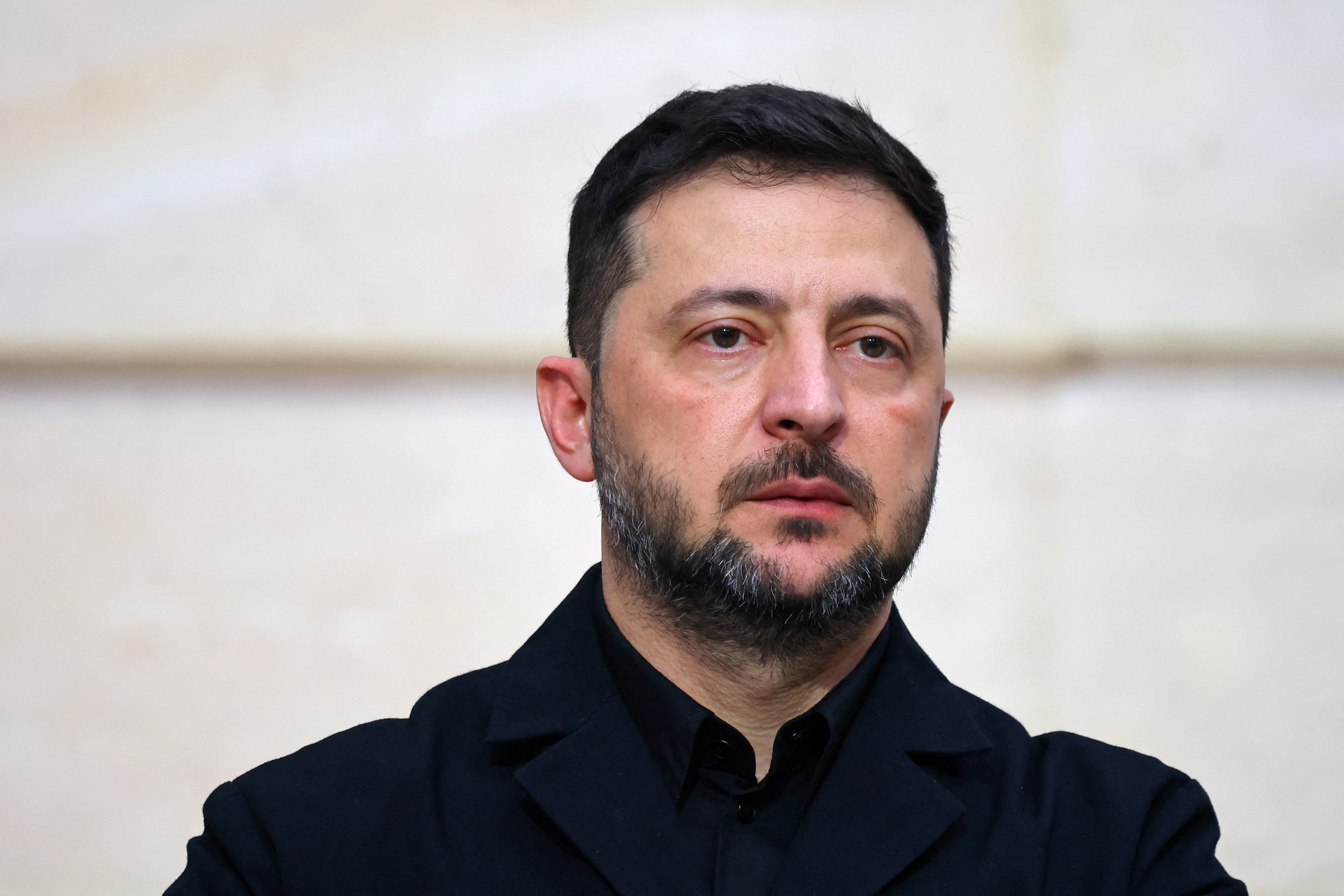

Ukrainian President Volodymyr Zelenskyy, on Dec. 13, announced that he will meet in the coming days with U.S. and European representatives in Germany regarding the fundamentals for an eventual peace agreement between Ukraine and Russia.
“We are currently preparing for meetings with the U.S. side and our European friends in the coming days. Berlin will host many events,” Zelenskyy said in an address on Dec. 13.
Zelenskyy said the Ukrainian military’s General Staff chief, Gen. Andrii Hnatov, and other Ukrainian military and security officials will work to arrange security guarantees for Ukraine. Zelenskyy said other members of the Ukrainian government will also meet with U.S. and European representatives to discuss reconstruction and development efforts in post-war Ukraine.
“Most importantly, I will be meeting with envoys of [U.S.] President [Donald] Trump, and there will also be meetings with our European partners, with many leaders, concerning the foundation of peace—a political agreement to end the war,” Zelenskyy said.
Territory appears to be a critical sticking point as it discusses an eventual peace plan with U.S. representatives.
Russian forces currently control about a fifth of Ukraine’s pre-2014 territory.
Last month, President Donald Trump transmitted a 28-point proposal to end the ongoing conflict. That plan would have treated areas of Ukraine under Russian occupation as de facto Russian territories.
Zelenskyy has shown reluctance to accept territorial losses to Russia.
In an interview with Ukrainska Pravda this week, Zelenskyy indicated the latest talks are now focused on whether some of the Ukrainian territory currently under Russian control should be turned into a special demilitarized or economic zone. The Ukrainian leader expressed doubts about the idea.
“They see Ukrainian troops leaving the territory of Donetsk Oblast, and the supposed compromise is that Russian troops would not enter this part of Donetsk Oblast. They do not know who would govern this territory, which they are already calling a ‘free economic zone’ or a ‘demilitarized zone.’ This is more or less how the compromise vision of the United States looks at the moment,” he said.
Zelenskyy told Ukrainska Pravda that he may not accept such a framework for the disposition of Ukraine’s pre-war territory, because “when you talk to us about compromise, you must offer a fair compromise.”
“We need to continue the conversation and try to find answers to all the questions in a way that makes everything more reasonable,” he said.
Russian and Ukrainian forces traded drone and missile barrages on Dec. 13.
Zelenskyy said the Russian side launched 450 attack drones and 30 missiles, which targeted the Kirovohrad, Mykolaiv, Odesa, Sumy, Kharkiv, Kherson, and Chernihiv regions of Ukraine. He said the main target was Odesa’s energy sector, and efforts were underway to restore power there.
On Dec. 13, the Russian Ministry of Defense stated that its air defense forces intercepted two U.S.-made rocket artillery projectiles and 169 fixed-wing unmanned aerial vehicles in the past day.
Guy Birchall contributed to this report.