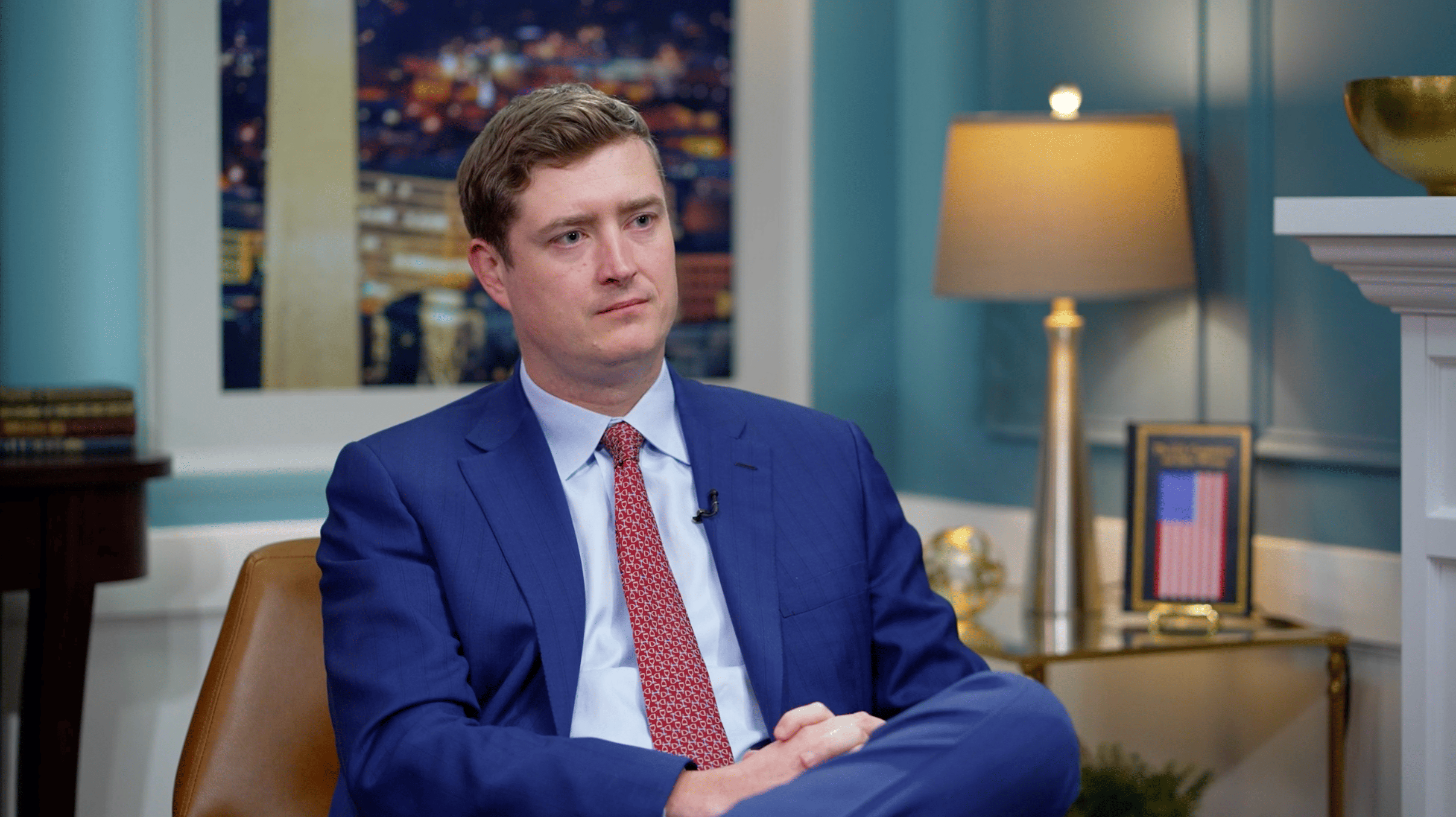


Canada’s state of defence expenditure and its deepening relationship with the Chinese regime threaten its shared security with the United States, says former chief of staff of the U.S. National Security Council Alex Gray.
Gray, who is currently a senior fellow at the Atlantic Council, previously served as deputy assistant to the U.S. president and chief of staff of the White House National Security Council during the first Trump administration.
“Canada is increasingly becoming a major strategic weak spot for the United States for a number of reasons,” Gray said in an interview with Jan Jekielek, senior editor and host of The Epoch Times’ American Thought Leaders.
Gray noted that Canada hasn’t been meeting its NATO commitments for defence spending, and doesn’t have a sufficient fleet of icebreakers for effective Arctic defence.
Gray added that the “lack of preparedness” of the previous Trudeau government when it comes to defence issues has “truly harmed U.S. core security interests.” Canada and the United States are members of a number of joint security and defence organizations, including NATO and the North American Aerospace Defense Command (NORAD).
“I think Canada’s lack of preparedness is a real threat to our shared security,” Gray said.
Prime Minister Mark Carney boosted Canada’s defence spending in Budget 2025, and has pledged to meet NATO’s defence spending target of 2 percent of GDP this fiscal year, and 5 percent by 2035. The Department of National Defence estimated Canada’s defence spending in the 2024–25 fiscal year was at 1.3 percent of the GDP, short of the committed 2 percent.
Carney also unveiled Canada’s first-ever defence industrial strategy last week, committing $6.6 billion over five years to bolster domestic military supply manufacturing, and setting out criteria for when equipment will be manufactured in Canada, developed in partnership with allies, or procured abroad.
China Relations
Gray said Carney’s pursuit to deepen ties with the Chinese Communist Party (CCP)-ruled China also threatens U.S. security and is creating a “strategically unsustainable situation” for the United States.
He said Canada is “offering themselves up on a platter to be devoured by the CCP for their strategic ends” by aiming to partner with the Chinese regime.
Ottawa and Beijing made several agreements during Carney’s trip to China in January, including a deal to slash Ottawa’s tariffs on Chinese electric vehicle imports for 49,000 vehicles every year, in exchange for lower Chinese tariffs on Canadian canola and other food products.
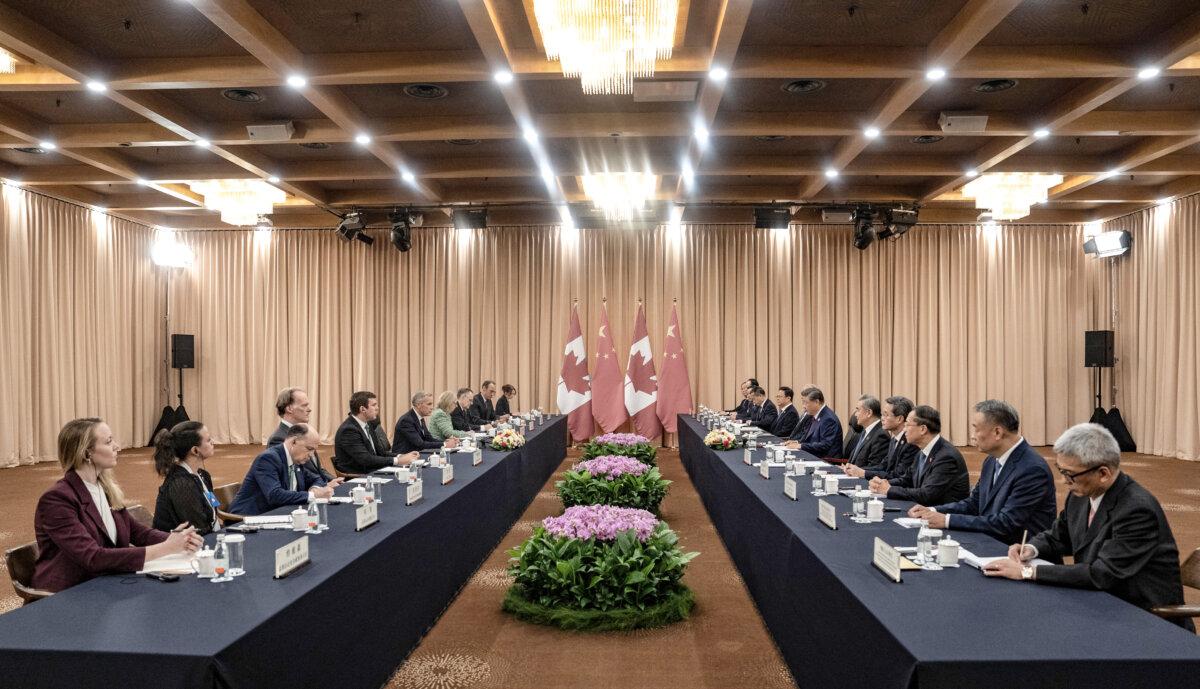
Prime Minister Mark Carney and the Canadian delegation (L) sit down with Chinese leader Xi Jinping and the Chinese delegation at the start of a meeting in Gyeongju, South Korea, on Oct. 31, 2025. (The Canadian Press/Adrian Wyld)
While in Beijing, Carney said the two countries have a “strategic partnership” and that relations between the two countries are entering “a new era.” He also said the progress made in the relationship sets Canada up well “for the new world order.”
Such comments were criticized by Conservatives and China watchers, who noted how drastically the Liberal government changed its tone on China, from when Carney said during the 2025 election campaign that China is Canada’s “biggest security threat” to now using terms like “strategic partnership.”
The U.S. administration has also criticized Ottawa’s pursuit to deepen ties with Beijing, with U.S. President Donald Trump saying China “will eat Canada alive,” and U.S. Commerce Secretary Howard Lutnick saying it could jeopardize the upcoming review of the United States–Mexico–Canada Agreement.
Carney has said that his government isn’t pursuing a free trade deal with China, and that the two countries are addressing some ongoing tariff and trade issues.
Security
Gray said the United States has a “geostrategic need” to keep Canada integrated with it economically, militarily, and politically.
“The challenge we’re facing with our relationship with Canada, is that Canada is increasingly going to be called on to do more in the Arctic, elsewhere, because that’s the direction of geopolitics,” he said. “But the United States is increasingly, from a voter perspective, a domestic political perspective, we’re just expecting more of our allies.”
The Arctic region has been the subject of heightened geopolitical debate among allies recently, after Trump said his country needs to acquire Greenland, which is an autonomous Danish territory, for “national security.” Trump has said that China and Russia have ambitions to take control of the territory, and argued Denmark is unable to adequately defend it.
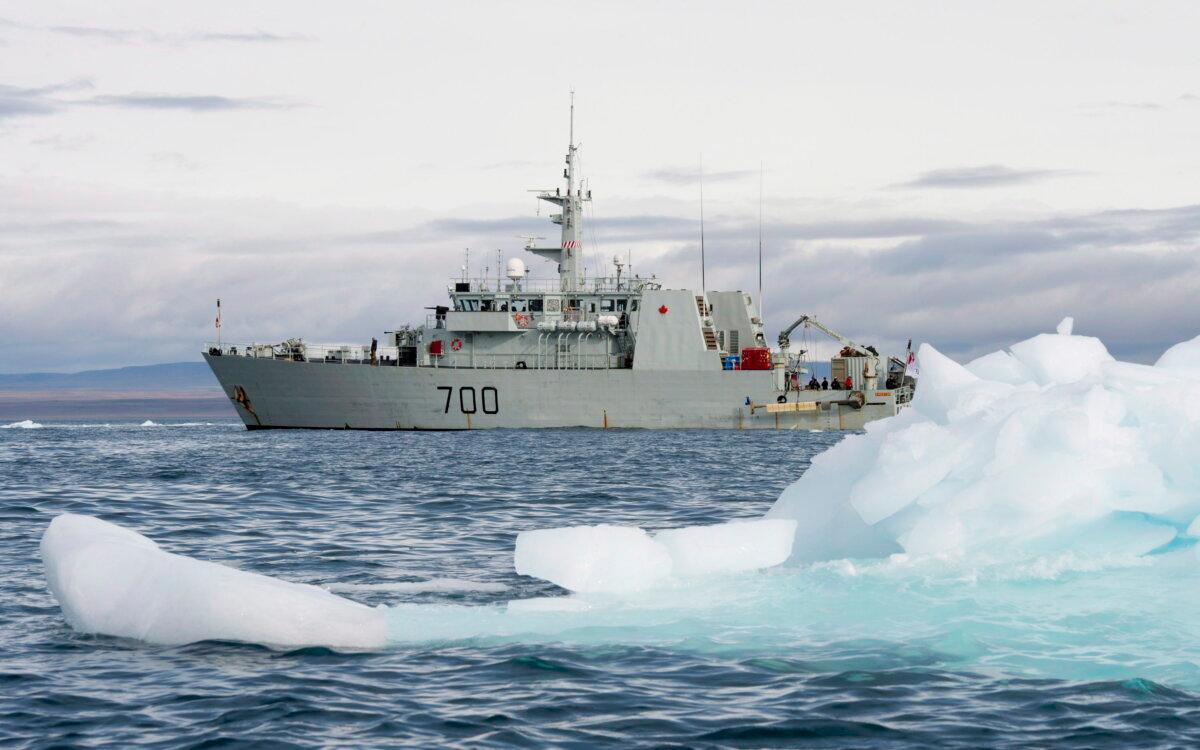
Ice floats past HMCS Kingston west of Pond Inlet in the Canadian Arctic, in a file photo. (The Canadian Press/Adrian Wyld)
Tensions over the issue eased in late January after Trump said he would not take the territory by force and that an arrangement was being discussed to allow the United States greater access to Greenland for defence purposes.
A senior official at the Canadian Security Intelligence Service (CSIS) told MPs in mid-February that although Russia maintains a “tremendous interest and focus” on the Arctic, China poses the greatest threat in the region.
Carney has said that his government wants to deepen security and trade relations with the United States, and that Canada is boosting its military capability for greater defence of its sovereignty.
Gray said the United States will have to find a balance between “biting [its] tongue” about the things it doesn’t like when it comes to Canada, and being “aggressive” when it comes to saying Canada has to ramp up its defence spending to contribute more to defending the Western Hemisphere.
“You can’t defend your homeland without having a secure hemisphere,” he added.
“You have to keep what the National Security Strategy calls extra hemispheric powers—Russia, China, Iran—from dominating or exerting coercive influence in our hemisphere.”
Carney has said that there are “many strengths” to Canada’s relationship with the United States, but that the current situation has made Canada too dependent on its southern neighbour.
“It’s a dependency we want to change in a positive way by building up our defence capacities here and our other partnerships abroad,” Carney said on Feb. 17.