
The Trump administration is proposing an underground visitor screening center beneath a park near the White House as part of broader plans to modernize security and visitor access to the complex.
The plans include visuals of a 33,000-square-foot facility to be built beneath Sherman Park, southeast of the White House and just south of the Treasury building. They were submitted ahead of an April 2 meeting with the National Capital Planning Commission, which oversees federal construction.
Should the plans be approved, the new facility would boast seven lanes to process guests, which is projected to cut wait times.
Construction could begin as early as August, and the White House hopes to have the facility operational by July 2028, just six months before the end of President Donald Trump’s term.
Prior to construction in the East Wing, the park has long been where tourists and guests bound for the White House have reported for security checks through trailer-type structures before heading to the East Wing entrance.
Currently, visitors are checked near Lafayette Park, which is across from the White House on Pennsylvania Avenue.
Project plans state that the monument of Union Gen. William Tecumseh Sherman in Sherman Park would not be removed.
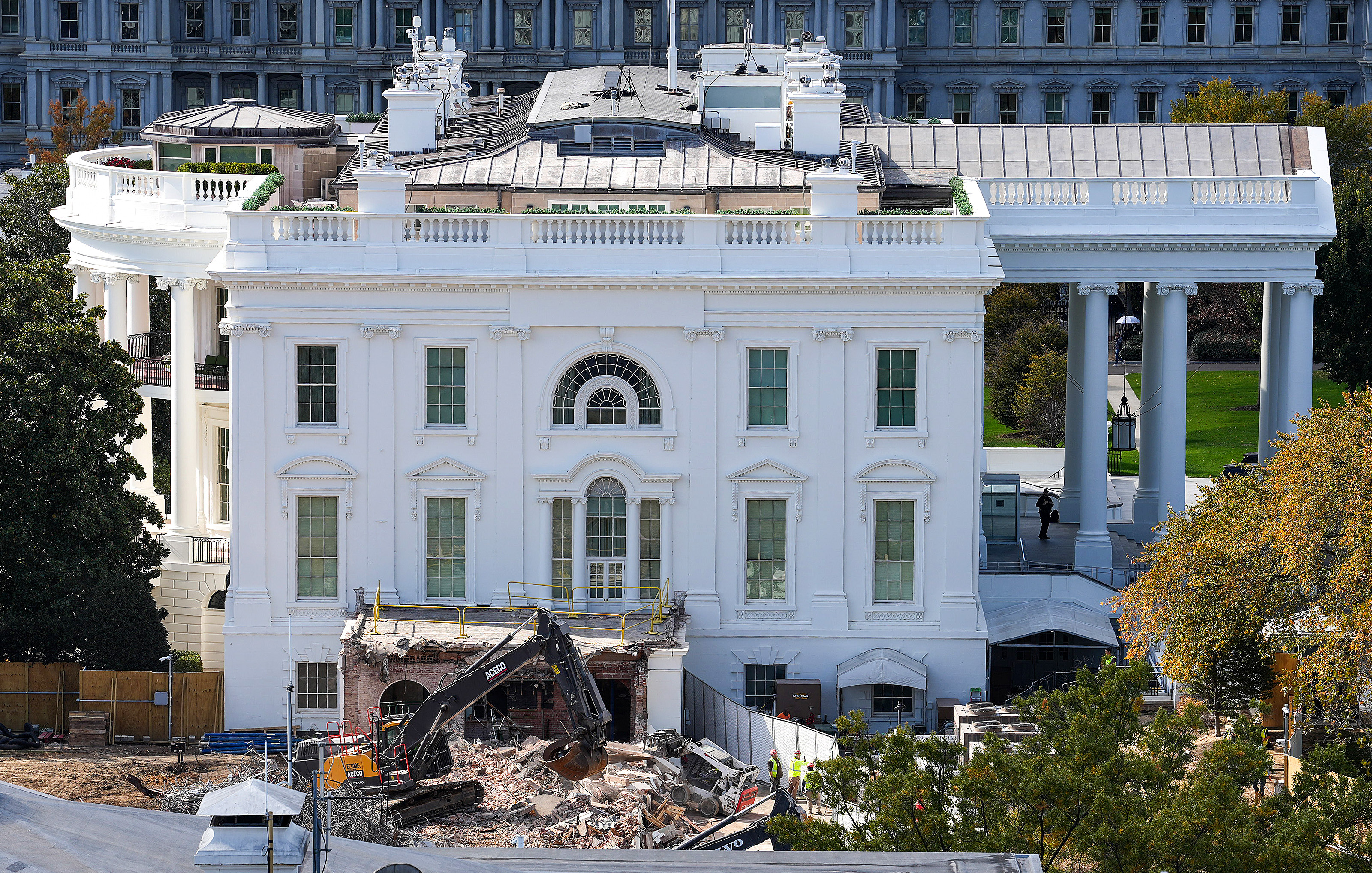
On the same agenda is a final vote on the plans to build a 90,000-square-foot ballroom where the East Wing previously stood.
On Feb. 19, the U.S. Commission of Fine Arts, an independent federal agency, approved a proposal for a new White House ballroom.
The design for the new building, shared by Trump on Truth Social on Feb. 3, depicts a complex that would match the scale and height of the White House.
“This beautiful building will be, when complete, the much anticipated White House Ballroom—The Greatest of its kind ever built!” Trump wrote, noting that the design is “totally in keeping with [the] historic White House.”
Speaking of the ballroom plans, Rodney Mims Cook Jr., chairman of the Fine Arts Commission, said: “Our sitting president has actually designed a very beautiful structure.
“The United States just should not be entertaining the world in tents.”
Demolition on the wing began in October 2025, paving the way for the ballroom, expected to cost $200 million in private donations.
The White House East Room could seat about 200 guests, while the new building is projected to hold nearly 1,000 guests.
In December 2025, the National Trust for Historic Preservation filed suit against the Trump administration over the ballroom construction.
The complaint alleged that the project violates federal statutes, stating that it should be halted “until the necessary federal commissions have reviewed and approved the project’s plans; adequate environmental review has been conducted; and Congress has authorized the Ballroom’s construction.”
However, on Feb. 26, a federal judge allowed the construction to continue, citing the wrong legal authorities in the trust’s motion.
“[The plaintiff] bases its challenge on a ragtag group of theories under the Administrative Procedure Act and the Constitution,” the Washington-based judge said.
Jackson Richman and Matthew Vadum contributed to this report.