
Liz Moore’s son Bodin struggled from birth: feeding and sleeping problems, followed by developmental and academic delays, social awkwardness, and finally an ADHD diagnosis at age 6.
By then, Moore had read “Sleep Wrecked Kids,” which connects airway health with behavior and learning issues. She became convinced there was more she could do than accept that her son had a neurodevelopmental disorder.
“I knew that something was not right and started with the least invasive thing,” Moore, an athletic trainer, told The Epoch Times. She first persuaded Bodin’s dentist to fit him with palate expanders to open his airway. Bodin stopped wetting the bed but still wasn’t sleeping through the night.

Liz Moore with her son Bodin, whose ADHD symptoms have resolved since having his adenoids and tonsils removed. (Photo courtesy of Liz Moore)
Next, Moore took him to an otolaryngologist—an ear, nose, and throat specialist—who surgically removed Bodin’s tonsils and adenoids. The doctor discovered his airway was 99 percent blocked by enlarged adenoids.
Bodin became a different child. He’s now social, academically bright, sleeping well, and playing sports. His story reveals that attention-deficit/hyperactivity disorder (ADHD) symptoms can sometimes stem from physical causes outside the brain that nevertheless affect it.
Bodin isn’t the only case. For 12 years, Maria Rickert Hong has documented families who have improved ADHD symptoms by addressing underlying health issues. Hong cofounded Documenting Hope, a nonprofit that shares potential causes and solutions for developmental conditions.
“There are so many root causes you can look into,” Hong told The Epoch Times. "A lot of times ADHD masquerades as something else.”
ADHD Easily Misdiagnosed
Medical conditions are among the most common reasons for ADHD misdiagnosis, yet medical evaluations are rarely part of an ADHD assessment process.
ADHD diagnoses ought to be made by a child psychiatrist, pediatrician, or a health care professional with experience diagnosing ADHD, according to an article in Neuropediatrics. But there’s growing concern that children are getting a diagnosis and medication too quickly. Among preschool-age patients who visited their primary care doctor for ADHD, 42.2 percent had medications prescribed within 30 days of their diagnosis, according to a study published in JAMA Network Open.
The Neuropediatrics article noted that epilepsy, thyroid disorders, sleep disorders, drug interactions, anemia, and leukodystrophy (genetic disorders that affect the brain) can all mimic ADHD and should first be ruled out when it is suspected that a child has ADHD.
There are several medical conditions—including disordered breathing and inflammatory bowel disease—that can be misdiagnosed as ADHD and may show a similar presentation to ADHD, particularly with inattentive symptoms, a review published in Brain Sciences concluded.
Sometimes the solutions are surprisingly simple. Addressing basic needs like adequate sleep, movement and exercise, sunlight, and nature can alleviate symptoms in some children, said Hong, a certified holistic health counselor. Balanced blood sugar and regular bowel movements are also important, she added.
5 Conditions Mimicking ADHD
Here are a few common underlying causes for ADHD-resembling symptoms:
1. Poor Sleep
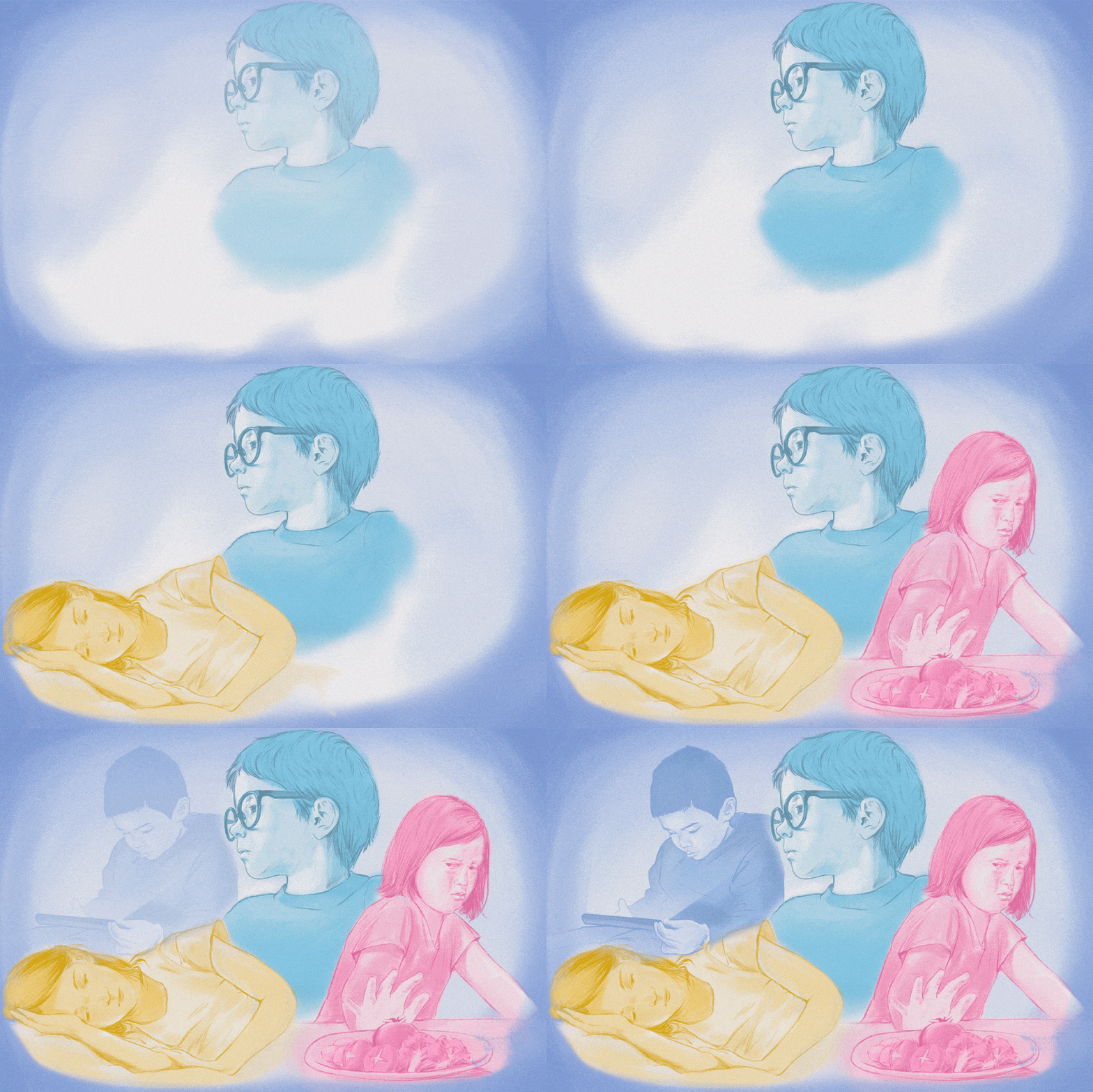
Sleep disturbances—especially poor breathing during sleep—can affect the brain at all ages. Children who don’t get quality sleep are at high risk of behavioral difficulties such as hyperactivity.
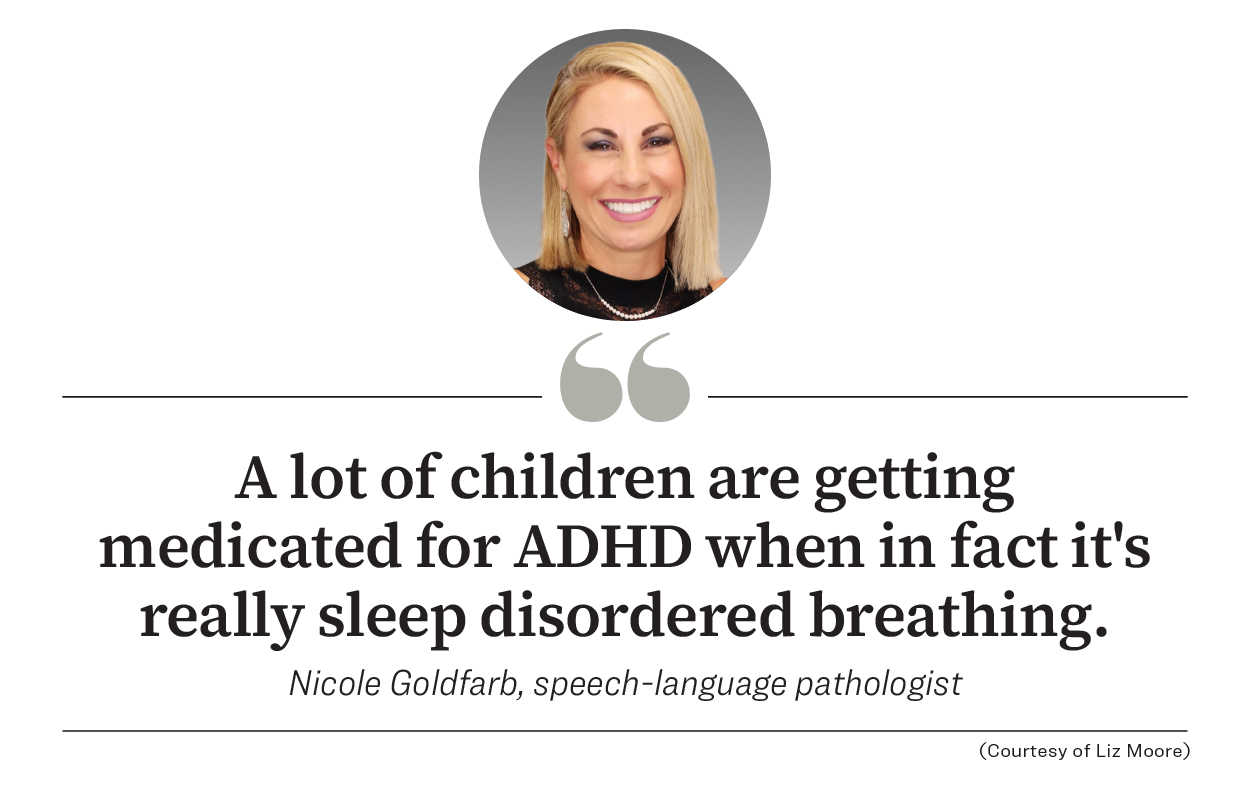
“A lot of children are getting medicated for ADHD when in fact it’s really sleep disordered breathing,” Nicole Goldfarb, a speech-language pathologist, told The Epoch Times. “Sometimes it’s not so obvious to a parent unless they’re in the room with their sleeping child.”
Goldfarb initially attributed her son’s inability to sit still in music class as a toddler to ADHD. Fearing she'd disturb his rest, she rarely checked on him at night. When she finally observed him, she wondered if he was at risk of dying as she saw him snoring, gasping for air, and tossing and turning.
It turned out he had extremely large tonsils and adenoids that needed to be removed—one of many causes of sleep-disordered breathing in children.
Children with breathing difficulties during sleep suffer from lack of oxygen and fragmented sleep—both drivers of inflammation that can affect the brain structure, particularly causing attention deficit.
Other signs of nighttime breathing problems include coughing or choking, night sweats, teeth grinding, frequent nighttime wakings, mouth breathing, bed-wetting, and ADHD-like symptoms such as lack of focus, impulsivity, and hyperactivity.
Children with early sleep-disordered breathing were up to 60 percent more likely to have behavioral problems at age 4 and up to 100 percent more likely by age 7, according to a study of 11,000 children published in Pediatrics. The worse the sleeping problems were, the worse the behavioral issues, with hyperactivity being most common.
Screening tools for sleep-disordered breathing could be coming soon to dental offices. Goldfarb, also certified in orofacial myology, is among the experts helping develop it.
She later learned her son also had periodic limb movement disorder, a condition related to low iron/ferritin that can also mimic ADHD because it disrupts sleep. He couldn’t stay seated and was pacing in class.
2. Vision Impairment
A systematic review and meta-analysis published in Molecular Psychiatry found an association between ADHD and reduced vision problems such as difficulty distinguishing subtle color differences, reduced contrast sensitivity, problems with shifting focus between distant and near objects, uncoordinated eye movement, cross eyes, and lazy eyes.
Visual impairment can alter not only cognitive capabilities but also psychosocial development, as it’s likely to limit one’s engagement in a wide variety of activities, the review stated.
One possible reason is that the brain is devoting excessive resources to visual tasks, robbing processing power from parts of the brain associated with sustained attention. Another explanation is that it’s difficult to focus on tasks such as reading when one’s eyes don’t work correctly.
“Functional vision problems are brain problems. Vision is how our brain filters, organizes, processes all the information coming into the eyes to derive meaning and then directs the appropriate action,” said Dr. Bryce Appelbaum, an optometrist with additional training in developmental and behavioral vision care. “Vision directs behavior.”
You can have 20/20 eyesight but still suffer from vision problems, Appelbaum added.
Appelbaum told The Epoch Times that he had problems with sports and motion sickness as a child, and his son used to hate reading—situations due to functional vision problems that required treatment.
The American Optometric Association estimates 80 percent of classroom learning is through vision. A proper diagnosis and treatment—which can involve glasses, surgery, or eye and brain therapy—can restore function, Appelbaum said.
Functional eye doctors are listed online with the Optometric Vision Development and Rehabilitation Association.
3. Screen Overuse
“Now that screen time is taking over so many of our children’s lives and our lives, it’s presenting all this new visual stress,” Appelbaum said. “We’re asking our brains and our eyes to do things that we’re not equipped for as human beings.”
Different eye movements are used for reading on a screen, versus on a page, he said, noting that brightness, contrast, glare, and high-energy light put a strain on eye coordination and focusing. Screens can impair everyday tasks, while exercising and strengthening the eyes can help reverse vision and ADHD problems, he said.

(ediebloom/GettyImages)
Excessive screen time appears to change the structure of the brain—a smaller cortical volume that’s associated with ADHD—as well as altering brain function such as neural connectivity.
A case study published in Environmental Research revealed that a 9-year-old boy’s ADHD diagnosis was eliminated after reducing screen time. He previously averaged more than seven hours each weekday playing video games on a television, computer, and phone and had symptoms of impulsivity, inattention, and aggression.
According to a meta-analysis, among 81,234 children across nine studies, those who spent more than two hours a day on screens were about 50 percent more likely to show ADHD-type symptoms than kids who used screens less than two hours a day.
“Therefore, it is necessary to reduce screen time per day in children to prevent the occurrence of ADHD,” the authors wrote.
4. Lack of Protein
The solution to attention and behavior problems may be simpler than it seems: eating enough protein, according to neuro-nutrient pioneer Julia Ross.
Complete protein—found in meat, fish, eggs, dairy, and soy—contains amino acids such as tyrosine and tryptophan, which the brain uses to make neurotransmitters that control attention, mood, and behavior. People with ADHD often have low levels of dopamine, norepinephrine, and serotonin, which these amino acids convert into.
Neurotransmitters are also influenced by exercise, caffeine, and sleep. Stimulant medication for ADHD works by temporarily increasing dopamine and norepinephrine.
Ross relayed a story of a hyperactive boy who was fully engaged during a meeting with his mom but only if he was running circles around the room. After consuming a chewable form of low-dose tryptophan called 5-HTP, he calmed down, sat beside his mom, and continued to stay engaged.
Later, Ross said, his mom left the room. He ate a piece of candy from his pocket and was immediately hyperactive once more. Sugar consumption is positively associated with ADHD, too.
“We got rid of his ADHD that day, but things have gotten much worse nutritionally for kids today,” Ross said. “The children and adults who come in are in much worse shape now. We never had these epidemics of depression, anxiety, ADHD, addiction, and autism before the 1970s when our diet included complete protein, healthy fats, and moderate carbs.”
5. Delayed Development
Delays and atypical patterns of baby developmental milestones and primitive reflexes—instinctive responses newborns have that allow them to eat, breathe, and lay the groundwork for crawling and walking—have been suggested as potential factors in some neurodevelopmental disorders.
Babies typically integrate primitive reflexes by 6 to 12 months, replacing them with more sophisticated voluntary movements that allow for a natural flow of developmental milestones.
Children with ADHD often have atypical development related to motor skills, according to a review in Behavioral Sciences. For instance, sitting may be delayed, posture may be poor, and milestones may not follow unusual patterns.
A systematic review in Frontiers in Psychiatry found correlations between ADHD symptoms in children and the persistence of certain primitive reflexes, particularly those that help babies prepare to crawl.
A 12-week reintegration program of 2,175 children with ADHD found improvements in reflex integration through rhythmic movement, listening, and math exercises, according to results published in Frontiers in Public Health.
Retained primitive reflexes can influence how children hold their bodies, according to Sargent Goodchild, who owns Active Healing, a clinic that offers movement therapy. When schools ban compensating postures such as slouching or sitting on their legs, children may seem distracted—staring out windows while their brains struggle to manage the reflex.
“It makes it really hard to concentrate unless you’re locking yourself out of the position,” he said.
End Goal: Effective Treatment
Hong suggests viewing ADHD as a whole-body condition and addressing simple solutions first. That could mean adding more minerals to a child’s diet or teaching both yourself and your child calming techniques.
It can also help to work with a practitioner who can thoroughly examine your child’s medical history, including birth trauma, to identify underlying conditions. Parents such as Moore who keep researching often find success, Hong said.
“Work with a specialized practitioner, read some books, find out more, just keep digging. There’s a lot of information out there.”
Even though Bodin is thriving, Moore continues his orthodontic care—braces and now a retainer to maintain a broad palate for better breathing. She even used palate expansion herself and closely monitors her 9-month-old for any signs of breathing problems.
Having witnessed Bodin’s transformation, Moore is frustrated that more doctors aren’t trained to identify airway and other physical issues that mimic behavioral problems in children. She feels she missed six years getting to know her son, whose attention deficits and delays prevented him from holding a conversation until after surgery.
“We just had a parent-teacher conference the other day and his teacher said everyone wants to sit with him at lunch,“ Moore said. ”He’s fun. He’s social. He’s now playing kickball and basketball during recess, which he would never do before. He started doing karate—all these different things he would never have let us do before.”