
President Donald Trump issued an executive order on Aug. 6, raising the tariff rate on Indian goods entering the United States to 50 percent.
Trump pointed to India’s continued purchases of Russian crude oil as justification for the significant increase in levies on the nation’s exports.
While India has pushed back against the president’s new tariff rates, the White House says its imports have helped fund Russia’s aggression in Eastern Europe.
Here is what to know about India’s imports of Russian oil.
Sights on Russia
A new strategy for the current administration is to address India as a key piece in resolving the Ukraine–Russia conflict.
The president told CNBC’s “Squawk Box” in an Aug. 5 interview that India’s purchases of Russian crude oil are “fueling the war machine.”
In an Aug. 5 note, ING economists said: “Whether the threat of secondary sanctions on India’s financing of Russia is the core goal remains to be seen. Or indeed, this move may be increased U.S. leverage on India to open up its domestic economy to agricultural imports or commitments to buy U.S. energy instead.”
India–Russia relations have intensified in recent years.
India’s Russian Oil Imports
India has rapidly transformed into one of Russia’s most important trading partners, with annual bilateral trade rising to nearly $69 billion.
This has been fueled primarily by energy transactions.
Before Russia invaded Ukraine, India’s annual crude oil imports from Russia hovered at about $1 billion. But since the war began, imports have skyrocketed, reaching $25.5 billion in 2022, $48.6 billion in 2023, and $52.7 billion in 2024, according to the U.N. Comtrade database.
Additionally, India has bought 19 percent of Russia’s coal exports since December 2022.
Experts at the Observer Research Foundation think tank estimate that India accounts for more than one-third of Russia’s crude exports, behind China’s 50 percent share.
In the first half of 2025 alone, India imported Russian oil at an average rate of 1.75 million barrels per day, underscoring the deepening energy ties between the two nations.
Because of sanctions and Western-led efforts to isolate Russia, the Group of Seven (G7) and the European Union introduced a price cap of $60 per barrel on Russian crude. This has enabled countries such as China and India to purchase Moscow’s petroleum products at a significant discount.
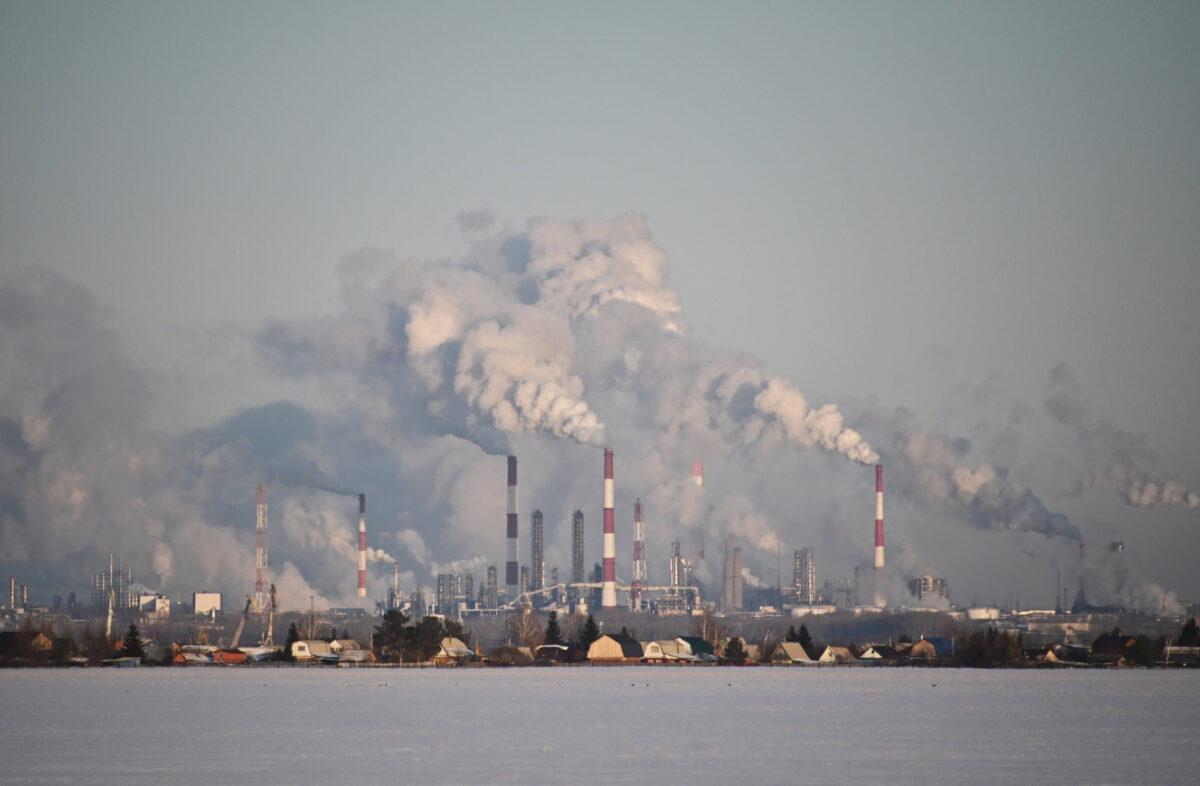
Gazprom Neft's oil refinery in Omsk, Russia, on Feb. 10, 2020. (Alexey Malgavko/Reuters)
However, India’s savings have narrowed as global oil markets have stabilized since the outbreak of the war in Eastern Europe.
Brent, an international benchmark for oil prices, is trading at about $68 per barrel on London’s ICE Futures exchange, down by 9 percent this year. This has prompted speculation that the G7 and the EU will consider lowering the price cap to apply additional pressure to Moscow.
Energy Dependence
India imports virtually all of its energy.
For years, India’s strategy has been to balance geopolitical relationships with the world’s major powers, whether the United States or China, without aligning with any alliance or bloc. Since the G7 price cap was not a blanket ban, nonparticipating countries such as India were not obliged to shun Russian oil.
Despite U.S. grievances over the strengthened relationship between the two sides, Indian officials said these transactions were critical for supporting the national economy and ensuring that the population—1.46 billion people as of mid-2025—had access to affordable energy.
A spokesperson for India’s Ministry of External Affairs stated on Aug. 5 that the government increased its purchases of Russian oil only after access to traditional supplies had been diverted to Europe.
However, even with oil prices trading firmly below pre-war levels, data indicate that India has yet to slow its demand for Russian energy.
“Indian refiners have temporarily ramped up Russian crude imports, without any visible signs of concern emerging from the political leadership,” the Observer Research Foundation wrote.
The United States has accused India of reselling Russian oil on the open market, allegedly benefiting Russia.
“India’s subsequent reselling of this oil on the open market, often at significant profit, further enables the Russian Federation’s economy to fund its aggression,” Trump’s executive order reads.
India’s Trade With Russia, US
Before the war, Russia and India had begun to foster economic ties.
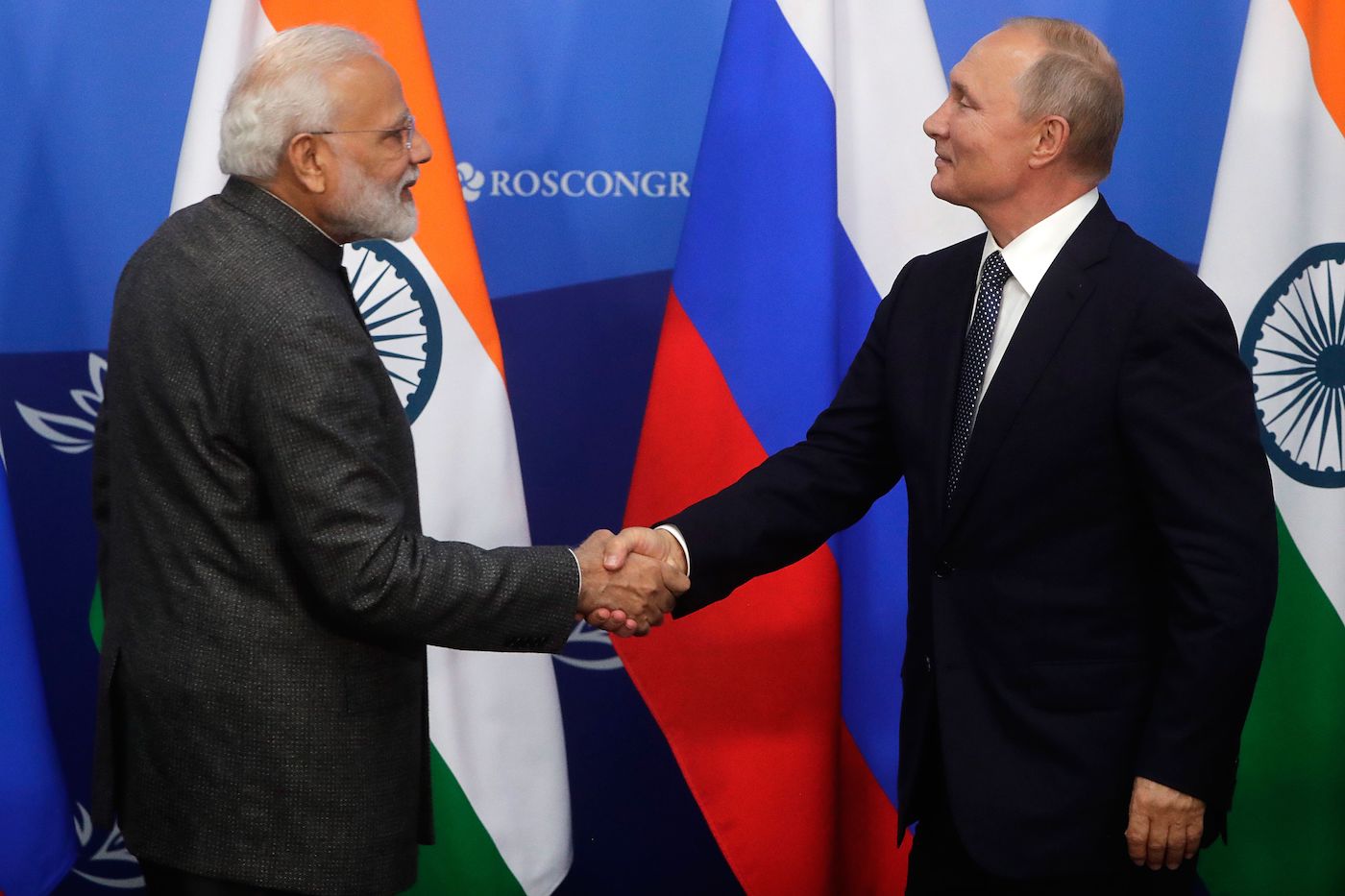
In December 2021, Russian President Vladimir Putin and Indian Prime Minister Narendra Modi signed a flurry of trade and arms deals. Putin and Modi also signed nine agreements related to trade, research, and climate action in July 2024.
But while the two sides attempt to bolster trade, the United States remains a crucial market for India’s economy.
The U.S.–India trade relationship is enormous, totaling approximately $212 billion. However, like other key trading partners, India exports more to the United States than it imports. Trump has regularly highlighted the South Asian economic powerhouse’s numerous tariffs and nontariff trade barriers, describing them as “strenuous” and “obnoxious.”
“We have done very little business with India; their tariffs are too high, among the highest in the world,” Trump said in a Truth Social post last week.
According to the U.S. Trade Representative’s Office, the U.S. goods trade deficit with India was almost $46 billion in 2024, representing a 5.9 percent increase from 2023.
Deepali Bhargava, regional head of Asia-Pacific research at ING, said goods to the United States account for approximately 18 percent of India’s exports, while Russia’s share of India’s shipments is about 1 percent—meaning that the sky-high tariff rate “could have a meaningful impact on [gross domestic product] growth.”
In the second quarter, the gross domestic product growth rate was 7.4 percent, from an upwardly revised 6.4 percent expansion in the first three months of 2025. Early estimates suggest that third-quarter growth will be little changed.
“We think it’s likely that both nations will continue the negotiations, using levers such as reducing imports from Russia, and India could end up with a lower tariff rate,” Bhargava said in an Aug. 6 note.
In the meantime, she said, investor sentiment for India—at home and abroad—could diminish, potentially forcing the Reserve Bank of India to lower interest rates by the year’s end.
The Epoch Times has reached out to the Indian government for comment.