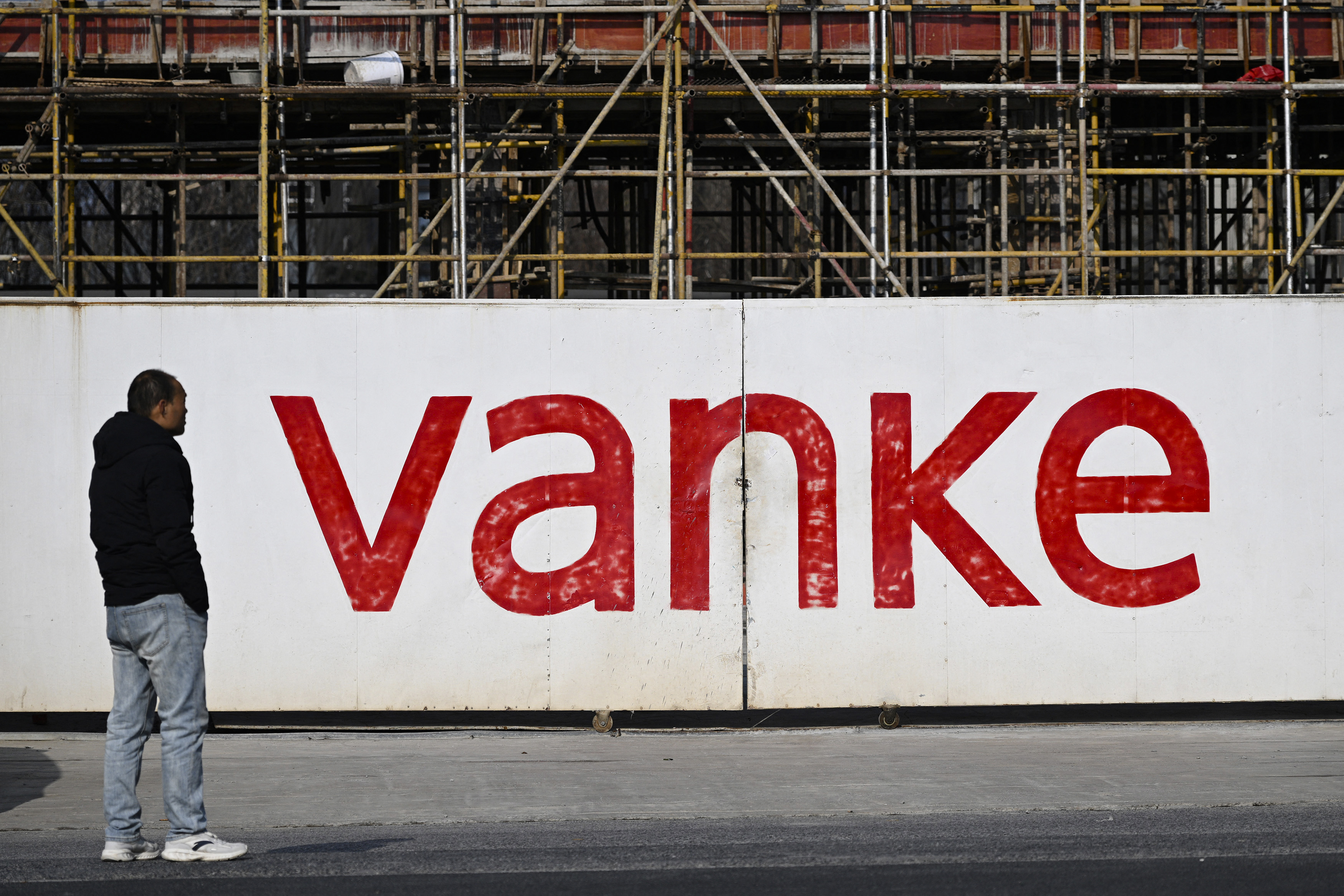

A widening anti-corruption probe into China Vanke, a leading Chinese real estate developer, is sending shockwaves through the country’s embattled real estate sector, an analyst says.
In recent days, reports have emerged that multiple current and former Vanke executives have been detained or placed under investigation, triggering anxiety within the company’s management ranks and fueling speculation about a broader political and financial reckoning.
According to a March 30 report by Chinese financial media outlet Sina, Wu Zhongyou, former general manager of Vanke’s Guiyang unit, was detained in an investigation. Around the same time, Wang Runchuan, a former senior executive once seen as a protégé of longtime Chairman Yu Liang, was also detained.
Both cases involve projects dating back more than a decade, suggesting that the Chinese regime is reopening old deals, particularly those tied to partnerships with state-owned enterprises.
Wang, who previously led Vanke’s Yunnan operations, had overseen a significant expansion in sales, from roughly 2 billion yuan (about $290 million) to nearly 20 billion yuan ($3 billion) over five years. He left the company in 2024, citing plans to study in Hong Kong.
Elsewhere, individuals linked to a major Vanke development project in Shenzhen, China, have also been detained, with investigators focusing on past financial arrangements involving asset management firms.
The scope of the investigation appears to be widening.
Executives Under Scrutiny
Sina estimates that more than 25 key Vanke executives have either left their positions or been detained in recent years. At least 13 have been investigated, prosecuted, or subjected to criminal measures between 2022 and now.
Meanwhile, Chinese financial news outlet Caixin reported in late January that Yu had been unreachable for weeks, raising further questions about the leadership vacuum at the top of the company. Yu has not appeared in any reports since then.
Moreover, Wang Shi, Vanke’s retired founder, is facing travel restrictions, according to the Caixin report. Since late 2024, the company has tightened controls on overseas travel for senior executives, with some family members briefly subjected to exit bans in China.
The crackdown comes as Vanke grapples with mounting financial pressure.
Once seen as a model operator in China’s property boom, Vanke’s trajectory has sharply reversed. In December 2025, Fitch Ratings downgraded Vanke’s ratings to “RD,” which stands for “restricted default.”
Vanke reported its first annual loss since listing in 2024, followed by even deeper losses in 2025, according to data reported by Chinese finance news outlet ZFNET. Combined losses over the two years reached more than 130 billion yuan ($19 billion), while profit margins collapsed to 2 percent.
The company’s balance sheet reflects growing strain, according to Chinese online news outlet NetEase. Total liabilities stood at approximately 872.9 billion yuan ($127 billion) as of the third quarter of 2025, and the company’s short-term debt exceeded 150 billion yuan ($21 billion). Cash reserves were roughly 60 billion yuan ($9 billion), leaving a funding gap of more than 90 billion yuan ($13 billion).
In an unusual move, Chinese financial media outlet Sina reported on March 28 that Vanke has also asked core executives to return compensation earned between 2021 and 2024. The report indicates that the clawbacks apply to all senior leadership during that period.
The move underscores both the severity of the company’s financial stress and the extent of internal accountability measures currently being implemented.
A Political Cleanup or Structural Reset?
One analyst says the investigation may go beyond a standard anti-corruption campaign, revealing deeper structural tensions within China’s business environment, in which private companies often work closely with state entities.
“This is not just about discipline or corruption,” Sun Kuo-hsiang, a professor of international affairs and business at Nanhua University in Taiwan, told The Epoch Times. “It looks more like a comprehensive restructuring carried out under the banner of anti-corruption.”
He pointed to the growing role of state-backed shareholders such as Shenzhen Metro, which now holds more than 27 percent of Vanke. Company statements in early 2025 also signaled a greater reliance on state resources in management and operations.
According to Sun, the process appears to involve multiple layers, including political accountability through investigations, management reshuffling, and financial stabilization backed by state capital.
The broader impact, he warned, could be significant. Executives across the property sector may become more risk-averse, avoiding off-balance-sheet financing and slowing project decisions. Cooperation between local governments and private developers could decrease, with resources increasingly flowing to state-backed companies.
Most importantly, the market may interpret Vanke’s troubles as a turning point, according to Sun.
“If even Vanke—once seen as one of the last ‘safe’ developers—has reached this stage of restructuring and state support, the signal to the market is unmistakable,” Sun said.
Gao Hui and Luo Ya contributed to this report.