
Period-Related Symptoms
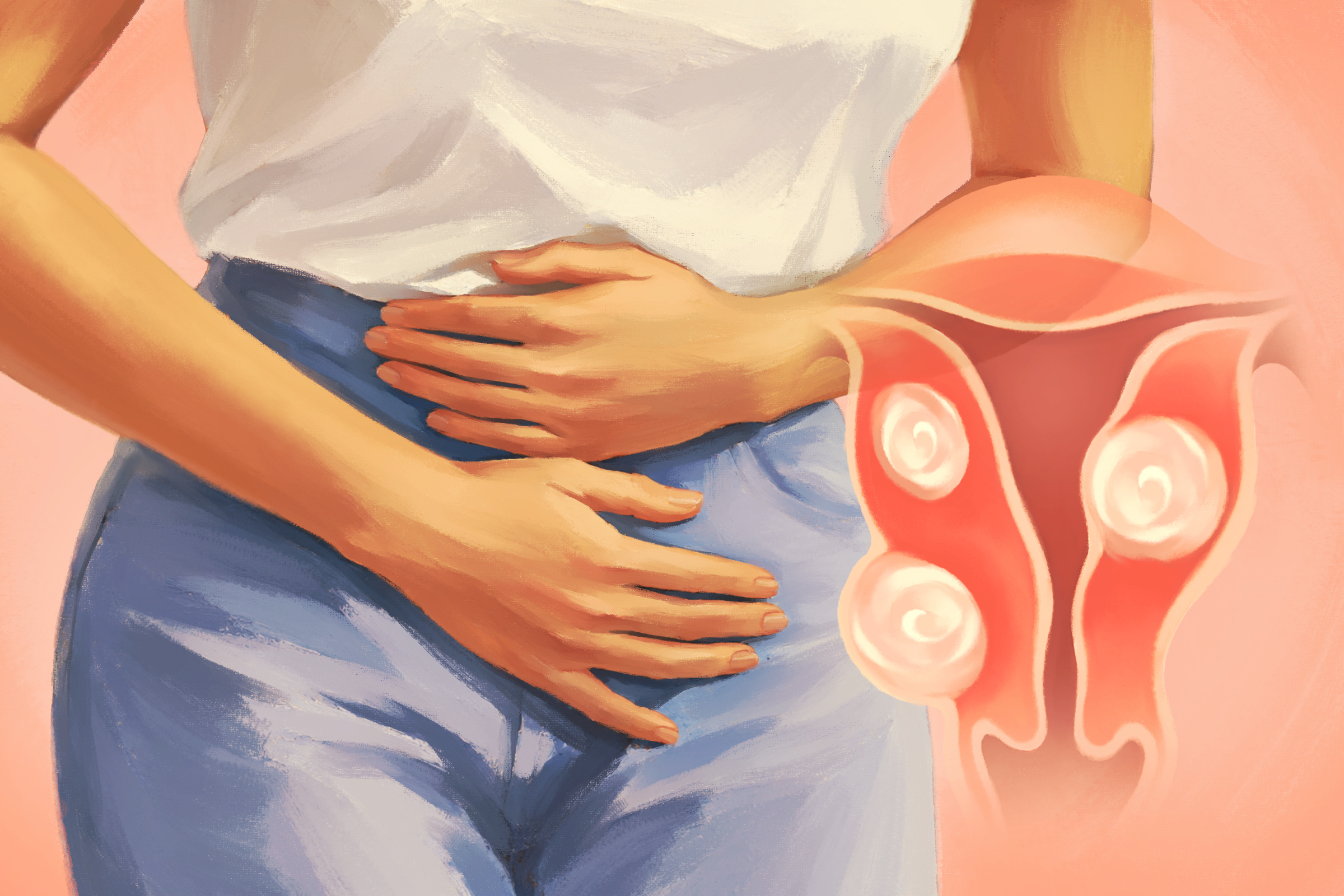
Heavy or Prolonged Menstrual Periods: Fibroids developing within the uterine wall (intramural fibroids) may contribute to heavy bleeding by interfering with the uterus’s ability to contract effectively and control blood flow during menstruation. Prolonged periods last eight days or longer.
Severe Menstrual Cramps: Fibroids may cause pain by increasing uterine contractions during menstruation or by pressing on nearby organs and nerves.
Bleeding Between Periods: Fibroids can cause bleeding outside your usual cycle.
Anemia: Ongoing heavy or irregular bleeding can lower your iron and red blood cell levels, leading to fatigue and weakness.
Pressure and Pain Symptoms
A Feeling of Fullness or Pressure in the Lower Abdomen: Larger fibroids can press on nearby organs, such as the bowel, causing constipation or abdominal pain.
Frequent Urination: This is caused by larger fibroids pressing on the bladder.
Pelvic Pain: Fibroids can cause dull or sharp pelvic pain, which may be more noticeable during menstruation.
Pain During Intercourse: Pain may occur only in certain positions or at specific times during the menstrual cycle.
Lower Back Pain: Rarely, fibroids can press on the muscles or nerves in the lower back, causing pain.
Fertility Issues
Placental Abruption: The placenta separates from the uterine wall before delivery.
Preterm Labor: Having multiple fibroids or fibroids in contact with the placenta may increase the risk of preterm labor.
Repeated Miscarriages: Fibroids, particularly those that distort the uterine cavity, may increase the risk of recurrent miscarriage by interfering with embryo implantation or the developing pregnancy.
Delivery Problems: The baby may be in an abnormal position in the uterus, and cesarean birth is more likely.
Postpartum Hemorrhage: Excessive bleeding can occur after delivery.
Obesity: A 2024 systematic review identified high body mass index as one of the strongest known risk factors for uterine fibroids. Women with obesity may have two to three times the risk of women with average weight. It is unclear whether excess weight directly causes fibroids, but fat tissue can convert androgens into estrogen, potentially promoting fibroid growth.
Vitamin D Deficiency: A 2013 study found that women with sufficient vitamin D levels had approximately 32 percent lower risk of developing fibroids than women with insufficient levels. Lab studies using human fibroid cells suggest that active vitamin D may reduce extracellular matrix protein production and inhibit fibroid cell growth.
Exposure to Endocrine-Disrupting Chemicals (EDCs): These chemicals can interfere with the body’s hormones. Studies suggest that exposure to certain chemicals, particularly phthalates, may increase fibroid risk and severity, although more research is needed.
First Period Before Age 10: Having the first menstrual period before age 10 may increase the risk of uterine fibroids, possibly because it leads to longer lifetime exposure to estrogen and progesterone.
No Pregnancy History: Women who have never been pregnant may have an increased risk of developing fibroids due to longer exposure to estrogen and progesterone over multiple menstrual cycles.
Age: Fibroids become more common with age, particularly during a woman’s 30s and 40s. Women approaching menopause may have the highest risk of developing fibroids.
Race: Uterine fibroids are approximately two to three times more common in black women than in white women. Black women with fibroids also tend to have more and larger fibroids and may experience more severe symptoms. They also tend to develop symptoms about five years earlier on average, although the reasons for these differences are not fully understood.
Family History: Having a mother or sister with fibroids raises your risk. A mother with fibroids may increase it about threefold.
First-Line Tests
Pelvic (Transabdominal) Ultrasound: Uses sound waves, without radiation, to produce images of the uterus and ovaries. The technologist moves a transducer over the abdomen to capture images.
Transvaginal Ultrasound: Involves gently inserting a special ultrasound probe into the vagina after you empty your bladder. The procedure is usually not painful and provides detailed images of the uterus, uterine lining, and ovaries.
Magnetic Resonance Imaging (MRI): Provides more detailed images of the number, size, and location of uterine fibroids than ultrasound. MRI may be used when ultrasound findings are unclear or when detailed mapping is needed before treatment. Depending on the clinical question, MRI may be performed with or without intravenous contrast.
Blood Tests: Identify fibroid complications rather than diagnose the growths themselves. A complete blood count checks for anemia by measuring red blood cells and hemoglobin, while iron tests show whether iron deficiency is contributing.
Specialist Tests
Saline Infusion Sonogram (Saline Hysterosonography): A small catheter is passed through the cervix to fill the uterus with sterile saline, allowing ultrasound to capture detailed images of the uterine cavity and lining to identify abnormalities such as submucosal fibroids and polyps.
Hysteroscopy: A thin telescope is inserted through the cervix, and sterile saline or carbon dioxide gas is used to expand the uterine cavity for a better view. This procedure can detect submucosal fibroids and uterine polyps.
Laparoscopy (Keyhole Surgery): A laparoscope (thin telescope) is inserted through a small incision in the abdomen to examine the reproductive organs. It is not routinely needed to diagnose fibroids.
Endometrial Biopsy: Involves taking a small sample of the uterine lining to check for cancer or other abnormalities, particularly in cases of abnormal uterine bleeding.
Hysterosalpingography: A specialized X-ray procedure used to detect abnormalities in the size and shape of the uterus and fallopian tubes.
Medications
Nonsteroidal Anti-Inflammatory Drugs (NSAIDs): Medications such as ibuprofen or naproxen may reduce menstrual bleeding and relieve fibroid-related pain, making them a conservative option for occasional pelvic discomfort.
Tranexamic Acid: Can reduce heavy menstrual bleeding by up to 40 percent. It also prevents blood clots from breaking down too quickly.
GnRH Agonists: Stimulate and then suppress the release of luteinizing hormone (LH) and follicle-stimulating hormone (FSH), reducing ovarian estrogen production. The temporarily lowered estrogen levels can shrink fibroids, stop periods, and improve blood counts before surgery. Because of side effects such as hot flashes and bone loss, they are generally used short-term.
Oral GnRH Antagonist Combination Therapies: Elagolix and relugolix are available in combination with low-dose estrogen and progestin. These medications reduce heavy bleeding, while the added hormones help limit hot flashes and bone loss. Treatment is generally limited to 24 months because continued bone loss may be irreversible.
Hormonal Contraceptives: Combined birth control pills, the patch, and the vaginal ring contain estrogen and progestin and may reduce fibroid-related bleeding. Women aged 35 and older who smoke are generally advised to avoid estrogen-containing contraceptives because of the higher risk of blood clots and cardiovascular problems.
Selective Estrogen Receptor Modulators: May help slow fibroid growth, but their effectiveness in relieving symptoms remains unclear.
Iron Supplements: Used to prevent or manage anemia caused by heavy menstrual bleeding.
Progestin-Releasing IUD (Intrauterine Device)
Procedural Treatments
Uterine Artery Embolization: Using X-ray guidance, a catheter is inserted through an artery in the groin to deliver tiny embolic particles, such as polyvinyl alcohol particles or tiny gelatin-based microspheres, that block the blood supply to the fibroids, causing them to shrink and die. It can reduce heavy menstrual bleeding, pelvic pain and pressure, frequent urination, and constipation.
Magnetic Resonance-Guided Focused Ultrasound: Uses focused sound waves, guided by MRI, to heat and shrink fibroids, particularly those located at the front of the uterus. Its effects on fertility are not yet fully understood.
Radiofrequency Ablation: Uses laparoscopy and ultrasound guidance to deliver heat energy that shrinks and softens fibroids. Its effects on fertility are not yet fully understood.
Endometrial Ablation: Destroys the lining of the uterus to reduce or stop heavy menstrual bleeding, but menstruation often stops completely. It may help women with small fibroids but does not remove the fibroids themselves. It is not suitable for women who want future pregnancies, and contraception is still needed because pregnancy after ablation can be dangerous.
Myolysis: Destroys fibroid tissue using an energy source such as a laser, extreme cold (cryomyolysis), a heated electrical needle, or high-intensity focused ultrasound energy. It is generally used for smaller fibroids and is not recommended for women planning future pregnancies because of the risk of uterine scarring and infection.
Surgeries
Abdominal Myomectomy: Fibroids are removed through an incision in the lower abdomen, often called a “bikini cut,” and the uterine muscle is stitched back together. This type has the longest recovery period, typically four to six weeks.
Laparoscopic Myomectomy: Fibroids are removed through several small abdominal incisions using a camera and specialized instruments, with a shorter recovery period of two to four weeks.
Hysteroscopic Myomectomy: Submucosal fibroids are removed through the vagina and cervix using a thin telescope and specialized instruments, without abdominal incisions. This type has the shortest recovery period, typically one to four days.
Vaginal Hysterectomy: The uterus is removed through the vagina without an abdominal incision. This approach is suitable when the uterus is not too large.
Abdominal Hysterectomy: The uterus is removed through an incision in the lower abdomen.
Laparoscopic Hysterectomy: The uterus is removed through small abdominal incisions using a camera and specialized instruments. This approach may not be suitable for women with very large fibroids or an enlarged uterus.
Herbs and Herbal Preparations
Acupuncture
1. Self-Care Strategies
Heat: Applying a heating pad or hot water bottle to your lower abdomen or taking a warm bath may relax muscles and ease pain.
Comfortable Positions: Lying on your back with a pillow under your knees or on your side with your knees drawn toward your chest may ease pain and reduce pressure on the back and pelvis.
Regular Exercise: Engaging in aerobic exercise may improve circulation and stimulate the release of endorphins, the body’s natural pain relievers.
2. Supplements
Curcumin: This compound in turmeric has anti-inflammatory and antioxidant properties. A small uncontrolled 2013 study of 50 women reported improvements in bleeding and fibroid measurements after curcumin treatment. However, the study lacked a control group, and its findings have not been confirmed in rigorous clinical trials. Another uncontrolled study found that average fibroid diameter decreased slightly, from 4.74 to 4.46 centimeters. Without a comparison group, neither study can establish that curcumin caused these changes.
Vitamin D: A 2024 meta-analysis of five studies involving 511 participants found that vitamin D supplementation reduced uterine fibroid size compared with a placebo, especially when taken for more than eight weeks. However, larger, well-designed clinical trials are needed to confirm its effectiveness. A 2019 study of 69 women with uterine fibroids and vitamin D deficiency found that those receiving 50,000 international units of vitamin D every two weeks had increased blood vitamin D levels and reduced fibroid size compared with the placebo group.
Green Tea Extract: In a 2013 study of 39 women with symptomatic fibroids, those who took green tea extract for four months saw their total fibroid volume fall by 32.6 percent, while the placebo group’s rose by 24.3 percent. Bleeding and other symptoms also improved. Concentrated green tea extracts have been linked to rare cases of liver injury, so use caution, particularly if you have liver disease.
Combined Supplements: A 2021 study of 95 women of childbearing age with fibroids smaller than 4 centimeters found that the 41 who took vitamin D, epigallocatechin gallate (EGCG), and vitamin B6 for four months had a 38 percent reduction in total fibroid volume, while volume rose in the untreated group. A 2025 study of 33 women taking the same combination for 16 weeks found that 94 percent experienced a 12.7 percent average reduction in fibroid volume. Symptoms and quality of life improved, although bleeding did not significantly improve.
3. Diet
4. Yoga
Diet: A balanced diet rich in fruits and green vegetables, with limited red meat and processed foods, may be associated with a lower risk of developing fibroids. A 2024 systematic review of 33 human studies found that high fruit and vegetable intake and adequate vitamin D intake were the strongest potential protective factors against fibroids.
Adequate Vitamin D: A 2013 study of more than 1,000 premenopausal women aged 35 to 49 found that women with sufficient vitamin D levels had a 32 percent lower risk of developing uterine fibroids than women with insufficient levels. Greater sun exposure was also associated with a lower likelihood of having fibroids. A pilot trial found that vitamin D supplementation did not significantly reduce fibroid recurrence after surgery, although recurrent fibroids were smaller among participants receiving vitamin D. Larger trials are needed to confirm these findings.
Higher-Intensity Exercise: Regular physical activity helps maintain a healthy weight and may contribute to a lower risk of fibroids. A 2025 systematic review of 15 studies found no significant link between regular physical activity and a lower risk of uterine fibroids. However, higher-intensity physical activity was associated with a slightly lower likelihood of having fibroids.
Herbal Products: A 2019 study of 52,151 Taiwanese women aged 20 to 45 found that Chinese herbal product use was associated with a lower incidence of uterine fibroids compared with nonuse, with an even lower incidence among users of phytoestrogen-containing products.
Reduced Chemical Exposure: A 2024 meta-analysis of 14 observational studies involving nearly 6,000 women found that higher exposure to phthalates, chemicals that make plastics flexible and durable, was associated with higher odds of uterine fibroids. The authors of a 2024 review suggested limiting endocrine-disrupting chemicals by avoiding heating food in plastic containers, limiting single-use plastics, choosing fragrance-free personal care products, dusting regularly, washing hands often, minimizing pesticide exposure, and choosing fresh, minimally processed foods over heavily packaged ones.
Childbirth: Having given birth to multiple children has been associated with a lower risk of fibroids, although this is not considered a preventive intervention. This may be due to changes in reproductive hormone exposure and uterine tissue remodeling after childbirth, although the exact mechanisms remain unclear.
Anemia: Heavy menstrual bleeding can cause anemia, the most common complication of uterine fibroids.
Severe Pain or Heavy Bleeding: These symptoms may require emergency medical treatment or surgery in severe cases.
Abdominal Swelling: Very large fibroids may cause abdominal swelling.
Urinary Tract Infections: Fibroids that press on the bladder may prevent it from emptying completely, increasing the risk of infection.
Hydronephrosis: A fibroid growing toward the side of the uterus can compress the ureter, the tube that carries urine from the kidney to the bladder. This can block urine flow and cause the kidney to swell.
Fibroid Torsion: A fibroid attached to the uterus by a stalk can twist, cutting off its blood supply and causing sudden, severe pain that may require emergency surgery.