
Price inflation further stabilized across the U.S. marketplace at the start of 2026, signaling that consumer relief could be on the way in the year ahead.
The annual inflation rate slowed to 2.4 percent in January, the lowest level since May, according to new Bureau of Labor Statistics data released on Feb. 13.
This is down from the previous month’s 2.7 percent and below the consensus estimate of 2.5 percent.
From December 2025 to January, consumer prices rose at a lower-than-expected pace of 0.2 percent.
Core inflation, which strips out volatile energy and food prices, also eased to a 12-month rate of 2.5 percent, in line with economists’ expectations. This was the lowest level since March 2021.
On a monthly basis, core inflation jumped by 0.3 percent, from 0.2 percent.
“This is a clear sign that while inflation isn’t gone, prices are cooling gradually,” Stephen Kates, financial analyst at Bankrate, said in a note emailed to The Epoch Times.
“For households, this report brings mixed news. Lower gas prices offer comforting breathing room, but it doesn’t erase the cumulative price increases already baked in.”
Deeper Dive Into the CPI
Shelter was the biggest contributor to the monthly increase, the bureau said, as the index rose by 0.2 percent and is up 3 percent year over year.
Housing costs remain stubbornly high, prompting the current administration and lawmakers to advance measures to alleviate prices through a mix of supply and demand strategies.
The energy index declined by 1.5 percent amid a significant drop in gasoline prices (down by 3.3 percent). Electricity costs also slipped by 0.1 percent.
In recent weeks, the national average for a gallon of gasoline has been steadily climbing because of increasing crude oil prices and the upcoming transition to summer-blend gas, reaching $2.94, according to the American Automobile Association.
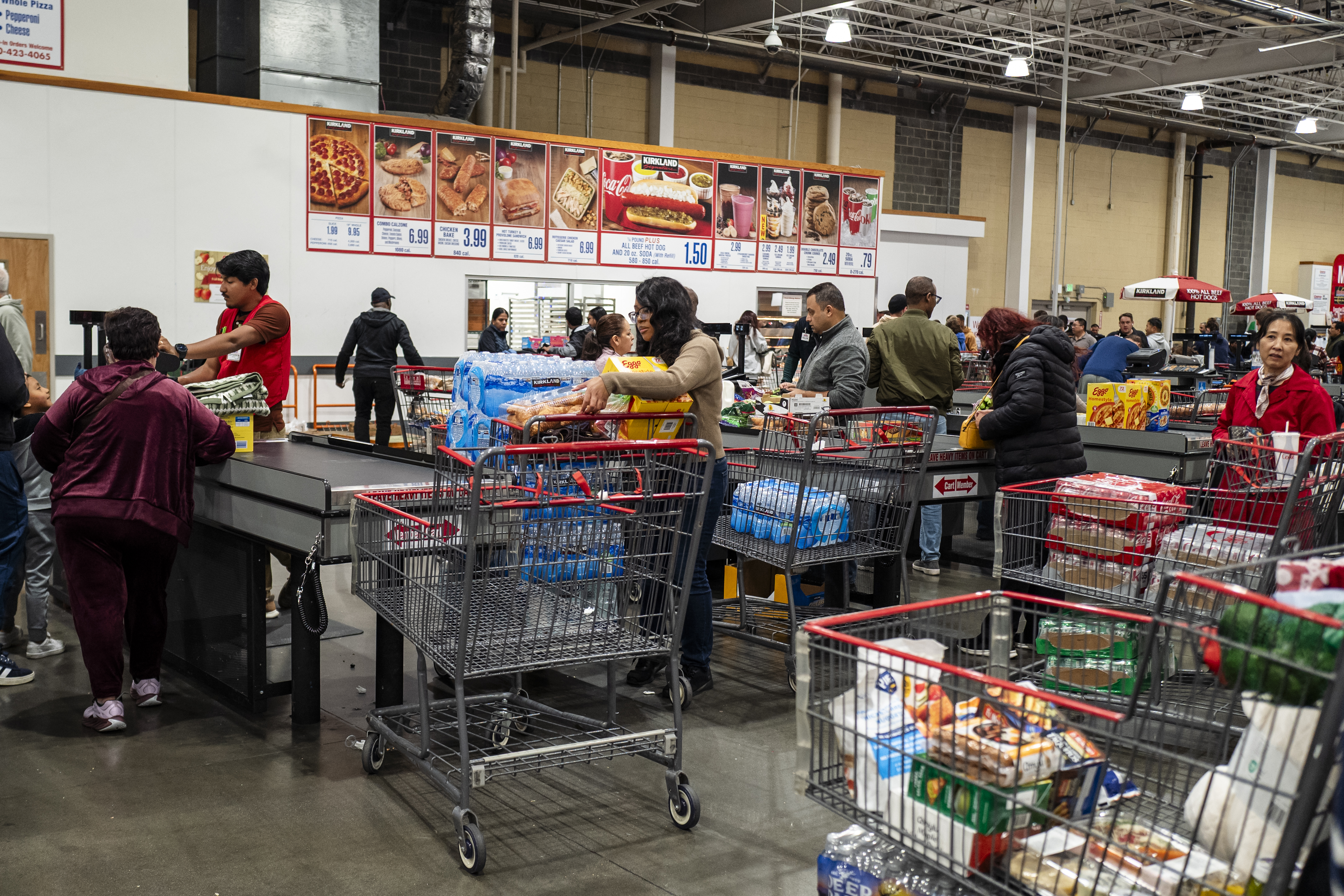
Food inflation was little changed last month, rising by 0.2 percent. Supermarket prices ticked up by 0.2 percent, while the food-away-from-home subindex edged up by 0.1 percent.
Eggs maintained their downward trajectory, falling by another 7 percent in January.
However, meat prices are still trending higher; beef and pork surged by 1.6 percent and 1.4 percent, respectively. Poultry was little changed, rising by just 0.2 percent.
Inflationary pressures for tariff-sensitive items were mixed last month.
Economic observers have been combing through the consumer price index (CPI) to determine whether President Donald Trump’s global tariffs are triggering higher prices for everyday goods.
The index for new vehicles rose by 0.1 percent. Apparel increased by 0.3 percent. Appliances rose by 1.3 percent following a 2.6 percent decline. Televisions jumped by 1 percent, while smartphones fell by 1.3 percent.
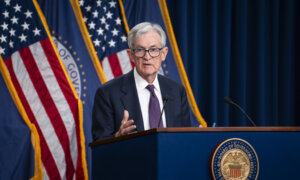
Federal Reserve Chairman Jerome Powell indicated that tariffs have been the primary driver of elevated inflation.
Speaking to reporters at the January post-meeting press conference, Powell suggested that the 12-month inflation rate excluding tariffs was likely in the low twos. Still, he said he anticipates that tariff-driven inflation will reach a peak in the middle of the year and then begin to slide.
“We do think tariffs are likely to move through and be a one-time price increase,” Powell said.
“The other good news is if you look away from goods and look at services, you do see ongoing disinflation in all the categories of services. So that’s a healthy development.”
Supercore inflation, which omits housing, was flat, at 2.7 percent.
Market Reaction
Stocks were flat following the new CPI data, as the leading benchmark averages wobbled.
Yields on U.S. Treasury securities were mixed. The 10-year yield slipped below 4.09 percent, and the 30-year hovered at about 4.72 percent.
The U.S. dollar index was little changed as it attempted to post its second straight session gain. The index is a measure of the greenback against a weighted basket of currencies and is down more than 1 percent this year.
Investors added to their expectations of a Fed interest rate cut in June. Traders put the likelihood of a 25-basis-point rate cut at the June 16–17 Federal Open Market Committee meeting at roughly 50 percent, according to the CME FedWatch Tool.
“As long as CPI remains in check—which so far it has—then the rates discussion will revert back to the labor market, and under the current economic conditions the Fed is likely to proceed cautiously lowering rates a couple of times later this year,” Chris Zaccarelli, chief investment officer for Northlight Asset Management, said in a note emailed to The Epoch Times.
For now, he said, markets may place more emphasis on the artificial intelligence trade than on Fed policy.
But while monetary policymakers are still waiting for the annual inflation rate to return to their 2 percent target, a widely watched private-sector alternative suggests it may already be there.
The truflation U.S. CPI index—a running real-time estimate using a treasure trove of consumer data—stood at 0.72 percent as of Feb. 13.
Fed officials place more weight on the personal consumption expenditures (PCE) price index than the CPI because of weights and frequent updating.
January’s annual PCE inflation rate is expected to be 2.6 percent, based on the Cleveland Fed’s Inflation Nowcasting Model.
Although prices are still rising, the pace of inflation is far lower than what was observed from 2021 to 2023.