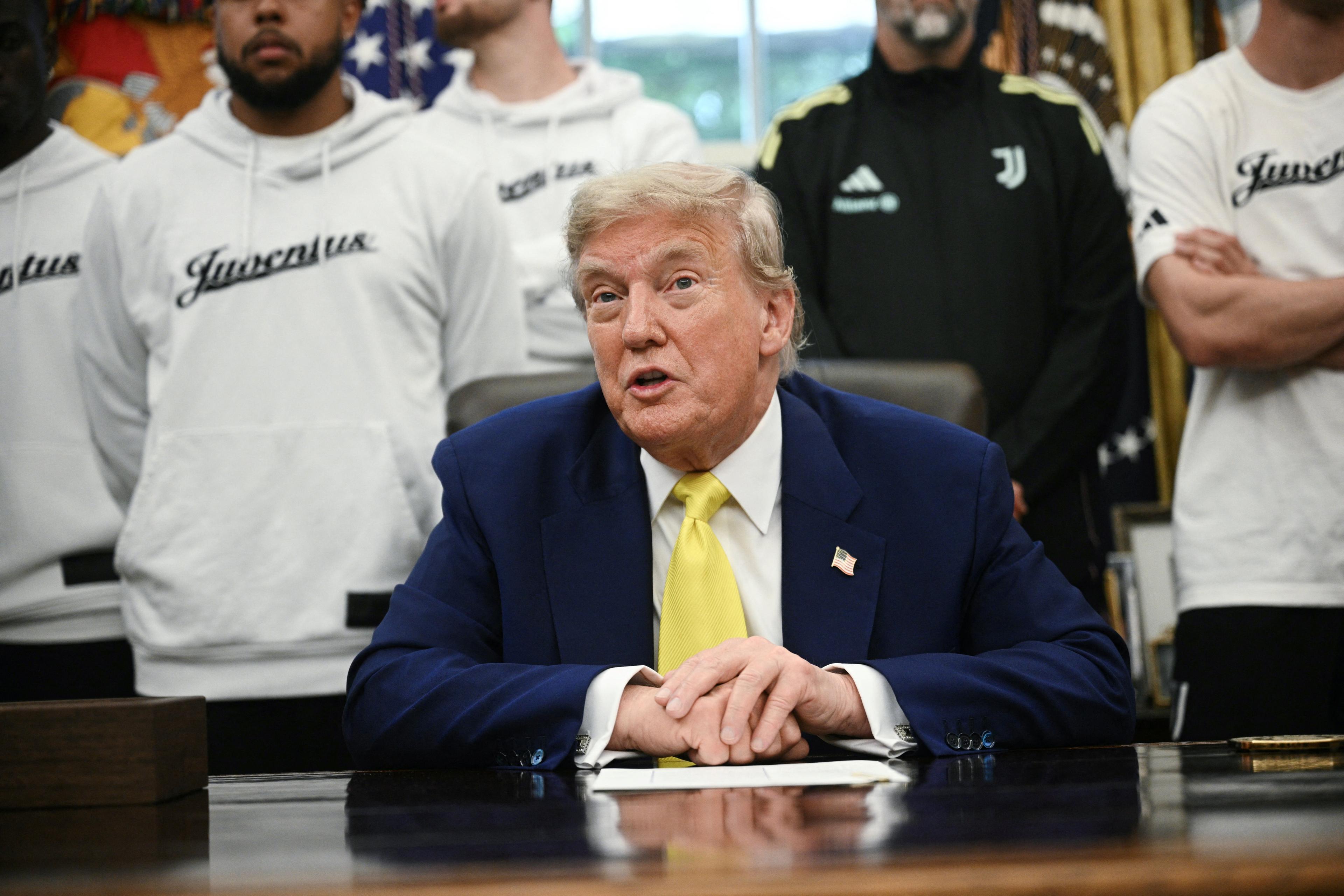

The official did not say when the meeting started or how long it lasted.
“I've been saying for 20 years, maybe longer, that Iran cannot have a nuclear weapon,” Trump said, adding “I think they were a few weeks away from having one.”
According to the UN’s nuclear watchdog, as of May 17, Iran possessed more than 900 pounds of uranium enriched to 60 percent. While 90 percent purity uranium is needed for a bomb, the agency said Iran could enrich enough uranium for a single bomb in two and a half days if it chose to.
The president’s team was negotiating with Iran on a tentative nuclear deal before the Israeli strikes. In 2018, Trump exited a deal brokered by President Barack Obama, citing a lack of restrictions on Iran’s missile program and the regime’s funding of terror groups.
On Wednesday, Trump said “I think they wished they signed” the latest deal.
“Now it’s a harder thing to sign, it’s a lot of water over the dam … But, I say it very simply, ‘Iran to have a nuclear weapon—too much devastation.’”

“I think it started the first night,” Trump responded, referring to Israel’s strikes on Iran in the early hours of June 13.
“That first night was devastating, and it really knocked the one side off.”
When asked if the United States has a plan if the Iranian regime falls, Trump said, "I have plans for everything, but we'll see what happens.”
In a Truth Social post Monday, Trump had called out Carlson, who has been against U.S. involvement in the conflict.
"Somebody please explain to kooky Tucker Carlson that, 'Iran can not have a nuclear weapon!'" Trump wrote, much of it in capital letters.
Trump said he has not decided whether to attack the nuclear plant, which is deep underground and would require bunker-busting bombs. Currently, only the United States has both the bomb and the bomber to carry it.
“I like to make the final decision one second before it’s due,” Trump said, adding that things change quickly in war.
“With war, it can go from one extreme to the other.”
The president said he desires to not get involved, but reiterated his stance that Iran cannot have a nuclear weapon.
Midway through the question, Trump responded, “I have intelligence.”
After the reporter finished the question, Trump said, “We’re doing very well.”
Americans wishing to leave Israel need to enroll in the State Department's Smart Traveler Enrollment Program, he said.
“The tornado continues to hit Tehran. Air Force jets have now destroyed the Iranian regime's Internal Security Headquarters — the Iranian dictator's central repressive arm,” posted Israeli Defense Minister Israel Katz on social media platform X.
“As we promised - we will continue to harm symbols of government and strike at the ayatollah regime everywhere,” Katz wrote, according to a translation.
The pontiff, addressing people in St. Peter’s Square in the Vatican, said that “the heart of the church is torn by the cries rising from places of war, especially Ukraine, Iran, Israel, and Gaza” and that there should be peace “in the name of human dignity and international law.”
“I say good luck,” Trump told reporters at the White House on Wednesday morning.
When asked when his patience runs out with Iran, he said, "It's already run out. That's why we're doing what we're doing."
Speaking to the Senate Armed Services Committee on Wednesday morning, Hegseth noted that Trump had given Iran 60 days to reach a deal over the future of its nuclear program.
No deal was reached during that time, and Israel attacked on the 61st day, on June 12.
“We know right now that Iran understands exactly what the president is saying,” Hegseth said.
“They had an opportunity to make a deal. They should have made a deal. President Trump’s word means something. The world understands that.”
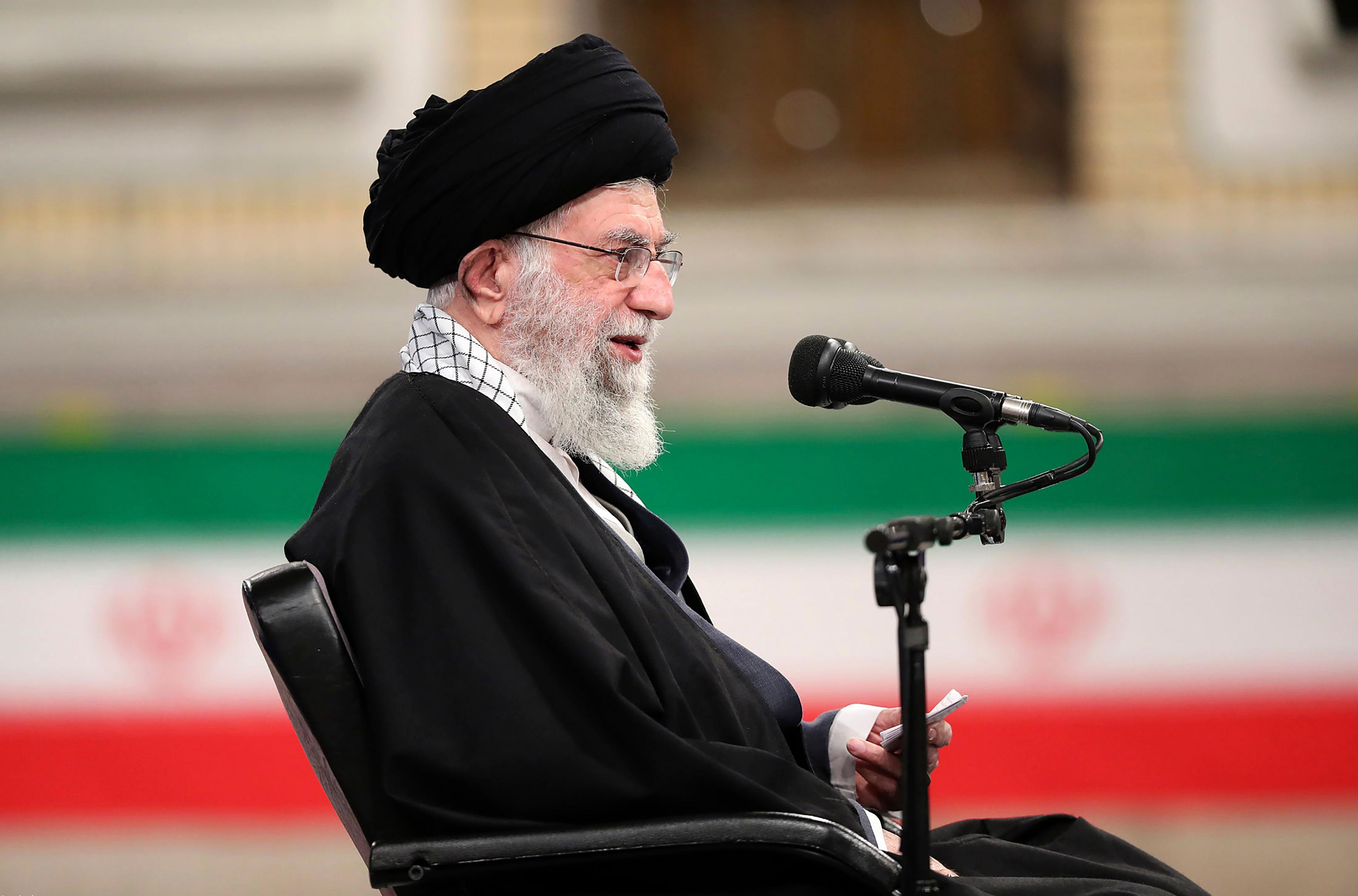

Iranian leader Ayatollah Ali Khamenei has rejected a call by U.S. President Donald Trump for Iran to unconditionally surrender amid the regime’s aerial war with Israel.
Earlier this week, Trump called for the “unconditional surrender” of Iran’s regime, led by Khamenei, as Israel launched a number of airstrikes against Iranian infrastructure, including its nuclear facilities, in the past five days. Iran has responded by firing hundreds of missiles at Israel.
“The US President threatens us. With his absurd rhetoric, he demands that the Iranian people surrender to him. They should make threats against those who are afraid of being threatened. The Iranian nation isn’t frightened by such threats,” Khamenei wrote in a post on X on Wednesday morning in response to Trump.
Iranian state television also aired footage of Khamenei giving a statement that was read out by a TV anchor on Wednesday, including a warning to the United States that joining the Israeli strikes targeting his country will “result in irreparable damage for them.”
Khamenei’s remarks follow Trump’s post on Truth Social, in which the president wrote that the United States and Israel “know exactly where the so-called ‘Supreme Leader’ is hiding” before adding that “he is an easy target, but is safe there.”
“We are not going to take him out (kill!), at least not for now,” the president added. “But we don’t want missiles shot at civilians, or American soldiers. Our patience is wearing thin.”
Meanwhile, Israeli Defense Minister Israel Katz wrote on X that “a tornado continues to hit Tehran” and that the Israeli Air Force has “now destroyed the Iranian regime’s Internal Security Headquarters,” according to a translation.
“As we promised—we will continue to harm symbols of government and strike at the ayatollah regime everywhere,” he wrote.
Trump urged Tehran’s 10 million or so residents to evacuate earlier this week as he also departed early from the G7 summit in Canada to return to Washington. While the president initially distanced the United States from the Israeli strikes on Iran, he has suggested greater U.S. involvement in the conflict in multiple social media posts and remarks to reporters.
The Iranian regime, Trump has also said, cannot have possession of a nuclear weapon, coming after Israeli officials have said that their intelligence shows that Tehran was enriching uranium to produce multiple nuclear weapons. Iran was given a deadline that expired last week to come to the negotiating table over its nuclear program.
But Iranian officials have warned that the United States shouldn’t get involved because it could lead to a significant conflict in the Middle East, saying that Iran has “very good relations” with nearby Arab countries.
“Any American intervention would be a recipe for an all-out war in the region,” Iranian foreign ministry spokesman Esmail Baghaei told Al Jazeera English on Wednesday.
Iran has “very good relations with Arab countries, and they are very cognizant of the fact that Israel has been trying to drag others into the war,” he said.
“We are sure our Arab countries hosting U.S. bases would not allow their territory to be used against their Muslim neighbors.”
Inside the United States, Trump also faces divisions among Republicans. Some GOP lawmakers and conservative commentators have urged Trump not to get involved in the Israel–Iran conflict, while others have pushed for the United States to strike Iran.
Sen. Lindsey Graham (R-S.C.) has been making the case that this is Trump’s moment to deliver a decisive blow against Iran. Graham called for Trump to “go all-in” in backing Israel and destroying Iran’s nuclear program during a Sunday CBS News interview.
Rep. Marjorie Taylor Greene (R-Ga.) said in a post on X that the United States should not get involved, writing that “foreign wars/intervention/regime change put America last, kill innocent people, are making us broke, and will ultimately lead to our destruction.”
The Associated Press contributed to this report.
“You don't seriously think I'm going to answer that question,” he said.
"I may do it, I may not do it, nobody knows what I'm going to do. … Iran’s got a lot of trouble and they want to negotiate.”
He said that it is not “too late” for Iran to give up its nuclear program.

Former Fox News host Tucker Carlson and Sen. Ted Cruz (R-Texas) engaged in a heated discussion over whether the United States should get involved in the Israel–Iran aerial conflict that started this past week.
In a video released by Carlson on June 17 on his X social media account, he asks Cruz a series of questions about Iran and its demographics as the two men escalate their rhetoric. The clip has drawn more than 23 million views, or impressions, on X.
In an earlier X post that appeared to promote the interview, Cruz wrote: “Yep, I stand with Trump. Iran can’t have a nuclear bomb. Make sure you tune in tomorrow.”
“How many people live in Iran, by the way?” Carlson asked Cruz.
“I don’t know the population,” Cruz responded.
“At all?” Carlson then asked
“No, I don’t know the population,” Cruz said.
“You don’t know the population in the country you seek to topple?” Carlson asked, adding that Iran has a population of roughly 92 million.
“Why is it relevant whether it’s 90 million or 80 million or 100 million—why is that relevant?” Cruz asked.
Carlson then asked about Iran’s ethnic makeup. Cruz said it was Persian and that they were mostly adherents of Shia Islam. The two then started talking over one another.
On multiple occasions, Carlson accused Cruz of not knowing enough about Iran and suggested Cruz wants the United States to overthrow the country’s regime and its supreme leader, Ayatollah Ali Khamenei.
“No, you don’t know anything about the country,” Cruz then said. “You’re the one who claims they’re not trying to murder [President] Donald Trump. You’re the one who can’t figure out if it was a good idea to kill General [Qasem] Soleimani, and you said it was bad.”
Cruz’s first statement referred to U.S. officials having prosecuted individuals accused of plotting to kill Trump who were allegedly backed by the Iranian regime. Similar statements were made by Israeli Prime Minister Benjamin Netanyahu in a Fox News interview over the past weekend.
Soleimani was killed by a U.S. drone strike in 2020.
Later on, Cruz said, “We are carrying out military strikes today,” to which Carlson pressed the senator on why he used the term “we.”
Since the aerial conflict started, Israel has launched many strikes against Iranian infrastructure, including nuclear facilities, while Iran has retaliated by firing hundreds of missiles at Israel. Trump has said the United States isn’t involved, although he suggested Washington could launch strikes against Iran if it doesn’t negotiate.
Cruz said that the United States is backing the effort but that Israel is conducting the strikes.
“You just said ‘we’ were,” Carlson said. “This is high stakes. You’re a senator. If you’re saying the United States government is at war with Iran right now, people are listening.”
Responding to the video’s release on Wednesday, Cruz commented on Carlson’s claims in his “Verdict” podcast, saying that Carlson has “suddenly” become a “hardcore isolationist ... even when we’ve got a lunatic theocratic zealot who is trying to murder Americans and has murdered hundreds of Americans.”
Carlson, who has backed Trump, has emerged as a key figure among conservatives who say the United States shouldn’t get involved in the Israel–Iran conflict. For years, he has criticized Republicans who want the United States involved in overseas military efforts, including in Ukraine and the Middle East.
Trump rebuked Carlson over the weekend, telling reporters, “I don’t know what Tucker Carlson is saying. Let him go get a television network and say it so that people listen.” And in a Truth Social post directed at Carlson, Trump wrote in all caps that “Iran can never have a nuclear weapon.”
The Epoch Times has contacted Cruz’s office for comment.
He added that Netanyahu has been “very unfairly treated by his country.”
“He's a wartime president and he's going through this nonsense,” Trump said.
He said he hasn't given Netanyahu any indication that the United States seeks to provide greater aid to Israel.
“So far, he’s done a good job,” he said of Netanyahu.
“Look, nothing’s finished until it’s finished. War’s very complex, a lot of bad things can happen…I wouldn't say we won anything yet. I would say that we sure as hell made a lot of progress,” he said at the White House, as workers prepared to plant flag poles to display the American flag.
"If you go back 15 years, I was saying we cannot let Iran get a nuclear weapon," he added.
Trump noted that for the past 40 years, Iran has been saying “death to America."
The cause is unknown.
“This decision to gradually open the economy in the various regions is a message of victory over the Iranian enemy,” Israeli Defense Minister Israel Katz said.
“The IAF is currently striking military targets belonging to the Iranian Regime in Tehran,” the IDF said on social media platform X.
"Iran must act urgently ... it is never too late to come to the negotiating table if one comes with sincere intentions," Wadephul said.
He added that European officials who were part of Iran’s 2015 nuclear agreement with world powers “still stand ready to negotiate on a solution.”
They included citizens of Italy, France, Georgia, Portugal, Switzerland, Austria, Hungary, Germany, Cyprus, Lithuania, Belgium, Sweden, and Albania.
U.S. citizens were also evacuated.
“Their mission was to try and harm our aircraft,” Israel Defense Forces Spokesman Brig. Gen. Effie Defrin said during a news conference, according to The Times of Israel.
Sa’ar posted a copy of the letter on social media platform on X. He said, “Iran has a strategic plan to eliminate Israel. Israel cannot and will not accept the threat of extermination!”
In the letter, Sa’ar said Iran had frequently threatened to eliminate Israel and had made “continued attempts to achieve the means to accomplish this by rapidly developing military nuclear capabilities.”
Sa’ar wrote, “While Iran rapidly produces highly enriched uranium, reliable intelligence confirmed in recent months that the Iranian regime had significantly accelerated its clandestine efforts to develop nuclear weapons.”
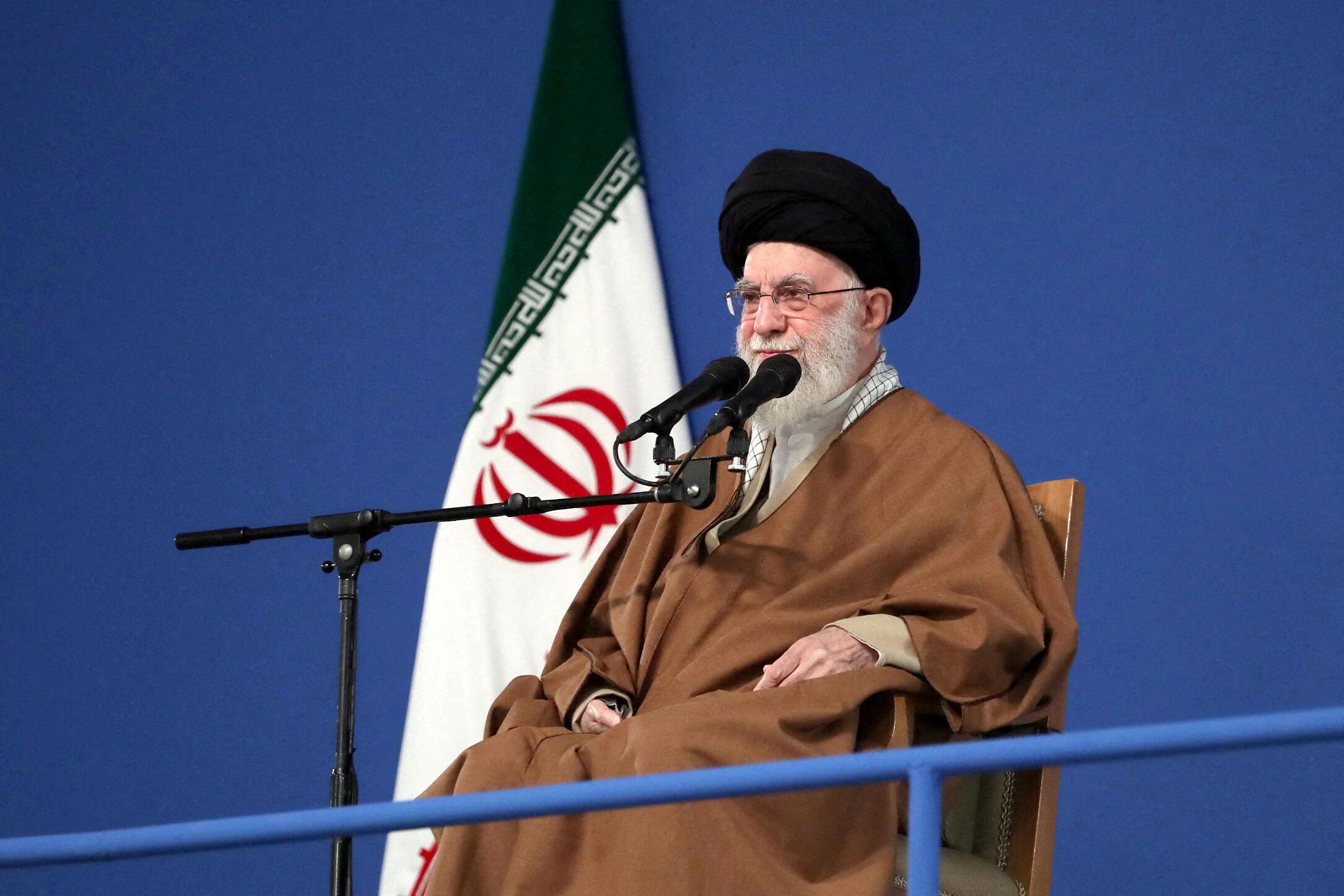
The 86-year-old cleric, who has been in power since 1989, said, "Any form of U.S. military intervention will undoubtedly be met with irreparable harm."
The statement was read out on Iranian state television against the background of a photograph of Khamenei.
The BBC reported that Khamenei said, "Wise people who know Iran, its people, and its history never speak to this nation in the language of threats, because Iranians are not those who surrender."
On Tuesday, Trump posted on the social media platform Truth Social, "We know exactly where the so-called “Supreme Leader” is hiding. He is an easy target, but is safe there - We are not going to take him out (kill!), at least not for now. But we don’t want missiles shot at civilians, or American soldiers. Our patience is wearing thin."
The UN atomic watchdog posted on the social media platform X, “The IAEA has information that two centrifuge production facilities in Iran, the TESA Karaj workshop and the Tehran Research Center, were hit. Both sites were previously under IAEA monitoring and verification as part of the JCPOA [Joint Comprehensive Plan of Action].”
The IAEA later added, “At the Tehran site, one building was hit where advanced centrifuge rotors were manufactured and tested. At Karaj, two buildings were destroyed where different centrifuge components were manufactured.”
Earlier the IDF said it had acted on instructions from Israeli intelligence and made precision strikes on a centrifuge production site on Wednesday.
The IDF said the air strikes were part of Israel’s efforts to destroy Iran’s alleged nuclear weapons development program.
Centrifuges are essential to Iran’s nuclear program and can be used to enrich uranium.
Iran’s state-run television IRIB television showed footage on Wednesday of what they said was an Israeli Hermes 900 drone, which had been shot down near Isfahan in central Iran.
In response, an IDF spokesman posted, in Hebrew, on the social media platform X, “During an operational activity, surface-to-air missiles were fired at a remotely manned aircraft of the Air Force. The aircraft fell in the area of Iran, there are no casualties, and there is no concern of information leakage.”
The Hermes 900 is an unmanned aerial vehicle (UAV) made by the Israeli firm Elbit Systems. It can fly for up to 36 hours, at an altitude of up to 30,000 feet and can carry a payload of 350 kilos.
Wednesday’s incident is believed to be the first Israeli drone to be shot down by Iran, although Iran’s state-run IRNA news agency said on June 15 the country’s Border Guards claimed to have intercepted and destroyed 44 Israeli drones and quadcopters in the first 48 hours of Operation Rising Lion.
The IDF did not confirm any of those losses, and The Epoch Times has been unable to verify the Border Guard’s claims.
Israel’s Ministry of Transport estimates that about 50,000 Israeli nationals are trying to return home. El Al has arranged repatriation flights from Paris, Rome, Milan, and Athens. Two smaller airlines, Arkia and Israir, are also participating in the operation.
A statement released by the Israeli Aviation Authority said Transportation Minister Miri Regev spoke to the flight’s captain as it headed to Israel from Larnaca and said, "We are very emotional about receiving the first rescue flight as part of 'Safe Return'. Land safely.”
The flight was the first passenger jet to arrive at Ben Gurion Airport since Israel launched Operation Rising Lion on June 13, triggering an Iranian missile attack in response.
Iran has fired more than 400 ballistic missiles at Israel since Friday, many aimed at the Tel Aviv area.
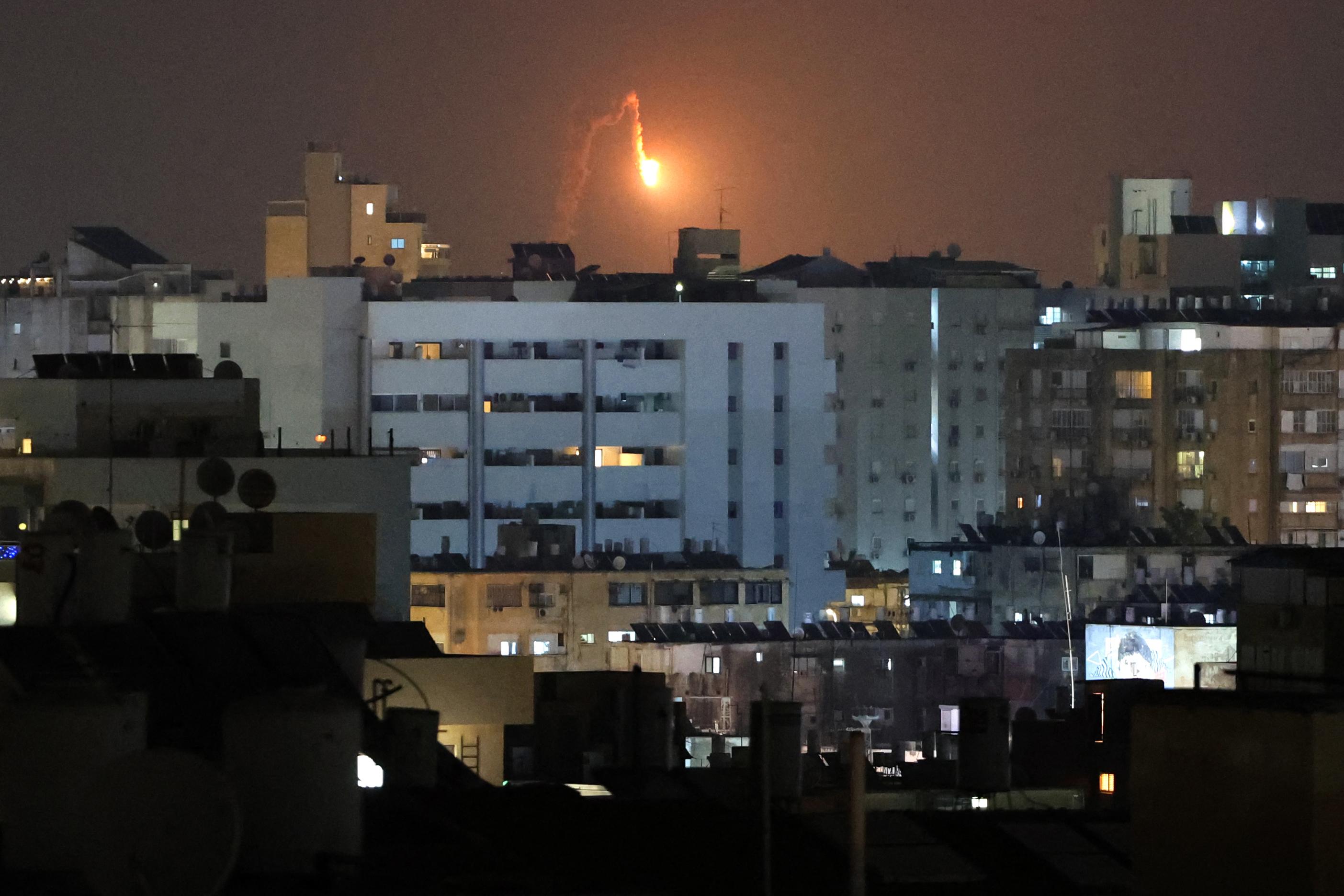
On Wednesday, IDF spokesman Avichay Adraee said in a statement posted to the social media platform X, “The Air Force intercepted seven drones launched from Iran this morning, neutralizing them before they could penetrate Israeli airspace.”
About 40,000 tourists are reportedly stranded in Israel. El Al has canceled all scheduled flights through June 23 and no other planes are departing Ben Gurion Airport.
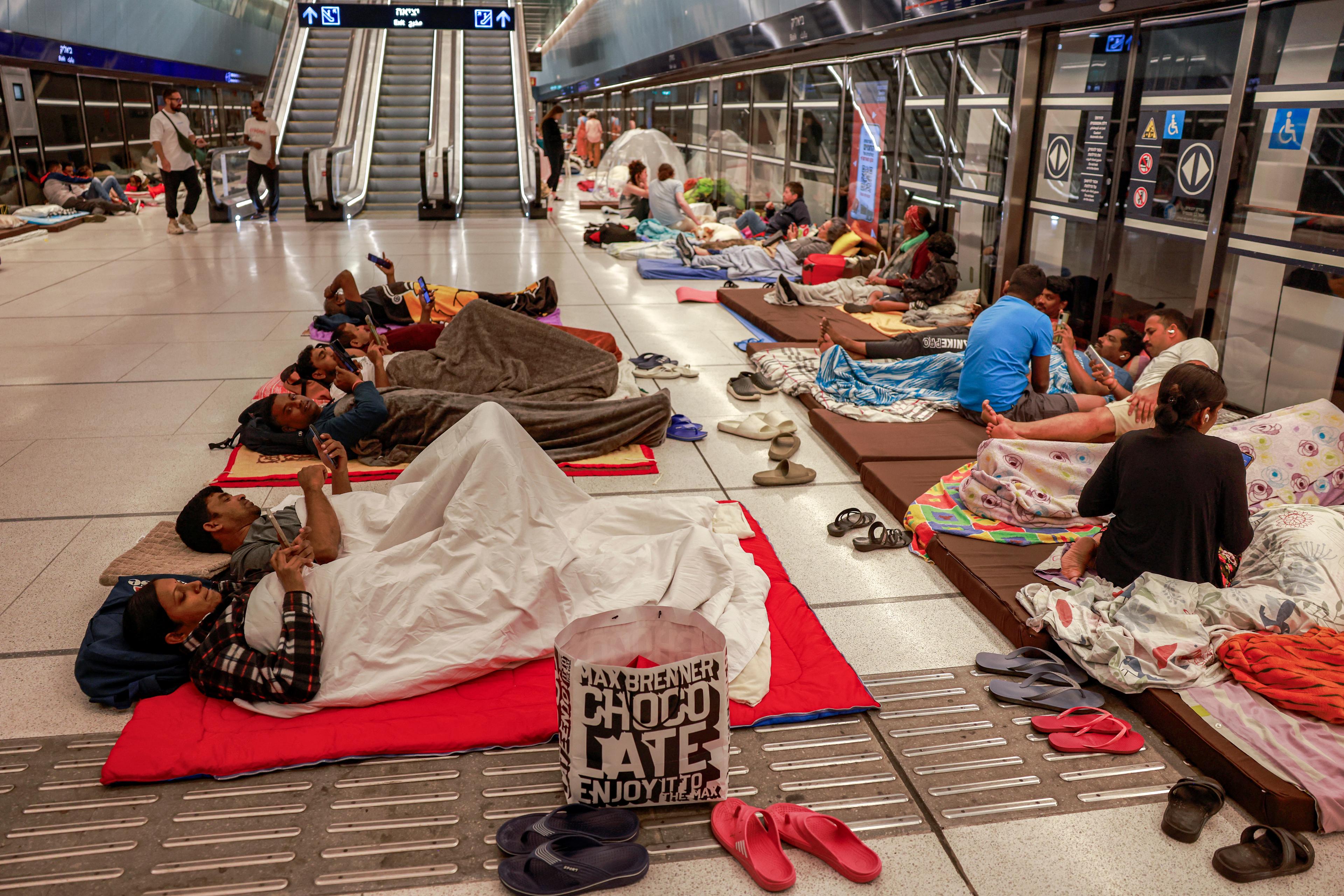
The group, which says it has a network of sources in Iran, said 126 members of the regime’s security forces were killed, 239 of the dead were civilians, and the remainder were unidentified.
The Epoch Times is unable to verify the figures.
Human Rights Activists provided detailed casualty figures during the 2022 protests in Iran. The protests followed the suspicious death of Mahsa Amini, who was arrested for allegedly wearing a loose headscarf, a serious offense under the country’s Shiite interpretation of Shariah law.
The Iranian regime’s most recent official death toll, released on Monday, said 224 people had been killed and 1,277 wounded.

More than 50 Air Force fighter jets were involved in the targeted attacks as part of Israel’s efforts to take out Iran’s alleged nuclear weapons development program.
According to the IDF, the centrifuge site “was intended to allow the Iranian regime to expand the scope and rate of its uranium enrichment for the purpose of developing nuclear weapons.”
“It should be emphasized that nuclear development for civilian use does not require enrichment at these levels,” it noted.
Several weapons manufacturing plants in the Tehran area were also targeted in the wave of attacks.
One of the plants was for producing raw materials and components for the surface-to-surface missiles being launched at Israel, and other plants were producing systems and components for surface-to-air missiles to launch at enemy aircraft.

Haidar is a name often used for Ali, who is not only the man who Shia Muslims consider the first Imam and successor to the founder of Islam, the prophet Mohammed, but was also the man who defeated a much greater Jewish force in the Battle of Khaybar in 629 AD.
President Donald Trump is considering using military force to support Israel’s current campaign to destroy Iran’s nuclear enrichment capabilities.
Although Trump has expressed a desire to keep U.S. forces out of the expanding conflict in the Middle East, Israel lacks the military capabilities required to directly destroy some of Iran’s nuclear facilities located deep underground.
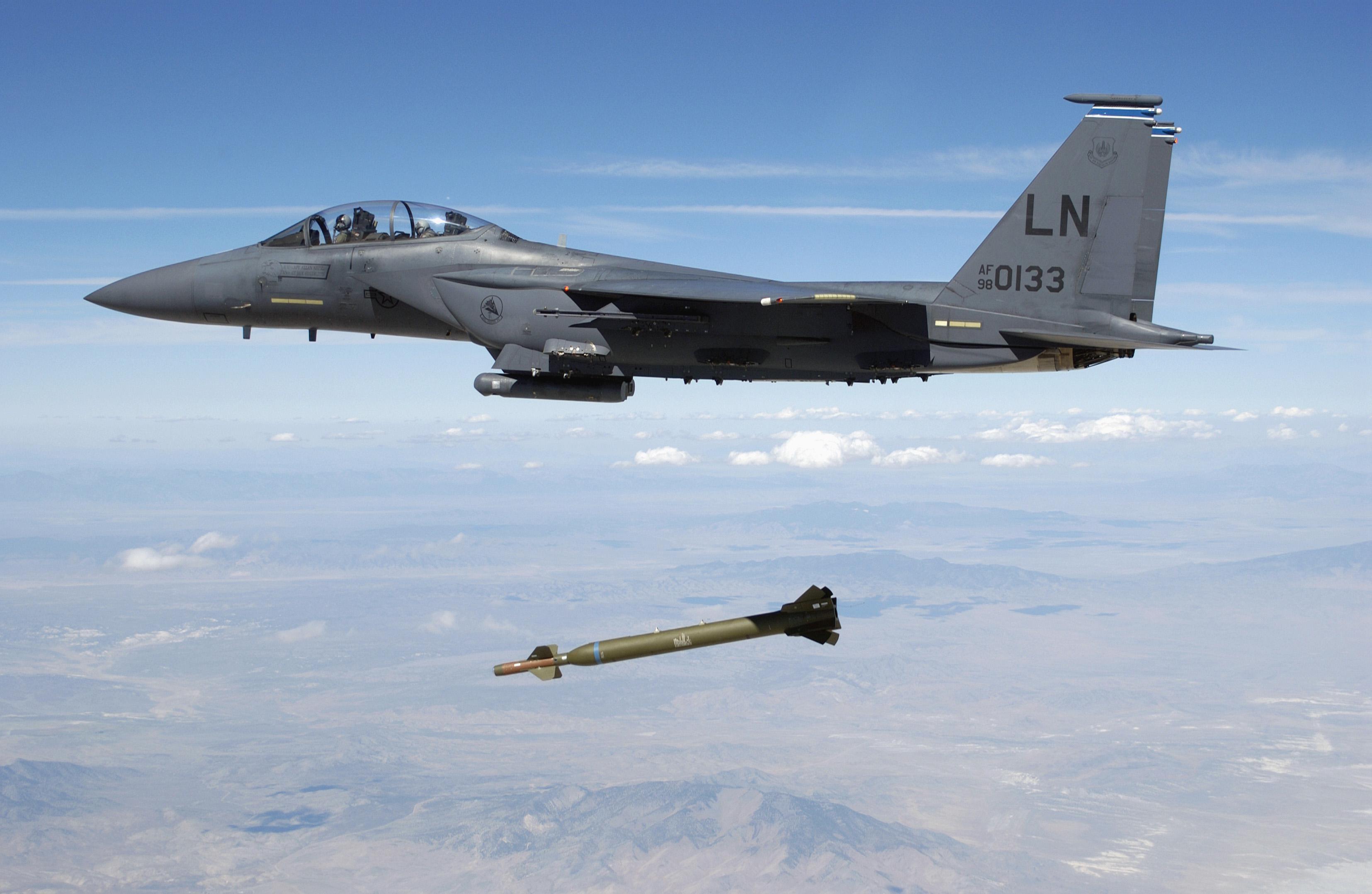
To successfully destroy Iran’s Fordow nuclear enrichment plant, which is housed beneath a mountain, Israel requires so-called “bunker-buster” bombs, which are designed to penetrate soil and concrete structures before striking their target.
However, the only ordnance likely capable of reaching the facilities at Fordow are U.S.-made precision weapons owned exclusively by the U.S. military.
That means that Israel will require U.S. support to complete its stated goal of destroying Iran’s nuclear facilities in toto without deploying troops on the ground at Fordow.
Iran’s Nuclear Fortress
Fordow is Iran’s second-largest nuclear facility and is located about 60 miles southwest of the capital of Tehran.
The facility hosts advanced uranium centrifuge cascades, which are essential for producing nuclear fuel. Many analysts have also long suspected that Fordow is where the Iranian regime would conceal any clandestine attempts to develop nuclear warheads.
Constructed between 2007 and 2009, the Fordow facility is built into the side of a mountain. It is roughly 260 feet underground and reinforced with barriers.
The facility also appears designed to withstand direct airstrikes and is protected by anti-aircraft batteries, although these have come under fire from Israeli forces in the past week.
Israeli Prime Minister Benjamin Netanyahu has said the goal of attacking Iran is to eliminate its missile and nuclear programs, which he described as an existential threat to Israel, and officials have said the destruction of Fordow is part of that plan.
“This entire operation ... really has to be completed with the elimination of Fordow,” Yechiel Leiter, Israel’s ambassador to the United States, said during a Fox News interview on June 13.
US Ordnance Required for an Airstrike
Fordow’s expansive natural and man-made defenses mean that there are steep requirements for what type of ordnance could destroy the facility via airstrike.
The only available ordnance likely to fit that bill is the GBU-57A/B Massive Ordnance Penetrator, a precision munition designed for the U.S. Air Force in the early 2000s.
Each GBU-57A/B weighs 30,000 pounds and is capable of penetrating about 200 feet of soil and concrete before exploding. Multiple bombs can also be used in succession to dig down farther, thereby destroying heavily fortified underground bunkers—such as those that U.S. forces struggled to eradicate during the Iraq War.
However, further complicating the matter of striking Fordow is the fact that there is only one aircraft outfitted to carry and use the GBU-57A/B. That aircraft is the B-2 Spirit, the United States’ premier stealth bomber.
The strategic long-range heavy bomber has a range of about 7,000 miles without refueling, and there are already four such aircraft deployed to the Indian Ocean, although it is unclear whether those four are equipped with the GBU-57A/B.
Such a bomb would therefore need to be dropped from a U.S. aircraft, which could risk pulling the United States into another war in the Middle East.
Such an attack would also risk releasing the highly enriched uranium present at the site, raising the possibility of a radiation-related disaster.
Israeli military leadership has suggested that there could be other options for attacking Fordow that do not require such a capability, but have not disclosed what those options are.
US Mulls Entering Israel’s War
Trump has called on Iran to submit to an unconditional surrender to Israel and has said that Iranian Supreme Leader Ali Khamenei would be an “easy target” if the United States were to take action against Iran.
Trump’s remarks come a day after he called for the immediate evacuation of Tehran, repeating the warning that Iran must not obtain a nuclear weapon and suggesting that the country could be headed for a catastrophe by refusing to make a deal on nuclear disarmament.
Although the Trump administration has frequently positioned itself as being against foreign military entanglements, the desire to eliminate the potential for a nuclear-armed Iran and to support Israel appears to have shifted that stance somewhat.
Writing on social media platform X, Vice President JD Vance said on June 17 that Trump “may decide he needs to take further action to end Iranian enrichment.”
Acknowledging Americans’ concern about another war in the Middle East, Vance said the decision of whether to bomb Iran would ultimately be made by Trump.
“That decision ultimately belongs to the president,” Vance wrote.
“But I believe the president has earned some trust on this issue.”
The Associated Press contributed to this report.
The strike follows a series of missile strikes carried out by Iran against Israel.
The State Department wrote on social media platform X just after 6:45 p.m. ET that the embassy in Jerusalem will be closed “Given the security situation and in compliance with Israel Home Front Command guidance.”
“This includes the Consular Sections in Jerusalem and Tel Aviv.”
“We have no announcement about assisting private U.S. citizens to depart at this time,” the department said, adding that it is “always planning for contingencies to assist with private U.S. citizens’ departure from crisis areas.”

Israel’s strikes on Iran on June 13 were conducted with the expressly stated aim of preventing Iran from developing a nuclear weapon.
During what has been code-named “Operation Rising Lion,” a reference to a Biblical verse from the Book of Numbers, the Jewish state hit numerous targets, including some nuclear facilities integral to the Islamic regime’s atomic ambitions.
But how successful has Jerusalem’s lightning strike been in achieving its aims?
Nuclear Sites Hit
Before the strikes, it was known that Iran was enriching uranium to up to 60 percent purity, which could easily be further refined to the 90 percent purity needed to make the radioactive element weapons grade.
Most civilian nuclear power reactors for creating electricity—Tehran’s publicly stated reason behind their facilities—require uranium to be enriched to between 3 and 5 percent purity, according to the World Nuclear Association.
Iranian leaders have repeatedly said they maintain a peaceful nuclear energy program, but resumed producing highly enriched uranium in 2018.
In February, the United Nations’ nuclear watchdog, the International Atomic Energy Agency (IAEA), assessed that Iran had stockpiled about 605 pounds of 60-percent-enriched uranium.
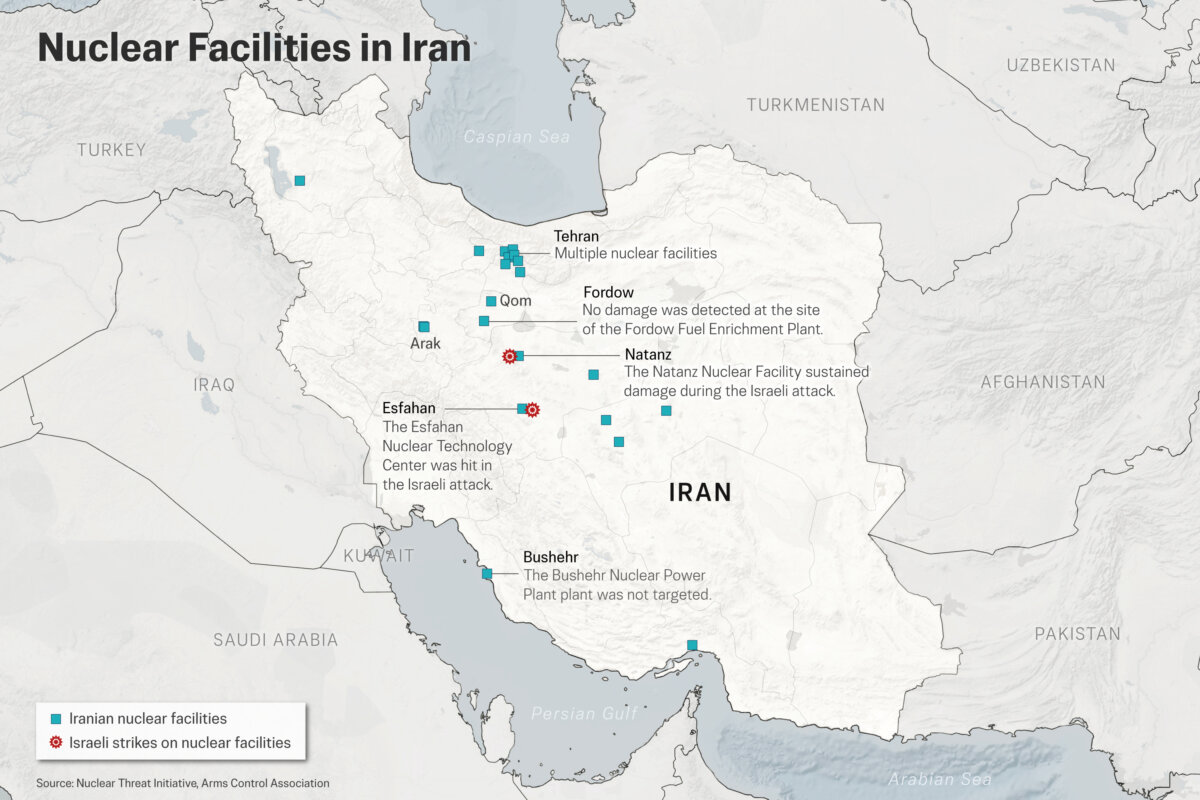
On June 13, the IAEA said two Iranian nuclear facilities sustained damage during the attack, but the exact extent remains unclear.
Those sites were the Natanz Nuclear Facility and Esfahan Nuclear Technology Center.
This is what is known so far about the impact of the strikes.
Natanz
The Natanz Nuclear Facility, officially the Shahid Ahmadi Roshan Nuclear Facilities, is located near the city of Natanz, about 180 miles south of Tehran.
According to the IAEA, Israel’s strikes “destroyed the above-ground part of the Pilot Fuel Enrichment Plant, one of the plants at which Iran was producing uranium enriched up to 60 percent.”
The watchdog said that the facility’s electricity infrastructure, including an electrical sub-station, a main electric power supply building, and emergency power supply and back-up generators, had also been obliterated.
IAEA Director General Rafael Grossi said in a statement to the agency’s board of governors in Vienna on June 16, that although the surface level buildings sustained demage, “there has been no indication of a physical attack on the underground cascade hall containing part of the Pilot Fuel Enrichment Plant and the main Fuel Enrichment Plant.”
However, Grossi added that the loss of power to the cascade hall may have damaged the centrifuges located there.
The IAEA said that the level of radioactivity outside the site had remained at normal levels, suggesting no immediate threat to the local population or environment.
Inside the facility, Grossi said there was “both radiological and chemical contamination.”
Grossi later told the BBC it was likely that all of the roughly 15,000 centrifuges—the machines used to enrich uranium—operating at Natanz were badly damaged or destroyed because of the power outage.
On June 17, the IAEA posted a message on social media platform X stating: “Based on continued analysis of high-resolution satellite imagery collected after Friday’s attacks, the IAEA has identified additional elements that indicate direct impacts on the underground enrichment halls at Natanz.”
Esfahan
The other nuclear site hit in the Israeli attack was the Esfahan Nuclear Technology Center, located in the city of Esfahan, just shy of 100 miles south of the Natanz facility.
According to the IAEA, four buildings at the site were damaged in the June 13 strike.
They were “the central chemical laboratory, a uranium conversion plant, the Tehran reactor fuel manufacturing plant, and the UF4 to EU metal processing facility, which was under construction.”
As with Natanz, the agency said “off-site radiation levels remain unchanged.”
The uranium conversion plant is where work on uranium metal was conducted.
While it can be used for other purposes, uranium metal technology is an important component in making the core of a nuclear weapon.
If Tehran were to attempt to make a nuclear weapon, it would need to take weapons-grade uranium and turn it into uranium metal.
If the conversion plant is out of action, Iran will eventually run out of uranium to enrich unless it finds an outside source.
Sites Remaining
The IAEA said no damage was detected at the site of the Fordow Fuel Enrichment Plant or at the Khondab heavy water reactor, which is under construction.
The Bushehr nuclear power plant was not targeted, nor was the Tehran Research Reactor.
Of those facilities, the most integral to Tehran’s nuclear ambitions is Fordow.
Fordow, located under about 260 feet of rock and soil, is built into the side of a mountain near the city of Qom, about 60 miles southwest of Tehran.
It is Iran’s second uranium enrichment facility after Natanz, and has been operational since 2009. The country has deployed the Russian-supplied S-300 surface-to-air missile defense system around the Fordow facility, Iranian state media reported in 2016.
Israel has stated ambitions to take out the site, with Israel’s ambassador to the United States, Yechiel Leiter, telling Fox News on June 13, “This entire operation ... really has to be completed with the elimination of Fordow.”
However, owing to its location, Fordow presents a particularly difficult target for the Israelis.
Where Does Iran’s Program Stand?
Unfortunately, owing to the secretive nature of Iran’s nuclear program, and the fact that the IAEA has not been able to visit the country, it is impossible to know with any real certainty how far back Israel’s strikes have set back the Islamic regime’s atomic ambitions.
However, the near-total destruction of two key nuclear facilities at Natanz and Esfahan, along with the deaths of numerous top military officials and nuclear scientists, will doubtless have been a body blow to the regime in Tehran.
Reuters contributed to this report.
“A short while ago, the IDF identified missiles launched from Iran toward the territory of the State of Israel,” the IDF wrote on Telegram 36 minutes past midnight. “Defensive systems are operating to intercept the threat. The public is instructed to enter a protected space and remain there until further notice.”
The IDF then confirmed that sirens sounded in several areas across Israel as the Air Force worked “to intercept and strike where necessary to eliminate the threat.”
A little more than 15 minutes after that, the IDF said that Israel’s Home Front Command cleared people to leave their shelters.
But, about 20 minutes later, the IDF said it identified more Iranian missiles on their way to Israel and instructed the public to take shelter again.
“We're concerned these false reports will be an excuse for our services to be blocked at a time when people need them the most,” a WhatsApp spokesperson said in a statement to The Epoch Times.
“All of the messages you send to family and friends on WhatsApp are end-to-end encrypted, meaning no-one except the sender and recipient has access to those messages, not even WhatsApp. We do not track your precise location, we don’t keep logs of who everyone is messaging, and we do not track the personal messages people are sending one another,” the spokesperson added.
WhatsApp said it does not provide bulk information to “any government.”
“For over a decade, Meta has provided consistent transparency reports that include the limited circumstances when WhatsApp information has been requested,” the spokesperson said.
“Israel’s continued, intensive attacks on peaceful nuclear facilities in the Islamic Republic of Iran are unlawful under international law, pose unacceptable threats to international security, and drive the world closer to a nuclear catastrophe—the consequences of which will be felt globally, including in Israel itself,” the ministry said in a statement.
Moscow is demanding that Israeli leadership immediately cease all strikes on Iranian nuclear installations.
Russia said it acknowledges Iran’s “unwavering commitment” to its requirements to adhere to the treaty on the non-proliferation of nuclear weapons and its “readiness to resume contacts with the United States” to explore possible ways to “dispel any unfounded suspicions and prejudices” about Tehran’s nuclear program if Israel’s attacks cease.
Moscow is also calling for “diplomacy and negotiations” to resolve the conflict.
It announced it will operate flights on June 18 from Paris, Rome, Athens, Milan, and Larnaca, Cyprus.
“We emphasize that we operate strictly in accordance with the directives of the relevant security and aviation authorities. Priority for flight assignment is based on the original flight cancellation date and urgent medical humanitarian cases,” El Al said in a Facebook post.
“All our crews and aircraft are on standby, awaiting further instructions from the authorities to operate flights at maximum capacity and as soon as possible.”
Currently, Israel is not allowing flights in and out of the country.
The resolution would also direct President Donald Trump to “terminate the use of United States Armed Forces from hostilities against the Islamic Republic of Iran or any part of its government or military, unless explicitly authorized by a declaration of war or specific authorization for use of military force against Iran.”
Announcing the resolution on social media, Massie wrote, “This is not our war. Even if it were, Congress must decide such matters according to our Constitution.”
“Do not stand against the Iranian people for the sake of a regime whose fall has begun and is inevitable,” he said, specifically to members of the military, law enforcement, and security forces. “Do not sacrifice yourselves for a decaying regime. By standing with the people, you can save your lives. Play a historic role in the transition from the Islamic Republic, and take part in building the future of Iran.”
Pahlavi pledged that Iran would not fall into civil war or instability after the fall of the Ayatollah's regime.
“We are prepared for the first hundred days after the fall, for the transitional period, and for the establishment of a national and democratic government—by the Iranian people and for the Iranian people,” he said.

“The task force is operating 24 hours a day,” Bruce told reporters at a June 17 press briefing.
“Over the past week, to help keep U.S. citizens informed, we have issued more than 30 security alerts to countries in the region and updated the travel advisories for Iraq and Israel.”
Bruce noted recent department updates advising U.S. citizens not to travel to Israel, Iraq, or Iran, particularly as Iran and Israel have traded attacks.
“We continue to monitor the complex and rapidly evolving situation on the ground as we continue to assess and address the needs of U.S. citizens,” Bruce added.
“We have delivered significant blows to the Iranian regime, and as such, they have been pushed back into central Iran,” Defrin said in a statement. “They are now focusing their efforts on conducting missile fire from the area of Isfahan.
“We are aiming at military targets, they are attacking civilian homes,” he added.
“Sirens sounding across northern Israel following another barrage of Iranian missiles,” it posted on X.
“The [Israeli Air Force] conducted intelligence-based strikes on 12 missile launch sites and storage facilities,” the IDF announced on Telegram. “These missiles were aimed at Israeli civilians.”
Attached in the message were links to footage that included a video of Israeli missiles striking “three key sites for storing and launching surface-to-surface missiles that were struck in the Isfahan area,” and footage of a “strike on a surface-to-air missile launcher” at one of Iran’s launch sites.
Trump Calls for Iran’s ‘Unconditional Surrender’
President Donald Trump on Tuesday called for the Iranian regime’s “unconditional surrender” in the Israel–Iran war and threatened the life of Iran’s supreme leader if he orders missile strikes against civilians or American troops.