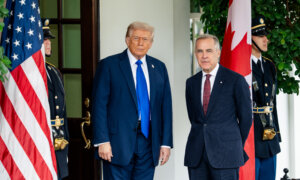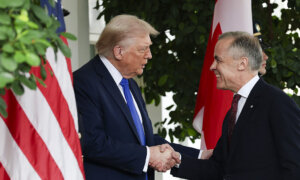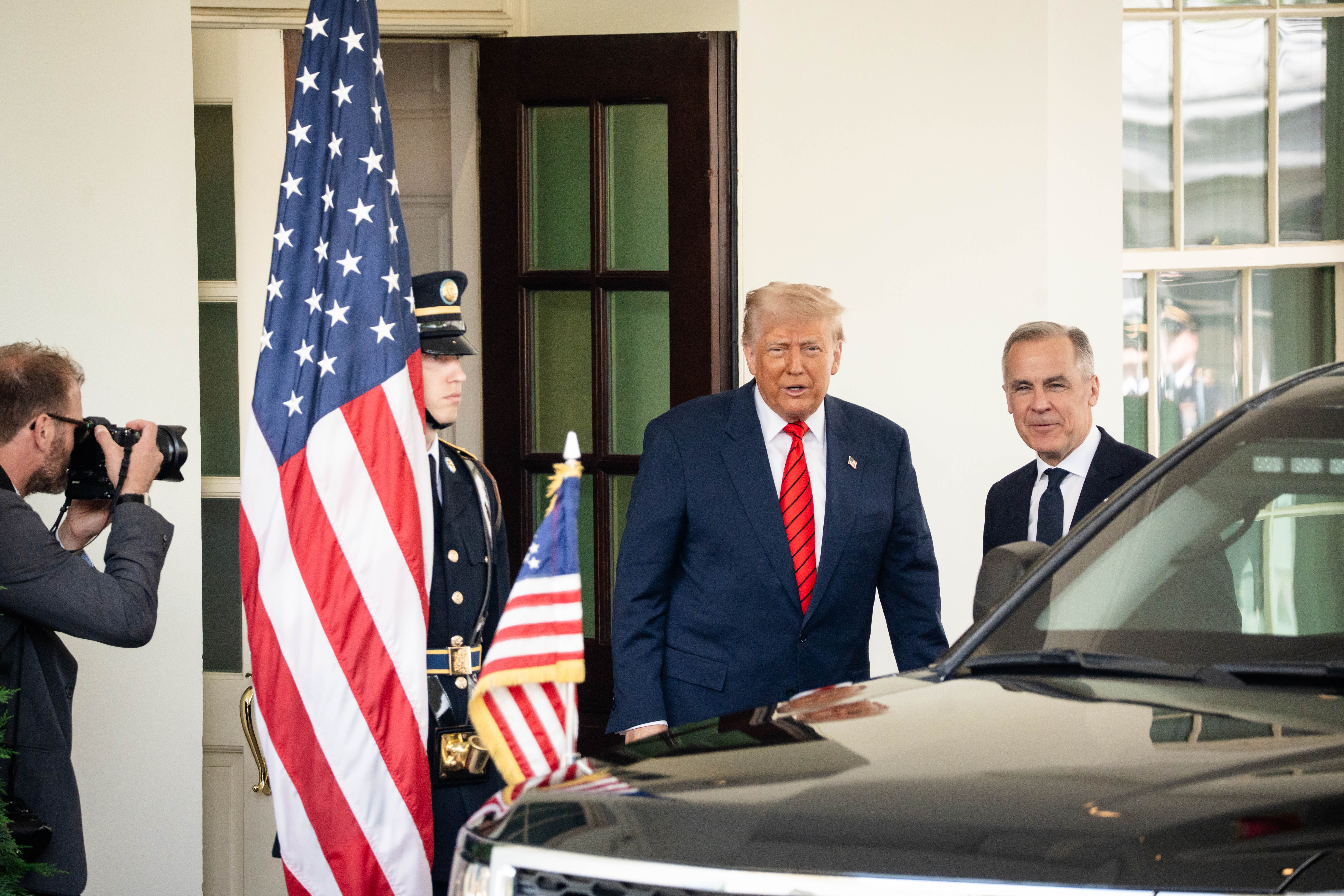
U.S. President Donald Trump says he is not approving the new international bridge linking Ontario and Michigan, adding that negotiations on the international border crossing will need to begin anew.
“As everyone knows, the Country of Canada has treated the United States very unfairly for decades,” Trump said on Truth Social on Feb. 9. “Now, the Canadian Government expects me, as President of the United States, to PERMIT them to just ’take advantage of America!' What does the United States of America get — Absolutely NOTHING!”
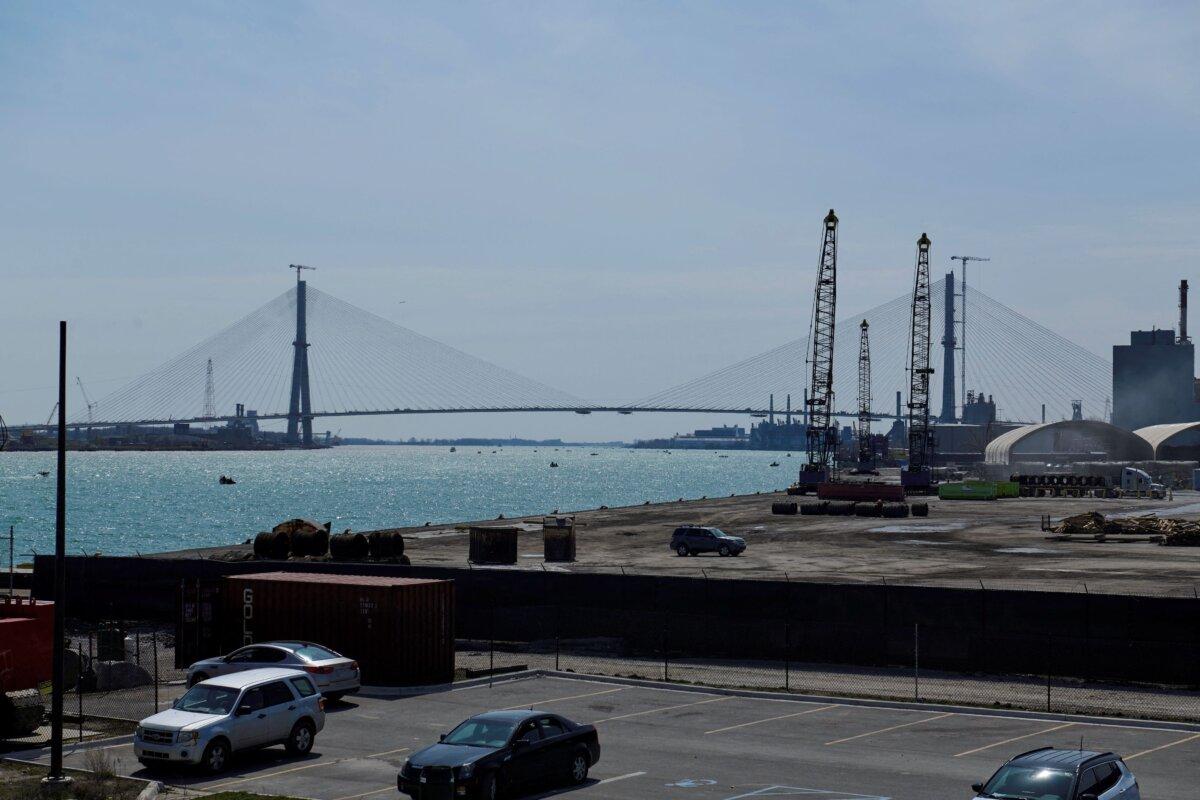
Spanning the Detroit River, the Gordie Howe International Bridge will connect southern Detroit, Mich., and Windsor, Ont., in Canada when completed. Photo taken in Detroit on April 17, 2025. (Dominic Gwinn/Middle East Images/AFP via Getty Images)
The U.S. president added: “We will start negotiations, IMMEDIATELY. With all that we have given them, we should own, perhaps, at least one half of this asset. The revenues generated because of the U.S. Market will be astronomical.”
The Gordie Howe International Bridge, when completed, would be the second bridge after the Ambassador Bridge connecting Windsor, Ont., and Detroit, Mich. Former Canadian Prime Minister Stephen Harper and former Michigan Governor Rick Snyder reached an agreement on the project in 2012, and the Obama administration provided approval in 2013.
The $6.4 billion project is funded by Canada’s federal government and owned by the Canadian Crown corporation Windsor-Detroit Bridge Authority (WDBA). The organization, which is also slated to operate the bridge once it becomes operational, said in a Feb. 6 update that construction has been completed and the bridge is now undergoing testing and commissioning. The Epoch Times contacted the WDBA for comment but didn’t immediately hear back.
Trump said the agreement signed under the Obama administration wasn’t to the benefit of the United States, and added that there should have been requirements to use U.S. products, including U.S. steel. Under the Canada–Michigan agreement for the bridge, both American and Canadian iron and steel producers were eligible to bid for the project.
“Canada is building a massive bridge between Ontario and Michigan. They own both the Canada and the United States side and, of course, built it with virtually no U.S. content,” Trump said.
He also cited Ontario’s ban on U.S. alcohol in provincially run liquor stores over U.S. tariffs, Canada’s dairy supply management system, and Prime Minister Mark Carney’s new agreements with China, while also referencing Canada’s favourite sport, hockey.
“On top of everything else, Prime Minister Carney wants to make a deal with China — which will eat Canada alive. We’ll just get the leftovers! I don’t think so. The first thing China will do is terminate ALL Ice Hockey being played in Canada, and permanently eliminate The Stanley Cup,” he said.
The Epoch Times contacted Carney’s office for comment but didn’t hear back. Carney has said that he is not seeking a free-trade deal with China. The office of Ontario Premier Doug Ford also didn’t immediately respond to a request for comment. Ford has said he'll only remove the ban on U.S. liquor once Washington lifts tariffs on Canada.
During his first administration, Trump had supported the bridge, saying in a joint statement with former Prime Minister Justin Trudeau in 2017, “we look forward to the expeditious completion of the Gordie Howe International Bridge, which will serve as a vital economic link between our two countries.”
The project had for years faced legal challenges from the private owners of the Ambassador Bridge, who cited exclusivity rights, but the cases were dismissed.
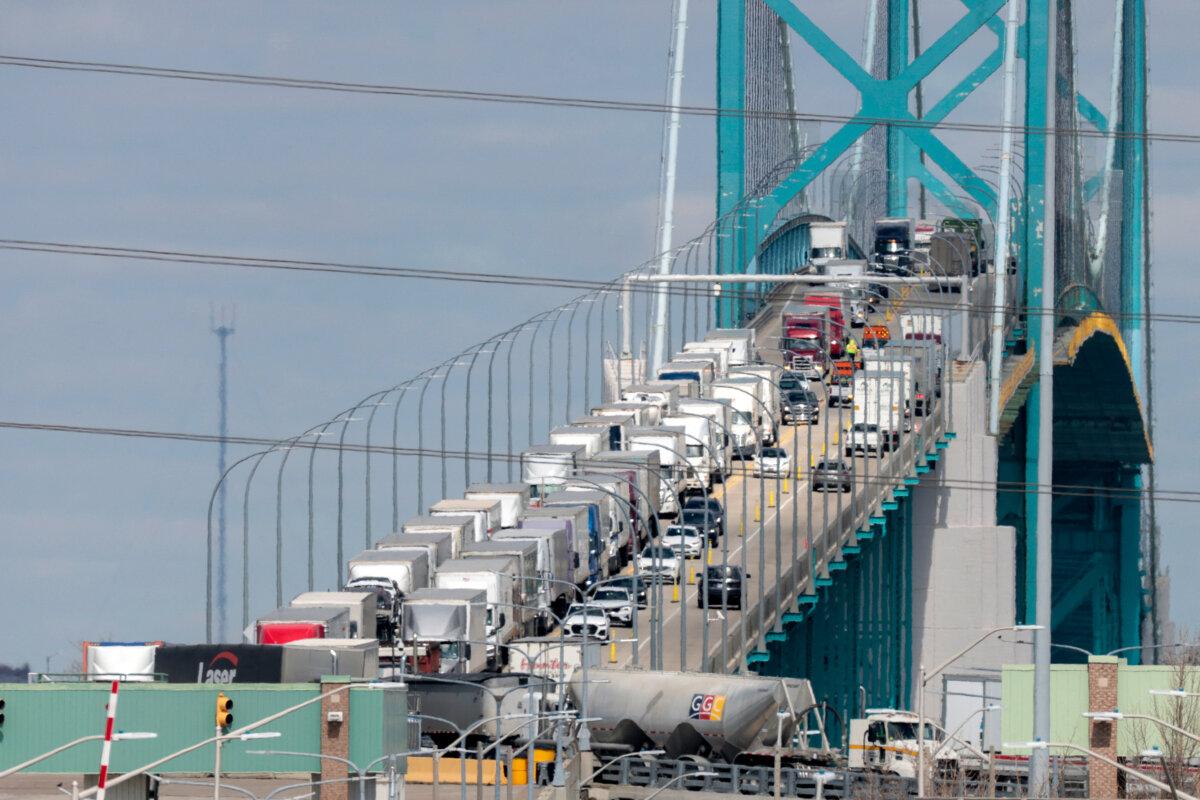
Vehicles cross the Ambassador Bridge in Windsor, Ont., to go to Detroit, Mich., on April 1, 2025. (Jeff Kowalsky/AFP via Getty Images)
Trump-Carney Relations
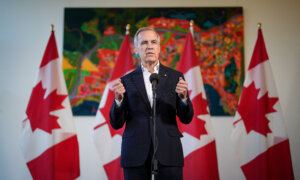
Trump has increasingly taken a tougher stance on Canada since Carney delivered a speech at the World Economic Forum (WEF) in Davos, Switzerland, on Jan. 20, in which he said middle powers should band together to stand up to “great powers,” and indirectly criticized U.S. protectionism.
Trump said the next day at the WEF that Carney “wasn’t so grateful,” and soon after rescinded his invitation for Carney to join the U.S.-led Board of Peace to help rebuild Gaza.
Amid criticism by his administration over Canada’s China deals, Trump also said he would impose 100 percent tariffs on Canada if Ottawa “makes a deal with China.” Carney recently visited Beijing, where he signed a series of deals, including an agreement to cut tariffs on Chinese EVs from 100 percent to 6.1 percent for the first 49,000 vehicles, in exchange for Beijing reducing tariffs on some Canadian agricultural products until at least the end of the year. Carney also said he is seeking a “strategic partnership” with Beijing, and that relations between the two countries are entering a “new era.”
U.S. Treasury Secretary Scott Bessent said last week that Washington wouldn’t remove tariffs on Canada, adding that the United States can’t allow its northern border to be used “as a way for Chinese EVs to come into the U.S.”
On Jan. 29, Trump also said his administration would be “decertifying” the Global Express aircraft line of the Canadian company Bombardier, citing Canada’s refusal to certify U.S.-made Gulfstream jets as the reason.
Carney has said that the agreements with China are targeted at specific trade issues, and that they’re not in violation of the United States-Mexico-Canada Agreement. The trilateral free-trade agreement is set for review later this year.