
President Donald Trump’s negotiators are seeing signs of progress on a deal to end the Russia–Ukraine war following two days of talks in the United Arab Emirates.
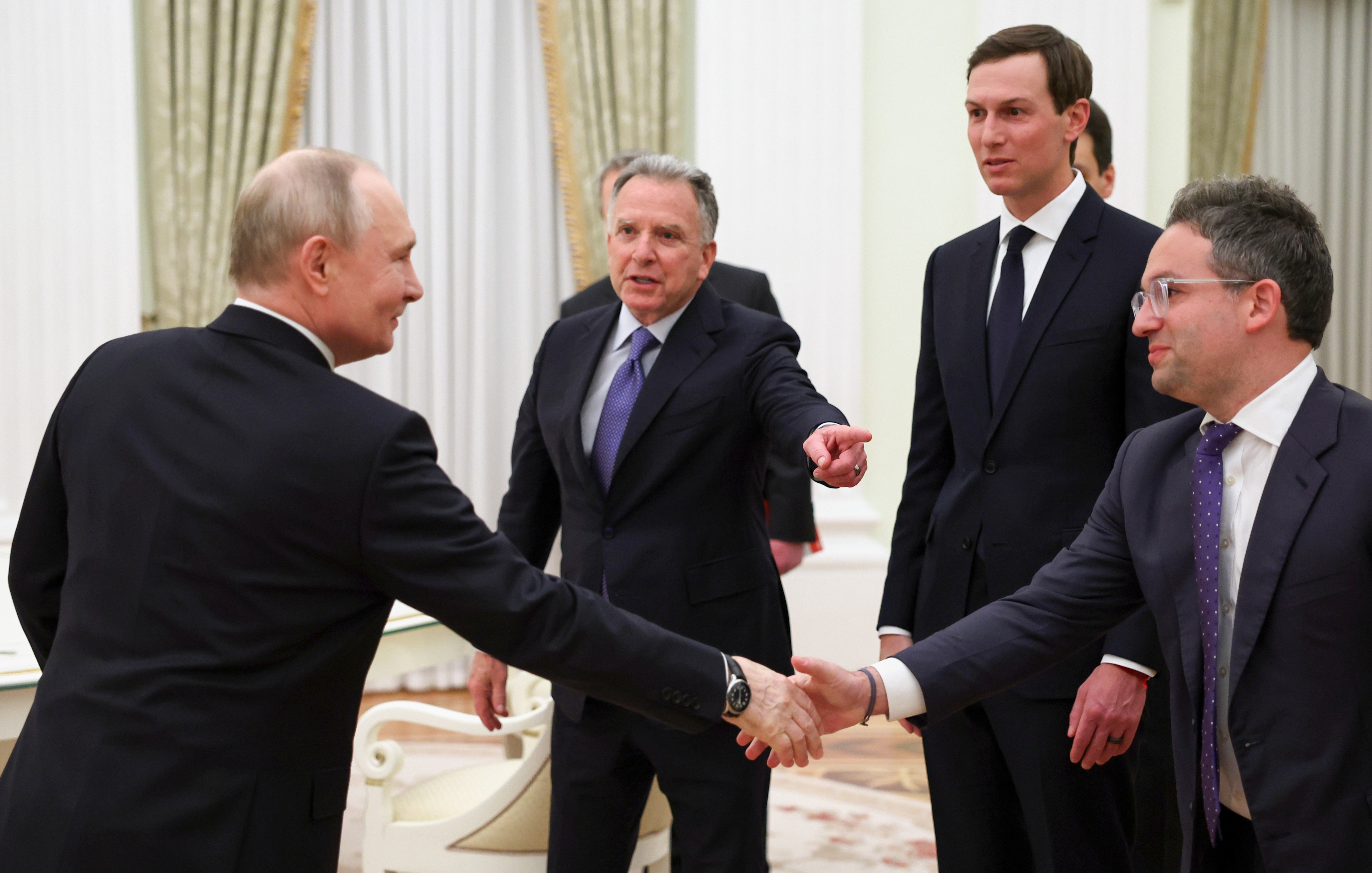
U.S. special envoy Steve Witkoff and Trump’s son-in-law and adviser, Jared Kushner, held trilateral talks with Russian and Ukrainian representatives in Abu Dhabi on Jan. 23 and 24. Although no parties announced an immediate breakthrough from the talks, a pair of U.S. officials familiar with the discussions described marked progress since November 2025, when U.S. and Ukrainian representatives met in Geneva.
“We felt that the meeting in Abu Dhabi was a critical step towards getting to the next phase,” one U.S. official said.
The Abu Dhabi talks are the first known instance in which Russian and Ukrainian representatives have sat for direct talks, mediated by the United States.
In an X post following the Jan. 24 meetings, Ukrainian President Volodymyr Zelenskyy described the talks as constructive and said the main focus was on finding “possible parameters for ending the war.”
“All sides agreed to report in their capitals on each aspect of the negotiations and coordinate further steps with leaders,” Zelenskyy said.
One U.S. official said both Moscow and Kyiv are “starting to envision what they can gain from peace.” The official noted Ukrainian interest in a “prosperity plan” for the war-torn country.
Ukraine’s Ministry of Economy, in a Jan. 3 statement, described a “prosperity plan” that aims to attract public and private investment from the United States, the European Union, and the G7 to cover an estimated $800 billion in post-war reconstruction and economic recovery efforts in Ukraine.
The first U.S. official said the Russian side is interested in opportunities to pursue trade with the United States.
The second U.S. official said the parties have agreed to meet again in Abu Dhabi next week.
Both U.S. officials avoided offering specifics on how discussions were proceeding on the issue of territory.
Russian forces control significant portions of Ukraine’s pre-war territory and have called for Ukraine to cede that land and other pockets of territory.
The first official said the trilateral setting meant U.S. mediators no longer needed to articulate Ukrainian demands to the Russian side, or vice versa.
“It was nice to see them relaying their positions to each other and probing and pushing and being creative together,” the official said. “And so that was actually, you know, a really, really helpful dynamic in the negotiation.”
Part of Kyiv’s condition for a settlement rests on security guarantees from Western partners.
One of the U.S. officials said talks on security protocols had reached an advanced stage and had been reviewed by the North Atlantic Treaty Organization and by U.S. military and national security leadership.
Although U.S. officials expressed optimism coming out of the Abu Dhabi talks, challenges remain in building trust between the warring sides.
Ukraine reported that Russian forces carried out a heavy missile barrage against residential areas and energy infrastructure in the cities of Kyiv and Kharkiv on Jan. 24.
“Peace efforts? Trilateral meeting in the UAE? Diplomacy? For Ukrainians, this was another night of Russian terror,” Ukrainian Foreign Minister Andrii Sybiha wrote in an X post addressing the attacks.
On Jan. 24, Russian state news agency TASS reported attacks targeting Belgorod, which is near the Russia–Ukraine border.