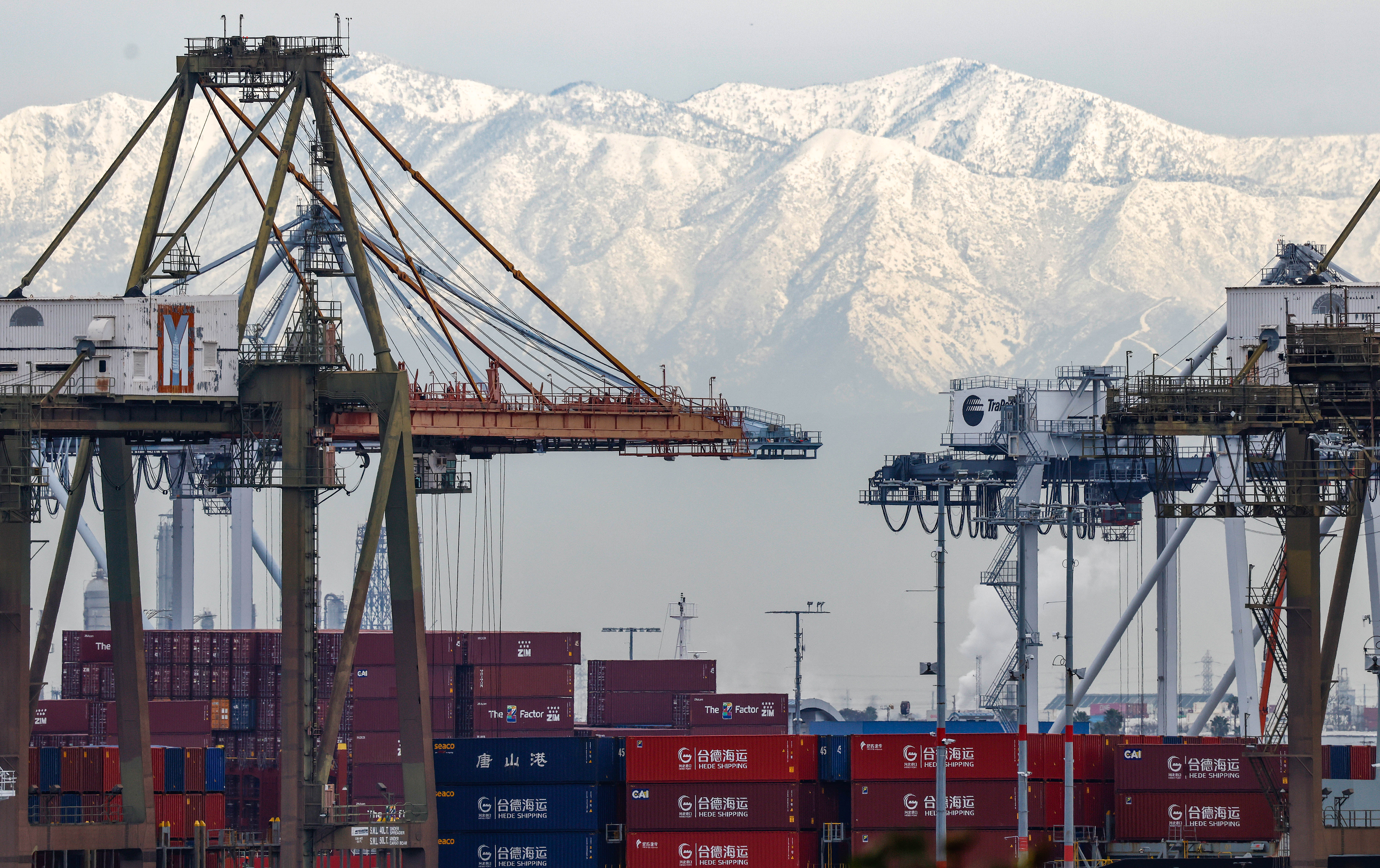

The Court of International Trade heard oral arguments on April 10 in a suit challenging President Donald Trump’s recent global tariffs.
Trump implemented those tariffs using Section 122 of the Trade Act of 1974 after the Supreme Court struck down tariffs he’d issued using the International Economic Emergency Powers Act. Section 122 allows the president to apply tariffs up to 15 percent and lasting 150 days in certain circumstances. After that, he must obtain approval from Congress to extend them.
A group of 24 states—led by Oregon—along with two small businesses sued, arguing that the current circumstances don’t allow Trump to use that law.
“Contrary to the purpose and limited delegation of Section 122, President Trump has invoked this statute to impose immense and ever-changing tariffs on whatever goods entering the United States he chooses and for whatever reasons he finds convenient,” the plaintiffs’ complaint reads.
The plaintiff’s legal filing said Section 122 existed to allow the president to address “fundamental international payments problems,” and “large and serious balance-of-payments deficits.”
Trump cited some of that language in his proclamation issuing the 10 percent global tariffs.
Friday’s three-hour oral arguments revolved around a struggle to understand the precise meaning of those two terms, and exactly when they would apply.
“We’re three judges who are trying to—please help us—we’re trying to figure it out,” Judge Timothy Stanceu said. “It’s a term in a statute, and we’re trying to define it.”
Trump, the plaintiffs argued, illegally used that part of the law to address a mere trade deficit, which was not what the framers of the law intended.
“Section 122 does not grant the President authority to impose tariffs based on a trade deficit,” their complaint reads.
Stanceu said the United States does indeed appear to have a balance of payments problem, “because our current account deficit is now excess of $1.1 trillion, and has been growing larger and larger over the last five years, since 2020 at least.”
“So I’m not sure I can agree with you that the President acted simply because of a trade deficit,” he told attorney Jeffrey Schwab, who was representing the businesses.
Judge Claire Kelly asked Oregon’s attorney, Brian Marshall, what would constitute an “international payments problem.”
Marshall said a “serious depreciation of the dollar” would theoretically apply, but that situation doesn’t exist today.
The judges were also skeptical of the states’ theory that anyone who had to pay higher prices because of the tariffs had standing—that is, the right to sue.
“Any citizen who’s buying goods that are imported would have standing to come into this court and challenge the president’s action, is that what you’re saying?” Chief Judge Mark Barnett asked.
Marshall said yes.
Meanwhile, Justice Department attorney Brett Shumate argued that the language of the statute allowed the president to define the meaning of the disputed terms, but the judges pushed back against that too.
“This raises a problem for me,” Stanceu said. “You’re saying the president has discretion to interpret what the term balance of payments deficit means, but that’s a pure question of law, isn’t it?”
The judges did not give any indication of when they would issue a ruling. Trump’s Section 122 tariffs expire at the end of July.