
In his Oct. 6 Epoch Times article “Make a Chicken Soup,” Jeffrey Tucker wrote about cooking up an “old-fashioned chicken soup” that helped an ailing member of his household feel better. His inspiration for this remedy came from his grandmother “who made this soup without ever consulting a recipe or a journal article. She knew because her mother knew, and her mother before her, stretching back to some village kitchen where the first someone thought to boil a bird with root vegetables and time.”
Tucker’s piece sparked a thought in me. He made his grandmother’s soup for a sick member of his family. Was it possible that the victims of the strange age in which we live might find some relief via the remedies of those “grandparents” who preceded us?
Few would deny that many today are unwell. Polls and government data reveal high and increasing rates of depression and anxiety among Americans of all ages. Just three years ago, then-U.S. Surgeon General Vivek Murthy reported that a loneliness epidemic was contributing to an overall darker American mood. Jonathan Haidt’s bestseller “The Anxious Generation” declared an epidemic of mental illness among children and young people, in large part brought on by screens and social media.
Like Tucker’s chicken soup, there are authors whose works might break the fever of our unhappiness, whose prescriptions for optimism, health, and resilience helped shape the American character. Some of these books are dusty with age and neglect, but if we take them from the shelf, we may find some old-fashioned advice for escaping today’s age of anxiety and taking a healthier path. Here are just five of these sources of wisdom.
Rx for Living
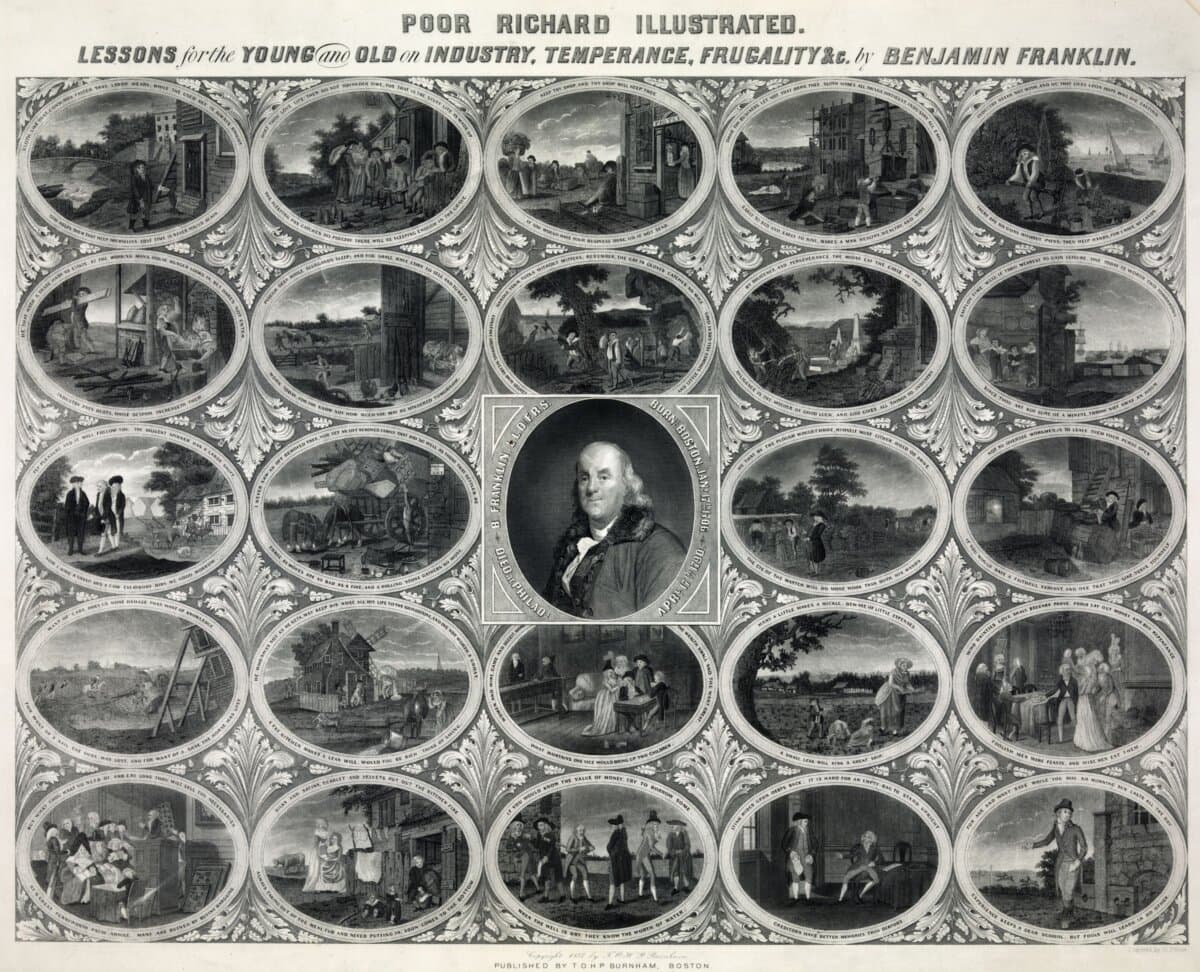
A 19th-century print based on "Poor Richard's Almanack," showing the author surrounded by 24 illustrations of many of his best-known sayings. (Public Domain)
Ben Franklin’s 1758 essay “The Way to Wealth” teems with aphorisms gleaned from previous editions of “Poor Richard’s Almanack.” Here are just a few of the gems Franklin left us: “One to-day is worth two to-morrows”; “If you will not hear Reason, she will surely rap your knuckles”; and “But, dost thou love life? then do not squander time, for that is the stuff life is made of.”
“The Way to Wealth” delivers this payload of wit and wisdom via a story featuring a crowd listening to a certain Father Abraham. At the story’s end, we learn a final lesson: Everyone cheered Father Abraham’s advice, but no one followed it.
If you’re looking for several dozen tips for living a better life condensed into a short essay, study Franklin’s recipe for the good life. Particularly helpful for millennials and the Gen Z gang.
Rx for Loneliness
Dale Carnegie’s 1936 “How to Win Friends and Influence People” remains one of the bestselling books in history. In 2013, the Library of Congress included Carnegie’s book on its list of “Books That Shaped America.”
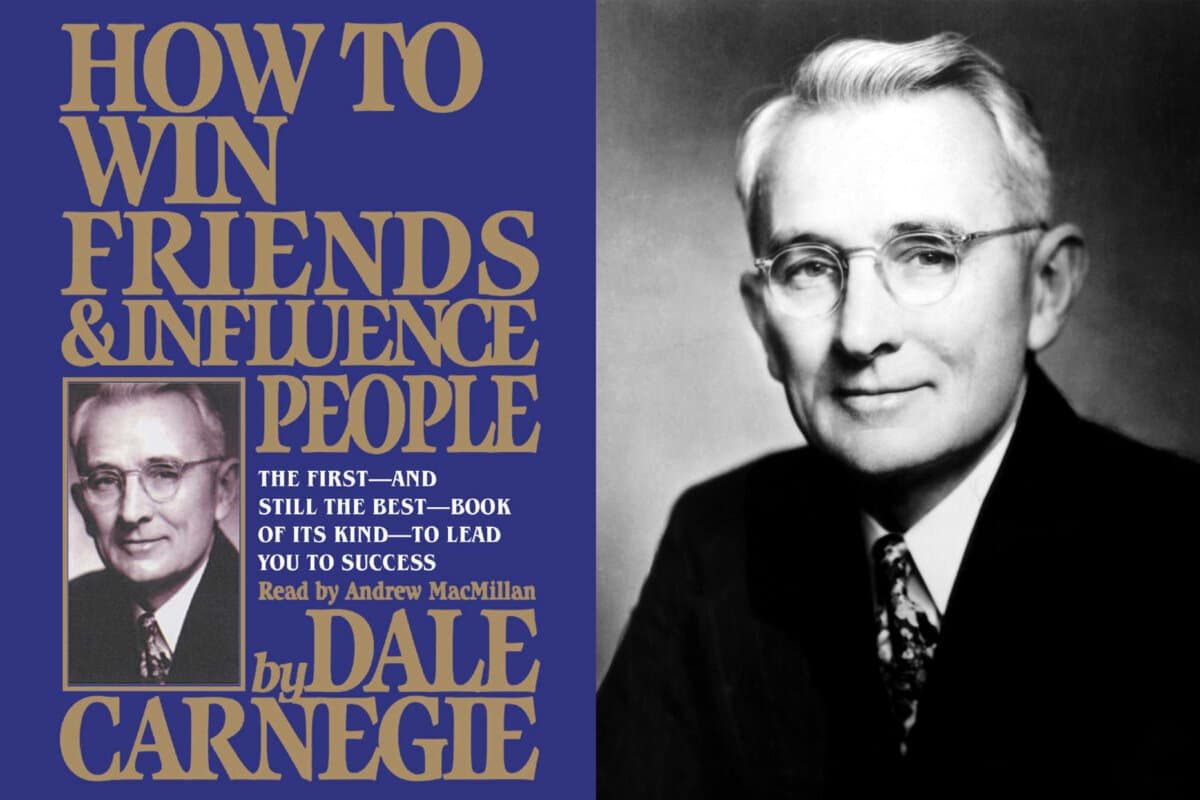
Dale Carnegie and his book “How to Win Friends and Influence People,” 1936. (Public Domain)
“How to Win Friends” offers countercultural advice to our age in which so many people focus so much of their time and energy on themselves and their own well-being. Carnegie’s formula for acquiring friends is simple: Take more of an interest in others than in yourself, be a good listener, and avoid complaining or criticizing others.
His “winning friends begins with friendliness” is simply a reiteration of “If you want to make a friend, you have to be a friend.” Old-time stuff, sure, yet missing in action today.
So, if you’ve got the lonesome blues, try listening to others instead of talking, stifle the complaining, and practice kindness. You’ll stand a much better chance of escaping your solitary confinement.
Rx for Negativity, Cynicism, and Despair
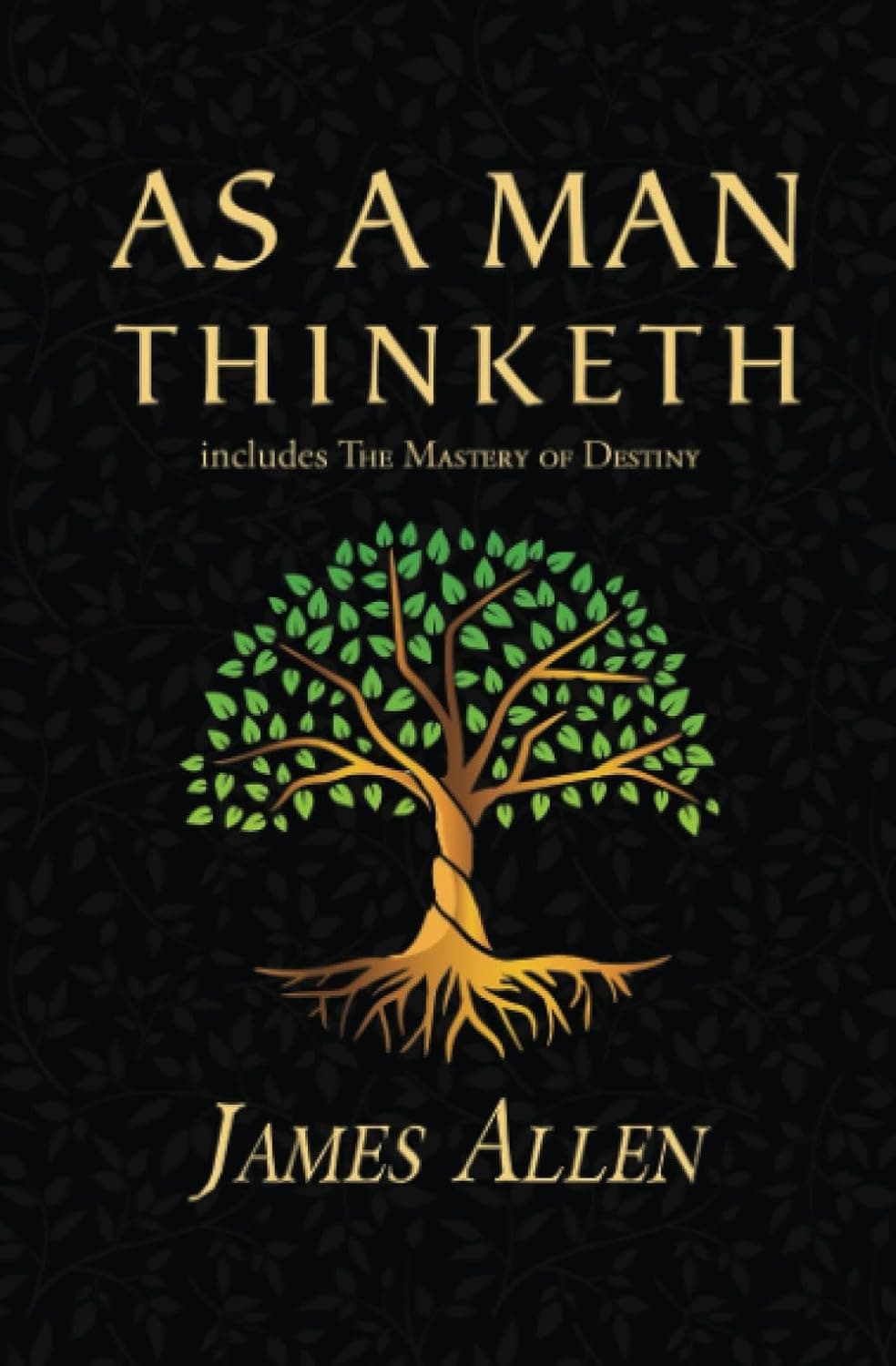
The 2022 edition of James Allen's "As a Man Thinketh." (Reader's Library Classics)
James Allen was British, but his 1903 “As a Man Thinketh” deeply impacted millions of Americans as well as other writers of self-help manuals. In this short book—it’s really just a long essay—Allen’s premise is simple: We are what we think.
If we identify with an age crippled by the crass and blind to beauty, truth, and goodness, then we will be the same. If we view ourselves as victims of others, as so many do today, then we will never be masters of ourselves. But if we take charge of our thinking, we can become more joyful and in love with life.
Norman Vincent Peale’s 1952 bestseller “The Power of Positive Thinking” builds on Allen’s ideas, blending into them Christian ideals and beliefs. In our age of negativity and fear, Peale’s book is worthy of ownership for its title alone. All too many people, young and old, live in the flickering shadows of a screen culture and bad news—a combination that darkens the mood and breeds defeatism.
You don’t have to be one of them.
Rx for Good Eating
Like Carnegie’s guide to winning friends, Irma Rombauer’s “Joy of Cooking” first appeared during the Great Depression and is today considered another classic that influenced American culture. Revised nine times, it remains the go-to cookbook in many kitchens.
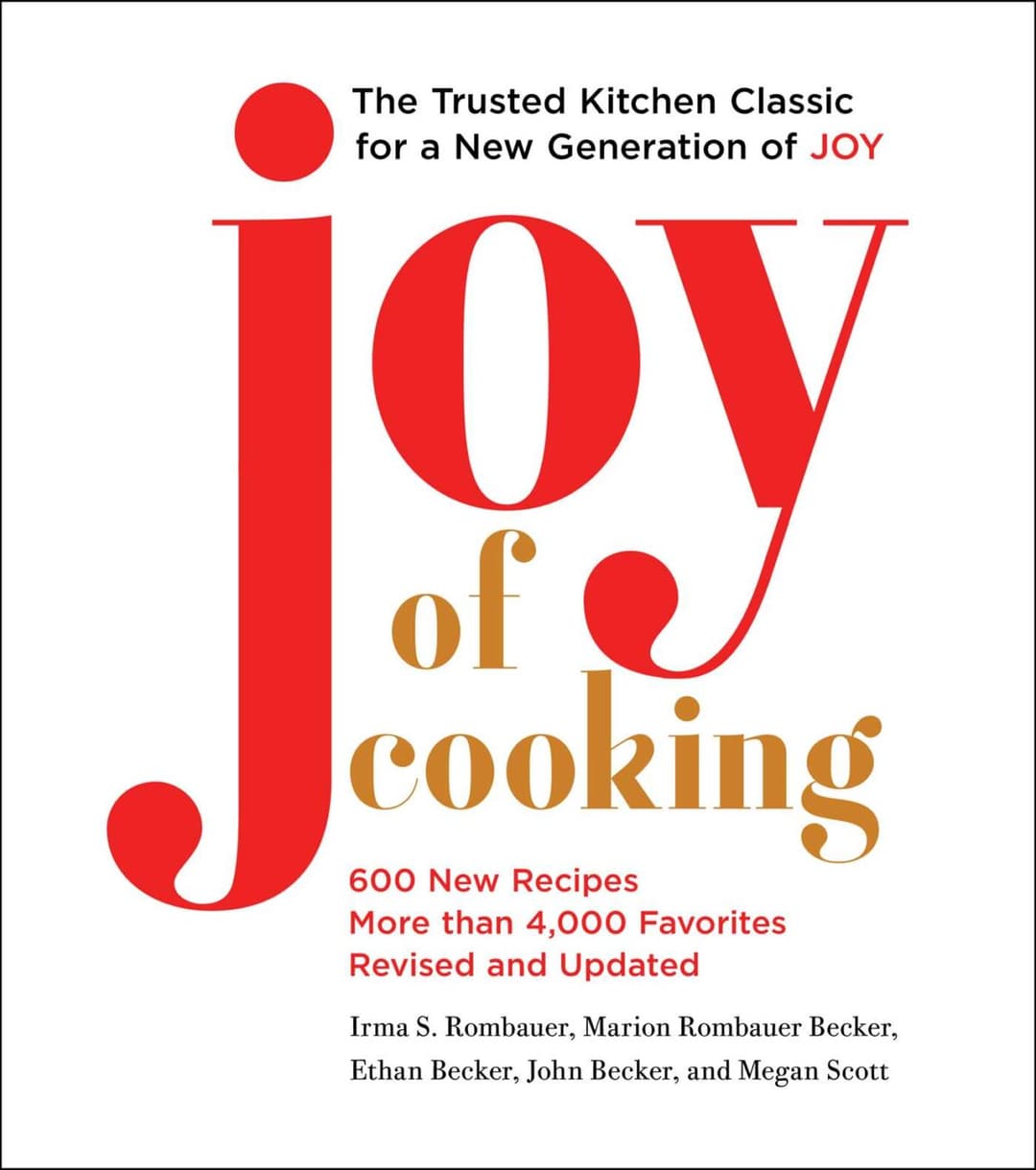
"Joy of Cooking," 2019 edition, fully revised and updated. (Scribner).
And like Peale’s “Power of Positive Thinking,” the mere presence of a copy of “Joy of Cooking” in the home can serve as a reminder, particularly to the younger generations, of a better way, that is, of the benefits to health and the pocketbook derived from cooking and eating at home.
Moreover, “Joy of Cooking” offers advice on home entertainment, meals or visits over coffee or wine that can provide family or friends with a wonderful evening without spending megabucks at a restaurant.
Rx for Civility
That our society has become cruder in this new century seems beyond debate. Many people still practice good manners on some level—holding a door open for an elderly woman, saying thank you for a compliment or favor—yet overall, the level of conversation and behavior, even among our “elites,” is often either vulgar or tactless.
America has a long history of etiquette literature, guides of behavior aimed at citizens in a republic. Of these, Emily Post’s 1922 “Etiquette” and Amy Vanderbilt’s 1952 “Complete Book of Etiquette” impacted American society and remain in print in updated editions.
Judith Martin’s 1982 “Miss Manners’ Guide to Excruciatingly Correct Behavior,” updated in 2005, offers etiquette with wit, verve, and a bit of an edge. Martin also wrote other manuals of manners and a newspaper column regarding proper etiquette for our chaotic social scene. Reading her, even the grumblers about our fallen civility will get a chuckle.
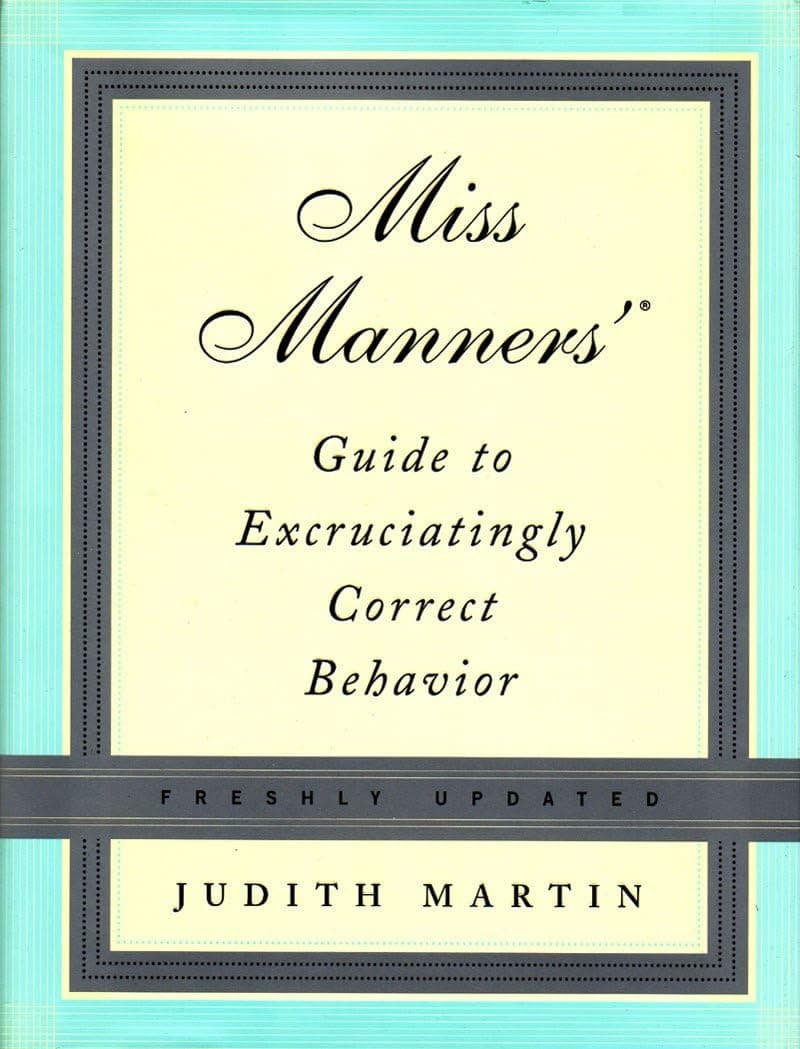
"Miss Manners' Guide to Excruciatingly Correct Behavior" by Judith Martin. (W.W. Norton & Company)
So if you’re feeling lonely, pay a visit to Dr. Carnegie and see what tips he has for you. If you’re down in the dumps, spend a few sessions in consultation with Dr. Allen. Depending on your particular ailment, all the authors above can help you. Remember, too, that if your aim is to raise positive-thinking, healthy, and wise children, these physicians can, through what they teach you, act as pediatricians.
You don’t have to be trapped in the fads and wrongheaded fashions of our time. Moreover, if you step outside it, you may inspire others to do the same. As Dr. Franklin wrote, “We may make these times better, if we better ourselves.”
And that’s how change begins.
What arts and culture topics would you like us to cover? Please email ideas or feedback to features@epochtimes.nyc.