
The United States is conducting a second round of talks with Iran over its nuclear program later this week, the Swiss Foreign Ministry said on Feb. 14.
Hamid Ghanbari, Iranian foreign ministry deputy director for economic diplomacy, said Tehran is pursuing a nuclear deal with Washington that would benefit both nations economically.
“For the sake of an agreement’s durability, it is essential that the U.S. also benefits in areas with high and quick economic returns,” Ghanbari said on Feb. 15, days before the planned summit in Geneva, according to the semi-official Fars news agency.
The Swiss ministry said Oman, which oversaw the first round of indirect talks between the United States and Iran on Feb. 6, will mediate this week’s summit.
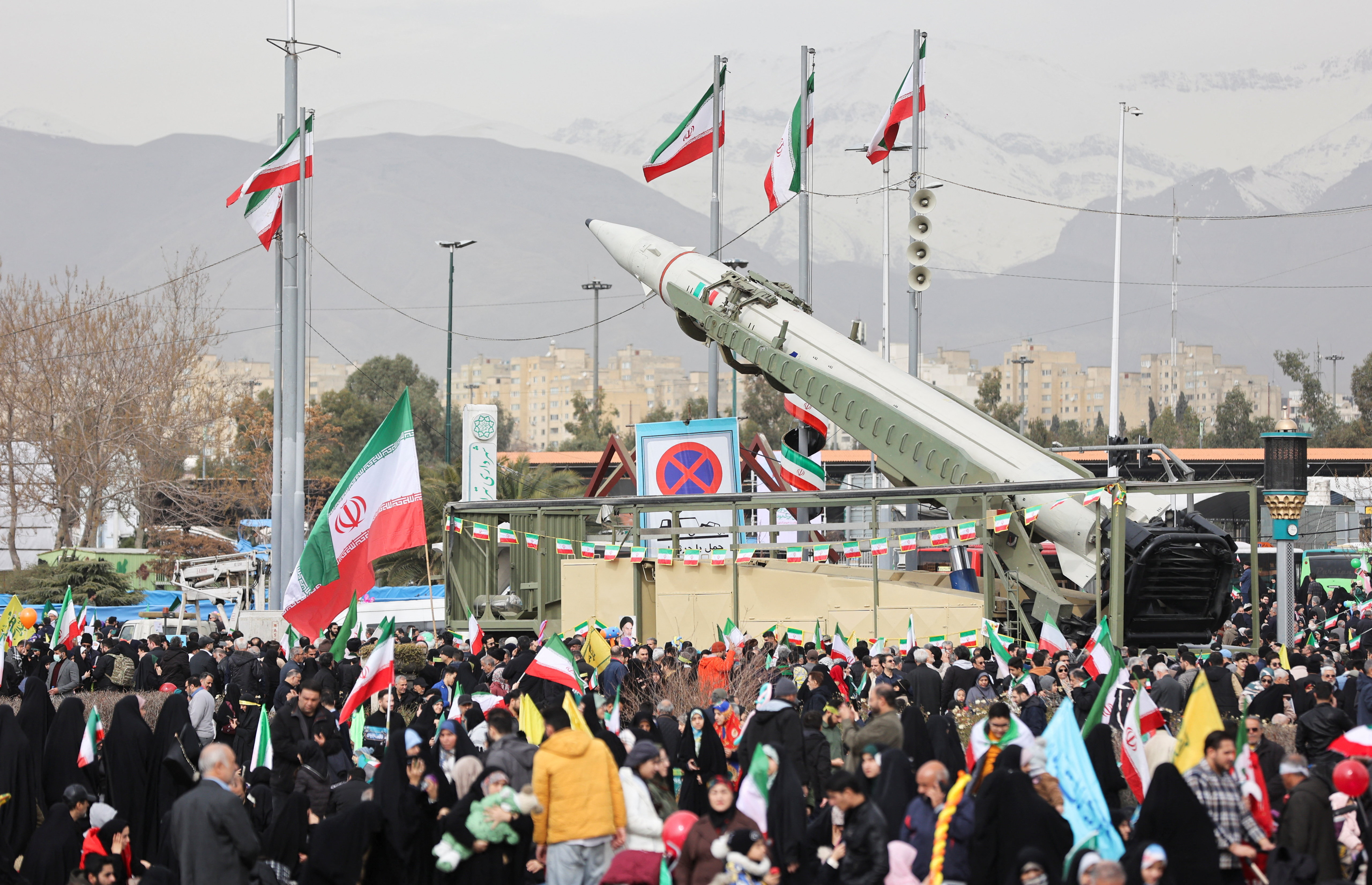
After the previous round of talks, U.S. President Donald Trump warned that if Iran fails to reach an agreement with the United States, it would be “very traumatic” for the regime, which plunged its citizens into an internet blackout throughout the past month and a half amid the nation’s largest wave of protests since the 1979 Islamic Revolution.
Trump has also suggested Iran could face grave repercussions if the regime continues killing protesters.
Increasing pressure on Tehran to strike a deal, Washington recently dispatched a second aircraft carrier to the region at the threat of another potential military campaign following last year’s blows to Iran’s nuclear facilities.
Although Iran has threatened to retaliate against any additional U.S. attacks, Ghanbari’s tone on Feb. 15 was more conciliatory than the regime’s previous statements.
“Common interests in the oil and gas fields, joint fields, mining investments, and even aircraft purchases are included in the negotiations,” Ghanbari said.
The official said that 2015’s Joint Comprehensive Plan of Action—a nuclear deal among Iran and multiple world powers that eased sanctions on Tehran in exchange for limits on its nuclear program—had not secured the United States’ economic interests.
Trump is prioritizing diplomacy and a negotiated deal between Washington and Tehran, U.S. Secretary of State Marco Rubio said at a news conference in Bratislava, Slovakia.
“No one’s ever been able to do a successful deal with Iran, but we’re going to try,” Rubio said.
Trump pulled the United States out of the Joint Comprehensive Plan of Action in 2018 and reimposed strict economic sanctions on Iran.
Geneva Meeting
U.S. envoys Steve Witkoff and Jared Kushner will meet with Iranian officials in Geneva this week, Rubio confirmed, but neither Washington nor the Swiss ministry specified which days.
“Steve Witkoff and Jared Kushner will be traveling, I think they are traveling right now, to have important meetings, and we'll see how that turns out,” Rubio said.
The Joint Comprehensive Plan of Action included multilateral negotiations among multiple world powers, but the current talks will include only Washington and Tehran, and Oman will mediate.
Iranian Deputy Foreign Minister Majid Takht-Ravanchi told the BBC on Feb. 15 that the ball is “in America’s court to prove that they want to do a deal,” suggesting Iran’s willingness to compromise on its nuclear ambitions in exchange for eased sanctions.
He referred to a recent statement from Iran’s atomic chief that Tehran could commit to diluting its most highly enriched uranium to demonstrate the nation’s flexibility in return for sanctions relief.
Takht-Ravanchi, however, emphasized that Iran would not agree to ceasing all uranium enrichment, a critical impasse in past talks with Washington, which views any enrichment as a gateway to nuclear weapons development. Iran has repeatedly denied that it’s developing nuclear warheads.
Reuters and The Associated Press contributed to this report.