
News Analysis
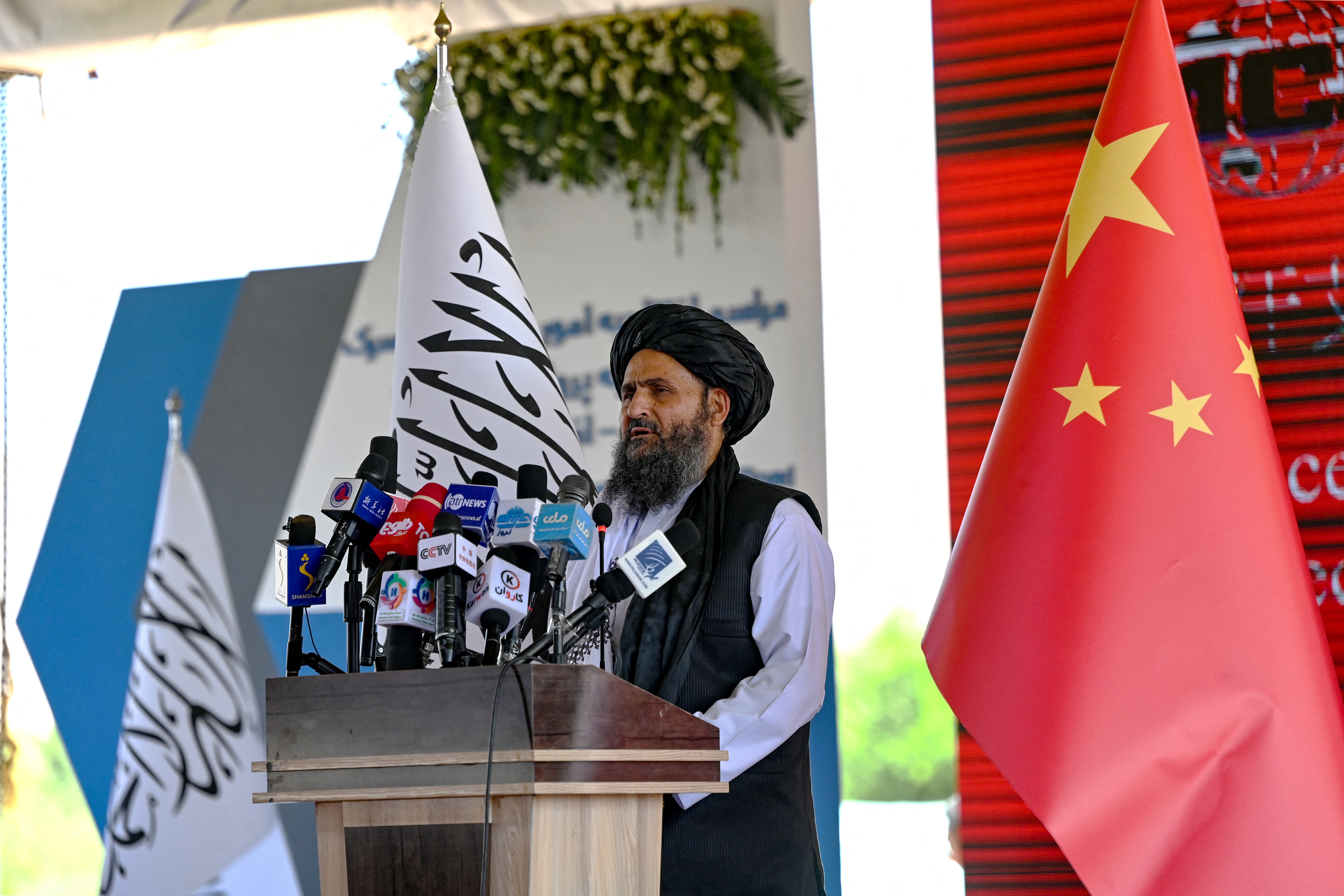
Afghanistan’s Taliban regime has torn up the only major resource contract it has signed since retaking power in 2021, accusing its Chinese partner of failing to invest the money, drill the oil wells, or hire the workers it pledged.
The move halts a 25-year, $540 million plan to tap crude oil from the Afghan side of the Amu Darya basin—a vast river valley that stretches across Afghanistan, Tajikistan, Turkmenistan, and Uzbekistan.
Analysts say the cancellation is a litmus test for both regimes. The Taliban wants to show it is open for business—but on its own terms—while still under sanctions and lacking diplomatic recognition. Beijing, which has courted Kabul with Belt-and-Road promises, is learning that its “checkbook diplomacy” can backfire when pledged cash fails to land.
On June 17, the Afghan Ministry of Mines and Petroleum announced it had terminated the contract covering around 1,700 square miles in the northern provinces of Faryab, Jowzjan, and Sar-e Pul.
Ministry spokesman Homayun Afghan said the decision followed repeated breaches by the contractor, a joint venture called Afchin.
Afchin was created in January 2023 by Chinese state-owned Xinjiang Central Asia Petroleum and Gas Co. (CAPEIC)—a subsidiary of China National Petroleum Corp.—and Afghanistan’s state oil firm.
CAPEIC held an 80 percent share in the joint venture, and the Taliban held 20 percent, with a provision to increase it to 75 percent as output grew, Taliban spokesperson Zabihullah Mujahid has previously said.
The Chinese side had pledged to invest $150 million in the first year and $540 million within three years, according to Mujahid.
At the 2023 signing ceremony in Kabul, then-acting Mines and Petroleum Minister Sheikh Shahabuddin Delawar said the project would employ 3,000 Afghan workers.
The deal also included building a domestic refinery to ensure that crude oil stays in the country and ramping up oil production from 200 tons per day to 20,000 tons. It also carried an automatic-cancellation clause if obligations were not fulfilled within the first year, Afghanistan International reported, citing Mujahid.
By mid-2024, none of the commitments had been met.
Although Taliban officials concluded that Afchin’s “repeated violations” voided the contract, details of these breaches have not been released.
Why Kabul Pulled the Plug
Hamayun Khan, a Washington-based Afghan writer and former Albrecht fellow at the World Trade Center Institute, told The Epoch Times that mistrust of Beijing and potentially a poorly drafted contract doomed the venture.
“In Afghanistan, there’s a perception that China would debt-trap the country,” Khan said, pointing to countries like Angola, Zambia, and Kenya, which have unsustainable debts due to China’s Belt and Road Initiative (BRI) investments.
China’s BRI investments often put participating countries into debt through large-scale infrastructure loans, high repayment obligations, and weak risk management practices. Afghanistan, Angola, Zambia, and Kenya are all BRI participants.
Canceling the contract, he said, signals that China cannot walk in, ignore the rules, and saddle Afghanistan with obligations it cannot bear.
Khan added that other factors might include unrealistic project timelines, contractual weakness on the Taliban side, and Afghanistan’s lack of legal and technical staff to monitor such a project.
Short-Term Tension, Long-Term Calculus
Still, Khan expects only short-term friction.
China, he said, has long-term goals in Afghanistan: securing its western border, countering competing extremist groups like the East Turkistan Islamic Movement, and extending BRI trade routes. Afghanistan’s resource potential is simply too large to ignore, he said.
A 2006 U.S. Geological Survey put recoverable oil in northern Afghanistan at about 1.6 billion barrels—nearly a billion of them in the Amu Darya basin—plus 16 trillion cubic feet of natural gas and more than 500 million barrels of natural-gas liquids. The country also sits on huge reserves of lithium, copper, and rare earths.
Frank Tian Xie, a business professor at the University of South Carolina Aiken, argues that Beijing’s interest is mostly political at this time.
“From a purely economic standpoint, China does not urgently need Afghan oil,” he told The Epoch Times. “Leaders sign for headlines. Later, when the economics look bad, they stop—and assume the other side can do nothing.”
China’s own economic troubles—property-market turmoil, heavy local government debt, and trade frictions with the United States—tighten resources for overseas projects.
A fiasco in Afghanistan, Xie said, could tarnish the image of state-owned firms already under scrutiny abroad.
A Message to Beijing—And Other Suitors
For the Taliban, scrapping the agreement carries significant risks, according to Khan. Its government remains unrecognized internationally and under Western sanctions, leaving few prospective investors other than China.
Still, Khan believes Kabul wants to show future partners it can enforce contracts and protect its sovereignty.
“They want to show the world that they are adhering to the rules and responsibilities in the contracts,” he said.
Whether that stance will entice capital from Russia, India, or the West remains uncertain. Khan said Afghanistan’s trade with neighboring Iran reached $3 billion last year, according to Afghan news agency Pajhwok, yet large-scale energy or mining ventures demand financing and technology that only major economies can provide.
CAPEIC and its parent company, China National Petroleum Corp., did not respond to a request for comment. The Afghan Ministry of Mines and Petroleum has not yet disclosed the precise violations that triggered the cancellation.
With its Chinese partner gone, the Taliban is left searching for the funds and expertise needed to turn the Amu Darya basin into a revenue stream. For now, the fields remain untapped—a reminder, analysts say, that Afghan resources offer no quick windfall and that Beijing’s checkbook diplomacy comes with strings that many nations are no longer willing to accept.
Sonia Wu contributed to the report.