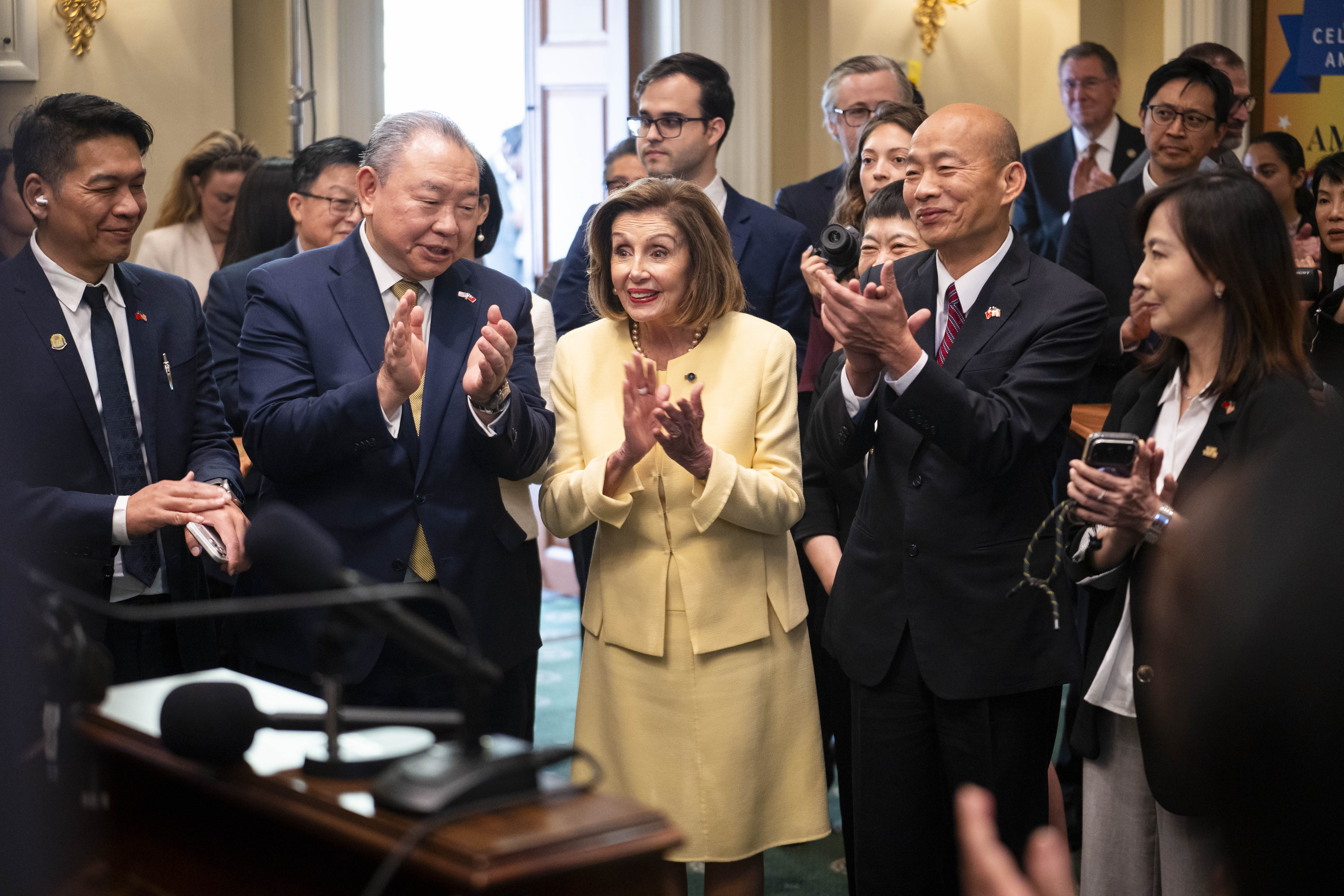


WASHINGTON—A bipartisan group of U.S. House lawmakers welcomed Taiwan’s parliamentary speaker on June 24, expressing support for the self-governing island as it faces increasing pressure and military threats from China.
Han Kuo-yu, president of Taiwan’s Legislative Yuan and a member of the opposition Kuomintang, arrived in the United States on the evening of June 21 with a cross-party delegation of eight Taiwanese legislators. The group first visited Phoenix before arriving in the nation’s capital on the night of June 23.
At the Longworth House Office Building on Capitol Hill, more than 30 House lawmakers held a reception welcoming Han and his delegation.
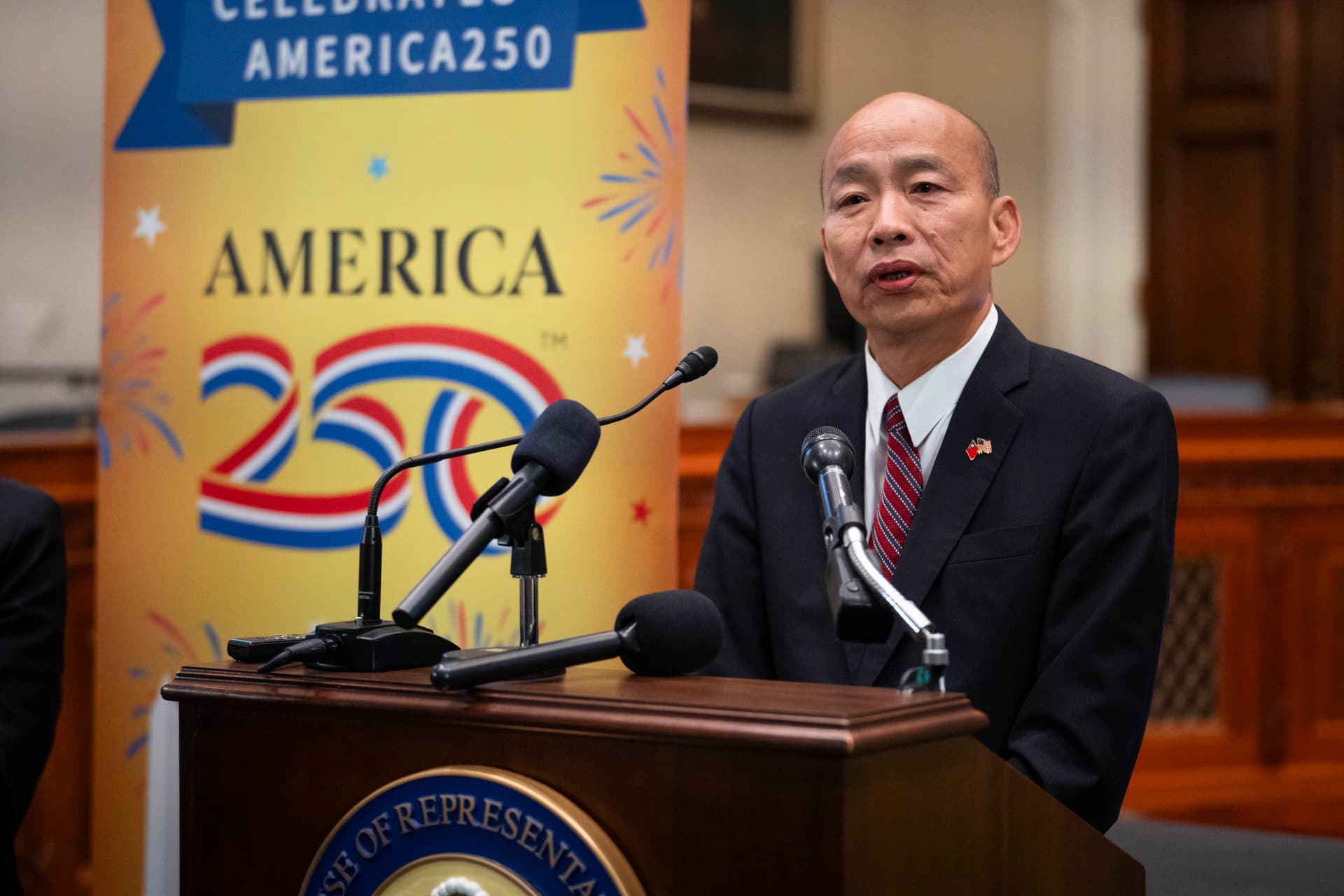
“Taiwan is a beacon of democracy in the entire Chinese-speaking world, and Chinese people around the world are closely watching the development of democracy in Taiwan,” Han said in Mandarin, according to a translation.
Han urged the U.S. Congress to assist Taiwan in participating in international organizations, noting that there is an urgent need for the island to join the International Civil Aviation Organization, Interpol, and the World Health Organization.
For years, Taiwan has sought to join these three international organizations without success, due to opposition from China’s communist regime, which considers Taiwan a province of China and maintains that it does not have the sovereign right to represent itself in international forums.
China’s efforts to isolate Taiwan internationally have prevented sitting Taiwanese presidents from making official state visits to the United States. They are instead limited to unofficial transit stops.
Rep. Jim Costa (D-Calif.), who serves on the House Foreign Affairs Committee, said the strategic importance of Taiwan is underscored by the Iran war and trade disruptions in the Strait of Hormuz.
“Make no mistake about it—the Taiwan Strait is important to the world and global economic trade,” Costa said. “We only have to look today at what has occurred in the Strait of Hormuz and what happens when one country attempts to determine that it is their own sphere of influence.”
Costa noted that, as China grows increasingly aggressive and threatens regional stability, Taiwan “remains at the front lines of freedom, of economic prosperity, and shared human values.”
Emphasizing that Taiwan is a “sovereign nation,” Rep. Pete Sessions (R-Texas) said at the reception that the United States and Taiwan share a strong friendship rooted in freedom and democratic values, and expressed confidence that the bilateral relationship would remain strong well into the future.
President Donald Trump recently suggested that he might call the person “that’s running Taiwan.” Sessions said Trump should make the call.
“Our president needs to have a strong relationship with Taiwan to make sure that they know that America believes in them, and in a dangerous world, would be their best friend,” Sessions told The Epoch Times.
Since Washington switched diplomatic recognition from Taipei to Beijing in 1979, no conversation between the two presidents has taken place. Then-President-elect Trump held a rare phone call with Taiwanese President Lai Ching-te’s predecessor, Tsai Ing-wen, in December 2016.
‘Treated With Respect’
One incident illustrating China’s push to isolate Taiwan internationally took place in March, when Taiwan was forced to pull out of a ministerial conference of the World Trade Organization (WTO) in Cameroon after the host nation chose to designate the island as a “Province of China” in visa documents for members of Taiwan’s delegation.
The incident prompted a bipartisan group of more than 20 House lawmakers—including Reps. Judy Chu (D-Calif.), Ted Lieu (D-Calif.), and Ami Bera (D-Calif.)—to send a letter dated May 14 to the WTO’s Director-General Ngozi Okonjo-Iweala. They asked Okonjo-Iweala to provide assurances that similar incidents would not occur at future ministerial conferences.
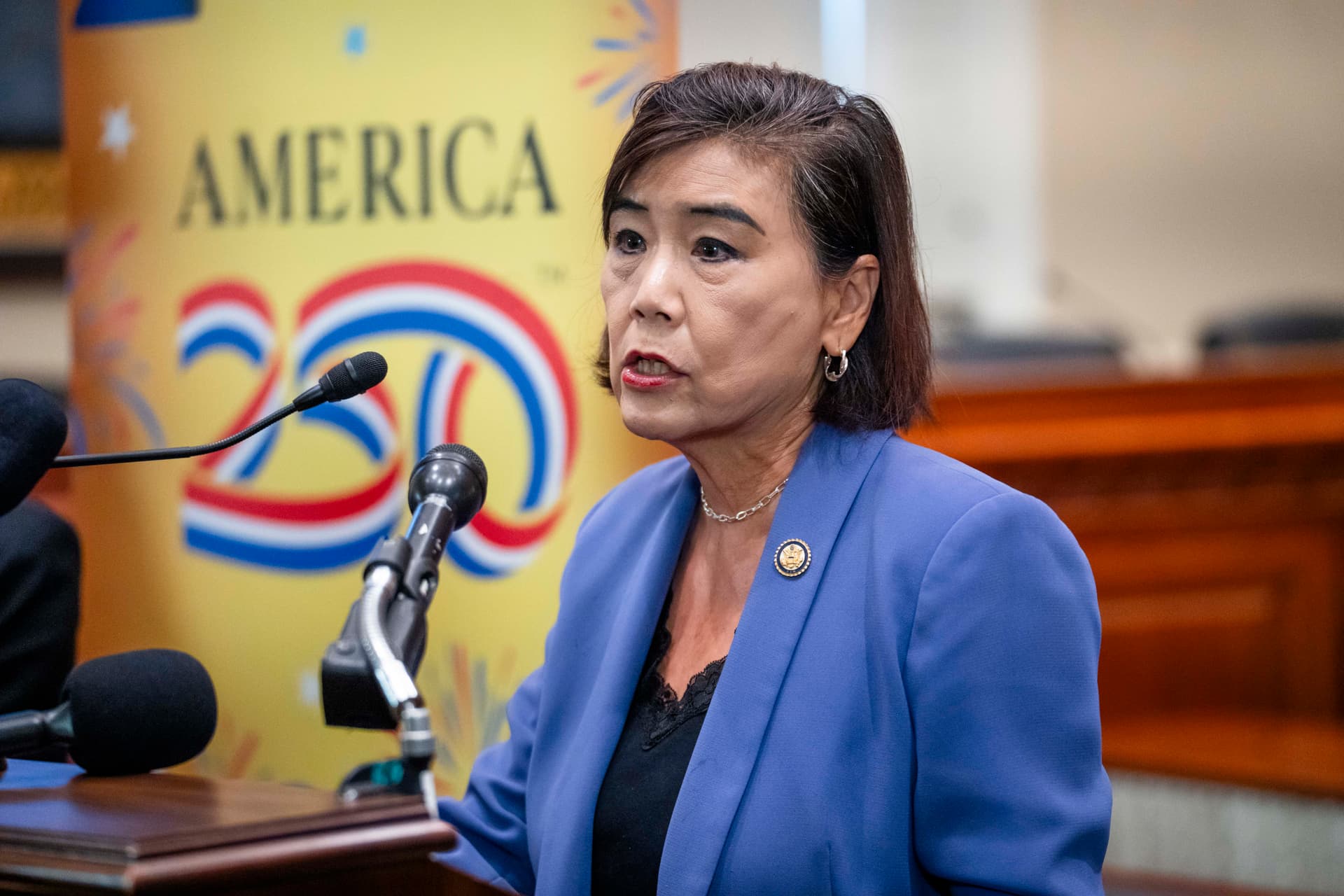
“Taiwan has been a full member of the WTO for more than two decades, and it should never be forced to choose between compromising its status as a WTO member and participating in international events,” Chu said at the reception, referring to Cameroon’s decision.
Chu said she will continue to work with her colleagues from both sides of the aisle to “ensure that Taiwan is treated with respect and recognition that it deserves as a responsible member of the international community.”
Chu, who sits on the Congressional Taiwan Caucus, said one issue that remains unresolved between the two sides is double taxation, which, in her view, creates unnecessary barriers to investment.
To address the issue, the House passed the U.S.-Taiwan Expedited Double-Tax Relief Act by a vote of 432–1 in January last year. Chu urged the Senate to take up the legislation so that it can be signed into law.
Ultimately, Chu expressed hope that Washington and Taipei can sign a comprehensive free trade agreement, which she said would “provide new opportunities for businesses, workers, and consumers” for both sides.
Before attending the reception, Taiwan’s parliamentary delegation met with seven U.S. senators—Sens. Jeanne Shaheen (D-N.H.), Tammy Duckworth (D-Ill.), Brian Schatz (D-Hawaii), Jacky Rosen (D-Nev.), Jeff Merkley (D-Ore.), Andy Kim (D-N.J.), and Elissa Slotkin (D-Mich.).
In a joint statement, the senators said Congress “should continue to advance legislation” that addresses the double-taxation issue.
The senators also appealed to the Trump administration to approve a proposed $14 billion arms sale to Taiwan, saying that the weapons are a “vital investment in Taiwan’s security, regional security and America’s own economic and national security.”
‘Prevent the Growth of Authoritarianism’
Han’s delegation included three Kuomintang legislators, three legislators from the ruling Democratic Progressive Party, and one legislator from the opposition Taiwan People’s Party.
Democratic Progressive Party legislator Chen Kuan-ting told reporters after the reception that the strong show of support from U.S. lawmakers marked an important milestone.
Trump has invited Chinese leader Xi Jinping to visit the United States following their summit in China last month. Asked whether Washington might make concessions to Beijing on Taiwan-related issues, Chen told The Epoch Times that he was not in a position to comment.
“At least through our exchanges with these members of Congress today, we were able to feel Congress’s commitment to and support for Taiwan,” Chen said.
As the United States prepares to celebrate its 250th birthday on July 4, Taiwan is also marking the 30th anniversary of its first direct presidential election in 1996.
“As America begins its next 250 years, I’m confident that the friendship between the United States and Taiwan will continue to grow,” Rep. Eugene Vindman (D-Va.) said at the reception.
“It’s important that we stand together as free democracies supporting independence and freedom, and that we stand together to prevent the growth in authoritarianism around the world.”