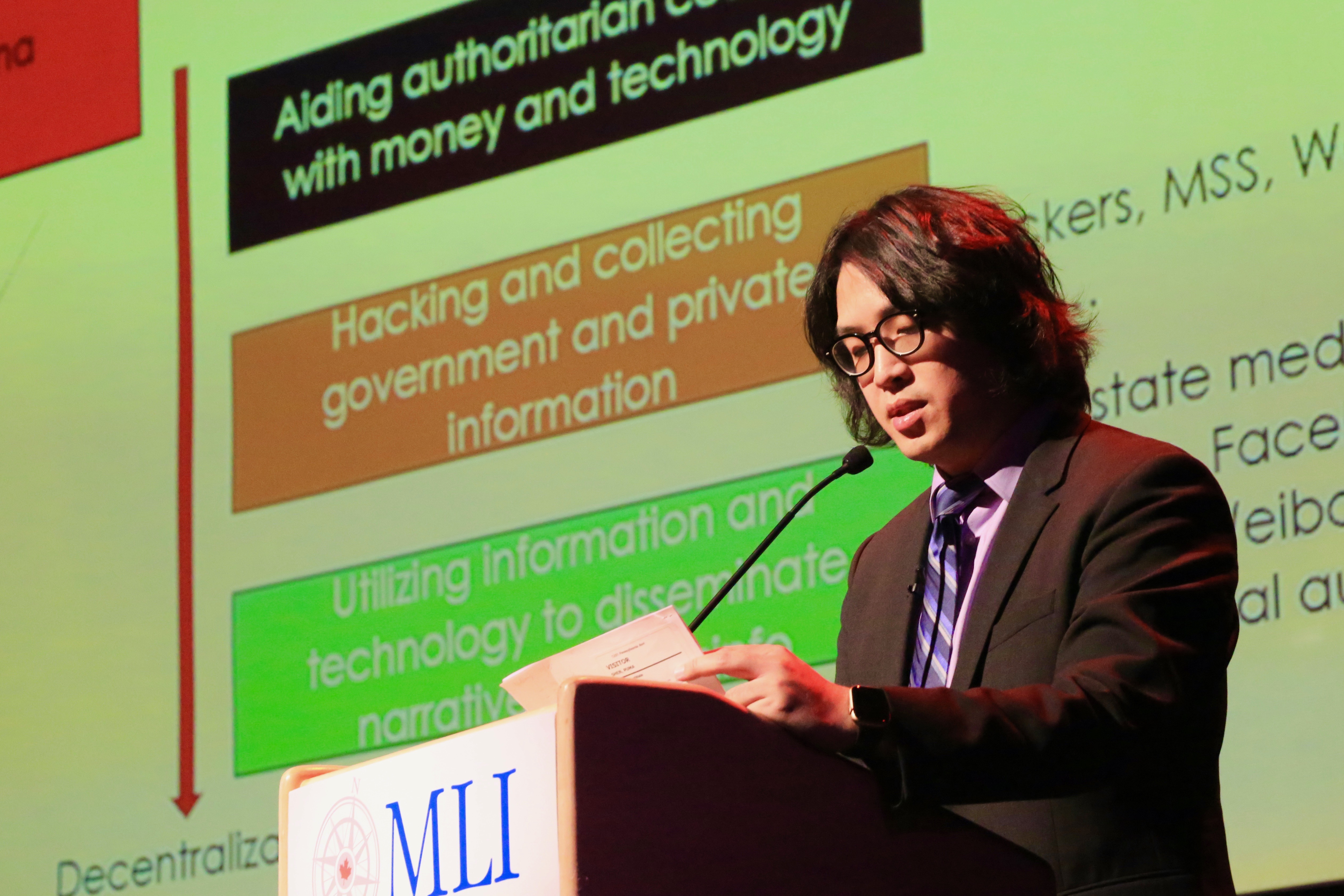

TAIPEI, Taiwan—Taiwanese authorities have condemned the Chinese regime for engaging in transnational repression after Chinese state-run media doxxed a lawmaker from the ruling Democratic Progressive Party (DPP).
On Jan. 3, the Taiwanese Ministry of Foreign Affairs stated that China’s decision to spread satellite photos of DPP legislator Puma Shen’s residence and work location via social media platforms was a “malicious attempt to intimidate the people of Taiwan and conduct long-arm jurisdiction and transnational repression.”
“Such behavior clearly shows that the Beijing authorities have no regard for the fundamental values of human rights and privacy common in civilized nations,” the foreign ministry said in a statement.
The foreign ministry urged the international community to join in condemning China for its “inappropriate efforts.”
The latest incident exemplifies the Chinese communist regime’s increased military pressure and coercion on Taiwan since 2016, when the DPP secured the first of three consecutive four-year presidential terms. The regime, which considers Taiwan as a part of its territory even though it has never ruled the island, labels those who advocate for Taiwan’s continued sovereignty and political autonomy, including some members of Taiwan’s ruling party, as “separatists.”
The satellite images were originally posted on Jan. 1 by a Chinese influencer on Weibo, China’s equivalent of X, with a warning directed at Shen saying, “Let’s see where you can run.”
The Weibo post was later shared by several Chinese state-run media outlets, including Straits Today, a television program owned by the state-owned Fujian Media Group.
In a Facebook post on Jan. 3, Shen shared a screenshot of a Straits Today Facebook post that reproduced the original Weibo message and photos. Shen said he was targeted by what he called a Chinese “precision attack” because Beijing failed to intimidate the Taiwanese people through its recent military drills encircling Taiwan, as evidenced by the island’s strong performance in the local stock market.
Shen said he chose to ignore the doxxing for three days because he believed that Beijing wanted him to panic and respond to the satellite photos. He said that if he had reacted, Beijing would have released clearer images to create the impression that their informants were everywhere.
“This kind of psychological warfare is ineffective in Taiwan,” Shen wrote, noting that Beijing’s move actually revealed its “collective inferiority complex toward democratic Taiwan.”
On Jan. 4, the Taiwanese Ministry of Digital Affairs said that, at its request, Meta and Google had removed the satellite photos and related social media posts and videos.
The digital affairs ministry condemned what it characterized as “digital coercion” by China’s state-run media and called on all platforms to “fulfill their social responsibility and work together to defend digital rights and democratic values.”
The Taiwanese Mainland Affairs Council, in a statement issued on Jan. 3, called on Beijing to remove the satellite photos and related content from Chinese sites.
“The Chinese Communist Party’s tolerance of its state media engaging in this kind of illegal and unruly ‘digital violence’ not only fails to contribute to the positive development of cross-strait relations, but also exposes its ignorance of the rule of law and human rights,” the council stated.
The council also called on Beijing to issue an apology to Shen.
This is not the first time that Beijing has chosen to target the lawmaker. In October 2024, the Taiwan Affairs Council, an agency under China’s State Council, announced sanctions against Shen, barring him and his family from entering China, Hong Kong, and Macau, because of his “separatist” activities in connection with the Kuma Academy he co-founded.
According to its website, the academy offers courses with the mission to “prepare a pre-war mentality for civilians” and “cultivate self-defense capability and will to defend Taiwan.”
On Oct. 28, 2025, China’s state-run Xinhua reported that the municipal public security bureau in China’s megacity of Chongqing had launched an investigation into Shen’s alleged “secessionist” activities in Taiwan, including his role in the Kuma Academy.
In response to the Chinese investigation, a U.S. State Department spokesperson told Taiwan’s national media, the Central News Agency, that “China’s actions threaten free speech and erode norms that have underpinned the cross-Strait status quo for decades.”
“We urge China to engage in meaningful dialogue with Taiwan to resolve differences. Continued threats and legal pressure will only undermine the peaceful resolution of issues that Beijing claims to seek,” the spokesperson said at the time.
Shen is currently also an assistant professor at the Graduate School of Criminology at Taiwan’s National Taipei University.