LONDON—Until Sept. 20, visitors to the National Gallery can leave the city behind for the pristine alpine air of Austria, courtesy of 19th-century artist Ferdinand Georg Waldmüller.
The Austrian painter (1793–1865) brilliantly captured his home country. The gallery’s “Waldmüller: Landscapes” exhibition celebrates the artist in a UK first, with 13 of his paintings, including a self-portrait. Vienna’s Belvedere Museum loaned most of the paintings in the exhibition, which was a collaboration between the two organizations.
Waldmüller held nature in high esteem. “Nature must be the only source and sum total of our study; there alone can be found the eternal truth and beauty, the expression of which must be the artist’s highest aim in every branch of the plastic arts,” he wrote in 1846.
Throughout his life, Waldmüller closely studied nature. He believed that artists should concentrate their efforts on the “rendering of sunlight,” a practice he embraced as he studied, sketched, and painted the transient sunlight across Austria and Sicily, to name a couple of countries.
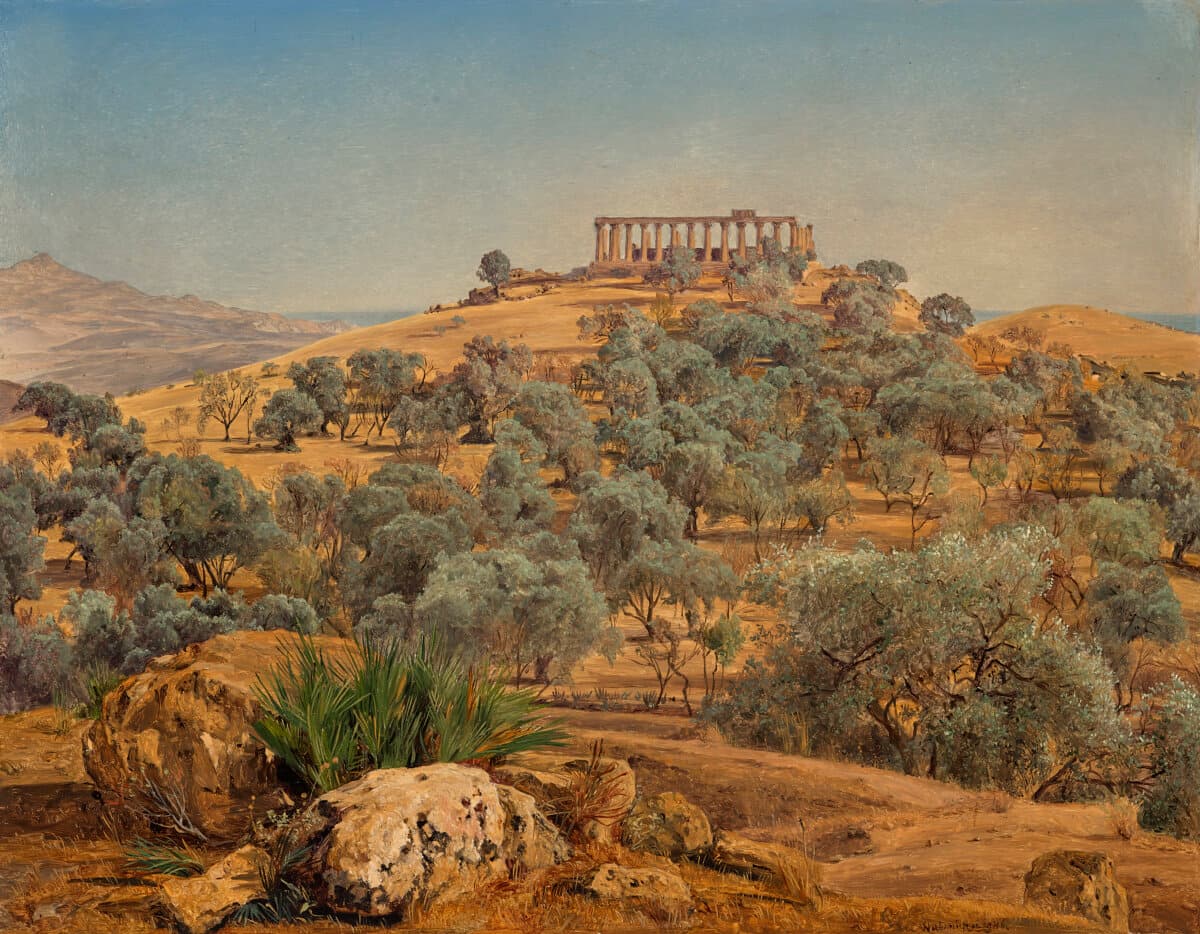
“Ruins of the Juno Lacinia Temples Near Agrigento,” 1845, by Ferdinand Georg Waldmüller. Oil on wood; 12 1/4 inches by 15 3/8 inches. Belvedere, Vienna, on permanent loan from a private collection. (Copyright Belvedere, Vienna)
Mastering Art
At 14 years old, Waldmüller studied at the Academy of Fine Arts Vienna, where he gained a strong foundation in the Old Master painting tradition. Soon after finishing at the academy, he took commissions, mainly copying old master works. His teachers were German painter Hubert Maurer, who introduced classicism to the academy, and Italian painter Johann Baptist Lampi.
Early in his career, Waldmüller painted portraits, which paid well and made him famous in the 1830s, before he focused on his love of painting genres and landscapes.
Waldmüller’s skillful portraiture, along with his ability to deftly render still life and landscape paintings, can be enjoyed all at once in his 1828 painting “Self-Portrait as a Young Man.” He brilliantly rendered the different textures: from his auburn curls, porcelain skin, and curled lip to his butter yellow gloves, the pale-pink peony petals, and the surrounding Vienna woods. The painting acts as a prelude to his future success.
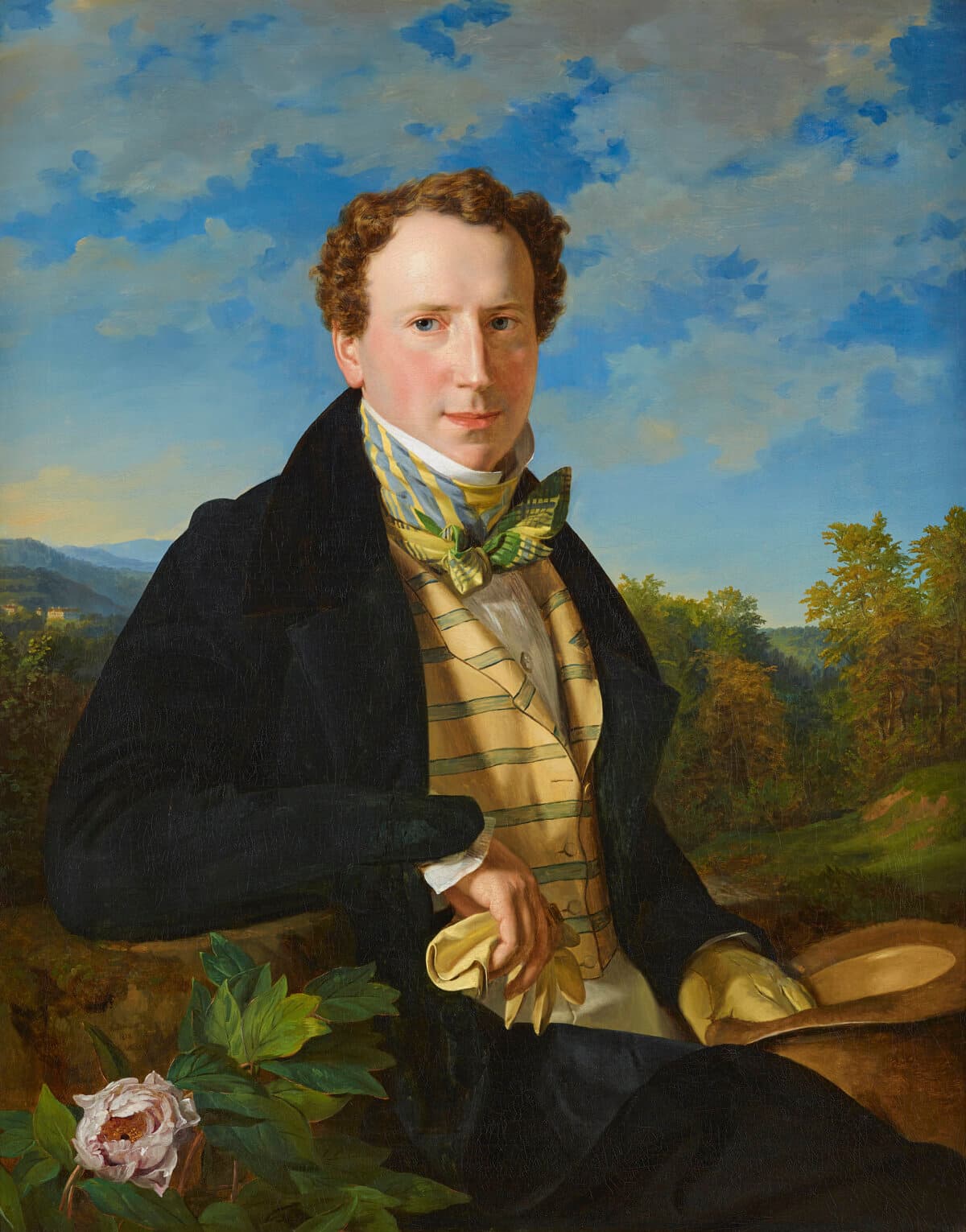
“Self-Portrait as a Young Man,” 1828, by Ferdinand Georg Waldmüller. Oil on canvas; 37 3/8 inches by 29 1/2 inches. Belvedere, Vienna. (Copyright Belvedere, Vienna)
Nearly 30 years after that self-portrait, Waldmüller gained international success following a private viewing of 34 of his paintings at Buckingham Palace, London, in 1856. All the paintings sold. Prince Albert bought “The Grandmother’s Birthday” for Queen Victoria, who bought “The Interruption” (“The Surprise”) for Albert’s Christmas present. The remaining paintings were sold at auction.
Capturing Austria’s Lake District
Waldmüller’s landscape paintings show his brilliant attention to detail. He painted his best landscapes between 1829 and 1843, when each summer he would visit the pristine alpine lakes and towering mountain peaks of the Salzkammergut, Austria’s lake district. Austrians often refer to one of the region’s lakes, Lake Altaussee, as an inkpot for writers and poets. In a similar vein, the entire Salzkammergut provides a breathtaking palette for painters.
Waldmüller, who loved to paint the high mountains, created the distant mountain and forest vistas just as detailed and clear as the foreground motifs. His ability to render distant details without any loss of definition defined his style.
Waldmüller’s sojourns at Salzkammergut gave him infinite opportunities to see how the sunlight caressed the land from dawn to dusk, and gave him endless plein-air painting practice. Many of Waldmüller’s Salzkammergut paintings appear ethereal, especially the golden glow where the mountains meet the sky. The curators explained that he used thin oil paint and small brushstrokes on a white ground, which resulted in paintings of “remarkable clarity and luminosity of colour.” From 1834 on, he mainly painted landscapes of the region.
The Salzkammergut
Waldmüller’s Salzkammergut paintings express German journalist and poet Helmine von Chezy’s 1833 sentiment for Bad Ischl, the spa town and gateway to the region. “It is not easy to find the sublime anywhere, the colossal so intimately and touchingly fused with the lovely and idyllic, as here in Bad Ischl.”
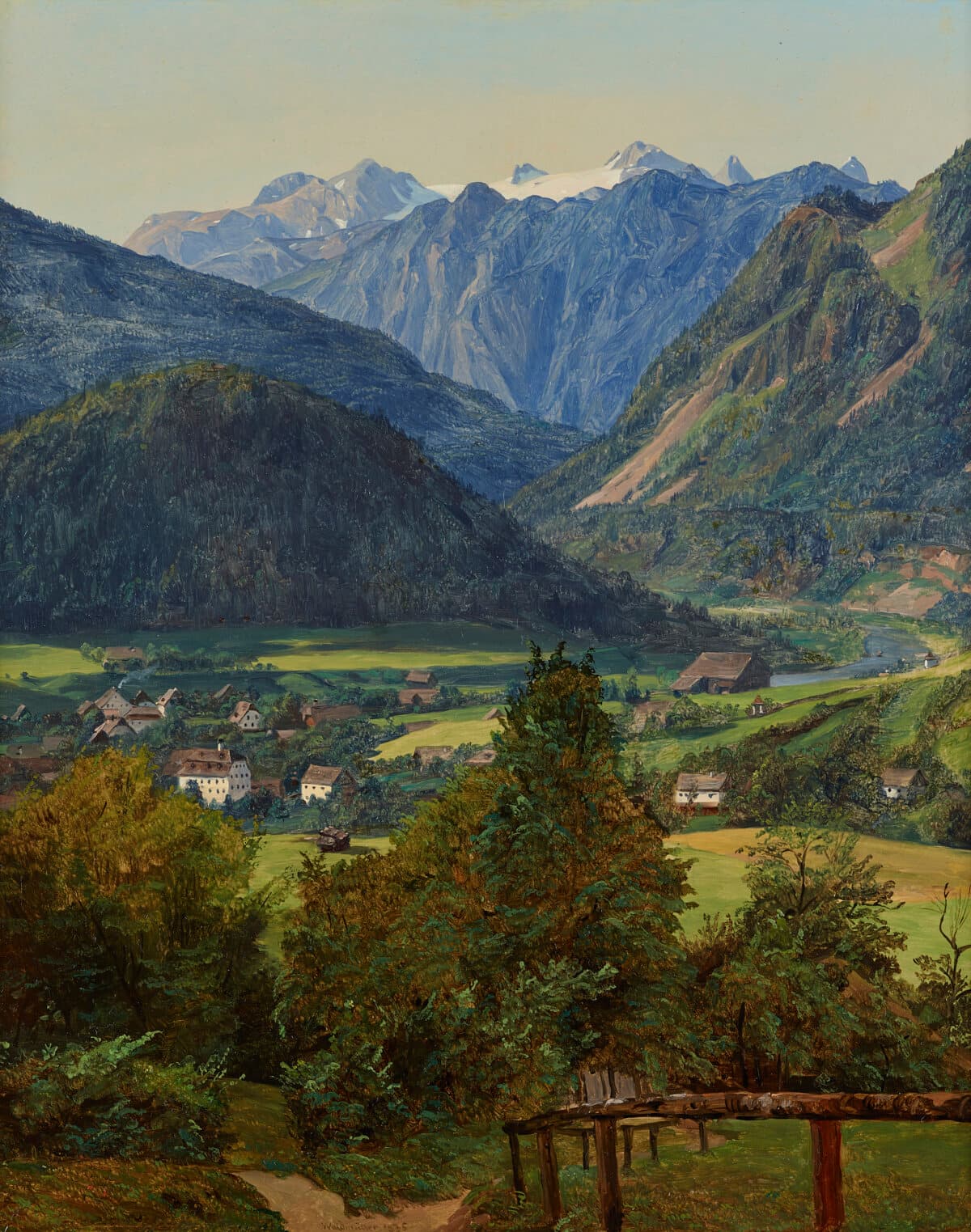
“The Dachstein From the Sophien-Doppelblick Near Ischl,” 1835, by Ferdinand Georg Waldmüller. Oil on wood; 12 1/4 inches by 10 1/4 inches. Belvedere, Vienna. (Copyright Belvedere, Vienna)
In “The Dachstein From Sophien-Doppelblick Near Ischl,” Waldmüller created a harmonious composition that leads the viewer deep into the Dachstein Mountains, a group of peaks in the Eastern Alps of Austria. In the foreground, a wooden fence guides viewers toward the houses in the valley and a meandering river on the right side of the painting. Waldmüller created the trees in the foreground with as much detail as the mountains and valley beyond, yet there is still a sense of space and depth of field—specialties of his work. “Sophien-Doppelblick” in the painting’s title means “Sophie’s Double View,” and refers to Emperor Franz Joseph’s mother, Archduchess Sophie, who loved the view depicted.
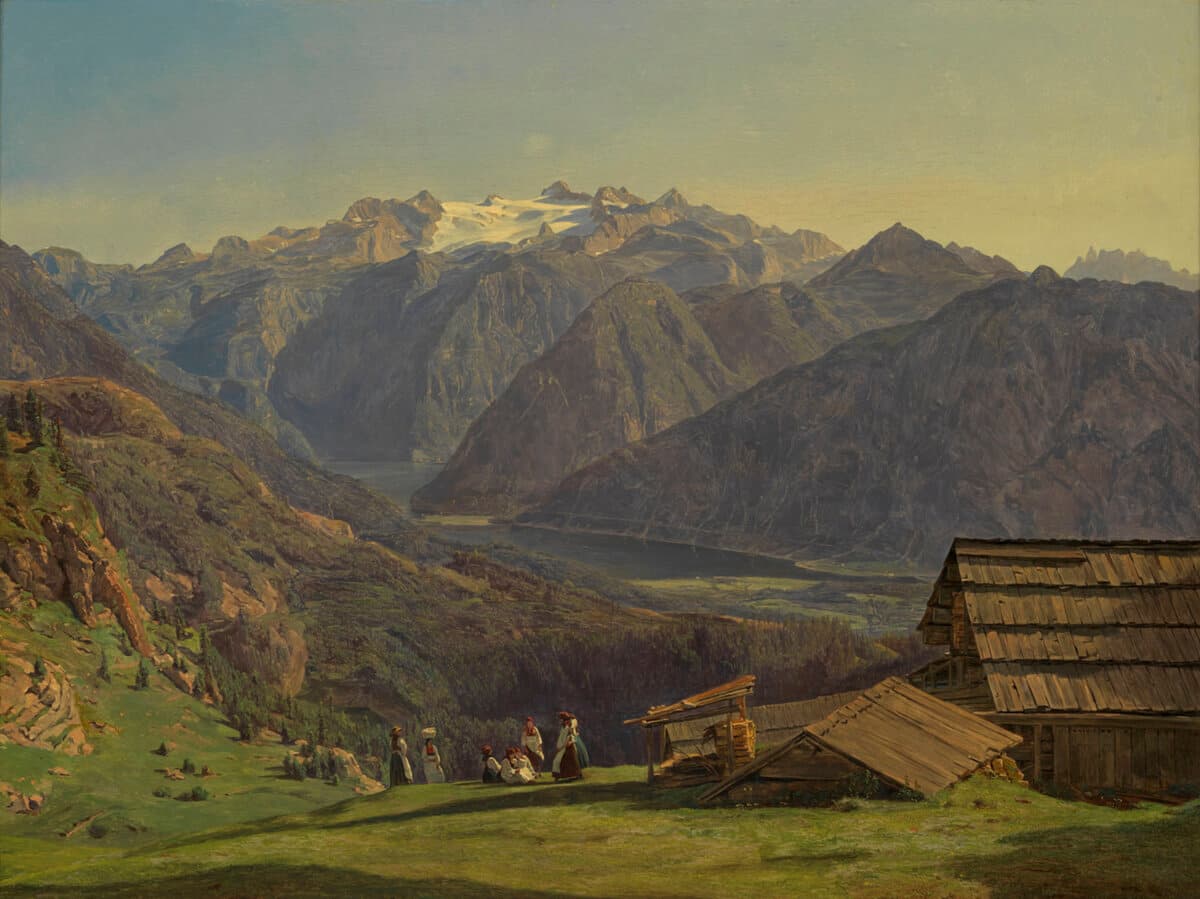
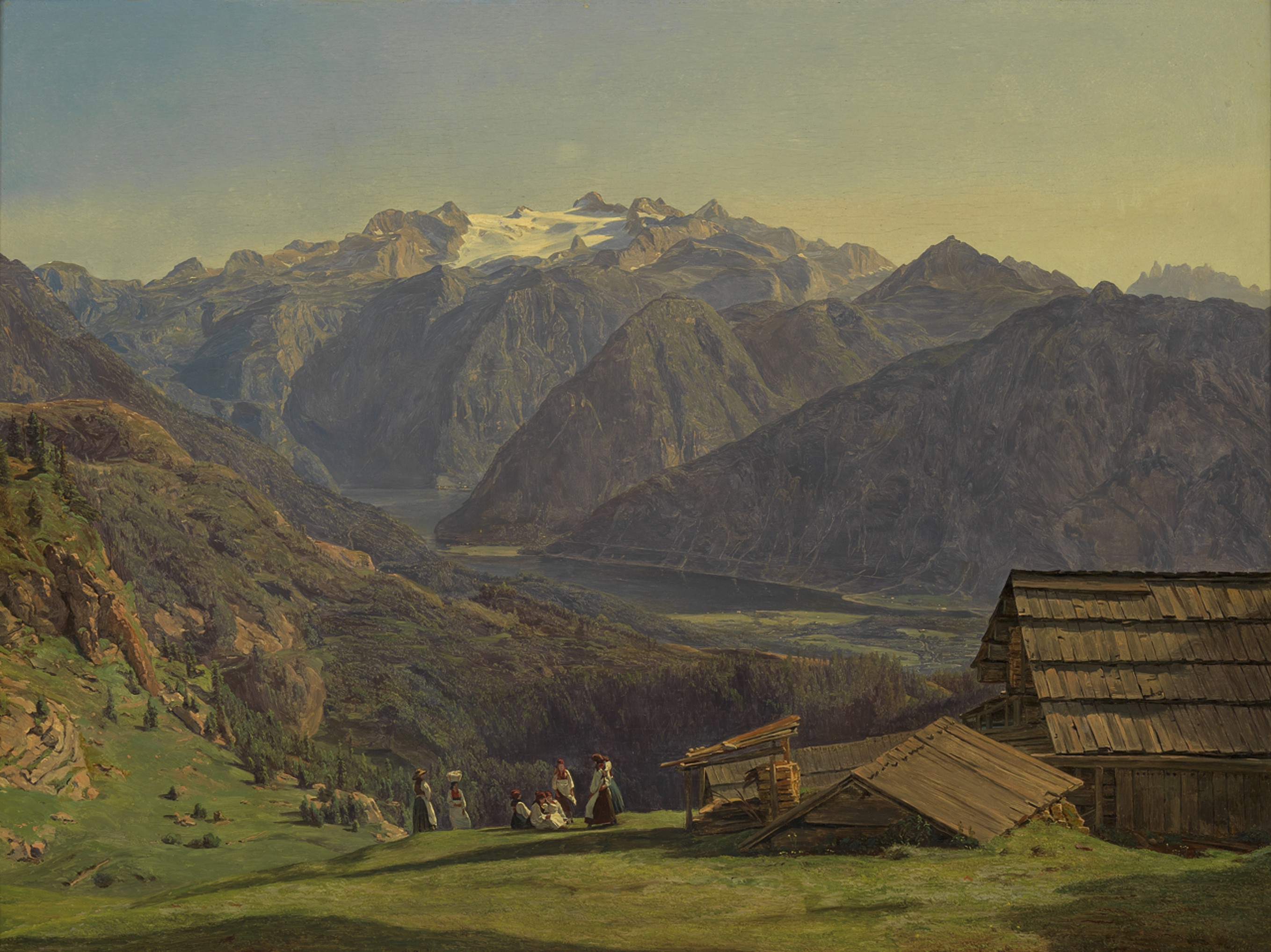
“View of the Dachstein With Lake Hallstättersee Seen From the Hötteneckalpe Near Ischl,” 1838, by Ferdinand Georg Waldmüller. Oil on wood; 17 7/8 inches by 22 5/8 inches. Wien Museum Karlplatz, Vienna. (Copyright Wien Museum Karlplatz, Vienna)
In “View of the Dachstein With Lake Hallstatt Seen From the Hütteneckalm Near Ischl,” Waldmüller rendered the scene directly from life but replaced trees in the foreground with women and mountain huts to give a sense of scale and depth. The tiny figures against the towering Dachstein Mountains put the vast, majestic scene into perspective, while allowing him to render the foreground and background objects in detail.
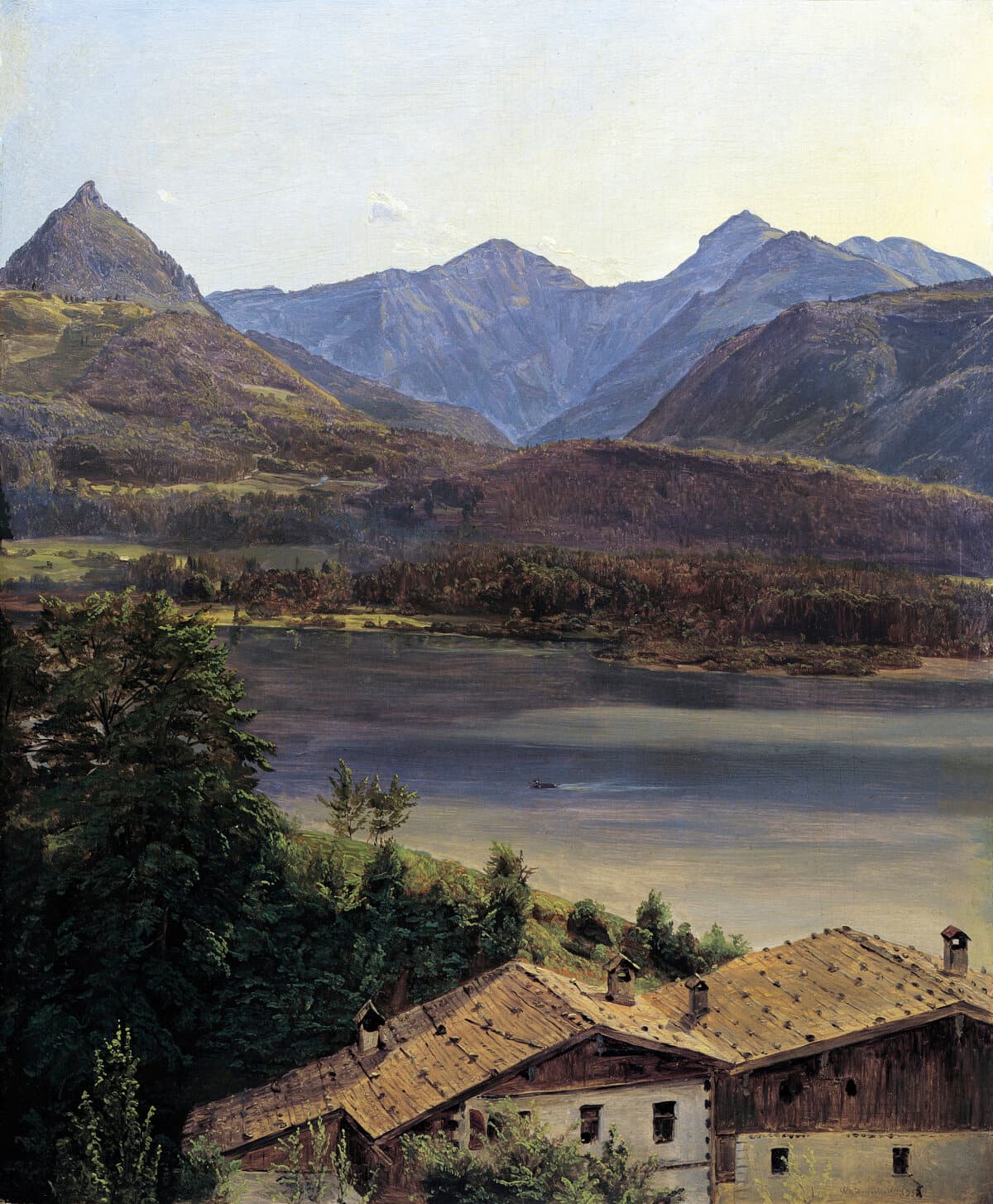
“Lake Wolfgang,” 1835, by Ferdinand Georg Waldmüller. Oil on wood; 12 5/8 inches by 10 1/4 inches. Belvedere, Vienna. (Copyright Belvedere, Vienna)
In his painting “Lake Wolfgang,” Waldmüller rendered the pristine waters of one of Salzkammergut’s best known lakes. He draws viewers into the painting by a boat in the middleground, a wisp of smoke in the woods, and then the deep mountain valley beyond.
The Biedermeier style
Waldmüller also had a talent for capturing human nature on canvas. He combined his love of the Austrian landscape with his keen insights into the human psyche to create successful genre paintings, often featuring multiple figures. He painted these in the Biedermeier style of realist art that originated in Germany.
The Biedermeier style of art and architecture (around 1815–1848) grew during a period of European peace after the Napoleonic Wars. Austrian diplomat and statesman Klemens von Metternich’s leadership in Europe had brought political stability to the region. Urbanization and industrialization flourished, and a new European middle class emerged, keen to collect and enjoy the arts. In Austria, Biedermeier-style paintings contained no social or political commentary.
After the country’s years of instability, Biedermeier artists created realistic, pious, sentimental paintings that generated warmth, good cheer, and a sense of belonging. Some paintings show people in bleak circumstances, but even in these scenes, he showed the joy and the strength of the human spirit in the face of adversity.
In his late work, Waldmüller combined genre and landscape subjects in his compositions, such as in “Early Spring in the Vienna Woods,” where children enjoy picking violets, including a shy girl who proffers a posy to the boys.
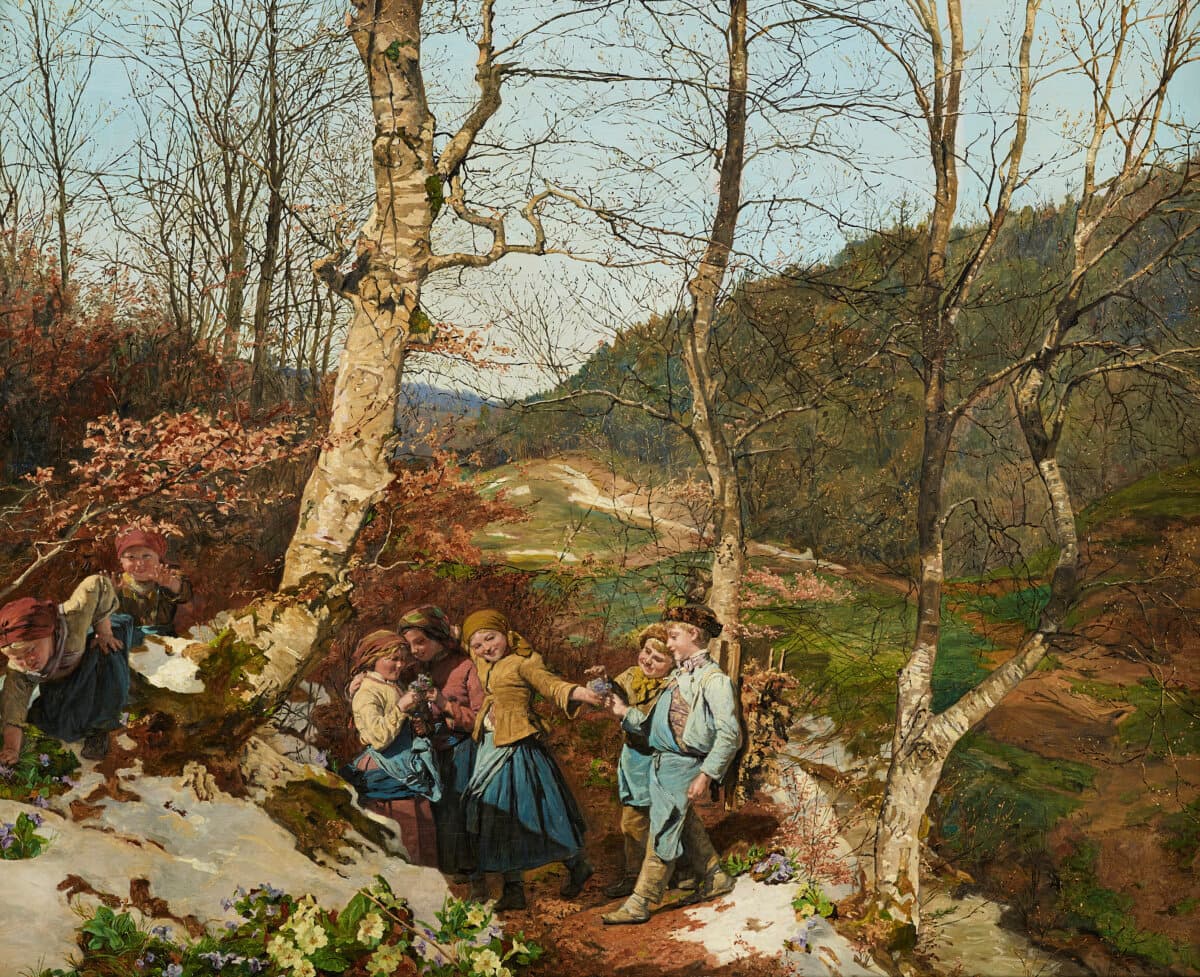
“Early Spring in the Wienerwald, Violet Pickers in the Wienerwald,” 1861, by Ferdinand Georg Waldmüller. Oil on wood; 20 1/2 inches by 26 inches. Belvedere, Vienna. (Copyright Belvedere, Vienna)
Waldmüller expressed “the eternal truth and beauty” of nature throughout his landscape paintings. Each of Waldmüller’s considered brushstrokes allows us to delight in the brilliance of the natural world, like a breath of fresh alpine air.
‘Waldmüller: Landscapes,’ at London’s National Gallery runs through Sept. 20, 2026. To find out more, visit NationalGallery.org.uk.
What arts and culture topics would you like us to cover? Please email ideas or feedback to features@epochtimes.nyc.