
Santa Clara County told the U.S. Department of Justice (DOJ) it will not disclose voter information related to the federal investigation into suspected noncitizens on California’s voter rolls.
County officials stated on Oct. 26 that the DOJ’s request for voter information was “unreasonable and not administratively feasible” with less than two weeks until Election Day and would put the “County Registrar of Voters in violation of federal and state laws.”
The DOJ letter in question, dated Oct. 23, was sent to Santa Clara County Registrar of Voters Matt Moreles. It asked the county to send voter registration information for 902 people on the voter rolls who are suspected noncitizens, and to reply within 48 hours with its commitment to working with federal officials on the investigation.
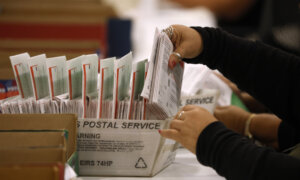
The federal agency also asked the county to separate and not count any ballots received from those 902 people until their citizenship can be verified.
“The Department is not asking Santa Clara County to adjudicate immigration status; it is asking it to temporarily set aside ballots from individuals whose eligibility is credibly in question—a standard election-administration practice implemented nationwide,” the DOJ wrote.
The federal agency added that noncitizens voting in federal elections is a crime, suggesting potential legal action against the county for ignoring or facilitating election violations.
In response, Santa Clara County sent two separate letters dated Oct. 25, one from County Executive James Williams and the other from County Counsel Tony LoPresti, to U.S. Attorney Craig Missakian.
LoPresti acknowledged the DOJ’s requests but argued that the Registrar of Voters is “legally prohibited from taking the actions requested in the letter” and will be “unable to comply with the requests.”
The letter said the DOJ’s list of 902 alleged noncitizens was based on “unsubstantiated allegations against County residents,” adding that voter information is confidential.
“We consider DOJ’s efforts to threaten California election officials with criminal sanctions for following federal and state law to be an effort to unlawfully intimidate both election officials and California voters,” LoPresti wrote in his letter. “The county reserves its rights to pursue all legal remedies against DOJ for its unlawful intimidation of election officials and California voters. The [Registrar of Voters] will continue to comply with federal and state laws while it conducts free and fair elections in this county.”
Williams’s letter states that voting rights are foundational to U.S. democracy and cites the 10th Amendment.
“Under our nation’s Constitution and California law, the sacred trust to administer elections impartially, fairly, and effectively is entrusted to California’s 58 counties,” wrote Williams. “It is precisely because of our vigilance and adherence to our duties that we cannot abide by your illegal request to provide confidential voter information or segregate ballots based on unverified allegations.”
Santa Clara County officials also stated that in Los Angeles County, local officials reviewed a sample of names from the DOJ’s statewide list of alleged noncitizen voters and found that fewer than half were active voters. Los Angeles also found that more than 40 percent of people in the sample had canceled voter registrations, almost three-fourths had never voted, and more than one-third of those with birthplace information available were U.S. citizens.
Similarly, San Mateo County stated that the DOJ’s letter is not a court order. Officials say the county is coordinating with the California secretary of state and the San Mateo County Attorney’s Office on a response.
Counties across California received similar letters from the DOJ with the same request for information and a 48-hour deadline. This resulted in a brief legal battle between the DOJ and California.
A federal judge on Oct. 28 denied the DOJ’s emergency request for California to isolate around 20,000 ballots suspected to be tied to noncitizens, allowing the state and local counties to continue following their established election procedures.