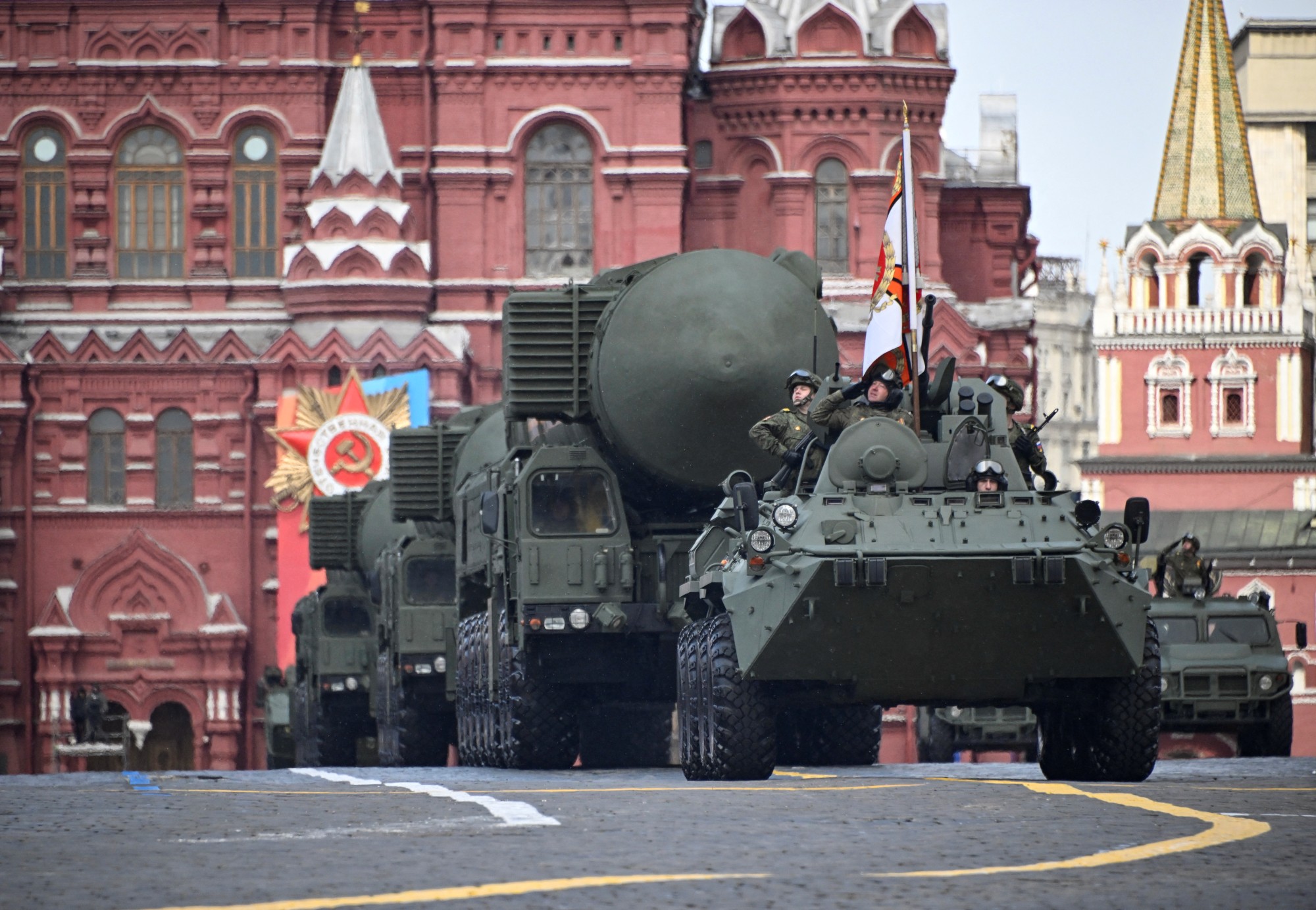

Russia will no longer abide by self-imposed restrictions on the deployment of intermediate-ranged missiles, the Russian Foreign Ministry announced on Aug. 4.
Until 2019, both Russia and the United States had been party to the Intermediate-Range Nuclear Forces (INF) Treaty, which prohibited either party from having ground-launched nuclear and non-nuclear missiles that can travel between 310 and 3,400 miles.
U.S. President Donald Trump, during his first term in office, ordered the formal U.S. withdrawal from the arms control treaty. Following Trump’s lead, Russia also formally withdrew from the treaty, though it claimed to continue exercising a degree of restraint against the build-up of land-based intermediate-range forces.
On Aug. 4, citing U.S. plans to continue deploying weapons once banned under the INF treaty, Russia announced it would also do away with any remaining self-imposed restraints on such weapons.
“Since our repeated warnings in this regard have been ignored and the situation is developing along the path of the actual emplacement of the US-made ground-launched INF-range missiles in Europe and the Asia-Pacific, the Russian Foreign Ministry has to state that the conditions for maintaining a unilateral moratorium on the deployment of similar weapons have ceased to exist,” the Russian Foreign Ministry said. “The Ministry is authorized to declare that the Russian Federation no longer considers itself bound by the relevant previously adopted self-restrictions.”
The Russian Foreign Ministry statement did not specify where Russian forces may deploy their intermediate-ranged missiles or provide a timeline for these deployments.
This announcement comes at a moment of heightened tensions between Russia and the United States.
On July 14, Trump threatened to impose new sanctions and tariffs against Russia and its trade partners if Russian President Vladimir Putin did not agree to a cease-fire deal in its conflict with Ukraine within 50 days. Last week, Trump shortened his cease-fire deadline, giving the Kremlin until Aug. 8 to reach a deal to avoid new financial pressure.
After Trump brought forward his cease-fire deadline, Deputy Chairman of the Security Council of Russia and former Russian President Dmitry Medvedev took to X to say Trump’s ultimatum risked bringing the United States and Russia closer to a direct armed conflict.
“Each new ultimatum is a threat and a step towards war,” Medvedev wrote on X. “Not between Russia and Ukraine, but with his own country.”
Responding to what he called “highly provocative statements” by Medvedev, Trump, on Aug. 1, announced he had ordered two U.S. nuclear submarines to be repositioned in case the “foolish and inflammatory statements are more than just that.”
It remains to be seen if the Kremlin will agree to a cease-fire deal with Ukraine on Trump’s timeline.
Speaking with reporters on Aug. 3, Trump said special presidential envoy Steve Witkoff may visit Moscow on Aug. 6 or 7. Such a visit would offer Witkoff a narrow opportunity to help facilitate a cease-fire deal.