This year marks the 75th anniversary of the start of the Korean War. Technically, the war never ended because a peace treaty was never signed. There was only an armistice signed in July 1953. Considering this, it’s fitting that Richard Dannatt and Robert Lyman’s new book is entitled “Korea: War Without End.”
The Korean War was many things to many people. It was a deciding factor as to whether Korea would unite or remain separate. It was the first hot war of the Cold War—pitting against each other the political wills of the Soviet Union and America. It was the first war that involved the United Nations, leading it to condemn the actions of the North Koreans (DPRK) as well as requesting military support from its member nations.
In some ways, it became America’s war. Americans led the charge for the United Nations. Additionally, American casualties far exceeded those from any U.N. members. In some ways, it was China’s war; the country sent in approximately 300,000 soldiers when U.N. troops neared the Yalu River, which separates North Korea from Manchuria. For as many countries involved, specifically through the U.N. and the major players pulling the strings—America, the Soviet Union, and China—the Korean War was a world war, though geographically constrained.
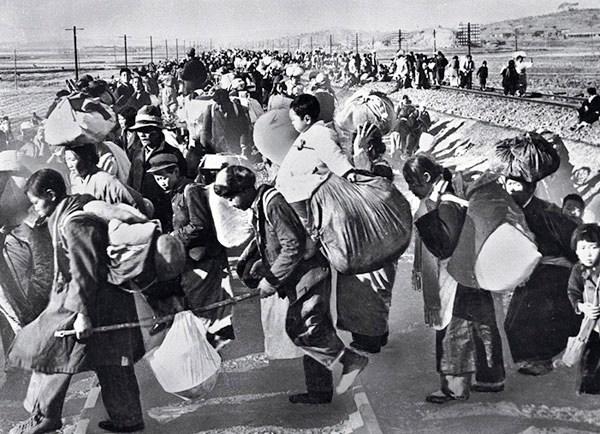
Hundreds of thousands of South Koreans fled south after the North Korean army invaded. U.S. Defense Department. (Public Domain)
Historical Record With Military Commentary
It’s odd that despite all these factors, the Korean War has famously, or infamously, been called The Forgotten War. Dannatt and Lyman’s book makes the case—indeed, many cases—that the Korean War must not simply be remembered, but studied.
The British authors traversed the course of the war, combining the historical record of action with warfare commentary. The collaboration between Dannatt, former chief of the British general staff, and Lyman, a best-selling military historian, accomplished the commentary effort quite well. While readers will notice the separation of the two—at times giving the read a stop-and-start feel—it isn’t a detriment to the overall message.
As an aside for American readers, at times the work does have a British angle to it. For anyone familiar with the Korean War, this should provide some new history and perspective.
Miscalculations and Hubris
Simply put, the Korean War was a war of miscalculations. The Democratic People’s Republic of Korea (DPRK) miscalculated American resolve to support the South Koreans. The authors note that Kim Il Sung, leader of North Korea at the time, was perhaps unaware that the Americans and South Koreans (Republic of Korean Army or ROK) had signed a “mutual security and military assistance agreement” a few months before the war began.
As the DPRK neared annihilating the ROK, the Americans and the U.N. troops turned the tide suddenly with a masterstroke amphibious invasion orchestrated by Gen. Douglas MacArthur. He was also supreme commander of the U.N. forces. MacArthur’s gamble for the invasion paid off; but just as he had underestimated the DPRK at the start of the war (the Soviets had supplied them with tanks, planes, and artillery), he also miscalculated the threat from Communist China.
The Chinese leadership believed, ultimately wrongly, that their surprise attack by hundreds of thousands of troops would destroy the U.N. troops. These miscalculations led to an ebb and flow of war that witnessed each side near total victory on several occasions.
Behind these miscalculations, which the authors rightfully hammered home, is a rather common theme in military histories: hubris. According to the authors, this fatal characteristic was never more prominent during the conflict than in MacArthur. The American general had been crowned a conquering hero at the end of World War II, becoming the quasi-ruler of Japan during its occupation. MacArthur was rightfully held in the highest regard, but, as Dannatt and Lyman indicate, believing one’s own publicity can be blinding, and MacArthur was blind to many things. But he was hardly the only one.
The American government had come to believe that lasting peace had been achieved. After winning WWII, America’s military was shrunk by approximately 90 percent. Its posture of unpreparedness was now reminiscent of pre-World War I.
When the Korean War erupted, the greatest military power the world had ever seen attempted to stop the invading DPRK with outdated and insufficient weaponry. Its unpreparedness was on deadly display. As the authors note, “In the first six weeks of the war the USA had lost 6,000 men—dead, wounded, and missing—the South Koreans a staggering 70,000. Such was the cost of unpreparedness.”
America had forgotten one important truth: Peace is never perpetual.
Knowns and Unknowns
The book provides details behind the war’s most important moments, including the DPRK invasion, the standoff at Pusan, MacArthur’s amphibious landing, the North Koreans’ retreat into Manchuria, the arrival of the Chinese, the firing of MacArthur by President Harry S. Truman, the leadership of Gen. Matthew Ridgway, and the eventual armistice. The authors also dig into the atrocities committed by both sides, the all-too-often panicked retreats by the American-led U.N. troops, the devastation of area bombing, the massive death toll of Korean civilians, and the incredibly harsh weather.
As anyone would expect, the battles of 1950, like Pusan, Seoul, and Taejon, are highlighted. But, appreciatively, the authors also highlight battles that took place after 1950 in what the authors call a “war of no movement.” Their discussions of the April 1951 Battle of Imjin River, the March 1952 battle for Outpost Eerie, and the Battle of the Hook, fought near the war’s end, gives detail into often overlooked moments of the war.
Lessons to Be Learned
The crux of the book, however, is how not to conduct a war. “Korea: War without End” is a warning about the dangers of miscalculations originating from hubris, a characteristic often attributed to powerful people and/or powerful nations.
Dannatt and Lyman make the case that even great powers must remain prepared at all times, even when it seems peace has been reached. Just as war is not perpetual, neither is peace. Taking enemies, or potential enemies, seriously is a posture that will ultimately save blood and treasure. For anyone who believes in national invincibility, that person should consider the lessons of the Korean War, and the historical commentary of the war by Dannatt and Lyman would be a good place to start.
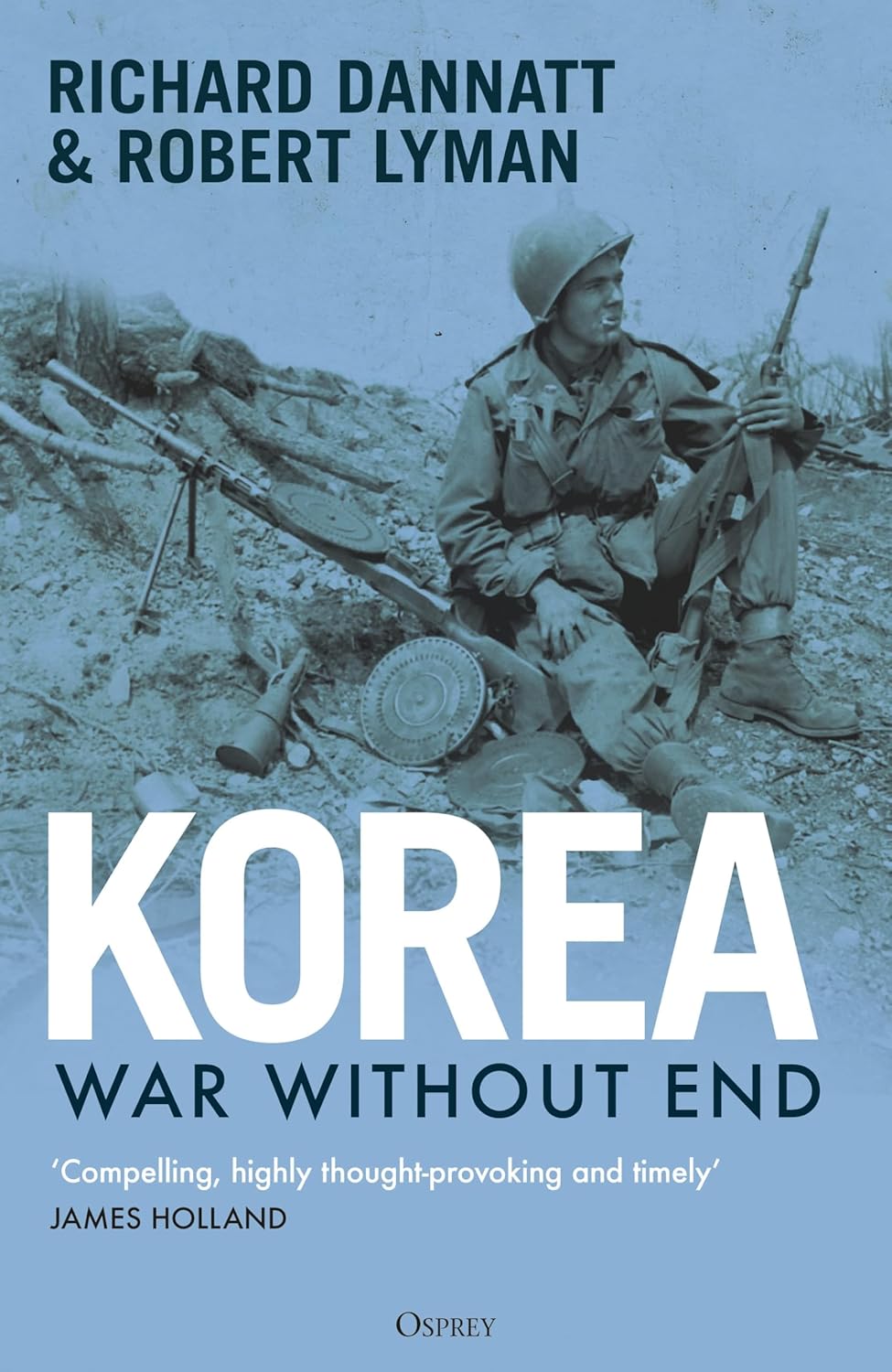
’Korea: War Without End’
By Richard Dannatt and Robert Lyman
Osprey Publishing: May 20, 2025
Hardcover, 352 pages
What arts and culture topics would you like us to cover? Please email ideas or feedback to features@epochtimes.nyc