
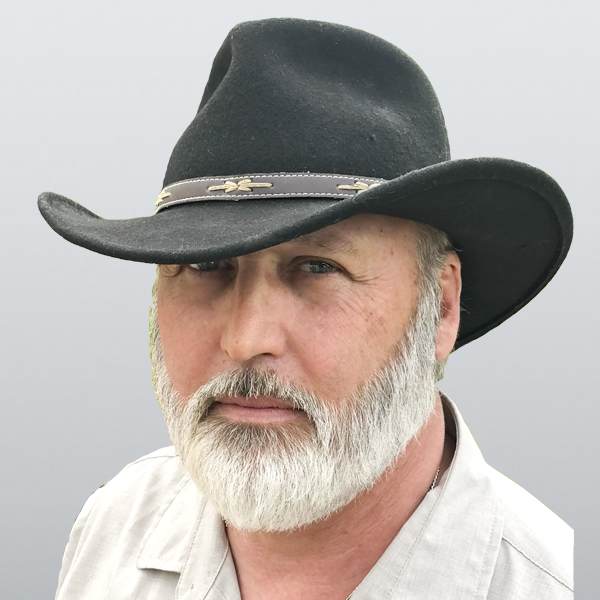
Incumbent Rep. David Valadao (R-Calif.) will face Democrat Randy Villegas in the Nov. 3 general election in California’s 22nd Congressional District, one of the most closely watched battleground races.
Valadao topped the primary with 40.7 percent. Progressive Villegas, a college professor and business owner, received 32.2 percent of the vote, beating moderate state Assemblywoman Jasmeet Bains, a family physician, who garnered 27.2 percent. The Associated Press called Villegas’s advance on June 9, a week after the primary.
Valadao has held the Central Valley seat for six of seven elections, but the district, which is predominantly Hispanic with an agricultural-based economy, was recently redrawn under Proposition 50 to favor Democrats. He formerly represented California’s 21st Congressional District from 2013 to 2019 and 2021 to 2023.
Although it is still centered in California’s vast Central Valley, the district now includes more blue areas—mainly in Fresno County—and excludes some red-leaning areas. It encompasses large parts of Kern County and portions of Kings, Tulare, Fresno, and Madera counties, eastern parts of Bakersfield, and portions of Hanford, Tulare, Porterville, and Caruthers. It excludes Avenal and parts of Hanford, Valadao’s hometown.
Last year, after Texas Republicans launched a congressional redistricting effort, California Gov. Gavin Newsom wrote in an X post on July 15, 2025, “two can play that game,” and on Nov. 4, 2025, the state held a special election on a constitutional amendment to redraw California’s congressional district boundaries.
More than 64 percent of California voters passed Proposition 50, which replaced the independent Citizens Redistricting Commission’s 2021 congressional maps with those redrawn by the Democrat-controlled Legislature under state Assembly Bill 604.
Medicaid Funding Cuts
Valadao has taken flak from Democrats for voting to cut spending for Medicaid—called Medi-Cal in California—as part of President Donald Trump’s One Big Beautiful Bill Act, which brought in sweeping federal policy reforms last summer.
On Jan. 1, 2024, California became the only state to offer full Medi-Cal benefits to all low-income residents regardless of their immigration status.
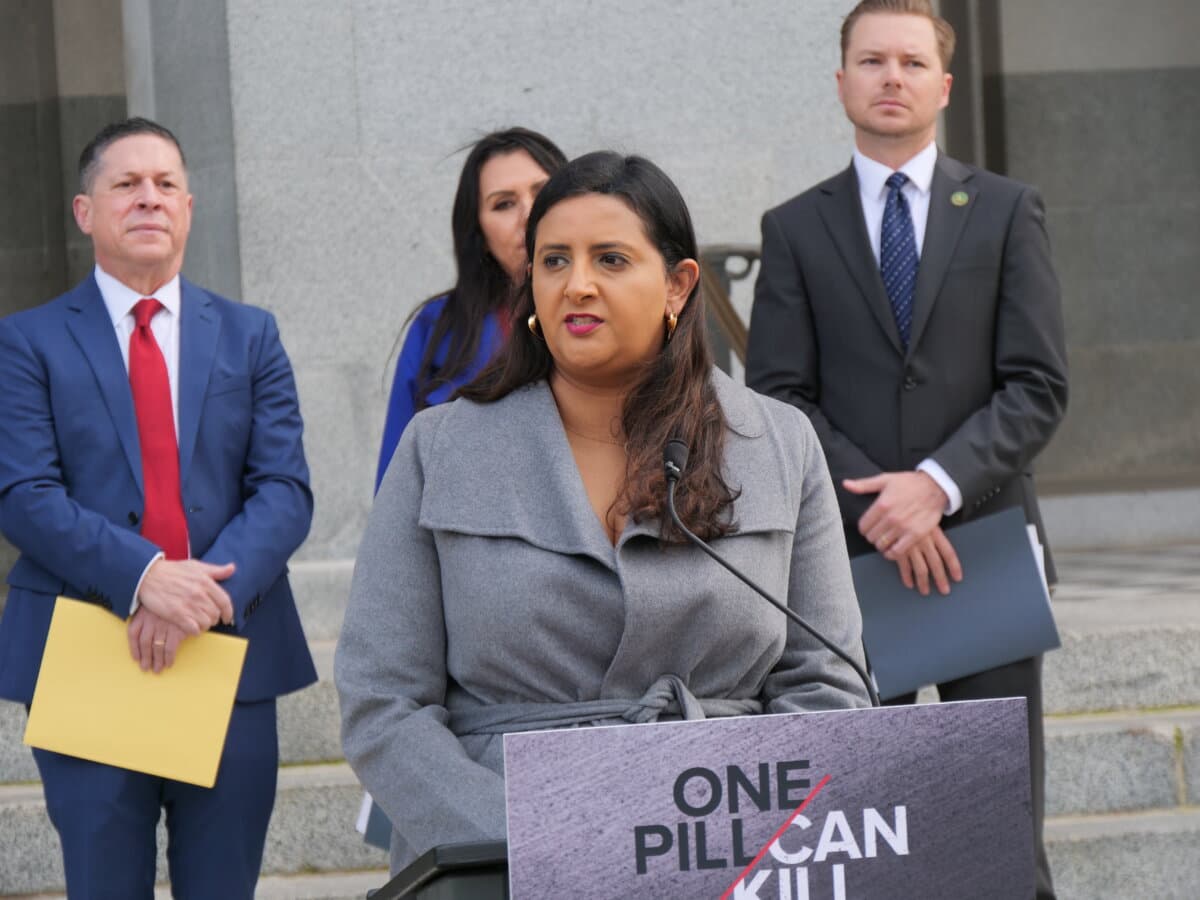
Assemblywoman Jasmeet Bains at the Capitol on Feb. 14, 2024. (Travis Gillmore/The Epoch Times)
U.S. law prohibits the use of federal funds for non-emergency care of illegal immigrants, but a 2024 audit found that California improperly claimed about $52.7 million in federal reimbursements for non-emergency services provided to low-income illegal immigrants, according to the U.S. Department of Health and Human Services Office of Inspector General.
Paragon Health Institute, an independent nonprofit think tank launched in 2021 by Brian Blase, a former health policy adviser to Trump, claims that the state uses a “loophole” to tax health insurers via California’s Managed Care Organization Tax to draw extra federal funds and free up state funds to pay for illegal aliens.
“The state taxes Medicaid insurers and then makes higher payments to those same insurers with that tax revenue,“ according to the institute. ”The higher payments enable the state to claim additional federal matching dollars. This scheme effectively allows the state to ‘launder’ federal Medicaid funds without spending any of its own money.”
State funds are then used for expanded Medicaid coverage, including for illegal immigrants, but California lawmakers argue that the practice is not against the law, the institute says.