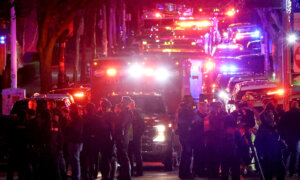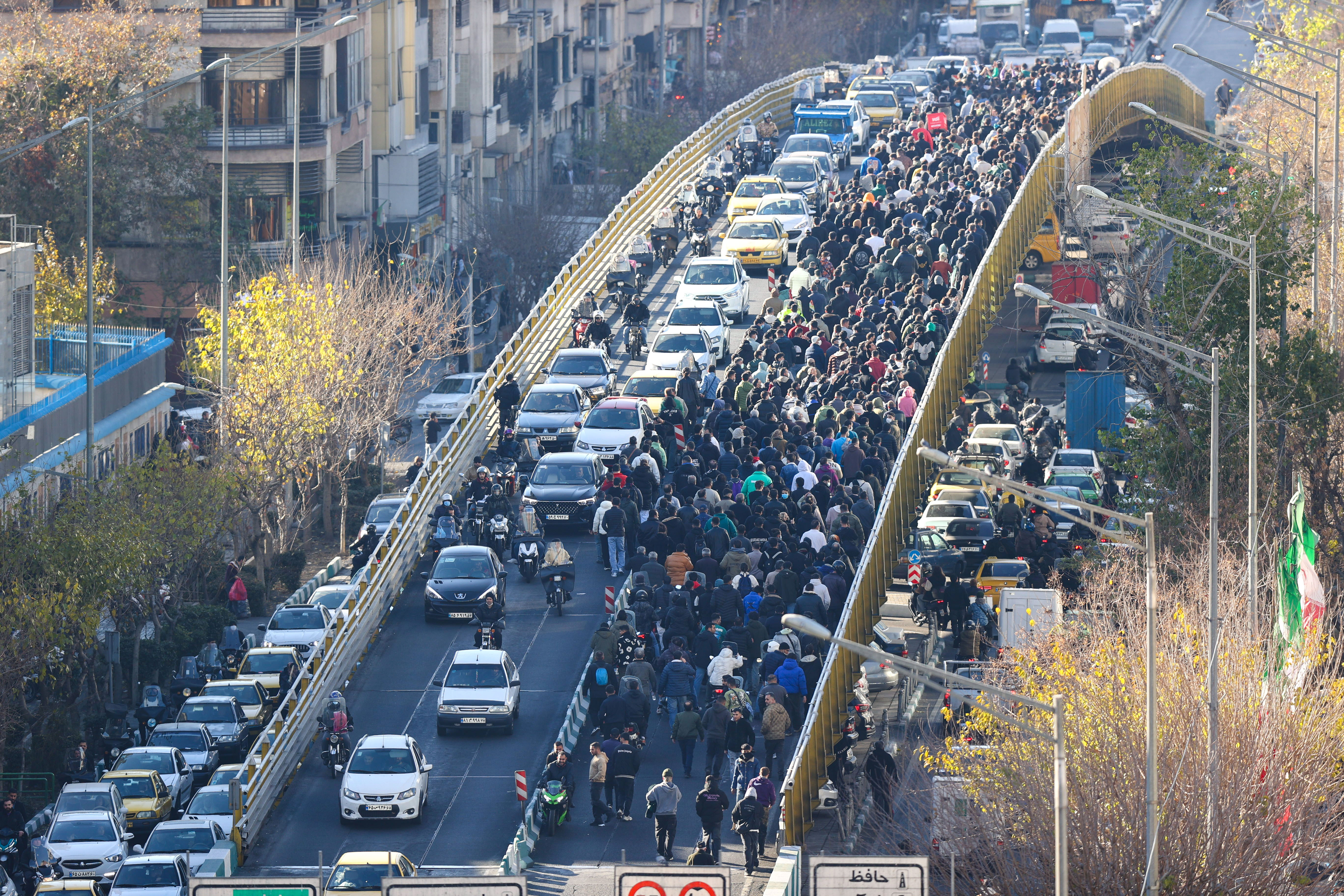

Iran’s government contended with continuing protests on Dec. 30 after the value of the country’s currency tumbled in recent days.
Witnesses speaking with The Associated Press on Dec. 29 said that people were rallying in the capital city of Tehran, the central city of Isfahan, the northeastern city of Mashhad, and the southern city of Shiraz.
The value of Iran’s rial has been declining for years. In 2015, as the international community lowered sanctions against Iran in exchange for limits on its nuclear program, Iran could exchange about 32,000 rials for a U.S. dollar.
According to Iran’s state statistics center, the inflation rate in December rose to 42.2 percent from the same period last year and is 1.8 percent higher than in November. Food prices rose by 72 percent from December 2024, and health and medical items were up by 50 percent from a year ago, according to the statistics center.
On Dec. 28, the open-market exchange rate fell to 1.42 million rials to the dollar. On Dec. 29, it had settled to about 1.38 million rials to the dollar.
The Iranian government has acknowledged the protests and the uncertainty surrounding the rial.
In a statement late on Dec. 29, Iranian President Masoud Pezeshkian said he had instructed Iran’s Interior Ministry to begin dialogues with protest representatives.
“The livelihood of the people is my daily concern,” Pezeshkian said. “We have fundamental actions on the agenda to reform the monetary and banking system and preserve the purchasing power of the people.”
Amid the economic uncertainty, Mohammad Reza Farzin has resigned as head of Iran’s central bank. On Dec. 30, Pezeshkian’s office announced that he had accepted Farzin’s resignation and named Abdolnaser Hemmati as a replacement.
When Farzin took office in 2022, the rial traded at about 430,000 to the dollar.
The Iranian rial to U.S. dollar exchange rate had held relatively stable for some time after the passage of the 2015 Iran nuclear deal and the relaxation of international sanctions. The rial began to falter in the months before U.S. President Donald Trump’s 2018 decision to withdraw the United States from the nuclear agreement.
After withdrawing from the Iran deal, the United States began reimposing sanctions under what Trump termed his “maximum pressure” campaign. Tehran, in turn, began resuming higher levels of uranium stockpiling and enrichment.
International pressure has continued to mount on Iran in recent months.
In August, France, Germany, and the UK triggered a 30-day sanctions snapback provision within the 2015 Iran nuclear deal. For years, Iran had been reluctant to provide transparency as to the status of its nuclear program, particularly after Israeli and U.S. forces targeted components of the program with military strikes in June.
The threat of renewed military action may also add to economic uncertainty for Tehran. Trump indicated on Dec. 29 that he could support renewed military strikes on Iran if Tehran were to make new advances with its nuclear or long-range weapons programs.
Jack Phillips, Reuters, and The Associated Press contributed to this report.