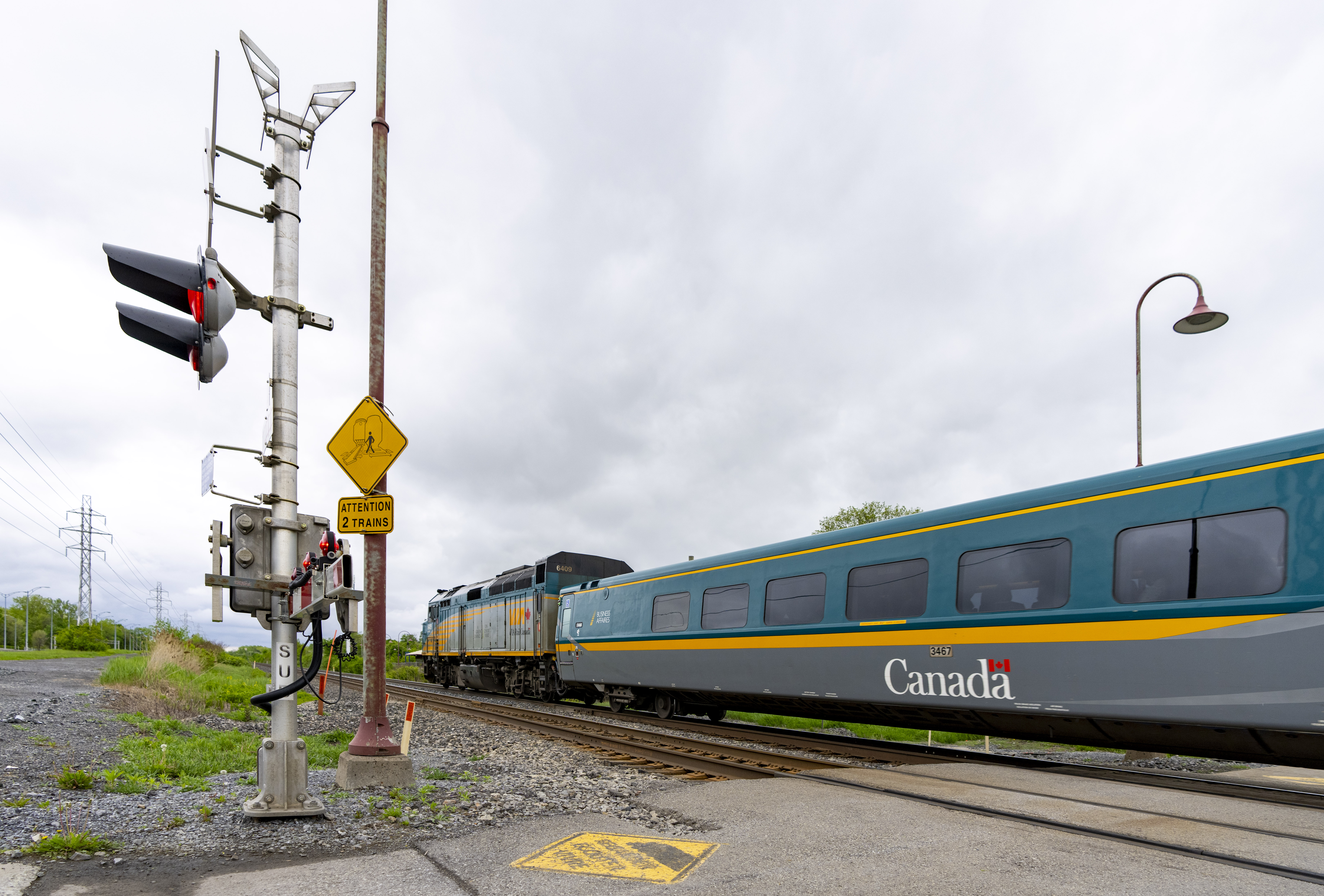

Conservative Party Leader Pierre Poilievre says the government should abandon the multibillion-dollar high-speed rail line between Toronto and Quebec City, arguing that the money would add to the national debt and be a burden on taxpayers.
“The project’s total estimated cost is greater than the current federal deficit and would amount to nearly $8,000 for a family of four, for a service that two-thirds of surveyed Canadians said they would not use even once a year,” the Conservatives said on March 31.
Poilievre said that the money should be used to lower taxes and the national debt, and that instead of this project, the Conservatives believe in facilitating projects that “make money rather than taking money.”
“Canadians need transportation that works and taxpayer dollars that are respected; this project does neither,” he said.
The federal government says the 1,000-kilometre high-speed rail line from Toronto to Quebec City, dubbed Alto, will “transform transportation” in Canada’s busiest corridor. According to government figures, 18 million people, or 44 percent of the nation’s population, live in the region between the two cities.
The proposed rail line is meant to transport passengers between the two major cities in three hours, roughly half the driving time and twice as fast as Via Rail’s existing trains. It will include stations in Quebec City, Trois-Rivières, Laval, Montreal, Ottawa, Peterborough, and Toronto.
A recent survey by McGill University’s Transportation Research centre suggested that one out of the three people along the corridor say they would use the rail at least once per year.
The government has set up a new Crown corporation responsible for the project, which is currently engaged in indigenous and public consultations, environmental assessments, and engineering design work. According to the government, the project will cost between $60 billion to $90 billion. Construction is expected to start around the end of the decade.
Transport Minister Steven MacKinnon shot back at Poilievre’s criticism, saying the project is a “generational investment.”
“It will boost GDP by $35 billion annually, create over 51,000 well-paying jobs, and help Canadians work, study, and travel more efficiently,” MacKinnon said.
Land Expropriation
The government’s budget omnibus bill tabled last year included provisions to allow expropriation of land without going through the normal procedural steps.
Under the current Expropriation Act, the Crown must generally attempt to negotiate the purchase of private land before proceeding with expropriation, but proposed amendments would create an exception for the high-speed rail project, allowing the government to bypass this step.
“The Corporation is not required to have attempted to purchase an interest or right required for the high-speed rail network before it requests to have the interest or right expropriated,” says the the legislation, which became law on March 26.
The Conservatives raised concerns with the land expropriation aspects of the project.
“In 1969, the federal government expropriated nearly 100,000 acres of farmland to build Mirabel airport, right in the Ottawa-Montreal corridor. After displacing roughly 12,000 people, the government used only 5,000 acres, and passenger flights stopped more than 20 years ago,” the Conservatives said.
Transport Canada says the government isn’t altering the compensation regime under the Expropriation Act, and that affected individuals and organizations would still be able to challenge compensation amounts before the courts.
Community groups, including farmers and small-town residents, have launched campaigns opposing the project, while some elected officials and groups along the route have expressed support, at times with calls for changes to the proposed corridor.