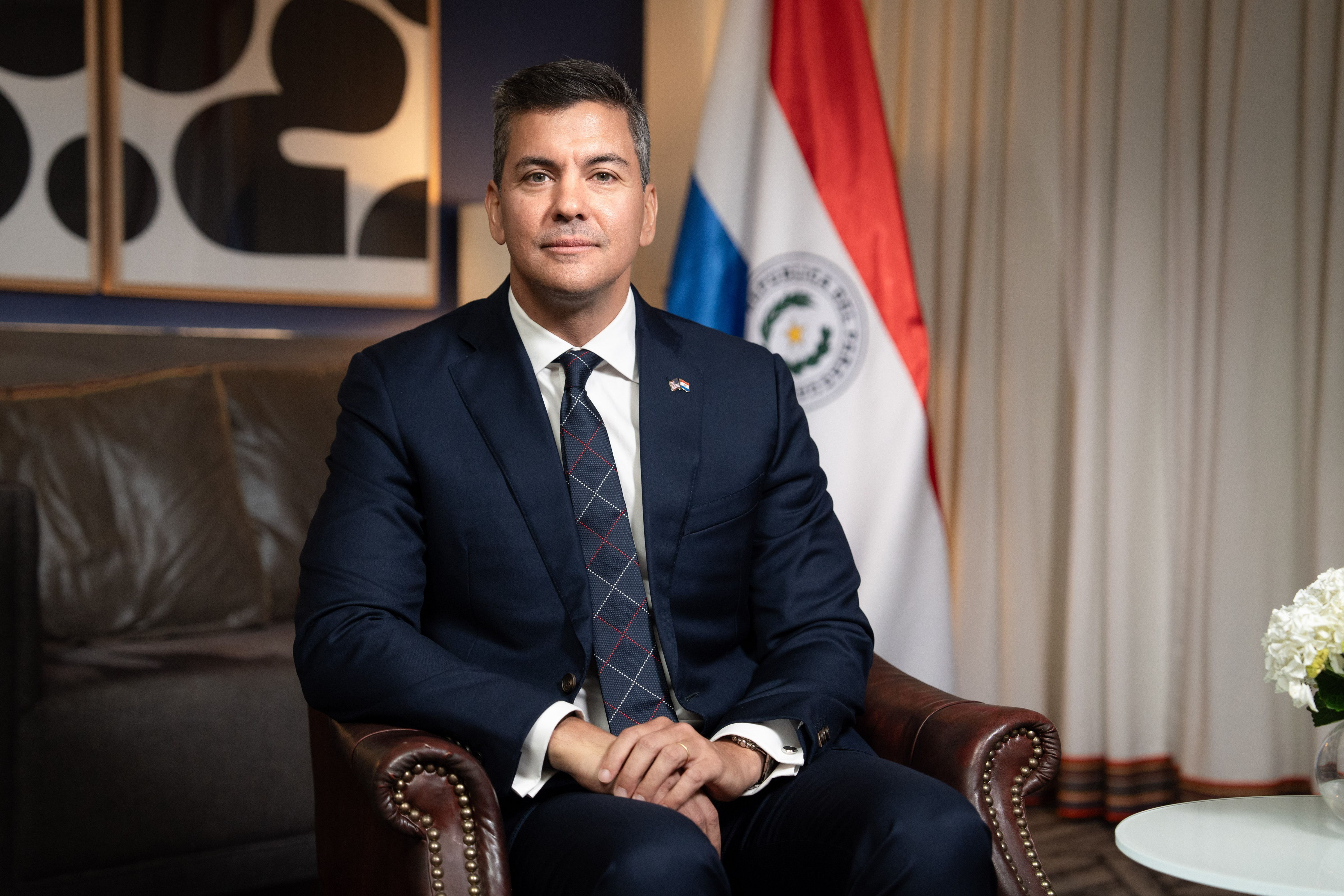

Paraguayan President Santiago Peña was placed under house arrest on Nov. 6 after Congress impeached and removed him from office due to a financial crisis triggered by the collapse of a digital bank.
Peña was a shareholder in the group that controlled the collapsed lender, Ueno Bank. Lawmakers have accused him of conflicts of interest, pension fund misuse, and institutional cover-ups linked to the lender’s collapse. He has denied any wrongdoing.
Peña offered to resign on Nov. 5, but Congress proceeded with impeachment proceedings rather than accept his resignation, denying him the immunity afforded to former presidents. All 44 senators present on Nov. 6 voted to remove him.
Following his removal, Paraguay’s Vice President Pedro Alliana was sworn in to serve the remainder of his term through August 2028. Alliana is also facing an investigation related to the bank’s collapse.
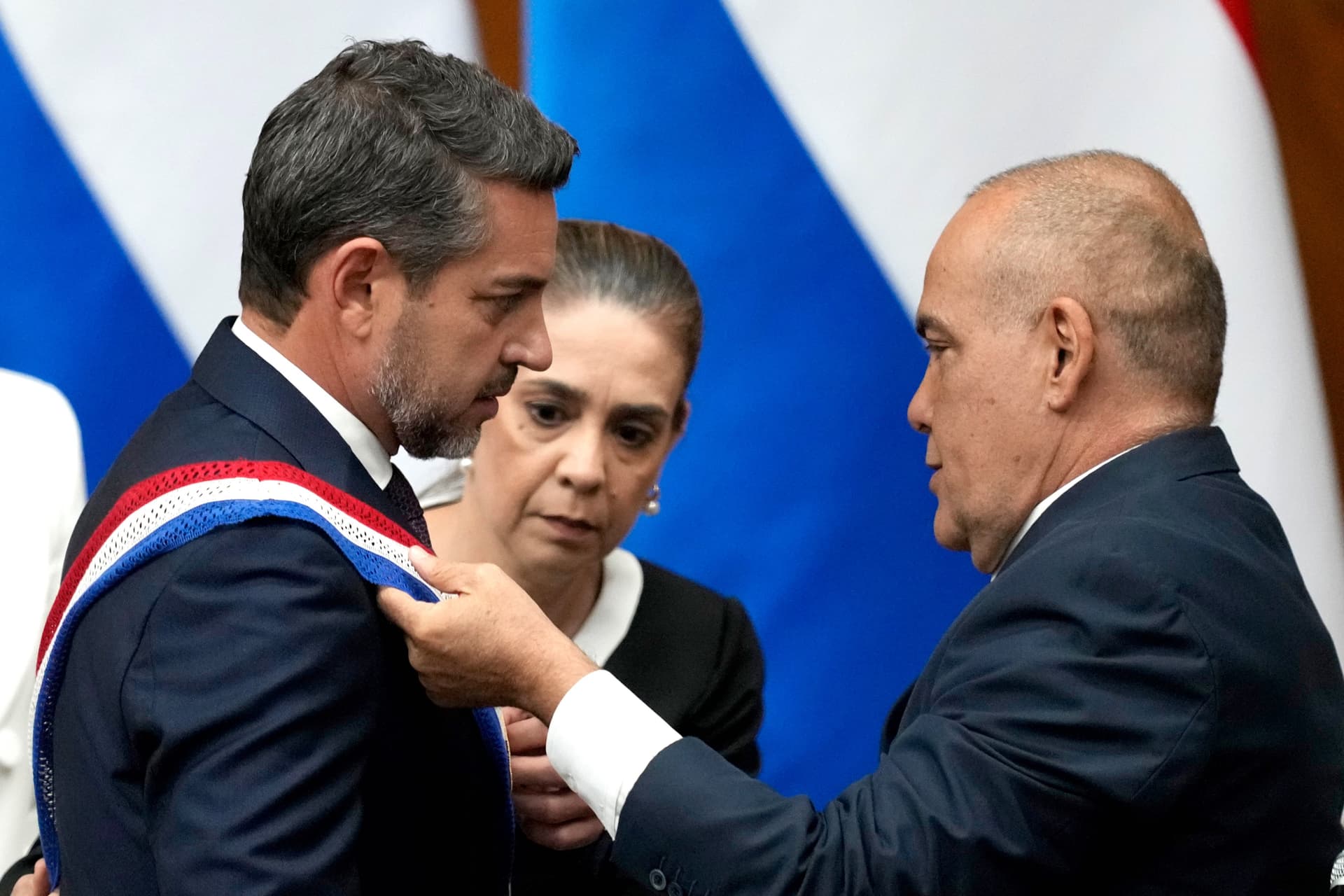
Congress President Basilio Nunez places the presidential sash on Pedro Alliana (L) as he takes office as Paraguay's new president after the Senate removed Santiago Pena over accusations linked to the collapse of Ueno Bank in Asuncion, Paraguay, on Nov. 6, 2026. (Jorge Saenz/AP Photo)
Authorities placed Peña under house arrest until his scheduled questioning on Saturday over allegations of breach of trust, influence peddling, and abuse of public office for personal gain.
Crowds gathered outside Peña’s home in Asunción on the night of Nov. 6, and police ringed the property.
Peña wrote on X, before the Senate voted to remove him, that he had submitted his resignation to prevent further harm to the country and help restore calm. He said he did not want his presence to deepen division or instability.
He said his responsibility was to put the country ahead of his own future, and he acknowledged the anguish of Paraguayans still waiting for answers. He called on Paraguayans to come together to rebuild institutions and restore trust.
Prosecutors also ordered the arrest of Carlos Carvallo, whom Peña appointed in 2023 to head the central bank that regulated Ueno. Carvallo previously ran Financiera Ueno, the finance company that became the bank. It was unclear on Friday whether he was in custody.
Paraguay’s central bank seized Ueno on Nov. 3. Customers could no longer withdraw money or use their bank cards.
As of last month, Ueno reported holding about $800 million in public deposits, roughly a quarter of its total, including money from the state pension and health fund and the operators of Paraguay’s giant hydroelectric dams.
Regulators investigating Ueno’s loans to companies linked to its owners found poorly documented lending, the central bank said, together with expenses the bank had wrongly counted as assets.
Alliana vowed in his swearing-in speech that people hurt by the bank’s collapse would be fully compensated. He said he was ordering immediate action, with preference for the least fortunate, and that he would not leave them on their own.
The impeachment charges focused on Peña’s former stake in Ueno’s holding company, which he gave up under pressure last year, and on his choice of Carvallo to head the central bank. Lawmakers also accused him of allowing the state pension fund to deposit $355 million at the bank, an amount they said exceeded legal limits.
Rachel Roberts, Reuters, and The Associated Press contributed to this report.