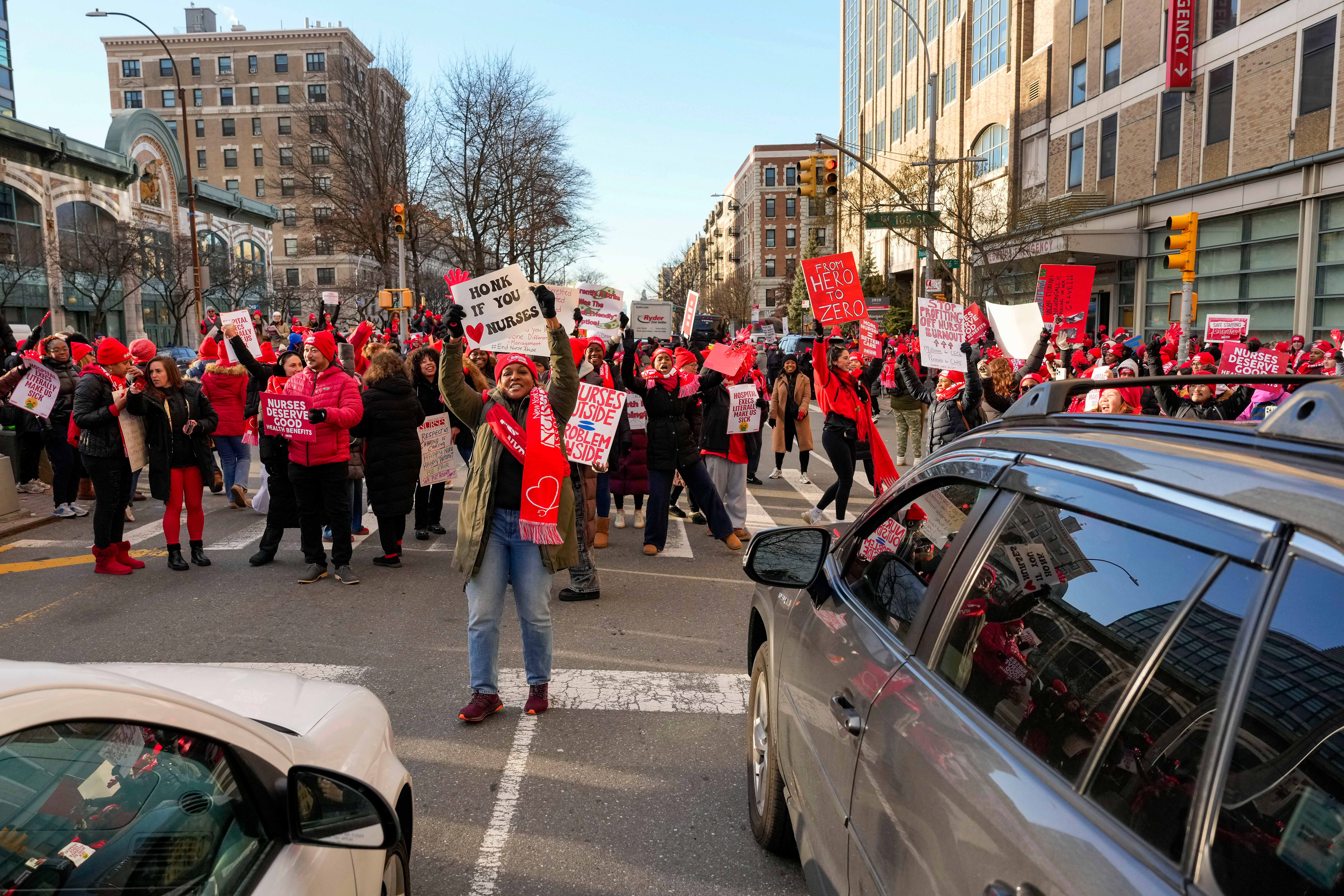
Nearly 15,000 New York City nurses launched a strike on Jan. 12 at three major hospital systems over demands for a fair contract. Key issues included safer staffing levels, improved healthcare benefits, and better protections against workplace violence.
The New York State Nurses Association (NYSNA) characterized the walkout as the largest nurse strike in the city’s history. The labor action affects several facilities within the Mount Sinai, Montefiore, and NewYork-Presbyterian systems.
Nurses and union leaders highlighted a number of critical reasons for their strike.
Nurses’ Demands
The nurses stated they are being forced to care for too many people at once, which can lead to burnout and poor patient outcomes. They want hospitals to follow “safe staffing ratios” to ensure that every patient gets the attention they need.
NYSNA said management had attempted to roll back safe staffing standards put in place after nurses went on strike at two major hospitals three years ago.
“Healthcare workers are being stretched to their limits,” said New York Attorney General Letitia James at a strike press conference.
Nurses reported being physically attacked on the job and expressed a deep fear for their own safety and the safety of their patients. They demanded basic security measures, such as weapon detectors, citing an active shooter at Mount Sinai Hospital and a recent violent incident at NewYork-Presbyterian Brooklyn Methodist Hospital.
Nurses also expressed that management had threatened to cut healthcare benefits for the city’s frontline nurses.
“If anybody deserves great health care, it’s the professionals who are providing health care to the rest of us,” said New York City Comptroller Mark Levine.
NYSNA president Nancy Hagans accused the hospitals of refusing to negotiate seriously, meeting for only 19 minutes before walking out.
Government Response
Mayor Zohran Mamdani spoke in strong support of the striking nurses, emphasizing their historical importance to the city and the need for a resolution that provides them with dignity and fair compensation.
“At every one of our city’s darkest periods, nurses showed up to work. Their value is not negotiable, and their worth is not up for debate,” the mayor said.
“These nurses are here for New Yorkers. They show up, and all they are asking for in return is dignity, respect, and the fair pay and treatment that they deserve.”
New York Gov. Kathy Hochul signed an executive order on Jan. 9 declaring that “a disaster is imminent for which the affected local governments are unable to respond adequately.”
The strike can “impact the availability and delivery of care, threatening public health and safety,” she said.
James voiced her support: “Nurses put their lives on the line every day to keep New Yorkers healthy. They should never be forced to choose between their own safety, their patients’ well-being, and a fair contract.”
What Hospitals Say
“Unfortunately, [the union] decided to move forward with its strike while refusing to move on from its extreme economic demands, which we cannot agree to. We are ready with 1,400 qualified and specialized nurses
—and prepared to continue to provide safe patient care for as long as this strike lasts,” said Mount Sinai spokesperson Lucia Lee in a statement sent to The Epoch Times via email.
According to Mount Sinai’s Jan. 8 negotiations updates, the union requested an approximately $88,000 pay increase for the average nurse, which would raise the annual average from $162,000 to nearly $250,000 by the third year of the contract.
NewYork-Presbyterian said in a statement that it is currently negotiating a new contract with the union.
“Our goal is to reach a fair and reasonable agreement with union leadership that reflects our respect for the important role our nurses play. We remain hopeful that we can accomplish this soon,” the statement said.
It also took steps to “minimize potential disruption” and ensure patients receive the care they need, the hospital said.
As of 2025, there are 310 hospitals in New York City, out of a total of 705 hospitals statewide, according to Ampliz data.
NursingProcess.org tracked 190,470 registered nurses employed in New York in 2025.
New York has an average of 270 nurses per hospital.
Roughly 9,600 nurses were employed within the NYC Health and Hospitals system, which included 11 acute care hospitals, 5 long-term care facilities, and 29 Gotham Health Centers across all five boroughs, according to an August 2025 news release from NYC Health + Hospitals.
The average salary for a registered nurse in New York State is $100,130, which is significantly higher than the national average, according to NursingProcess.org, referencing the U.S. Bureau of Labor Statistics. Including benefits, total compensation is around $142,000.