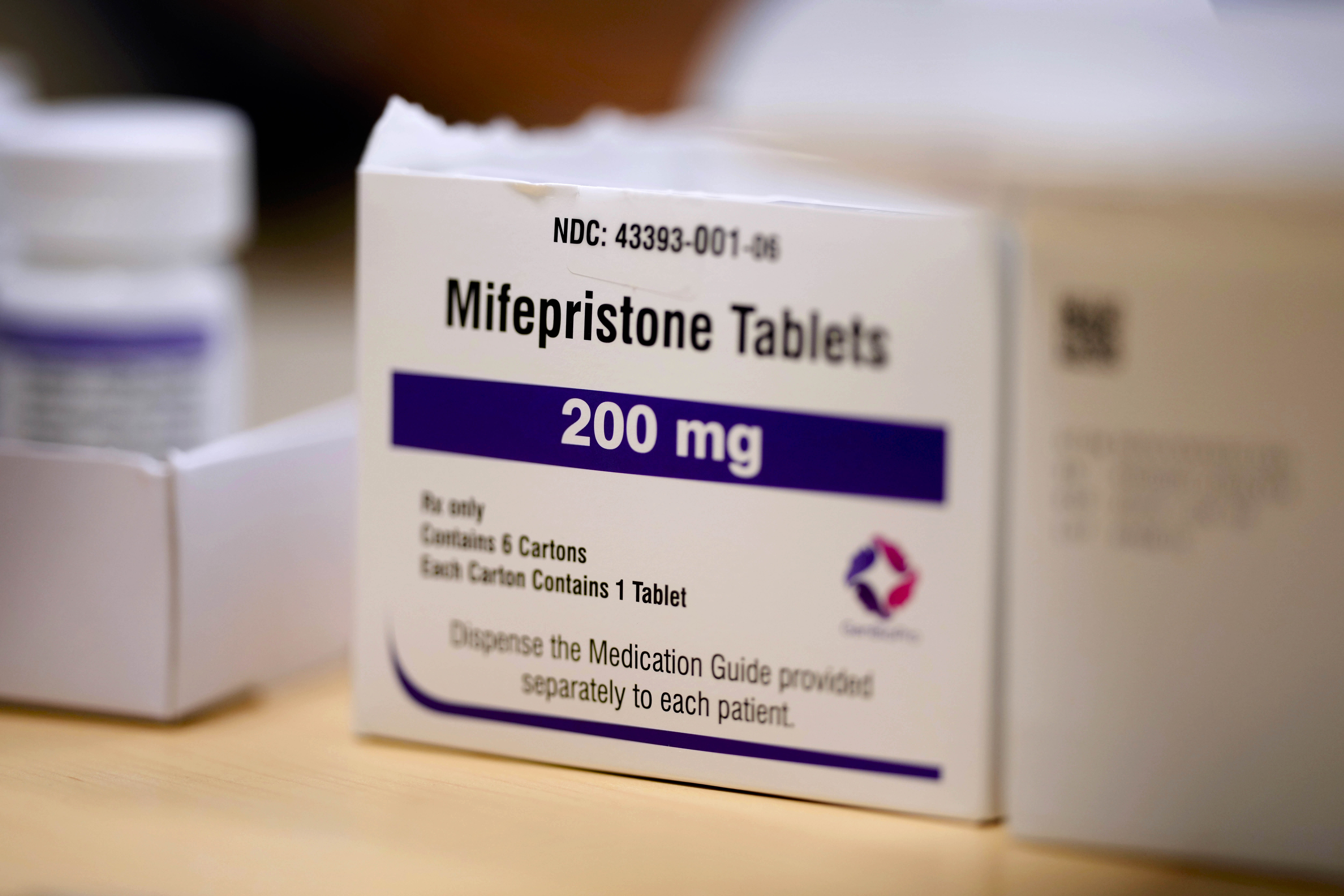

Texas Attorney General Ken Paxton is suing Taylor Bruck, a clerk from Ulster County, New York, after he refused to impose a $100,000 fine against a doctor who mailed abortion pills to a patient in Texas.
Texas is now seeking a “writ of mandamus,” a court order requiring Bruck to enforce the judgment against Carpenter.
The case is unusual, because it highlights the friction between states whose laws contradict each other, and it brings up tricky questions about which state’s jurisdiction will prevail in court.
Here’s what to know:
Texas Abortion Laws
Paxton had previously sued Dr. Margaret Carpenter for sending abortion pills to a resident in Collin County, Texas. Carpenter did not respond to the suit, resulting in an automatic victory for the attorney general.
Texas law forbids most abortions, with exceptions when the mother’s life is at risk, or if the pregnancy will result in “substantial impairment of a major bodily function.”
Following the Supreme Court’s 2022 Dobbs v. Jackson decision that struck down the federal right to abortion, many states moved to ban, or at least restrict, the practice.
The Texas Heartbeat Act had already passed in 2021, allowing lawsuits against physicians who performed an abortion when a fetal heartbeat was detectable.
This is usually regarded as being around six weeks into the pregnancy, although no specific time frame was mandated.
Texas was also one of 13 states with “trigger bans,” abortion prohibitions that would automatically take place if Roe v. Wade were overturned, or the federal government allowed states to ban abortion.
The ban kicked in 30 days after the Dobbs decision.
The Shield Laws
Bruck said he could not enforce the Texas judgement, because to do so ran counter to New York’s own laws.
“As the Acting Ulster County Clerk, I hold my responsibilities and the oath I have taken in the highest regard,” Bruck said in a statement. “In accordance with the New York State Shield Law, I have refused this filing and will refuse any similar filings that may come to our office.”
The so-called “shield laws,” enacted by some states as a response to the Dobbs decision, forbid the prosecution of doctors who prescribe abortion-inducing medication like mifepristone to out-of-state patients.
New York Gov. Kathy Hochul signed the law into effect on June 23, 2023, one day before the first anniversary of the Dobbs decision.
“This legislation will help more women access medication abortion and reproductive care by ensuring our health care providers can deliver telehealth services to out-of-state patients without fear of legal or professional repercussions,” Hochul said when signing the bill.
Hochul had already created the Reproductive Freedom and Equity Grant Fund in May 2022 to expand abortion access in her state.
States’ Rights Conflict
The case pits Texas law against New York law, with Bruck squarely in the middle.
“It’s very rare when two states’ laws directly conflict,” Neama Rahmani, president and co-founder of West Coast Trial Lawyers, told The Epoch Times.
“This is uncharted legal waters. This is exactly the type of case that the Supreme Court needs to take up because you have this clear schism and inconsistency in the law, and the only really appropriate venue to resolve it is the Supreme Court.”
Though he was hesitant to make a prediction on who would come out on top, Rahmani said he thought Texas might have a slight edge, for two reasons.
Firstly, the current makeup of the Supreme Court generally leans conservative.
Secondly, the “full faith and credit” clause in Article IV of the Constitution directs the states to respect each other’s laws.
On the other hand, Rahmani said, Texas is “reaching across the country to impose liability on someone that isn’t even a Texas resident,” so New York may have a strong jurisdiction claim.
The Outcome?
The case may be headed for appeals in the federal courts and then the Supreme Court.
Rahmani said that changes to federal law are possible before a decision is rendered, and this may further tip the case in Texas’s favor.
Some state attorneys general have called for a Congressional ban on shield laws, saying they are just a way of sidestepping abortion bans.
The Food and Drug Administration under Health Secretary Robert Kennedy Jr. has also announced a safety review of mifepristone, following reports by insurance companies that 11 percent of women who used the drug experienced adverse side effects.
Meanwhile, Dr. Carpenter also faces prosecution in Louisiana, where Gov. Jeff Landry signed a warrant for her extradition earlier this year.
That case involved a pregnant minor whose mother procured the abortion pills.
Rahmani noted that Louisiana’s extradition of Carpenter is unlikely to go anywhere, since that procedure requires the governors of both states to sign off—and Hochul has already refused to do so.