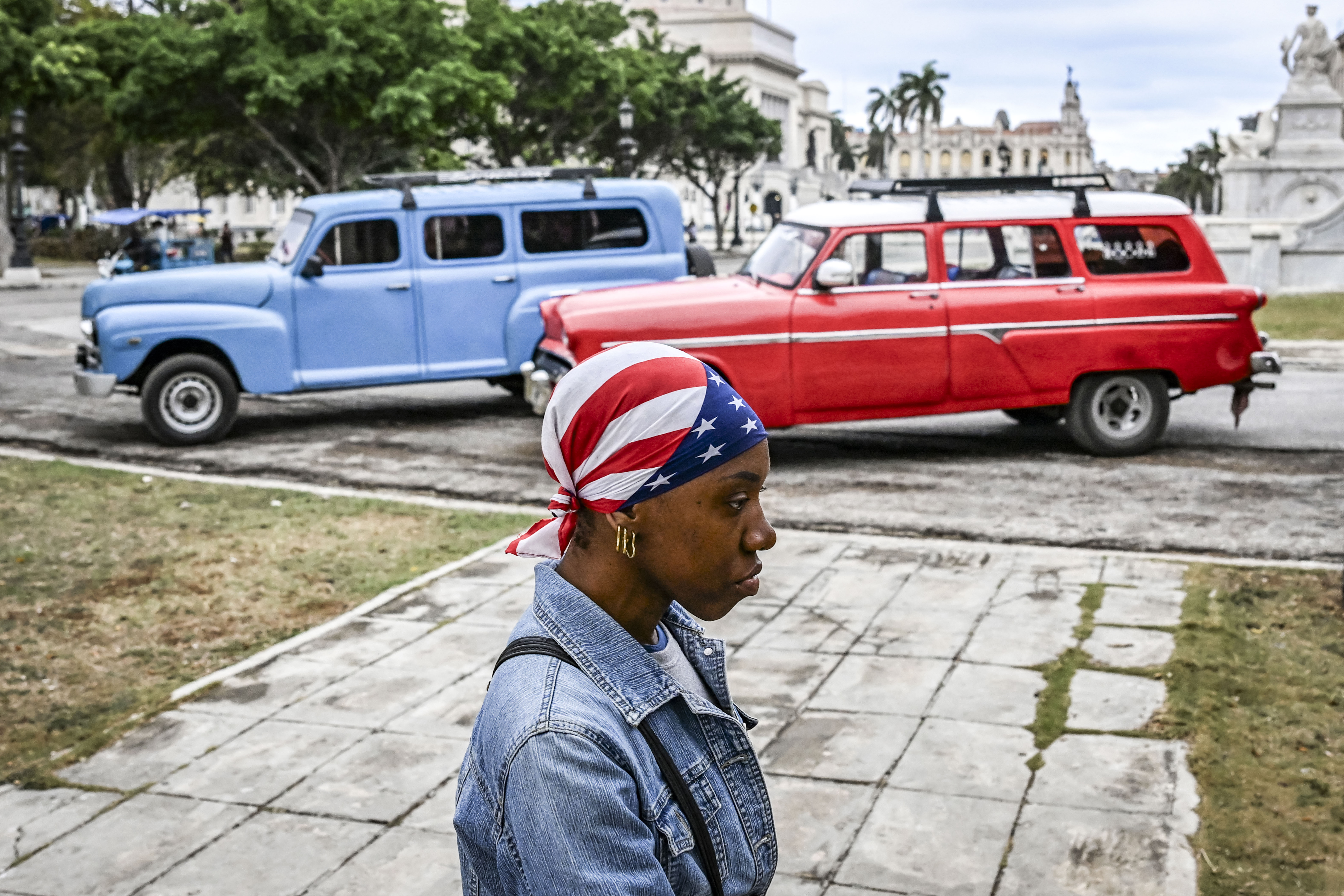

Selena Lambert Ortega, a 24-year-old from Santiago de Cuba, created a Facebook poll on Jan. 12, asking people who should be Cuba’s next president. Within hours, the post went viral.
But, state security agents soon told her to take the post down.
Before it was deleted, U.S. Secretary of State Marco Rubio had about 35,000 votes compared to just a few hundred for the current president, Miguel Diaz-Canel.
“The poll was taken off Facebook, but it shows you what the mentality is inside Cuba,” said Ninoska Perez Castellon, a prominent member of the Cuban exile community in Miami.
Growing public frustration comes at a time when U.S. pressure on Cuba is intensifying.
Rubio, who is leading negotiations with Havana, has made the U.S. position clear: the island must “dramatically” change its political system. He said that the current leadership cannot fix the failing economy.
For decades, Havana managed to withstand the U.S. embargo with help from the Soviet Union, which provided subsidies until its collapse in 1991.
Later, Venezuela supported the Caribbean island by supplying oil at reduced prices. This has played a critical role in Cuba’s economy for the past two decades.
Following the U.S. military operation and capture of Nicolás Maduro in early January, oil shipments from Caracas were suspended. As a result, Cuba now faces one of its most severe economic crises in decades.
Large protests erupted on the island amid frequent blackouts, severe food shortages, and limited access to medicine.
In Cuba, people are less afraid to protest, and many see that the embargo is not the main reason for their problems, Perez Castellon said.
Meanwhile, Washington is pushing for sweeping political reforms.
Under the 1996 Helms-Burton Act, U.S. sanctions can only be lifted if Cuba meets certain conditions. These conditions include the release of all political prisoners, the legalization of political parties, the guarantee of a free press, and the holding of “free and fair elections” under international supervision.
“There are two possibilities,” said John Suarez of the Center for a Free Cuba. “Congress repeals the law, or the regime fulfills those conditions to have the sanctions lifted.”
Other provisions of the law call for progress toward a market-based economy and the establishment of an independent judiciary system. This means, in practice, the entire regime would need to change.
Facing mounting pressure, the Cuban government has recently announced that it would release some prisoners and open its economy to foreign investors, including Cuban immigrants in Miami.
But Rubio has said these measures are not enough.
Whether from rising domestic unrest or mounting pressure from the United States, Cuba’s leaders now face more strain than they have in recent years.
–Emel Akan
BOOKMARKS
Residents of towns along the U.S. southern border with Mexico say that there’s a “night and day” difference between conditions now and conditions when President Joe Biden was in office, The Epoch Times’ Brad Jones reported. San Diego County Sheriff Kelly Martinez says calls to rescue illegal immigrants at the border have plummeted 93 percent since Trump was sworn into office last year.
Trump said on Sunday that he will deploy Immigration and Customs Enforcement (ICE) agents to airports on March 23 to help Transportation Security Administration (TSA) agents manage security checkpoints, The Epoch Times’ Jacki Thrapp reported. White House border czar Tom Homan will lead the operation.
The debate over Kratom, an over-the-counter substance with pain-relieving properties, is intensifying after a documentary on the product was released, The Epoch Times’ Janice Hisle reported. Researchers are still exploring the complexities of this botanical product, which has been involved in overdoses when other substances are used.
Dr. Mehmet Oz, administrator of the Centers for Medicare and Medicaid Services, posted an Instagram video this week detailing ongoing fraud among hospice and health care facilities in Los Angeles County, The Epoch Times’ Tom Gantert reported. Investigations have focused on Los Angeles County, where officials said state regulators did little to stop fraud. Investigators believe that the start of the hospice fraud can be traced as far back as 2010.