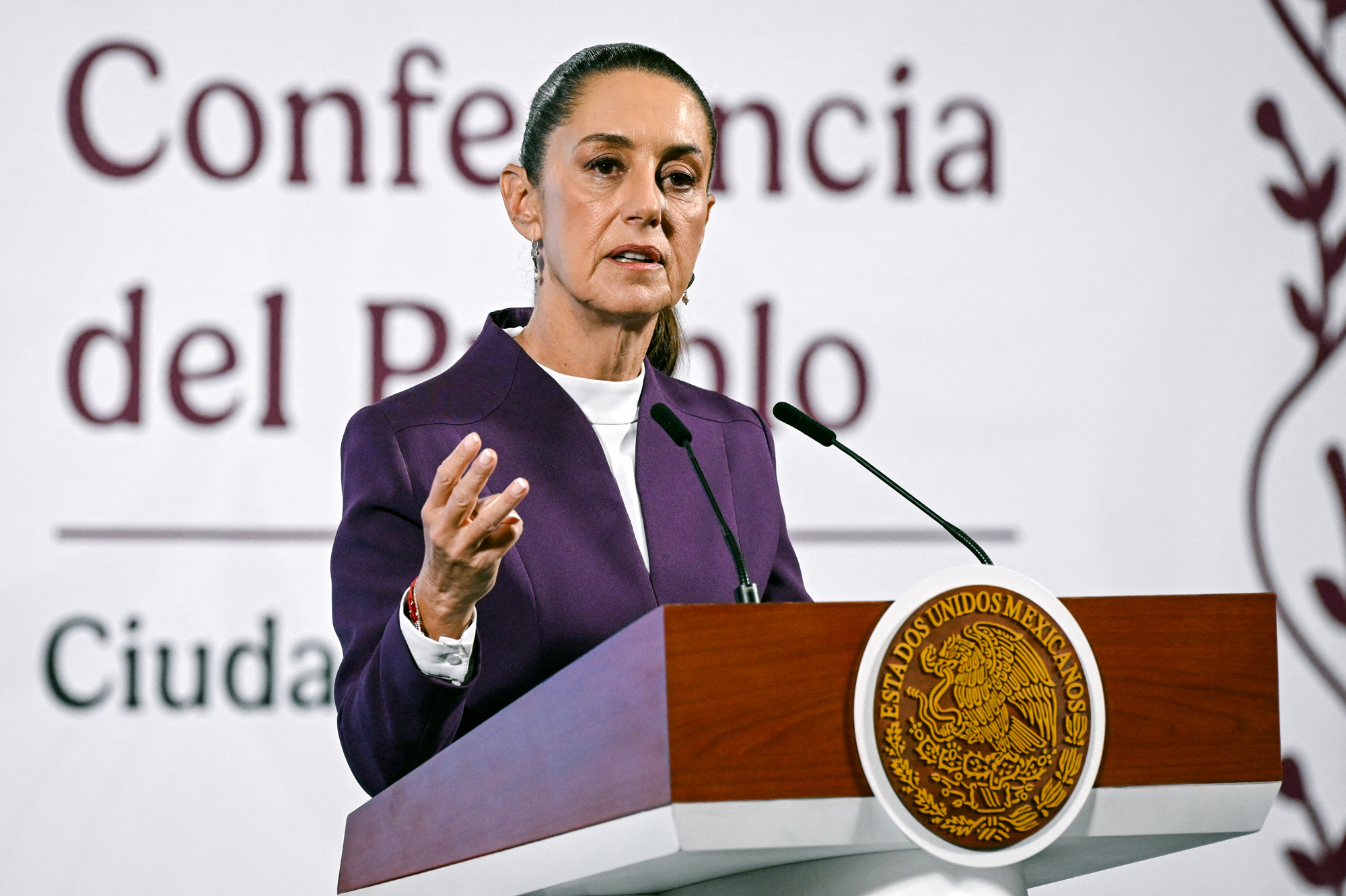

Mexico has frozen bank accounts of former officials accused by the United States of being linked to the powerful Sinaloa cartel, Mexican President Claudia Sheinbaum said in a press conference May 18.
The move was a preventative measure, Sheinbaum said, while announcing she was preparing for a visit later this week with U.S. Department of Homeland Security Secretary Markwayne Mullin and U.S. Office of National Drug Control Policy Director Sara Carter.
Mexican financial authorities have blocked the accounts of Sinaloa Gov. Ruben Rocha and nine other current and former officials who face U.S. charges that they aided drug traffickers.
“Given that there is an arrest warrant in the United States against 10 people, the banks here—because they have relationships with banks there—take a series of measures,” Sheinbaum said during her morning press briefing.
“Automatically, preventively, the UIF does it,” she said, referring to the Mexican government’s financial intelligence unit Unidad de Inteligencia Financiera (UIF).
In a statement posted on X, Rocha strongly rejected the accusations last month, calling them an attack and saying “they lack any truth or foundation whatsoever.”
The U.S. Department of Justice (DOJ) announced in April the charges against the Mexican officials on drug trafficking and related weapons offenses.
“The Sinaloa Cartel is a ruthless criminal organization that has flooded this community with dangerous drugs for decades,” U.S. Attorney for the Southern District of New York Jay Clayton said. “As the indictment lays bare, the Sinaloa Cartel, and other drug trafficking organizations like it, would not operate as freely or successfully without corrupt politicians and law enforcement officials on their payroll.”
The nine other officials are current and former government or law enforcement officials in Sinaloa, including Enrique Inzunza Cazarez, a Mexican senator and former secretary general for Sinaloa; Enrique Diaz Vega, former secretary of administration and finance; Damaso Castro Zaavegra, deputy attorney general for Sinaloa; Marco Antonio Almanza Aviles, former head of the Investigative police for Sinaloa State Attorney General’s Office; Gerardo Merida Sanchez, former secretary of public security for Sinaloa; and Juan de dios Gamez Mendivil, mayor of Culiacan.
The officials are alleged to have participated in activities to help the cartel bring fentanyl, heroin, cocaine, and methamphetamine from Mexico into the United States, according to the DOJ.
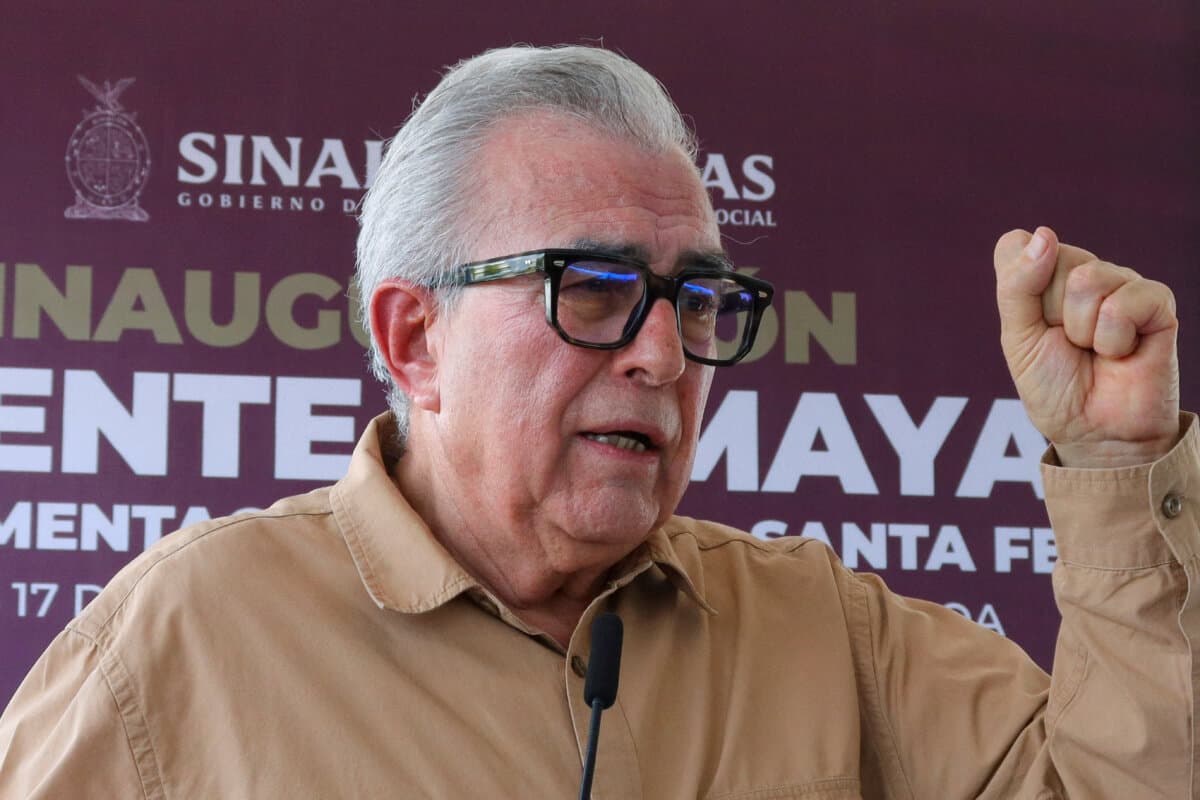
Sinaloa Gov. Ruben Rocha attends the inauguration of the Santa Fe bridge, in Culiacan, Mexico, on July 17, 2025. (David Gaspar/Reuters)
The Sinaloa cartel has transformed the Mexican State of Sinaloa into the geographic epicenter of the global narcotics trade, acting as the distribution center for cocaine and precursor chemicals from China, the DOJ said.
To protect the drug trafficking empire, the cartel allegedly partnered with corrupt politicians and law enforcement in Mexico, including the officials named by the DOJ.
The officials allegedly abused their authority and sold out their offices in exchange for massive bribes.
The DOJ also claims certain police officials in Mexico have directly participated in the cartel’s violence and retribution, including murdering enemies of the cartel.
Mexico’s financial authorities were expected to provide further details on the investigation and future steps in the matter.