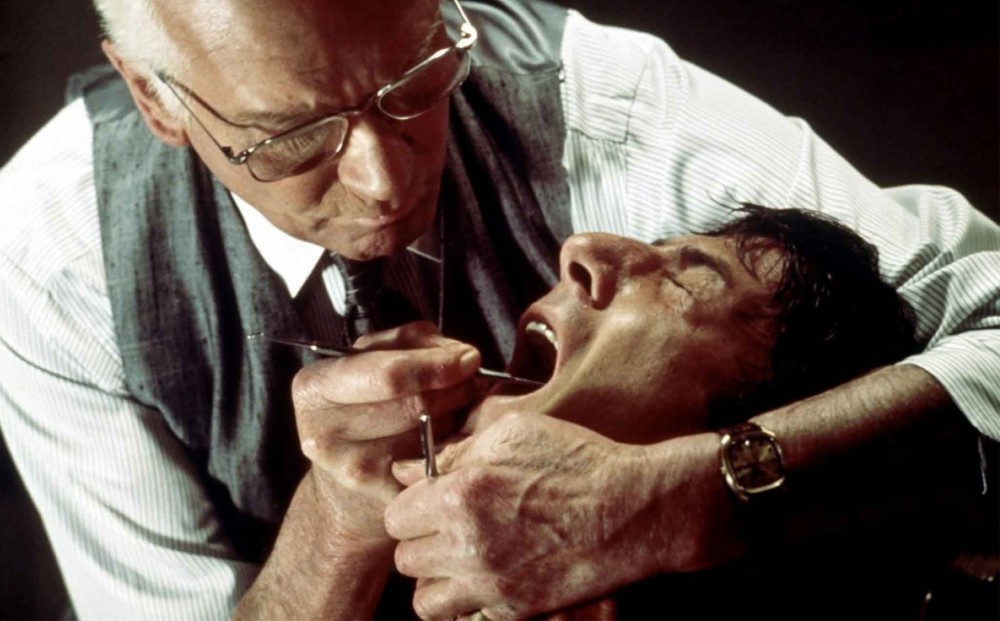
R | 2h 5m | Drama, Action, Mystery, Thriller | 1976
For most people, the music and movies with the greatest staying power for them are those that were released when they were in their early to mid-teens. At least, that’s how it turned out for me. My favorites came out between 1971 and 1976.
For music, it was the Who, Steely Dan, Frank Zappa, and Todd Rundgren. As far as movies were concerned, it was films by Martin Scorsese, Francis Ford Coppola, Clint Eastwood, and Brian De Palma.
Despite winning an Oscar for directing the (overrated) “Midnight Cowboy” (1969), John Schlesinger was the right choice and ultimately achieved greatness with “Marathon Man.”
WWII, the Cold War, and Post-Nixon
Adapted by legendary author William Goldman from his 1974 novel of the same name, “Marathon Man” (1976) was a bridge between the end of World War II and the peak of the Cold War, wrapped up in post-Nixon conspiratorial paranoia.
Dustin Hoffman stars as Thomas “Babe” Levy, a Columbia University grad student. He’s attempting to follow in the footsteps of his historian father, who committed suicide years ago after he was accused of being a communist.
Babe’s older brother, Doc (Roy Scheider), is a successful and refined businessman; he doesn’t share the same reverential memories of and fondness for their father.
Babe thinks Doc is an oil executive, but that’s just a front. Doc actually does “black bag” ops for a rogue intelligence agency that works in tandem with wanted Nazi war criminal Dr. Christian Szell (Sir Laurence Olivier).
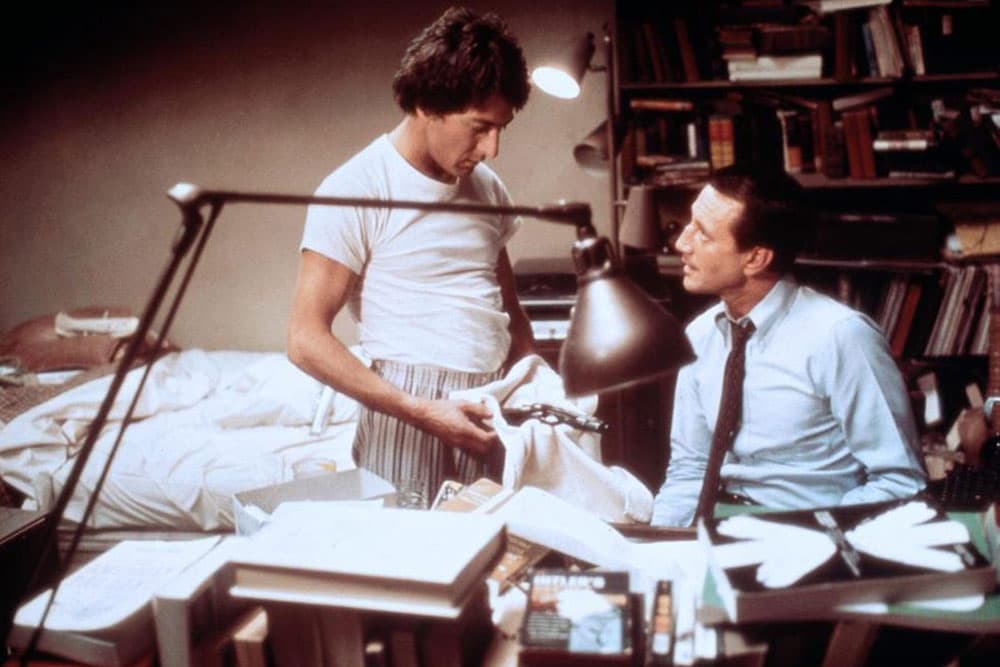
Babe (Dustin Hoffman, L) and Doc (Roy Scheider), in "Marathon Man." (Paramount Pictures)
Diamonds Are Forever
After an event in the extended opening scene which results in the death of his brother, Szell (based on real-life Nazi Josef Mengele) must travel to New York City to retrieve his cache of diamonds stashed in a safety deposit box. The diamonds were payment to him from Jews imprisoned in concentration camps who wished to buy their freedom.
An interesting factoid: Two years after “Marathon Man,” Olivier co-starred opposite Gregory Peck in “The Boys from Brazil.” In that film, Peck played Mengele, and Olivier was a fictional Nazi hunter based on Simon Wiesenthal.
The narrative is solid throughout, but the opening act is the strongest. This is due in part to Goldman’s strategic parceling of clues and initially unconnected events. Even with repeated viewings (which I highly recommend), piecing everything together is a challenge, but in the best possible way.
Although Hoffman and Olivier rule the roost whenever on the screen, three supporting performances make them look even better.
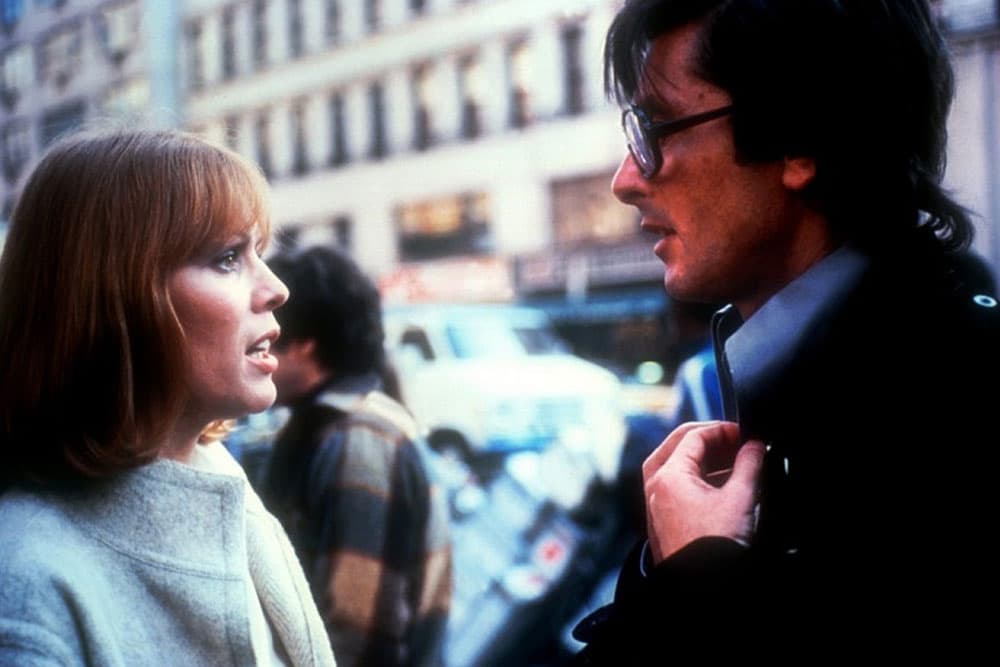
Actress Marthe Keller and producer Robert Evans on the set of "Marathon Man." (Paramount Pictures)
Leader of the Pack
Leading the pack is Scheider, whose character is the polar opposite in every possible way to the humble and soft-spoken sheriff he played the year before in “Jaws.” Blustery, snobbish, elitist, and unafraid to speak his mind, Scheider’s Doc offers perfect contrast to Babe’s slightly naïve, semi-gullible optimist.
Nearly impossible to peg is William Devane as Peter Janeway, a confidant of Doc and something of a fixer. His true alliances aren’t revealed until late in the third act.
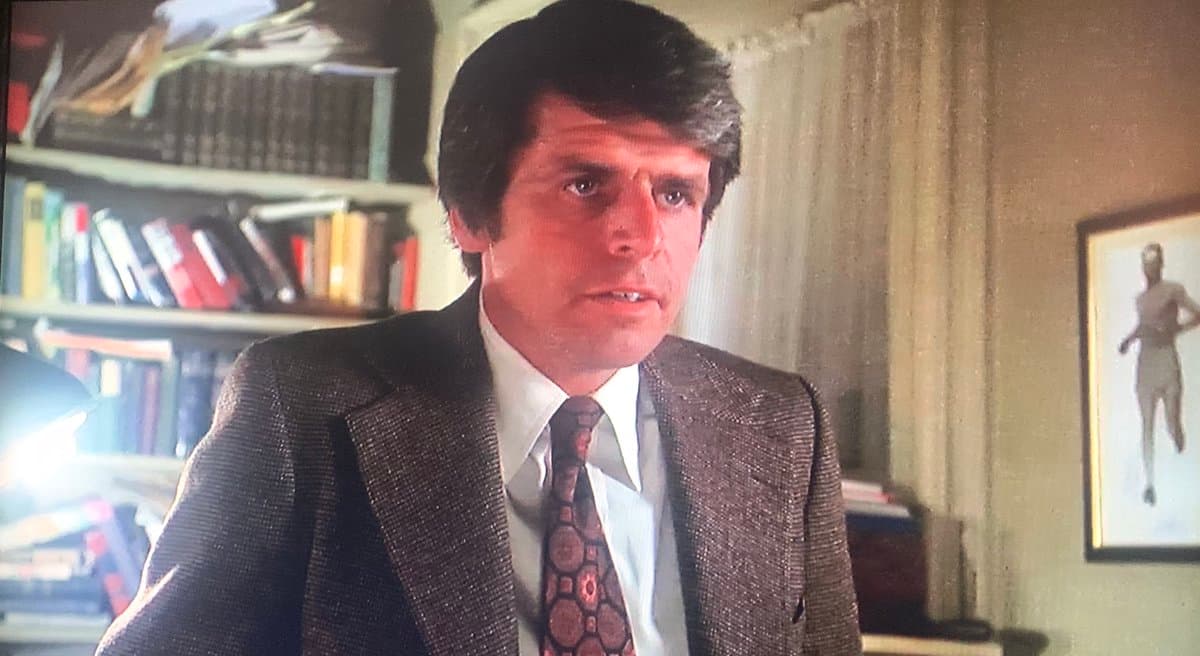
Peter Janeway (William Devane), in "Marathon Man." (Paramount Pictures)
The only female cast member with more than a line or two of dialogue, Swiss actress Marthe Keller is remarkable in her nuanced and understated performance as Elsa.
Exquisitely playing hard-to-get at first, Elsa eventually becomes Babe’s girlfriend, but the romance hits a roadblock during a contentious lunch with Babe and Doc. As with Janeway, Elsa’s motives and allegiances aren’t fully made clear even after her last words are uttered.
According to the bonus feature documentary on the DVD, Keller spoke no English prior to filming and learned her lines phonetically.
Script Doctor Towne
Without giving anything whatsoever away, screenwriter Robert Towne (who won an Academy Award for “Chinatown”) was brought in by co-producer Robert Evans to provide a different ending to the movie, supposedly because Hoffman didn’t like Goldman’s version.
It’s worth noting that, had Hoffman not signed on to star in the movie, it likely wouldn’t have been made. His casting guaranteed the needed funding for the production.
In retrospect, I totally agree with Hoffman, Evans, and Towne. The ending of the movie is far more satisfying and fitting than what happens in Goldman’s novel. The movie keeps Babe philosophically “pure,” as opposed to the novel, which paints him as a somewhat hell-bent, merciless revenge seeker.
Second only to “Little Big Man,” my all-time favorite movie, Hoffman’s resourceful everyman performance here is one of his finest.
The film is available on home video and to stream on multiple platforms (go to justwatch.com).
‘Marathon Man’
Director: John Schlesinger
Stars: Dustin Hoffman, Laurence Olivier, Roy Scheider, Marthe Keller, William Devane
Running Time: 2 hours, 5 minutes
MPAA Rating: R
Release Date: Oct. 8, 1976
Rating: 5 stars out of 5
What arts and culture topics would you like us to cover? Please email ideas or feedback to features@epochtimes.nyc