
French President Emmanuel Macron has landed in Beijing to start a three-day state visit, where trade and the war in Ukraine are set to take center stage.
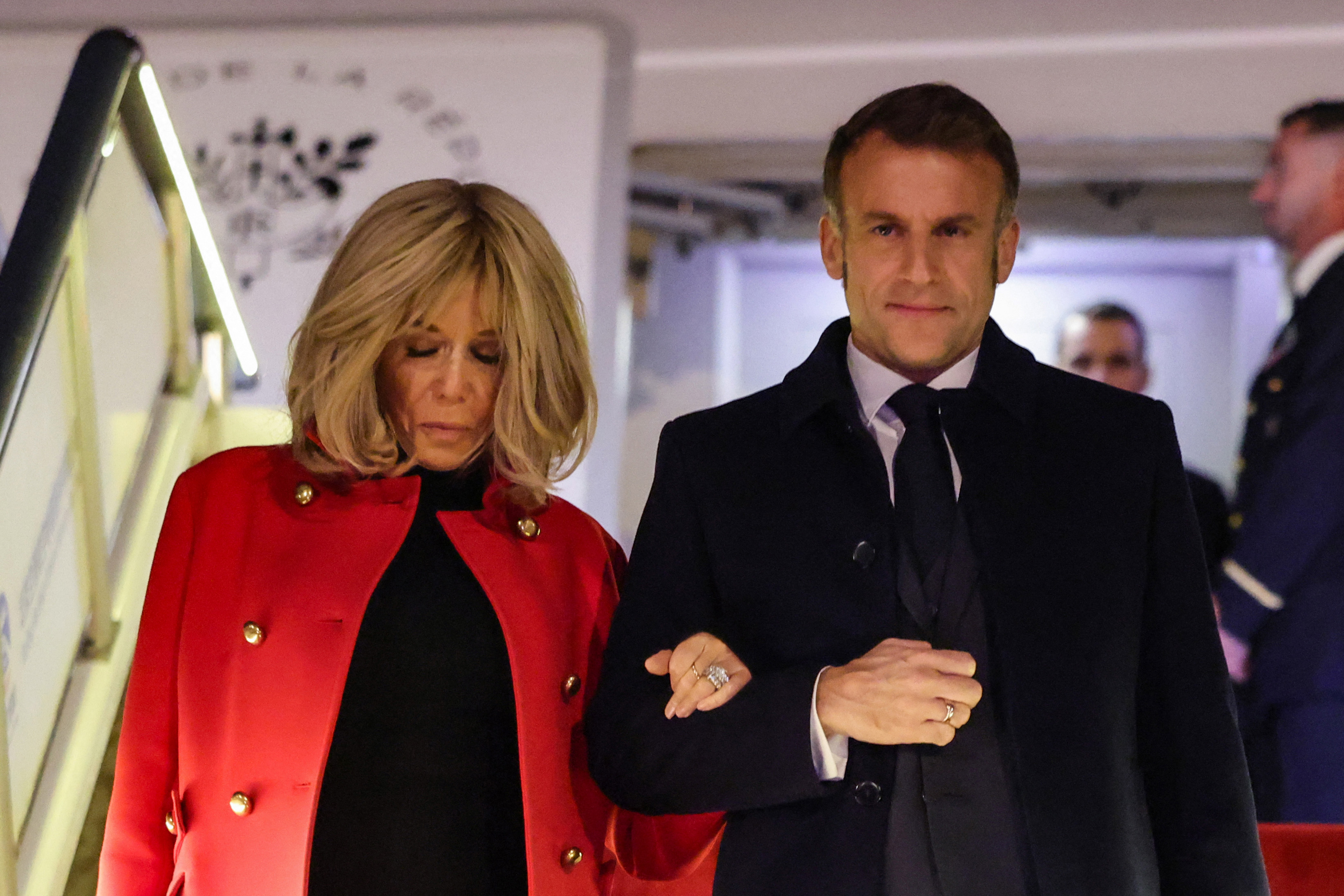
Upon arrival at the Capital International Airport on the evening of Dec. 3, Macron and his wife, Brigitte, were greeted by Wang Yi, China’s top diplomat, according to videos released by China’s state media.
Macron is accompanied by a delegation of senior French officials, including Foreign Minister Jean-Noël Barrot, alongside a group of business leaders such as Henri Poupart-Lafarge, the CEO of French train giant Alstom.
The French leader’s visit comes on the heels of European Commission President Ursula von der Leyen’s July trip, during which she told Chinese leader Xi Jinping that the relations between Beijing and the 27-nation bloc had reached an “inflection point.”
The trip also comes amid concerns in Brussels over the widening gap in trade, reaching a deficit of 305 billion euros ($358 billion) in 2024. With China’s exports to the United States declining following additional tariffs imposed by U.S. President Donald Trump, EU leaders are increasingly worried about cheap Chinese products being dumped on the EU market, undermining local businesses and jobs.
China’s customs data showed that, in the first 10 months of this year, exports to the EU exceeded its imports by $241.6 billion—a 19 percent increase compared with the same period last year. Specifically, the trade surplus with France stood at $10.6 billion in the January–October period, a nearly 31 percent increase from the same period last year.
In addition to trade, the war in Ukraine is expected to be on Macron’s agenda. Before departing for Beijing, Macron reaffirmed France’s long-standing support for Ukraine after hosting Ukrainian President Volodymyr Zelenskyy in Paris on Dec. 1.
The Chinese Communist Party (CCP) has been accused of aiding Russia’s invasion of Ukraine by supplying equipment and tools that have both civilian and military applications.
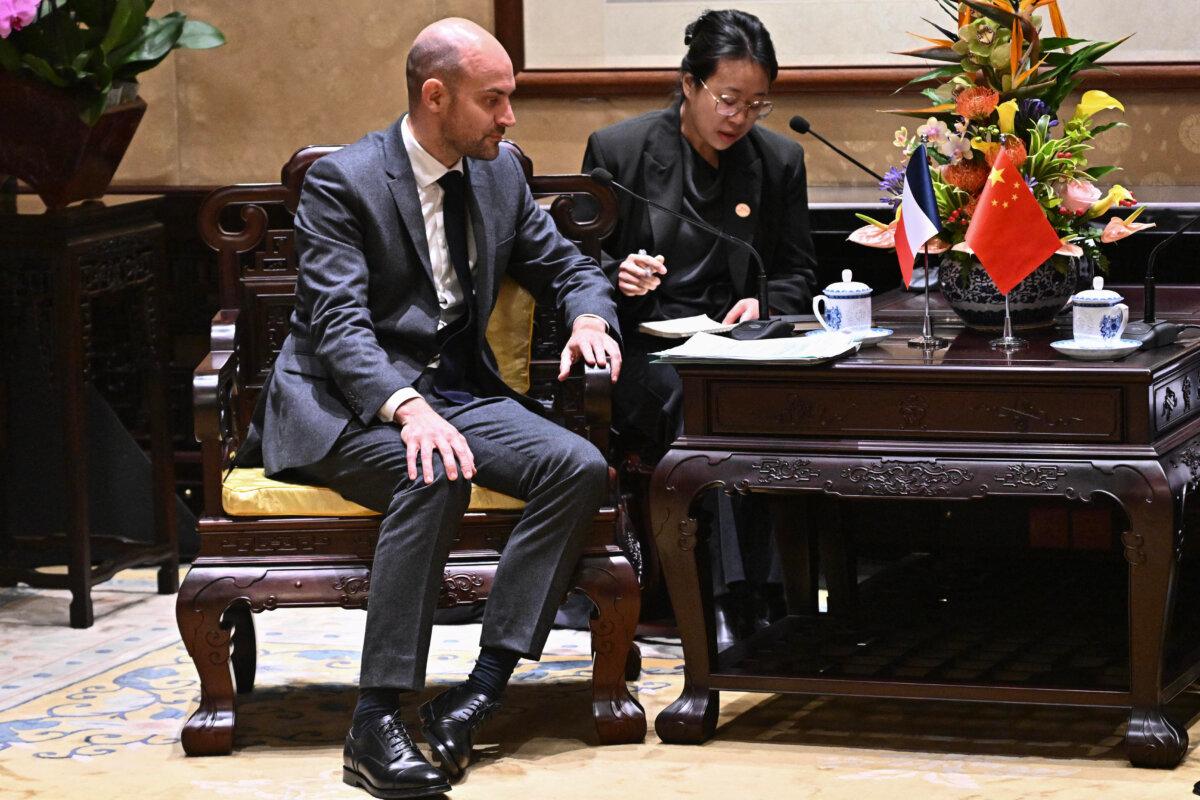
French Foreign Affairs Minister Jean-Noël Barrot (L) attends a meeting with China's Foreign Minister Wang Yi (not pictured) at the Diaoyutai State Guesthouse in Beijing on Dec. 3, 2025. (Pedro Pardo/POOL/AFP via Getty Images)
On Dec. 3, the two countries’ top diplomats had a meeting in Beijing, during which they exchanged views on the Ukraine crisis, among other issues, according to both sides.
Wang also laid out Beijing’s position regarding the Japanese prime minister’s recent remarks on Taiwan, which his ministry opposed. Wang told Barrot he hoped France would support China’s position, according to the ministry.
The French summary of the meeting didn’t mention Taiwan. Instead, it said that Barrot emphasized the shared responsibility of France and China as permanent members of the United Nations Security Council and the need to address threats to global security and stability.
The CCP has dialed up diplomatic pressure on Tokyo, demanding a retraction of the remarks by Japanese Prime Minister Sanae Takaichi, who linked a Taiwan contingency to potential existential threats to Japan.
The CCP has never ruled Taiwan but views the island as a breakaway province and refuses to rule out the use of force to seize the self-ruled democracy, which is only 68 miles from Japan.
During the visit, Macron is set to sit down with Xi and discuss “major international and regional hotspot issues,” according to China’s foreign ministry.
Macron will also meet with Premier Li Qiang and Zhao Leji, head of the National People’s Congress, the country’s rubber-stamp legislature, the foreign ministry said on Dec. 1.
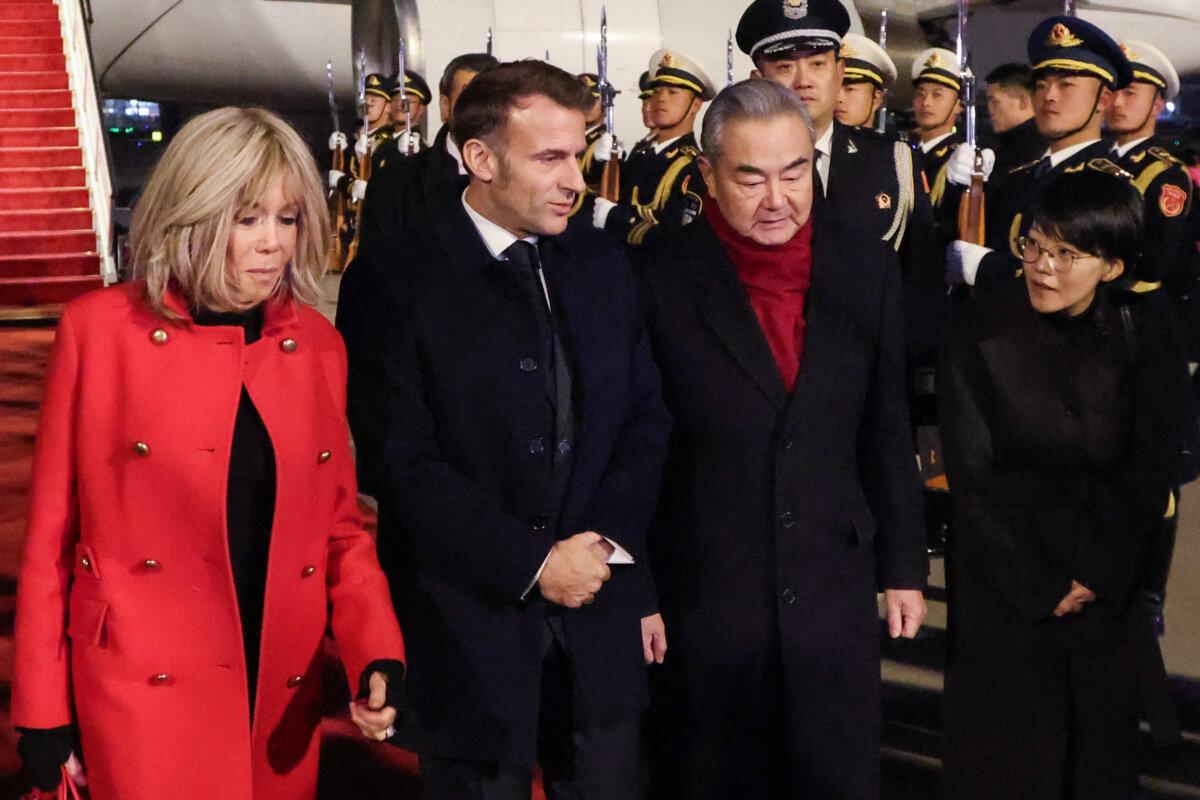
China's Foreign Minister Wang Yi (2nd R) receives France's President Emmanuel Macron (2nd L) and his wife Brigitte Macron (L) upon their arrival at the Capital International Airport in Beijing on Dec.3, 2025. (Ludovic Marin/POOL/AFP via Getty Images)
Rights advocates have asked Macron to voice human rights concerns with Xi and other CCP leaders when their meetings start in Beijing on Dec. 4.
Human Rights Watch, in a Dec. 3 statement, said that the regime has increasingly extended its oppressive campaign beyond China’s borders, seeking to suppress criticism and enforce ideological control in foreign countries such as France.
“Millions of people in China, France, and the EU continue to bear the weight of Beijing’s repression and abuses,” Bénédicte Jeannerod, the rights group’s France director, said in a statement.
“Macron should stop trying to justify France’s silence on rights and make clear that the Chinese government’s repression affects many core French and EU interests, and that China needs to reverse course to maintain strong relations.”