
Federal prosecutors say the Virginia man accused of planting pipe bombs outside the Democratic and Republican national committee headquarters on the eve of the Jan. 6, 2021, Capitol breach confessed to building and placing the devices.
Meanwhile, defense counsel has moved to obtain material that could test the government’s account.
In a court filing submitted on Dec. 28, U.S. Attorney for the District of Columbia Jeanine Pirro said that Brian Cole Jr., 30, admitted during a post-arrest interview that he built and planted the two improvised explosive devices, describing his actions as the result of mounting political anger after the 2020 election.
He told investigators that “something just snapped” in him after “watching everything, just everything getting worse,” the filing reads.
Submitted in support of the government’s request to keep Cole jailed pending trial, the document lays out what prosecutors describe as a detailed confession, including how the devices were constructed, transported, and placed outside the Democratic National Committee and Republican National Committee buildings the night before the Jan. 6 Capitol breach.
In a Dec. 29 filing in the U.S. District Court for the District of Columbia, Cole’s counsel, John Shoreman, asked for extensive discovery and exculpatory material, signaling a potential challenge to the government’s account of his statements and the evidence identifying him as the suspect.
Cole’s attorney did not respond to a request for comment on the statements attributed to Cole in the Dec. 28 filing or on the charges against him more broadly by publication time.
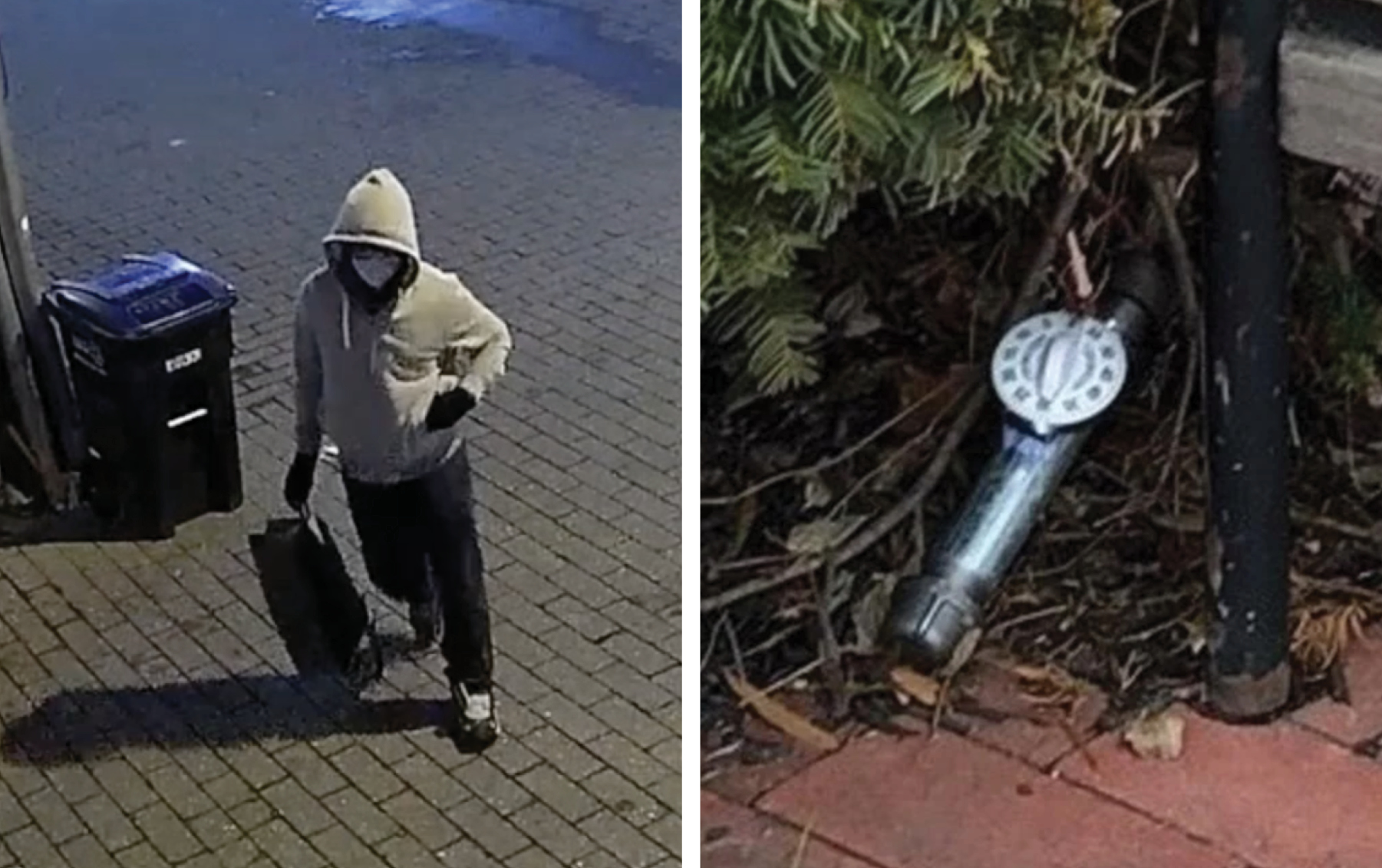
Cole, who was arrested on Dec. 4, initially denied involvement but later admitted that he was the masked individual seen on surveillance video footage placing the devices on Jan. 5, 2021, according to the filing. Investigators said he walked agents through how he made the bombs, how he transported them into Washington, and why he chose the locations.
Cole told agents that he learned to manufacture black powder from watching YouTube videos and that he packed the powder into metal pipes sealed with end caps. He said he drilled holes for fuses, wired the devices using kitchen timers instead of alarm clocks because they were easier to use, and powered them with batteries, according to court documents.
According to prosecutors, Cole said he carried the devices in a shoebox in the back seat of his 2017 Nissan Sentra and wore a hood, mask, and gloves. They said he told investigators that he used Google Maps to scout the areas near the Democratic National Committee and Republican National Committee headquarters and set each timer for roughly 60 minutes before walking away.
Surveillance footage released by the FBI showed a hooded individual moving between the two party headquarters on the evening of Jan. 5, 2021, carrying a backpack and stopping briefly at each location.
When asked about his motive, Cole said his frustration had built after watching political tensions worsen following the 2020 election, according to prosecutors. He allegedly told agents that he believed that grievances on all sides were being dismissed and that leaders in both major parties bore responsibility.
Prosecutors said Cole said that “something just snapped” and that he wanted to do something directed at the political parties because “they were in charge.” He told investigators that he disliked both parties and that he traveled to Washington not to attend the Jan. 6 protests but to plant the bombs, according to prosecutors.
Cole said he had not tested the devices, which ultimately failed to explode, they said.
“He claimed that when he learned that the devices did not detonate, he was ‘pretty relieved,’ and asserted that he placed the devices at night because he did not want to kill people,” the filing states. “After seeing himself on the news, the defendant stated that he discarded all the bombmaking materials he had at a nearby dump.”
The FBI has repeatedly said the devices, which were safely defused on Jan. 6, 2021, as Congress was meeting to certify the 2020 election results, were viable and could have blown up.
“Fortunately, these bombs did not explode, although they certainly could have,” Darren Cox, assistant director in charge of the FBI Washington Field Office, said on Dec. 4.
Cole’s arrest was the first major breakthrough in a case that had gone unsolved for nearly five years, despite a $500,000 FBI reward and extensive public appeals. Investigators ultimately identified Cole through a review of existing evidence rather than new tips, officials said.
“Today’s arrest happened because the Trump administration has made this case a priority,” Attorney General Pam Bondi said at a Dec. 4 briefing in Washington. “There was no new tip, there was no new witness, just good, diligent police work and prosecutorial work.”
FBI Director Kash Patel said at a briefing in early December that a new team of investigators had pored over “3 million lines of information” as part of the renewed probe.
This included a review of 233,000 sales of the type of black endcaps used to build the bomb and cross-checking them against purchases of pipe, wires, and other materials, according to Pirro.
Cole, who works in the office of a bail bondsman and lives with family members in northern Virginia, has been charged with transporting explosive devices across state lines with the intention to harm or kill and with attempted destruction of property used in interstate commerce.
Prosecutors have said he poses a continuing danger and are seeking to keep him jailed pending trial. A detention hearing is scheduled for Dec. 30.