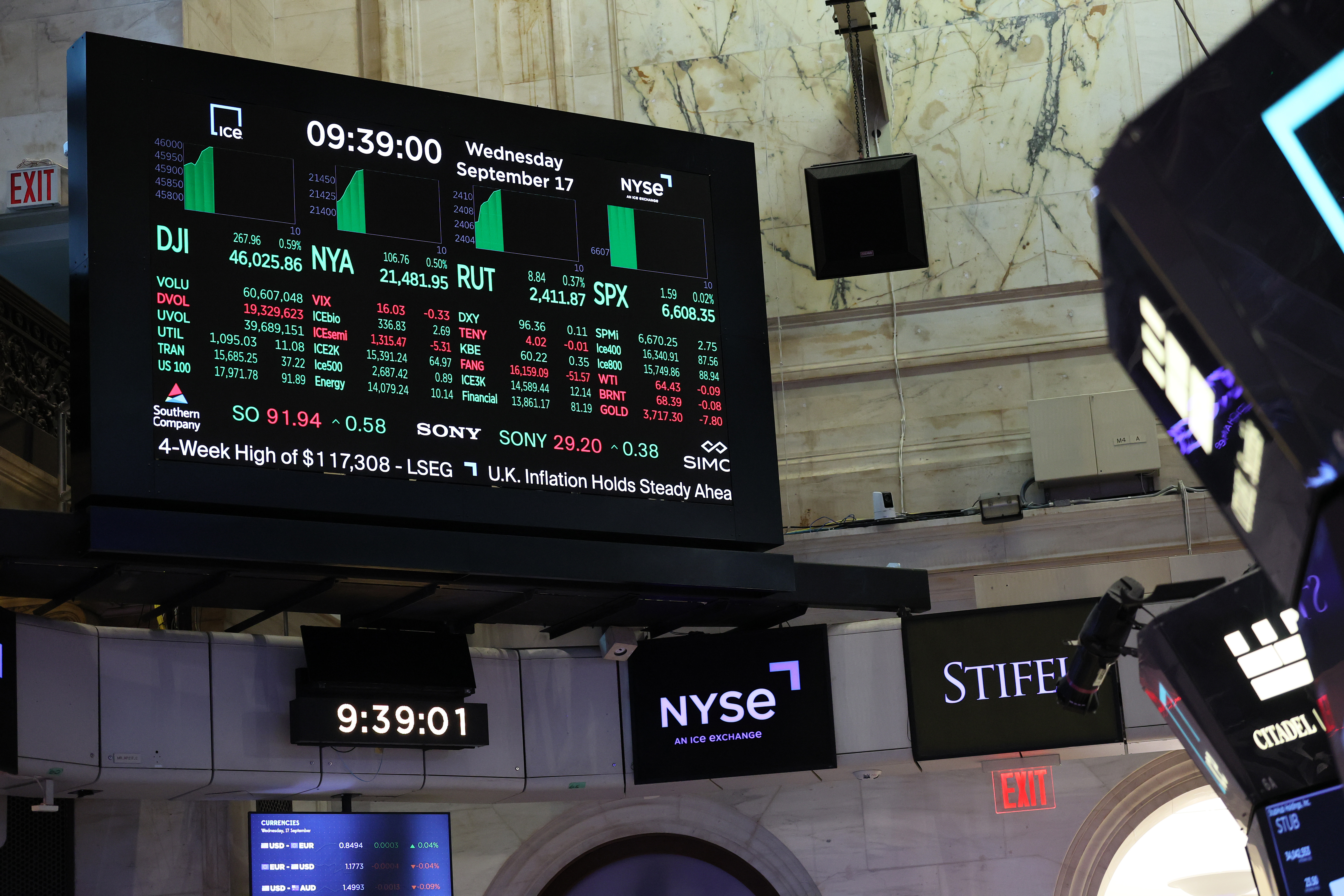

The Current Market Backdrop: A Snapshot of What Matters
For investors to make informed decisions, it’s vital to understand the macroeconomic environment. Currently, these key factors are influencing the market:
A New Era of Monetary Policy With the Fed’s Pivot
As part of its easing cycle, the Federal Reserve has begun to loosen monetary policy. In mid-September, the Fed lowered its federal funds rate to 4.00–4.25 percent, signaling that more cuts could be coming. Generally, lower interest rates boost corporate profits and make borrowing cheaper, which tends to increase risk assets, such as stocks.
Although Inflation Is Moderating, It’s Not Gone
While inflation has eased since its peak, it remains above the Fed’s long-term target. In August 2025, the Consumer Price Index (CPI) showed headline inflation of 2.9 percent year-over-year, while core measures, which exclude volatile food and energy prices, were higher.
Lingering Risks and a Strong Rally in Equities
In 2025, the S&P 500 has posted double-digit returns year-to-date. Notably, for Q3 2025, (year-over-year) earnings growth for the S&P 500 is estimated at 7.7 percent. If this growth rate holds, the index will have grown earnings for nine consecutive quarters.
Divergent Market Outlooks
With corporate earnings expected to rise and future Fed rate cuts likely, major banks and investment firms have raised their S&P 500 price targets. For example, Goldman Sachs recently raised its S&P 500 targets, reflecting a more dovish stance from central banks. Others, however, warn of a potential slowdown. In the coming months, uncertainty and volatility are likely to increase due to this lack of unified consensus.
Why Rebalance Now? Three Practical Reasons
In addition to being an essential technical exercise, rebalancing is a strategic decision to manage risk and maintain an aligned portfolio. If you’re still not convinced, here are three compelling reasons to give it a try:
You’ve Probably Shifted Your Asset Mix
You might have a portfolio with more equity than you intend if stocks outperformed bonds during the past year. For example, a portfolio with a 60 percent stock/40 percent bond mix is now closer to 68 percent stock/32 percent bond. In other words, you’re taking on more risk than you intended. As you rebalance to your target allocation, you will be forced to “sell high and buy low,” a core principle of successful investing.
Keep the Upside and Crystallize the Gains
You can capitalize on your profits without missing out on future gains by rebalancing after a significant market run. If you reinvest some of the proceeds from your winning investments, you can reduce your risk exposure by investing in high-quality bonds, cash, and undervalued sectors.
Review Your Investment Assumptions
From a massive inflation spike to a significant Fed tightening cycle, the last few years have been a whirlwind of economic changes. It’s possible that the assumptions you made when setting your target asset mix, such as expected returns, volatility, and the correlation between different asset classes, are no longer valid.
A Tactical Playbook for Rebalancing Into 2026
Putting together a rebalancing strategy is the key to success. To make it easier for you, here’s a step-by-step guide.
Your Target Allocation and Risk Tolerance Need to Be Reconfirmed
Before making a single trade, review your target asset allocation (e.g., 60 percent stocks/40 percent bonds). Consider the following:
- Have my financial goals changed? For example, is retirement close?
- Do I have a shorter or longer time horizon?
- Do I have a different tolerance for risk now? Is market volatility more uncomfortable for me?
It may be necessary to adjust your target allocation if any of these factors have changed. By aligning your rebalancing efforts with your overall financial plan, this foundational step is crucial.
Your Portfolio Should Be Tier-Based
Think about structuring your portfolio into three distinct categories:
- Core (Buy-and-Hold). You hold these broad market ETFs and index funds for the long run, which make up the majority of your portfolio. To maintain your target allocation, this part of your portfolio will be rebalanced periodically.
- Tactical (Opportunity). You can allocate a smaller portion of your portfolio (5-15 percent) to specific sectors, international markets, or undervalued small-cap stocks. As a result, you can selectively take advantage of opportunities without disrupting your overall strategy.
- Defensive (Risk Control). In this bucket, you can find assets such as cash, short-duration bonds, or Treasury Inflation-Protected Securities (TIPS). In a slowing economy, holding a defensive sleeve can provide liquidity and help dampen volatility.
Rebalance With Intent
Buy short-duration bonds or cash equivalents to trim risk if stocks are up 15-20 percent YTD and you’re 10 points overweight. If you’re underweight international or value and they have underperformed, consider rebalancing gradually (dollar-cost average over 3–6 months).
Be Tax-Aware
When it comes to taxable brokerage accounts, taxes are a critical consideration.
- Use tax-advantaged accounts first. A 401(k) or IRA allows you to swap assets within the account, making rebalancing tax-free and straightforward.
- Harvest losses. To offset capital gains, you can sell assets at a loss in taxable accounts, a strategy known as tax-loss harvesting. These sales can help rebalance your portfolio.
- Avoid realizing unnecessary gains. When triggering significant capital gains, be mindful of your future tax bracket, especially if you expect to stay in the same or lower bracket.
Consider Your Bond Positioning
Although bond prices have room to rally following the Fed’s rate cut, yields remain attractive compared with previous years.
- Short-to-intermediate duration. In addition to providing a balanced income stream, this strategy is less sensitive to interest rates.
- TIPS or high-quality corporates. You can protect yourself from inflation by adding TIPS if you’re still worried about persistent inflation. In addition to offering a yield premium over government bonds, high-quality corporate bonds can also present a manageable risk.
Sector and Factor Tilts
When growth slows, defensive sectors (healthcare, consumer staples) help, while cyclical sectors (financials, industrials) benefit from a reacceleration of growth.
When to Avoid Aggressive Rebalancing
In general, rebalancing is a good practice, but there are times when it’s better to hold back:
- When you’re in accumulation mode. Instead of selling winners and triggering taxes, younger investors may benefit from using new contributions to gradually rebalance their portfolios.
- If transaction costs are high. Small accounts and illiquid holdings may incur high transaction costs when rebalances are frequent.
Key Rules That Work in Every Cycle
Your rebalancing efforts can be guided by a few timeless rules, no matter what the market is doing:
- Establish a schedule and a threshold. You should not rebalance on a whim; instead, follow a schedule (e.g., quarterly or semi-annually) and a threshold (e.g., rebalance after an asset class drifts more than 5 percentage points from its target).
- Rebalancing is not market-timing. It is not about predicting the next move of the market, but about managing risk.
- Maintain a cash buffer. If you hold a small cash position (2–5 percent of your portfolio), you will be able to take advantage of dips without having to sell other assets prematurely.
- Document your rationale. You should write down your reasons for rebalancing. By doing this, you can avoid second-guessing yourself later on.
Final Verdict: A Prudent Move
Is it time to rebalance? The answer to this question is a thoughtful yes for most investors. As a result of a strong equity run and a shifting monetary policy landscape, rebalancing is a prudent risk management measure. With a rebalanced portfolio, tax awareness, and bonds and cash to dampen volatility, you can position yourself to navigate the uncertainties of 2026.