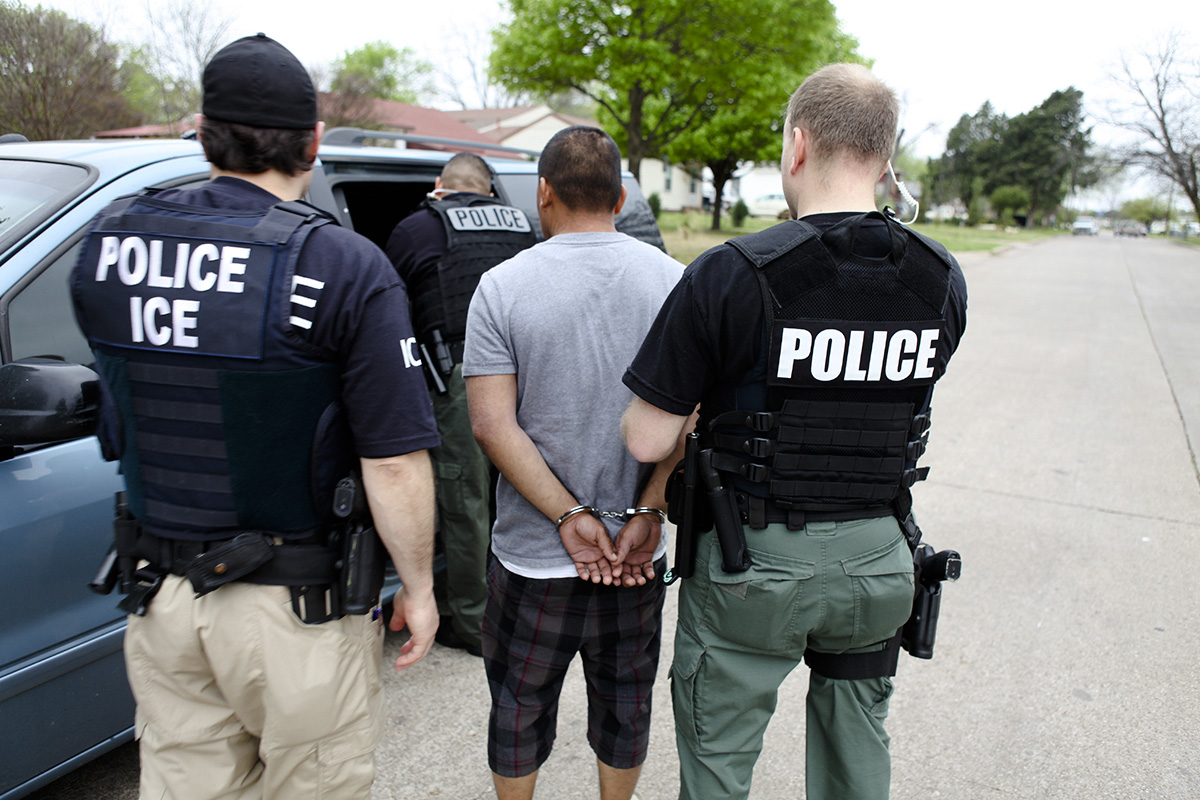

The acting director of Immigration and Customs Enforcement (ICE) signaled a crackdown on companies that hire illegal immigrants and said agents will arrest anyone in the country illegally, regardless of whether they have a criminal record.
ICE acting Director Todd Lyons told CBS News in an interview on July 20 that the Trump administration would persist in immigration enforcement at worksites, adding that there is no executive mandate that bans those actions.
ICE operations would be based on criminal warrants against companies that are believed to be hiring illegal immigrants, he said, noting that in some cases, companies are relying on child labor and engaging in human trafficking. Such actions are not victimless crimes, he added.
“Not only are we focused on those individuals that are working here illegally, we’re focused on these American companies that are actually exploiting these laborers, these people that came here for a better life,” he said.
Lyons added that federal agents will prioritize finding, arresting, and deporting “the worst of the worst,” such as illegal immigrants who have been convicted of serious crimes. However, ICE agents will apprehend any illegal immigrants regardless of whether they have convictions.
Lyons said that although ICE would rather focus all of its limited resources on that to “take them into custody,” the agency has to “go out into the community and make those arrests, and that’s where you are seeing [that] increase,” referring to individuals who are arrested but were not the original target of an ICE operation.
Should ICE agents find someone who is in the country illegally, they will take that person into custody, Lyons said in the interview, which was his first televised one since he became acting director in March.
During the 2024 campaign, President Donald Trump said he would make the large-scale deportations of illegal immigrants a priority. Both he and Vice President JD Vance have argued that mass illegal immigration into the United States would lead to long-term, serious consequences.
Starting in January, Trump signed several executive orders related to immigration and the U.S.–Mexico border, including ones ending automatic birthright citizenship, declaring a national emergency at the southern border, and designating certain transnational gangs and cartels as terrorist organizations. A number of lawsuits have been filed by immigrant groups, the American Civil Liberties Union, and others against the Trump administration over those orders.

In an aerial view from a helicopter, detainees are seen at Krome Detention Center, run by Immigration and Customs Enforcement in Miami, on July 4, 2025. (Alon Skuy/Getty Images)
The administration’s border czar, Tom Homan, has repeatedly said the priority is removing illegal immigrants involved in crimes beyond immigration offenses from the United States, but he has signaled that collateral arrests remain a real possibility during enforcement operations.
The Department of Homeland Security, which oversees ICE, has said that illegal immigrants who don’t want to be caught up in ICE operations should self-deport through a Customs and Border Protection app, making them eligible both for a $1,000 bonus and to apply to come back to the United States legally.
“ICE is always focused on the worst of the worst,” Lyons told CBS News. “One difference you'll see now is under this administration, we have opened up the whole aperture of the immigration portfolio.”