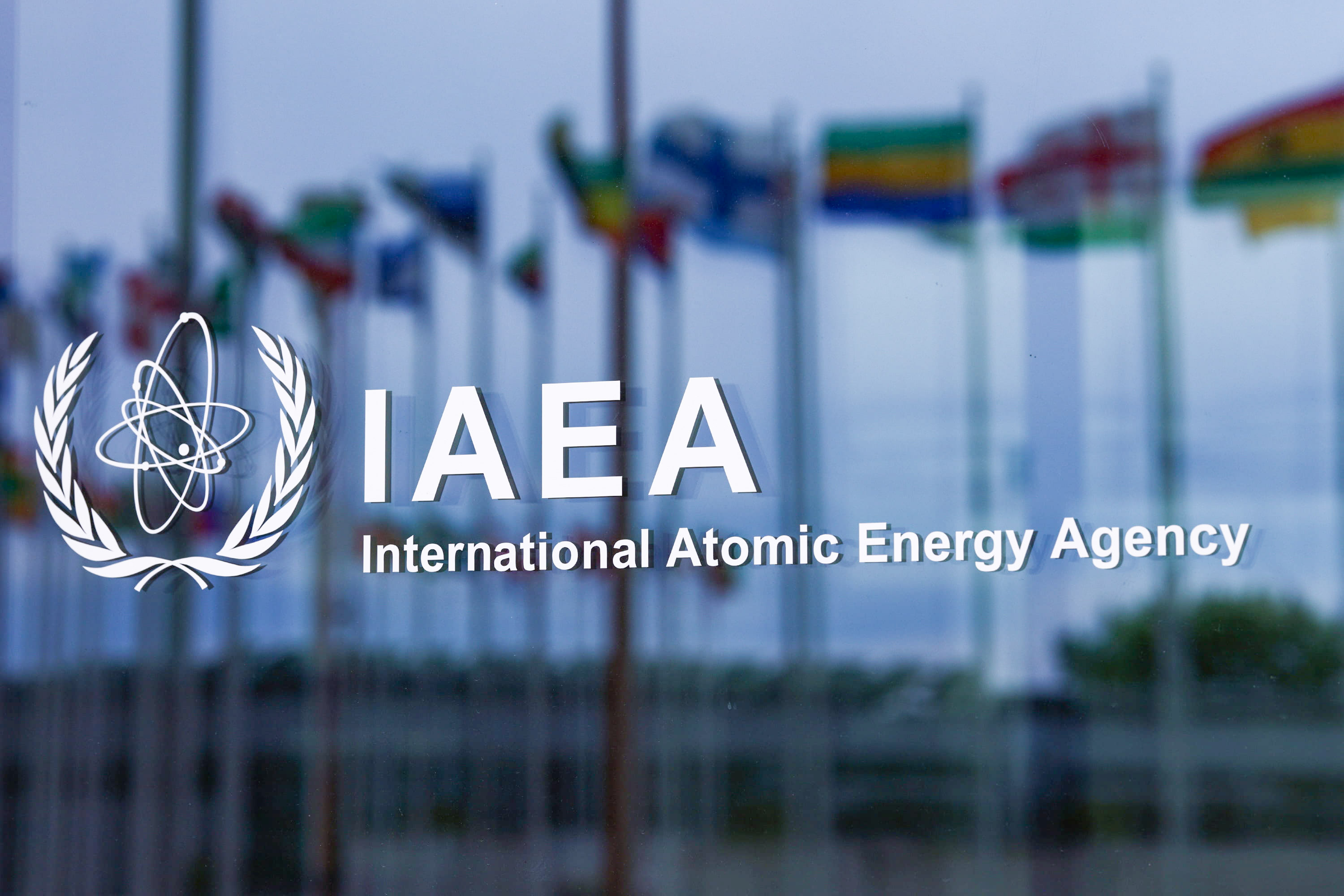

The International Atomic Energy Agency (IAEA) has pulled the last remaining inspectors it had in Iran out of the country, it announced on July 4.
The move comes amid escalating tensions between the United Nations nuclear watchdog and the regime in Tehran.
“An IAEA team of inspectors today safely departed from Iran to return to the Agency headquarters in Vienna, after staying in Tehran throughout the recent military conflict,” the organization said on social media platform X.
A follow-up post added that IAEA Director General Rafael Grossi reiterated the crucial importance of discussing ways for the watchdog to resume its “indispensable monitoring and verification activities in Iran as soon as possible.”
The IAEA has been unable to inspect any of the nuclear facilities in the Islamic Republic since Israel launched its first salvo of strikes on the country three weeks ago.
The Jewish state was later joined by the United States in the bombing campaign, which hit nuclear facilities at Fordow, Natanz, and Esfahan.
After the airstrikes, U.S. Defense Secretary Pete Hegseth, top U.S. intelligence officials, and U.S. President Donald Trump said that Iran’s nuclear enrichment capabilities were severely degraded.
In the intervening weeks, Iran has issued several statements rebuking the IAEA and accusing Grossi of acting in a biased manner.
As a result, Tehran formally suspended cooperation with the watchdog earlier this week. Its parliament passed a resolution that the IAEA cannot enter the country unless it can guarantee the security of Iran’s nuclear facilities.
The IAEA said on July 2 that Iran has not yet officially notified it of any decision to suspend cooperation.
Iran has also accused the watchdog of creating a pretext for the bombing campaign by issuing a report on May 31 that led to a resolution by its board of governors, which labeled the Islamic Republic in breach of its obligations under the nuclear nonproliferation treaty.
Grossi has said he stands by the report, denying that it provided diplomatic cover for military action.
Before the strikes, the IAEA said that Iran had been enriching its uranium to 60 percent, namely at the Fordow site that the United States bombed in late June.
Last month, meanwhile, it said it had concerns about the roughly 900 pounds of enriched uranium, noting that under the 2015 deal, Iran was permitted to enrich its uranium to less than 4 percent.
Israel and the United States have long said that Iran is using its nuclear program to attempt to create nuclear weapons.
Israeli Prime Minister Benjamin Netanyahu said in June that his country’s airstrikes were meant to prevent the regime from quickly obtaining such a device.
Jack Phillips contributed to this report.