
President Donald Trump signaled that health care would be a primary focus of a second term well before the 2024 election.
“We want every child in America to grow up and to live a long and healthy life,” Trump said when introducing longtime health advocate Robert F. Kennedy Jr. to his campaign.
Here’s how that played out in Trump’s (second) first year in office.

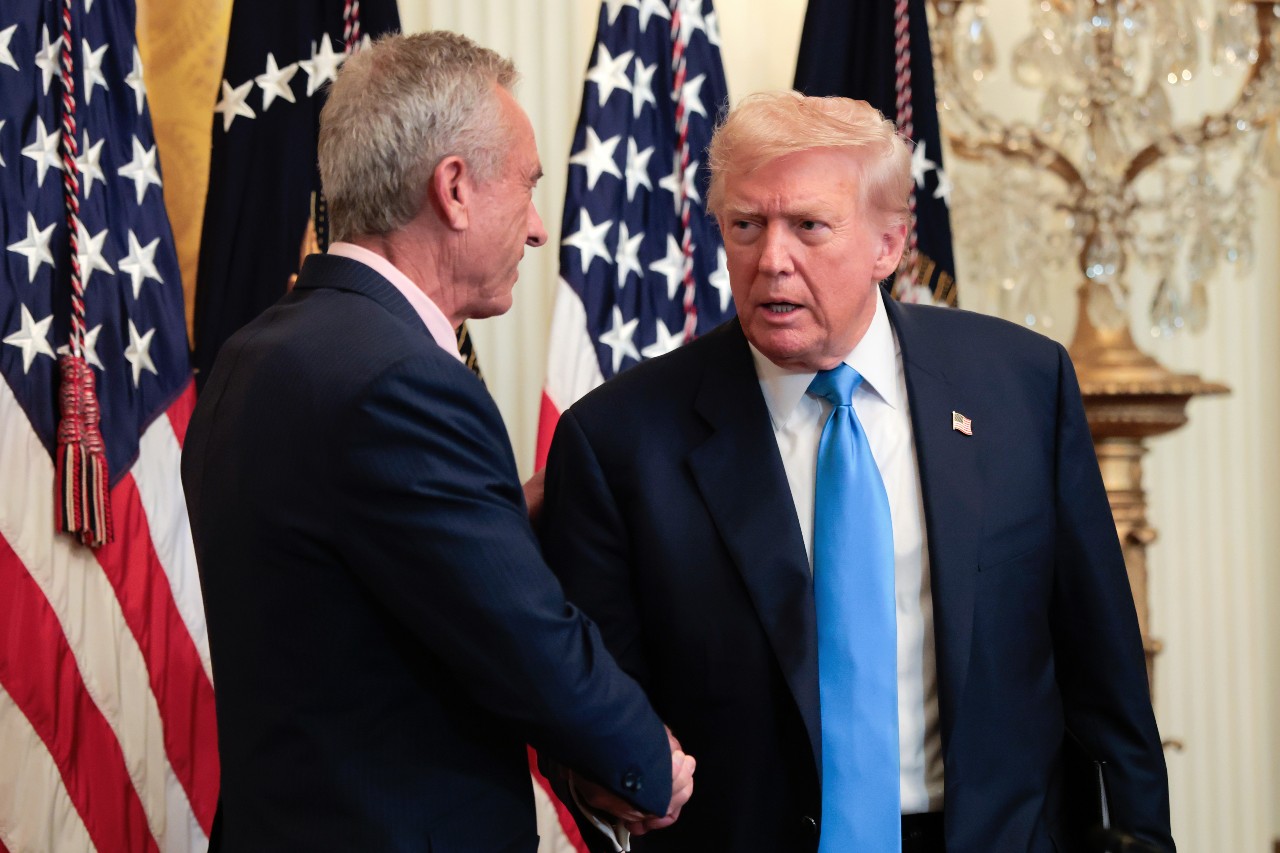
Health Secretary Robert Kennedy Jr. attends the "Great, Historic Investment in Rural Health Roundtable" in the East Room of the White House on Jan. 16, 2026. (Madalina Kilroy/The Epoch Times)
First, he introduced outsider thinking. That started with the selection of Kennedy as Secretary of Health and Human Services.
The administration has been criticized by some and praised by others for questioning long-established practices such as the childhood vaccination schedule and the allocation of medical research funding.
“One of the most consequential things we’re doing involves the power to convene, pulling together people who normally wouldn’t talk with each other, to figure out action steps,” Dr. Mehmet Oz, administrator of the Centers for Medicare and Medicaid Services, told The Epoch Times.
That thinking led to a second big change: Trump lowered prescription drug prices.
The administration balanced the threat of tariffs with financial incentives to get drug companies to stop charging U.S. customers 400 percent more for brand-name medications than those living overseas.
So far, 15 pharmaceutical companies have made drug pricing deals with the administration. They agreed to offer their best price on medicines to Medicaid patients, sell some drugs directly to consumers at lower prices, and offer all new drugs in the United States for the same price they’re sold elsewhere.
One criticism of the policy is that it depends on voluntary cooperation from manufacturers. Trump has asked Congress to codify this pricing policy into law.
Third, the administration overhauled dietary guidelines, deemphasizing grains and carbohydrates in favor of protein and saturated fats. This reversed long-standing federal policy.
“These new guidelines are informed by the best and most reliable research on health and nutrition, particularly as it relates to the role of our diets in the prevalence of chronic disease in the country,” Kennedy said.
Some have criticized the new guidelines as politicizing food.
Fourth, the administration revised the child vaccination schedule, reducing the number of recommended vaccines from 13 to 11.
Vaccines have been a topic of interest for Kennedy for more than a decade before joining the administration. His focus has been on advocating for robust studies to test the safety and effectiveness of vaccines.
The American Academy of Pediatrics filed a lawsuit challenging vaccine decisions made under Kennedy’s leadership and called the new guidelines “dangerous and unnecessary.”
Fifth, Trump pushed for price transparency in his “Great Health Care Plan.”
The plan would require health insurers and care providers to publicly post their prices and other information, such as the rate of claim denials and the wait time for prior authorization decisions.
Ninety-two percent of Americans favor requiring hospitals and insurers to reveal prices ahead of service, according to a 2025 poll by Patient Rights Advocate.
Trump has also proposed providing insurance subsidies money directly to low-income Americans rather than paying them to insurance companies, and cracking down on the practices of pharmacy benefit managers, the middlemen in the prescription drug supply chain.
Trump is asking Congress to codify these policies into federal law.
A spokesperson told reporters on Jan. 15 that the White House expects to work with lawmakers to craft appropriate legislation.
—Lawrence Wilson
BOOKMARKS
Trump was asked by The Epoch Times which three achievements he considers the most important of his first year back in office. The Epoch Times Jackson Richman and Travis Gillmore reported on the president’s response.
The Department of Justice has begun issuing subpoenas to top officials in Minnesota amid administration claims of unlawful obstruction, The Epoch Times’ Zachary Stieber reported. Minneapolis Mayor Jacob Frey reported that he had been subpoenaed, while Minnesota Gov. Tim Walz dismissed the investigation as a “partisan distraction.”
Trump suggested this week that he does not need Congress to issue $2,000 tariff rebate checks, The Epoch Times’ Andrew Moran reported. For months, the administration has touted the possibility of sending such checks to U.S. households and paying down the $39 trillion national debt with the proceeds from tariffs.
The California Republican Party has petitioned the U.S. Supreme Court to block California from implementing the redrawn congressional maps approved by voters in November, The Epoch Times’ Joseph Lord reported. Republicans have alleged that California’s redrawn maps, authorized by voters as Proposition 50 in November 2025, were affected by illegal racial gerrymandering that’s prohibited under the Voting Rights Act.
The U.S. House of Representatives has released the text of a $1.2 trillion multipart spending package that would fund key federal agencies until Sept. 30. The Epoch Times’ Arjun Singh reported that the bill, if passed, would fund the departments of Defense, Labor, Health and Human Services, Education, Homeland Security, Transportation, and Housing and Urban Development.